Key Takeaways
- Your garden isn’t a monolith: Even a small yard has distinct pockets of temperature, humidity, and wind that can vary by up to 5°C from the general local forecast.
- Map before you plant: Spend one weekend observing sun patterns and wind tunnels to identify your “warm,” “cool,” and “sheltered” zones before buying a single seed.
- Leverage hardscapes: Use walls, fences, and paved areas as thermal batteries that store daytime heat to protect sensitive plants during cool nights.
You’ve probably noticed that one corner of your garden is always the first to thaw in spring, while another stays stubbornly damp and cold until mid-summer. That isn’t just luck or bad soil; it is a micro-climate. For those of us juggling careers and the endless rhythm of parenting, gardening can often feel like a battle against the elements. We buy plants, follow the instructions on the tag, and then watch them struggle because the “full sun” spot we picked is actually a wind tunnel, or the “partial shade” area gets scorched by the afternoon glare.
Understanding your home’s micro-climate is the single most effective way to switch from “fighting nature” to “gardening with nature.” By identifying these small, localized weather patterns, you can optimize your yields, reduce water waste, and stop replacing dead plants every season. Let’s break down how to map your space and make it work for you.
Why Your Local Weather Report Is Lying to Your Plants
The weather app on your phone tells you the temperature for your city or region. It might say 22°C, but that number is recorded at a local airport or weather station, often miles away from your backyard. Your garden has its own personality, dictated by altitude, proximity to buildings, soil type, and existing vegetation.
A micro-climate is a small area where the climate differs from the surrounding area. Think of it as a “weather pocket.” If you have a brick wall on the south side of your house, that wall absorbs heat all day and radiates it at night. This creates a pocket that might be 3-4°C warmer than the rest of your yard. Conversely, a low-lying area near a fence might trap cold air, making it a “frost pocket” where delicate plants die early in the season. For a busy parent, this means the difference between a thriving tomato harvest and a disappointing summer project.
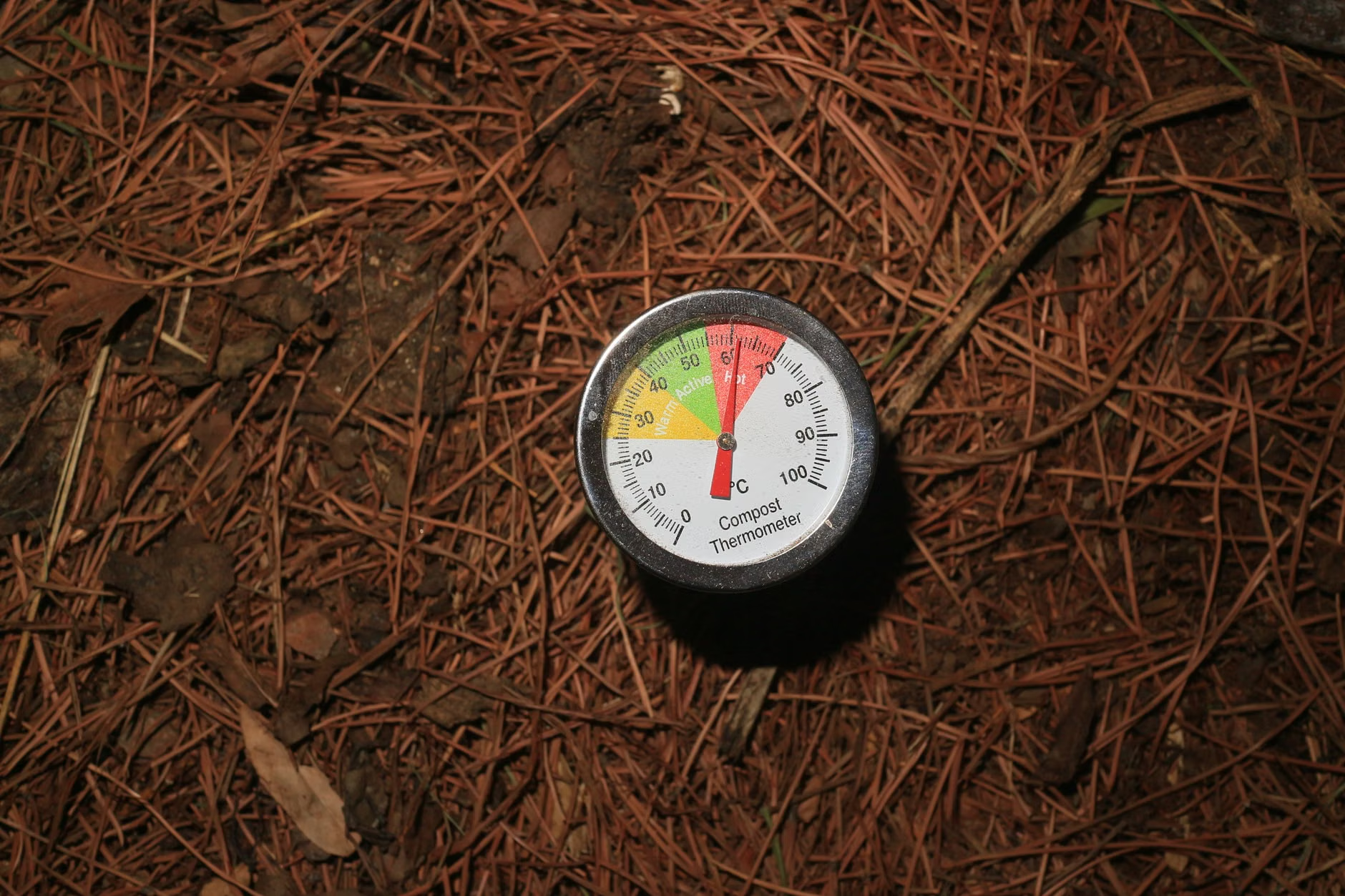
When you start paying attention to these nuances, you stop guessing. You stop trying to force a sun-loving plant into a cold, damp corner. This isn’t about becoming a meteorologist; it’s about observing how your specific space interacts with the sun and wind. Once you identify these zones, you can place your plants where they are naturally inclined to succeed, which means less maintenance for you.
Step-by-Step: How to Map Your Garden’s Micro-Climates
You don’t need expensive equipment to map your garden. You just need a bit of time and a notebook. Spend a weekend—or better yet, a few days spread across a month—observing how your yard changes.
1. Identify Sun Exposure
Walk your garden at 9:00 AM, 1:00 PM, and 5:00 PM. Note which areas are in full sun, partial shade, and deep shade. Remember, the sun’s angle changes drastically between spring and autumn. If you are doing this in early spring, account for the fact that trees without leaves currently will cast much denser shade once they flush out in summer.
2. The Wind Tunnel Test
Where does the wind hit your house? If you have a long, clear path between your house and a fence or neighbor’s home, you likely have a wind tunnel. Wind strips moisture from plants and can physically damage fragile crops. If you see your plants leaning or constantly drying out, you’ve found a high-wind micro-climate.
3. Temperature “Hot Spots” and “Cold Sinks”
Cold air is denser than warm air and flows downhill, just like water. It settles in the lowest parts of your garden. If your yard has a slope, the bottom of that slope is almost certainly a frost trap. Conversely, the areas against south-facing walls or fences are your “heat islands.”
| Zone Type | Characteristics | Best Use |
|---|---|---|
| Heat Island | South-facing wall, paved area. | Tomatoes, peppers, herbs (Mediterranean varieties). |
| Frost Pocket | Low-lying, poor airflow, north-facing. | Hardy greens, spring bulbs, ferns. |
| Wind Tunnel | Clear path between buildings. | Wind-resistant shrubs, trellised vines (if secured). |
| Deep Shade | Under dense tree canopy/north wall. | Hostas, woodland plants, moss. |
This table isn’t a set of rigid rules; it’s a decision-making framework. If you only have a “Frost Pocket” available, don’t try to force a heat-loving pepper plant there. Instead, choose crops that actually prefer cooler soil, like kale or peas.
Using Hardscapes as Your Secret Weapon
Many of us view our driveways, stone walls, and patios as “dead” space in the garden. In reality, these are your most powerful tools for managing micro-climates. These surfaces are “thermal masses.” They store the sun’s energy during the day and release it slowly throughout the night.
If you have a stone wall, planting heat-loving herbs like rosemary or thyme nearby creates an artificial Mediterranean environment. The wall protects the plants from wind and provides that extra bit of warmth that helps them survive a chilly night. For parents, this is a great way to grow higher-maintenance crops with less intervention. You aren’t “nurturing” the plant as much as the wall is doing the work for you.
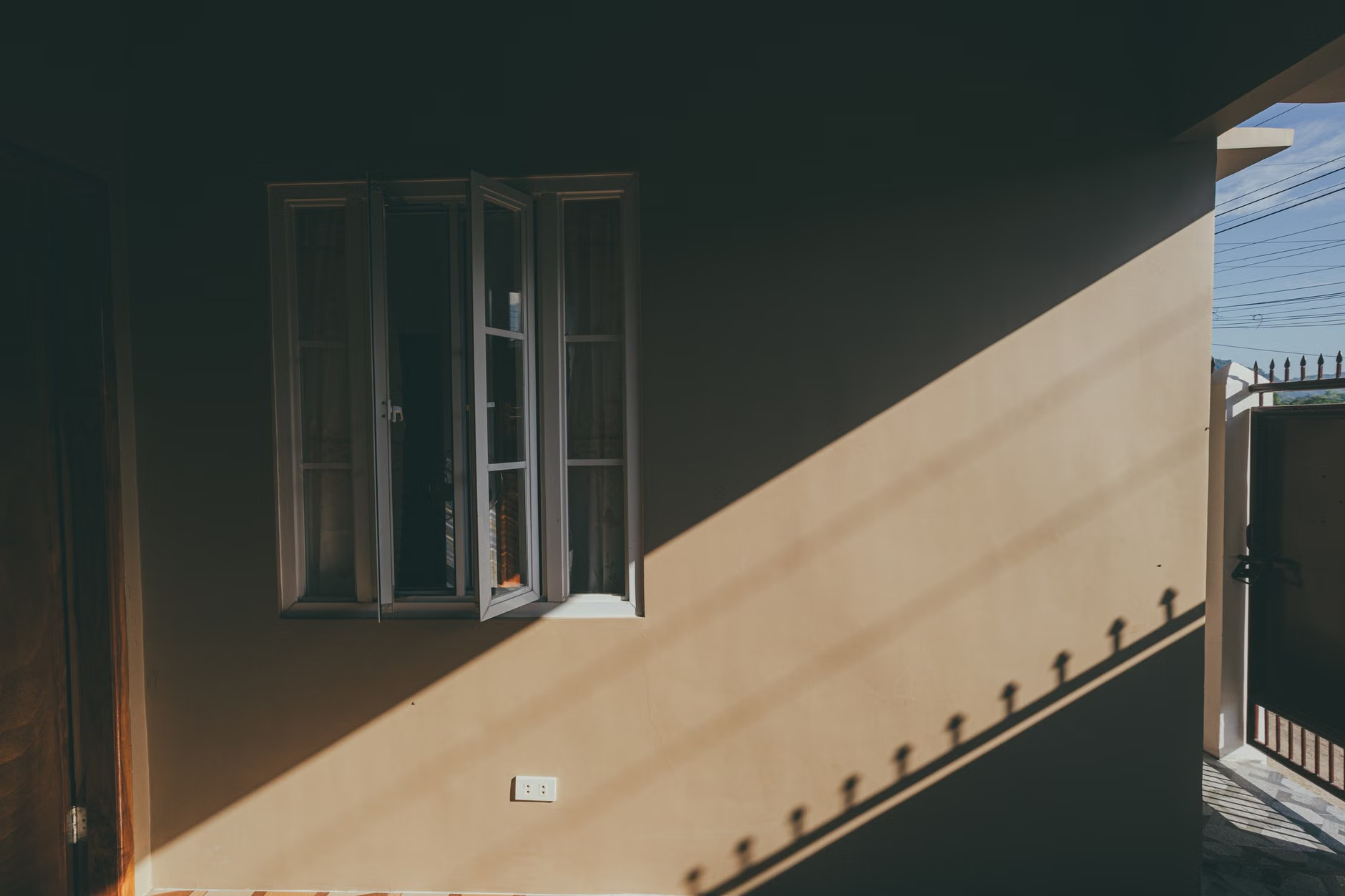
However, be aware of the “reflected glare” problem. A south-facing white wall or a glass sliding door can reflect enough light to actually scorch sensitive plants during the peak of summer. If you notice leaves turning brown on one side, you might need to provide a light shade cloth or move the container a few feet away.
Managing Water and Humidity in Your Micro-Climates
Micro-climates don’t just affect temperature; they drastically change how water moves through your soil. An area that receives constant shade will retain moisture much longer than a sunny, exposed spot. This is the most common reason for root rot in container gardening—people tend to water all their pots on the same schedule, ignoring the fact that some are in “evaporation zones” while others are in “moisture traps.”
The “Finger Test” is your best friend. Before you water, stick your finger two inches into the soil. If it’s damp, skip it. If you are a busy parent, consider a simple drip irrigation system or self-watering containers. These systems help normalize the moisture levels across your varied micro-climates, ensuring that your “shade plants” aren’t drowning while your “sun plants” are parched.
Another overlooked variable is humidity. If you live in a region with high humidity, air circulation is critical. Plants in sheltered, humid micro-climates are prone to fungal diseases like powdery mildew. If you have a “stagnant” corner of your garden, don’t pack your plants too tightly. Give them space for air to move. It’s better to have fewer, healthier plants than a crowded patch of sickly ones.
Practical Strategies for Modifying Your Micro-Climates
Once you’ve mapped your garden, you might realize that you don’t have the perfect spot for what you want to grow. Don’t worry—you can “engineer” your own micro-climates. This is where gardening gets creative.
1. Creating Windbreaks
If you have a windy backyard, you don’t need a massive wall to stop it. A simple trellis with climbing beans or a row of hardy shrubs can act as a “permeable barrier.” Permeable is key—you want to slow the wind down, not stop it dead, which can cause turbulence. By slowing the wind, you reduce the “wind chill” effect on your plants and prevent them from drying out.
2. The Cloche and Cold Frame
If you want to start your seeds earlier in the spring, you don’t need a greenhouse. A simple, clear plastic bin with the bottom cut out, placed over a plant, acts as a mini-greenhouse. This traps heat and creates a localized warm zone that can extend your growing season by several weeks. For a parent, this is a fun, low-cost project to do with kids—it’s like a science experiment that results in dinner.
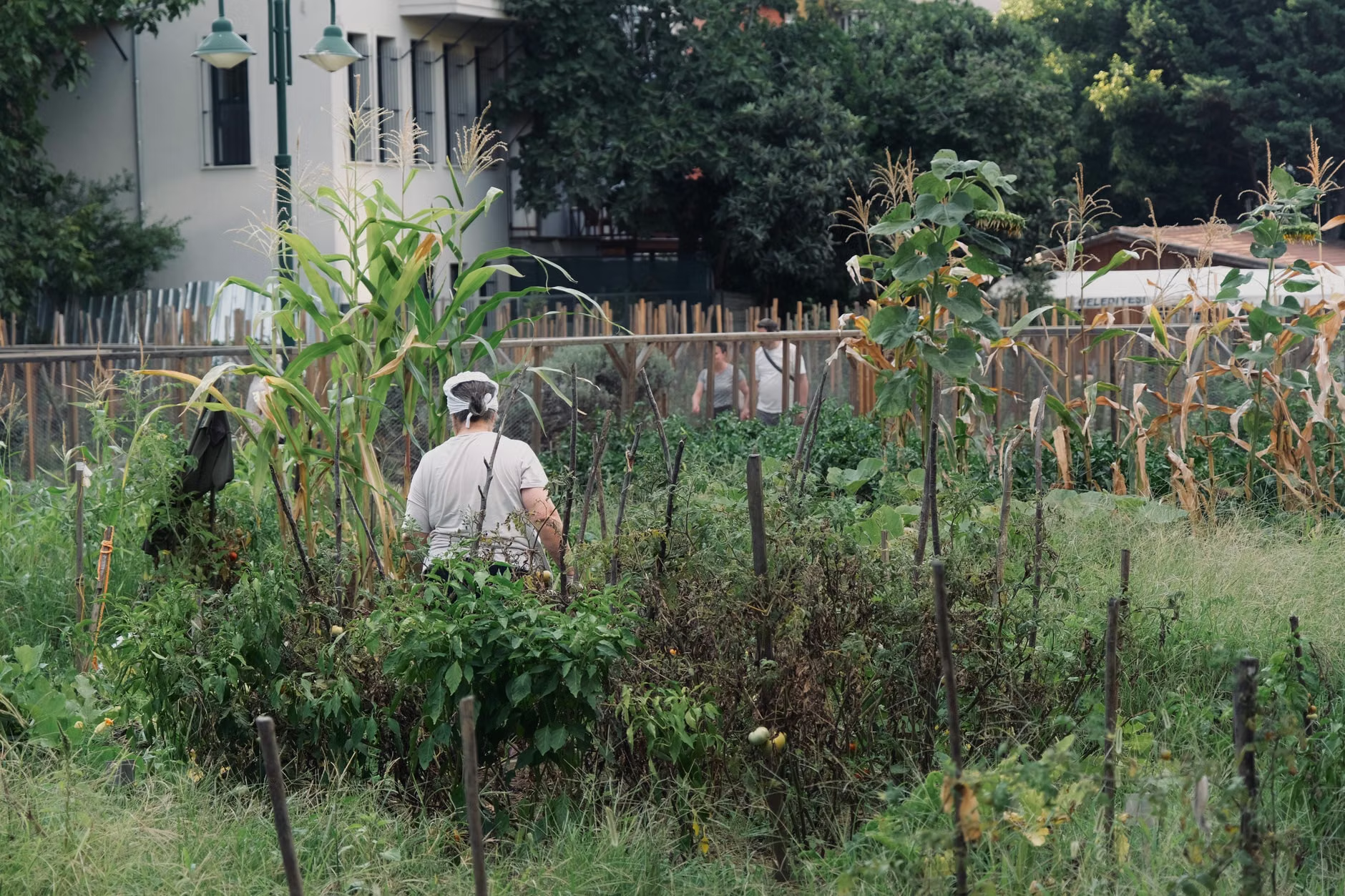
3. Strategic Mulching
Mulch is an incredible insulator. In the summer, it keeps the soil cool and moist. In the winter, it acts as a blanket for plant roots. If you are trying to grow a plant that is at the very edge of your climate zone, a thick layer of organic mulch can be the difference between it surviving the winter or dying back to the ground.
Common Mistakes to Avoid
The most common mistake people make is ignoring the “edge” conditions. We often focus on the center of the garden bed and ignore the edges, yet the edges are where the micro-climate changes are most dramatic. The soil at the edge of a raised bed dries out much faster than the soil in the middle because it is exposed to air on the side as well as the top.
Another mistake is assuming that a “sunny” spot is always a “hot” spot. If that sunny spot is also exposed to a constant breeze, it might actually be quite cool. Always consider the combination of factors. Sun + Wind = Evaporation. Sun + Wall = Heat. Shade + Low Ground = Cold and Damp.
Finally, stop trying to “fix” your entire garden at once. Pick one area—perhaps the one closest to your back door—and master it. See how plants perform there. Once you understand the rhythm of that specific spot, move to the next. Gardening is a long-term commitment, not a sprint.
The Hidden Costs and Trade-offs
It’s tempting to think that “more heat” is always better, but that’s not necessarily true. If you create a highly effective heat island, you might find that your lettuce bolts (goes to seed prematurely) or your spinach turns bitter. Some crops, like cool-season brassicas, absolutely despise the heat. The goal isn’t to make your whole garden a tropical paradise; it’s to create a mosaic of environments so you can grow a wider variety of plants successfully.
There is also the trade-off of maintenance. A highly modified micro-climate, such as one requiring constant shade cloth or wind protection, requires your time. As a parent, your time is your most precious resource. Choose the path of least resistance. If a plant requires you to run out and cover it every time the wind picks up, is it really the right plant for your garden? Sometimes, the most “sustainable” choice is to grow what thrives in your conditions without needing a life-support system.
Final Thoughts: Gardening for the Long Haul
Gardening isn’t about controlling nature; it’s about learning its language. By mapping your micro-climates, you are essentially learning to read the “fine print” of your yard. It’s a process of trial and error, but it’s one that pays off in a more resilient, productive, and enjoyable outdoor space.
Start today by spending just ten minutes outside. Walk your garden with a notebook. Don’t look at the plants—look at the light, feel the breeze, and notice where the puddles form after a rain. Those observations are the foundation of a smarter garden. Remember, you don’t need a perfect garden to have a successful one; you just need one that works with the unique, beautiful, and sometimes tricky weather patterns of your own little slice of the world.
If you’re feeling overwhelmed, start small. Focus on one raised bed or one corner of your patio. Once you see the difference that proper placement makes, you’ll be hooked. And the best part? Your plants will thank you with more flowers, more fruit, and a lot less stress.
Frequently Asked Questions
Q: I live in an apartment with a balcony. Does the micro-climate concept still apply to me?
A: Absolutely. In fact, it is even more important. Balconies are often extreme micro-climates. High-rise balconies can be incredibly windy, while a balcony tucked into a building alcove might be significantly warmer. Pay attention to how your building reflects heat and how the wind channels between buildings—this will dictate whether your container plants thrive or dry out in an hour.
Q: How do I know if my garden is a “frost pocket”?
A: The easiest way is to observe your neighbors. If their plants are showing frost damage while yours look fine, or if you notice your garden is always the last to lose its morning frost, you likely have a cold sink. You can also buy a simple, inexpensive min/max thermometer to place at ground level for a few nights to see exactly how cold it gets compared to the local forecast.
Q: Should I use artificial heat to extend my season?
A: While possible, it’s usually not recommended for the average home gardener. It increases your energy costs and adds a layer of complexity that can be difficult to manage. Instead, focus on “passive” methods like row covers, cold frames, or simply choosing plant varieties that are better suited to your specific climate. These methods are more reliable and require far less daily attention.
For further reading on regional climate data and local frost dates, you can check the official resources provided by your national agricultural extension or meteorological office. In the US, the USDA Plant Hardiness Zone Map is an excellent starting point for understanding your general regional climate, though remember that it does not account for the micro-climate variations discussed here.