- Nature-play journaling replaces traditional, word-heavy diary entries with sensory observations and physical artifacts to lower the barrier to entry for busy parents.
- By focusing on “what I felt” rather than “what I achieved,” this method shifts the brain from a productivity-focused state to a restorative, reflective state.
- Consistency is built through “micro-sessions”—five-minute windows—rather than long-form writing, making it sustainable for those juggling work and family life.
If you are in your 30s or 40s, your mental “to-do” list likely feels like a browser with 50 tabs open, and at least three of them are frozen. When people talk about “mindfulness” or “journaling,” it often feels like just another chore. You don’t need another task that requires 30 minutes of silence and a perfectly curated desk. You need a way to decompress that fits into the gaps of a chaotic day.
Nature-play journaling is the answer to this friction. It isn’t about writing a memoir or analyzing your childhood; it is a grounding technique that uses the natural world to anchor your busy mind. By shifting the focus from internal rumination to external observation, you can effectively “reset” your nervous system in just a few minutes.
The Neuroscience Behind Why Nature-Play Works
Our brains are constantly switching between the “Default Mode Network” (DMN)—which is responsible for mind-wandering, worrying, and rumination—and the “Task Positive Network” (TPN), which we use for focus and problem-solving. As parents, we are almost always in the TPN. We are solving problems, managing schedules, and navigating interpersonal dynamics. When we stop to “journal” in the traditional sense, we often just keep running the TPN, which leads to mental burnout.
Nature-play journaling interrupts this cycle by engaging the senses. Research from the field of environmental psychology, such as the Attention Restoration Theory (ART), suggests that nature provides “soft fascination.” This is a type of engagement that doesn’t demand sustained, effortful focus. It allows the TPN to rest while keeping the DMN from spiraling into negative rumination. When you observe a leaf, the texture of bark, or the way light hits a puddle, you are engaging in a sensory-based mindfulness practice that requires zero “effort.”
For a parent, this is a game-changer. You aren’t “thinking about your day”; you are “noticing the world.” This distinction is critical for lowering cortisol levels. If you try to journal by writing “I am stressed because X, Y, and Z happened,” you are simply re-traumatizing yourself. If you journal by noting “the wind felt cold on my face while I stood in the school pickup line,” you are grounding yourself in the present moment.

How to Start: The “Three-Senses” Framework
The most common mistake people make when starting a journaling practice is trying to be poetic or “deep.” If you feel like you have to write something profound, you will eventually stop doing it. The goal of nature-play journaling is to be a collector of moments, not a philosopher.
Here is a simple, actionable framework to get started. You don’t need a fancy leather-bound journal; a standard notebook or even a digital app with photo capabilities works fine. The key is the “Three-Senses” rule. Every time you open your journal, you must record one observation for each of these three categories:
| Category | Focus | Example |
|---|---|---|
| Visual | Color, light, or shape | The specific shade of orange in the sunset today. |
| Tactile/Physical | Temperature, texture, or weight | The rough, damp texture of a pinecone I picked up. |
| Atmospheric | Sound, smell, or movement | The sound of distant traffic blending with bird calls. |
By forcing yourself to identify these three things, you bypass the “what should I write?” hurdle. You aren’t writing about your problems; you are documenting the physical reality of your environment. This practice trains your brain to scan for beauty or neutral observation rather than scanning for threats or tasks.
Integrating Nature-Play into a Tight Schedule
If you are juggling a 9-to-5, school drop-offs, and household management, the idea of “finding time” is laughable. You don’t find time; you claim it. Nature-play journaling is designed to be done in “micro-doses.” You do not need a forest. You can do this in your backyard, at a bus stop, or even by looking out a window.
The “Five-Minute Buffer” Strategy
Most of us have a five-minute transition period in our day—waiting for a meeting to start, sitting in the car before picking up kids, or drinking coffee while the kids are occupied. This is your “Nature-Play” window. Use this time to capture one sensory detail. If you are in the city, look for the “nature” in the urban landscape: a weed growing through a sidewalk crack, the way the sky looks between two buildings, or the temperature change when you step from shade into sun.
The “Artifact” Method
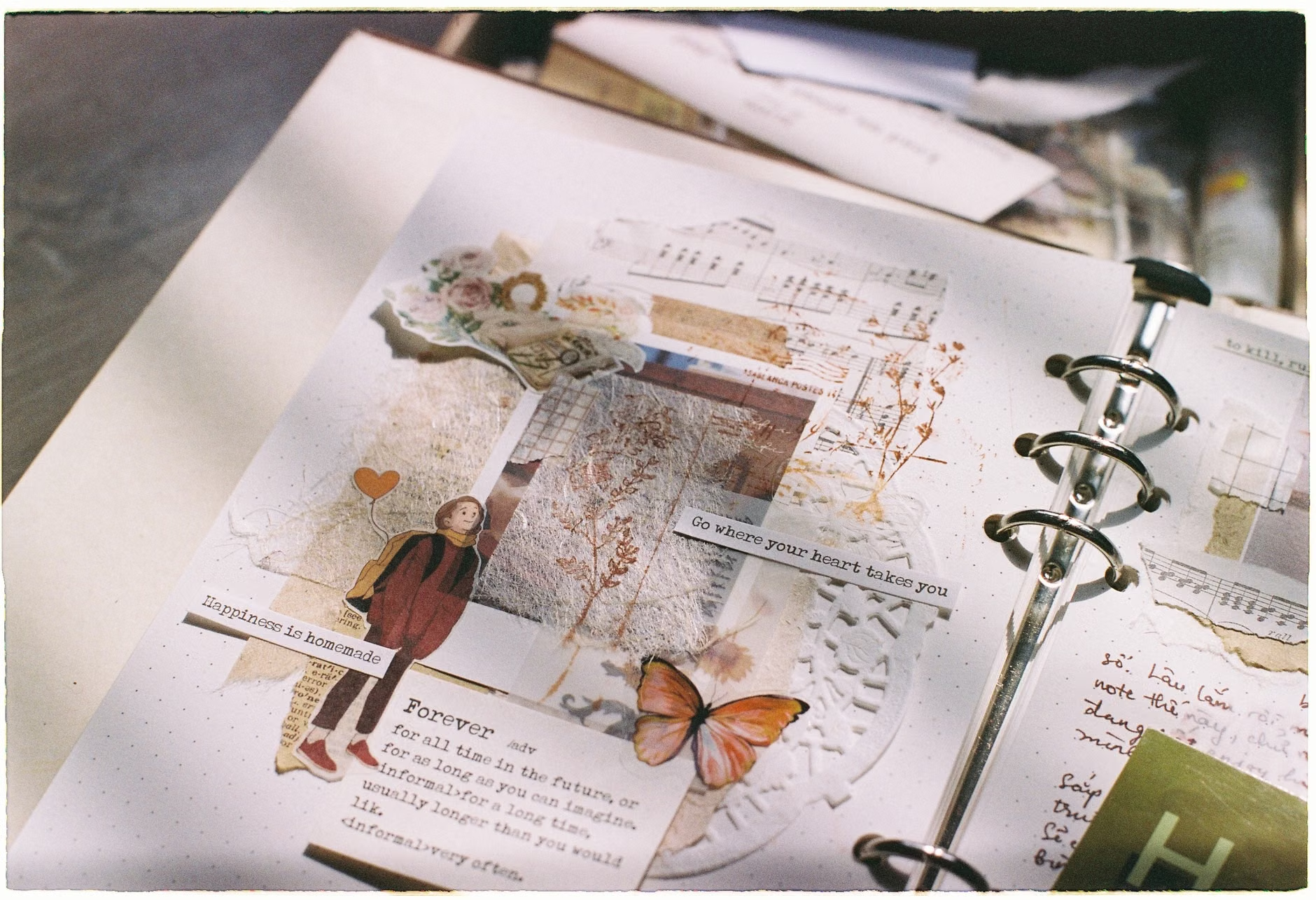
If you aren’t in the mood to write, use artifacts. Tape a leaf, a pressed flower, or a small stone into your journal. Write the date and one word describing how it felt to find it. This turns your journal into a physical repository of your life, which is far more rewarding than re-reading old complaints about your to-do list. This is particularly effective for parents with younger children; involving them in collecting a “nature treasure” can become a shared mindfulness activity.
Common Pitfalls and How to Avoid Them
Even with a simple system, you might hit roadblocks. Being aware of these common traps will save you from giving up when you inevitably miss a day or feel like your entries are “boring.”
1. The “Perfectionism Trap”
Many people stop journaling because they feel their handwriting is messy or their observations aren’t “interesting.” Remember, this is for you, not for a future biographer. A messy, scribbled note about a cool-looking cloud is a valid entry. If you feel the need to make it look like a Pinterest post, you have already turned a restorative practice into a performance.
2. The “Consistency Myth”
Do not aim for daily consistency if your life is unpredictable. If you miss three days, don’t try to “catch up” by writing a massive entry. Just start again today with a single sentence. The goal is to build a habit of noticing, not a streak of writing. If you notice things throughout the day, the journal is just the final step of capturing them.
3. The “Indoor Bias”
Many people think nature-play requires being “in nature.” If you live in a dense urban environment, you might feel this doesn’t apply to you. However, nature is everywhere. The “nature” in nature-play refers to the natural world—weather, light, seasons, biological growth. Even on the 40th floor of an apartment building, you can observe the movement of the sun, the patterns of rain on the glass, or the way a houseplant is leaning toward the light.
Why Your 30s and 40s Are the Prime Time for This Practice
Psychologically, our 30s and 40s are often characterized by a transition from “building” (career, family, home) to “sustaining.” This period is high-pressure because the stakes feel higher. We are often managing the emotional needs of our children while simultaneously caring for aging parents. This “sandwich” effect is a primary driver of chronic stress.
Nature-play journaling acts as a psychological buffer. By focusing on sensory input, you are practicing “grounding,” a clinical technique used in therapy to manage anxiety. When you are overwhelmed by the future (what if I lose my job? what if my kid fails that test?), grounding pulls you back to the present. The physical act of writing or collecting something from nature acts as a sensory anchor that tells your brain: “Right now, in this second, I am safe.”
Furthermore, this practice helps combat “decision fatigue.” Parents make hundreds of decisions a day—what to cook, how to discipline, how to manage finances. Nature-play requires no decisions. It is purely receptive. Giving your brain a few minutes of “receptive mode” each day can significantly improve your ability to make better decisions when you return to “active mode.”
Expanding the Practice: From Observation to Reflection
Once you are comfortable with the “Three-Senses” framework, you can slowly expand into light reflection. But—and this is a big but—only do this if it feels helpful. If you find that writing about your feelings makes you feel worse, stick to observations. You don’t need to “process” your trauma to heal; sometimes, simply noticing the beauty of the world is enough to soothe a stressed nervous system.
If you do want to add reflection, use the “Nature Metaphor” technique. Look at your observation and ask: “Is there a metaphor here for my life?” For example, if you observed a tree that is shedding its leaves in autumn, you might reflect on what you need to “let go of” in your own life to prepare for a new season. This is a gentle, indirect way to process emotions that feels much less heavy than direct journaling.
However, be cautious with this. The moment you start forcing a metaphor, you are back in the “Task Positive Network.” If you find yourself struggling to find a “deep meaning,” stop. The observation itself is enough. The act of noticing is the healing part; the interpretation is optional.
The Hidden Costs and Trade-offs
Is there a downside to this? The only real “cost” is the time it takes away from other activities. If you are using your five-minute break to journal, you aren’t checking your email or scrolling social media. For some, this trade-off is difficult. The dopamine hit of checking social media is immediate, while the calming effect of nature-play is cumulative.
You may find that in the first few weeks, you feel bored. That is actually a good sign. It means your brain is withdrawing from the constant stimulation of high-speed digital input. Stick with it. The boredom is the “detox” phase. Once you move past it, you will likely find that you have more mental bandwidth and a higher threshold for stress.
Another potential trade-off is the physical clutter. If you start collecting rocks, leaves, and twigs, your space can get messy. Use a small box or a dedicated envelope inside your journal to keep these items contained. Don’t let your self-care practice become a source of household friction.
Next Steps: Building Your Nature-Play Toolkit
To make this sustainable, you need to lower the friction of starting. If you have to hunt for a pen and a journal, you won’t do it. Keep a small notebook and a decent pen in the place where you spend most of your time—perhaps your bag, your car, or the kitchen counter.
Here is your plan for the next 7 days:
- Day 1: Buy a simple, inexpensive notebook. Don’t worry about the cover or the paper quality.
- Days 2-3: Practice the “Three-Senses” rule once a day, even if it’s just for two minutes.
- Days 4-5: Try to do this outside at least once. Feel the difference between indoor and outdoor observation.
- Days 6-7: Add one “nature artifact” to your journal. Notice how it feels to have a physical reminder of a moment.
Remember, the goal is not to be a “journaler.” The goal is to be a person who notices the world, even when life is loud. You are not trying to change your life overnight; you are trying to change how you experience the minutes that make up your life.
If you find yourself stuck, go back to the basics: look at the sky, touch a surface, listen to the air. That is all there is to it. The simplicity is the point. When you are in the middle of a chaotic week, remember that the natural world is still moving at its own pace, and you can tap into that rhythm whenever you choose to stop and look.
For further reading on how nature impacts mental health and stress, the American Psychological Association’s report on the benefits of nature provides excellent context on why this works. Additionally, the University of Minnesota’s Taking Charge of Your Health & Wellbeing site offers further insights into the connection between environmental exposure and cortisol reduction.
Frequently Asked Questions
1. Can I do this on my phone instead of a paper journal?
Yes, you can use a notes app or a photo-journaling app. However, be aware that the act of writing on paper provides a different sensory experience that is more effective at grounding. If you use your phone, ensure you are not tempted to check notifications or social media, which will break the mindfulness cycle.
2. What if I live in a place with very little nature?
Nature is not just forests or parks. It includes the weather, the movement of light, the behavior of insects, the growth of indoor plants, and the changing of the seasons. Even in a concrete jungle, there is “nature” happening in the sky and in the small details of the environment. Focus on what is present rather than what is missing.
3. How do I handle it if my children want to participate?
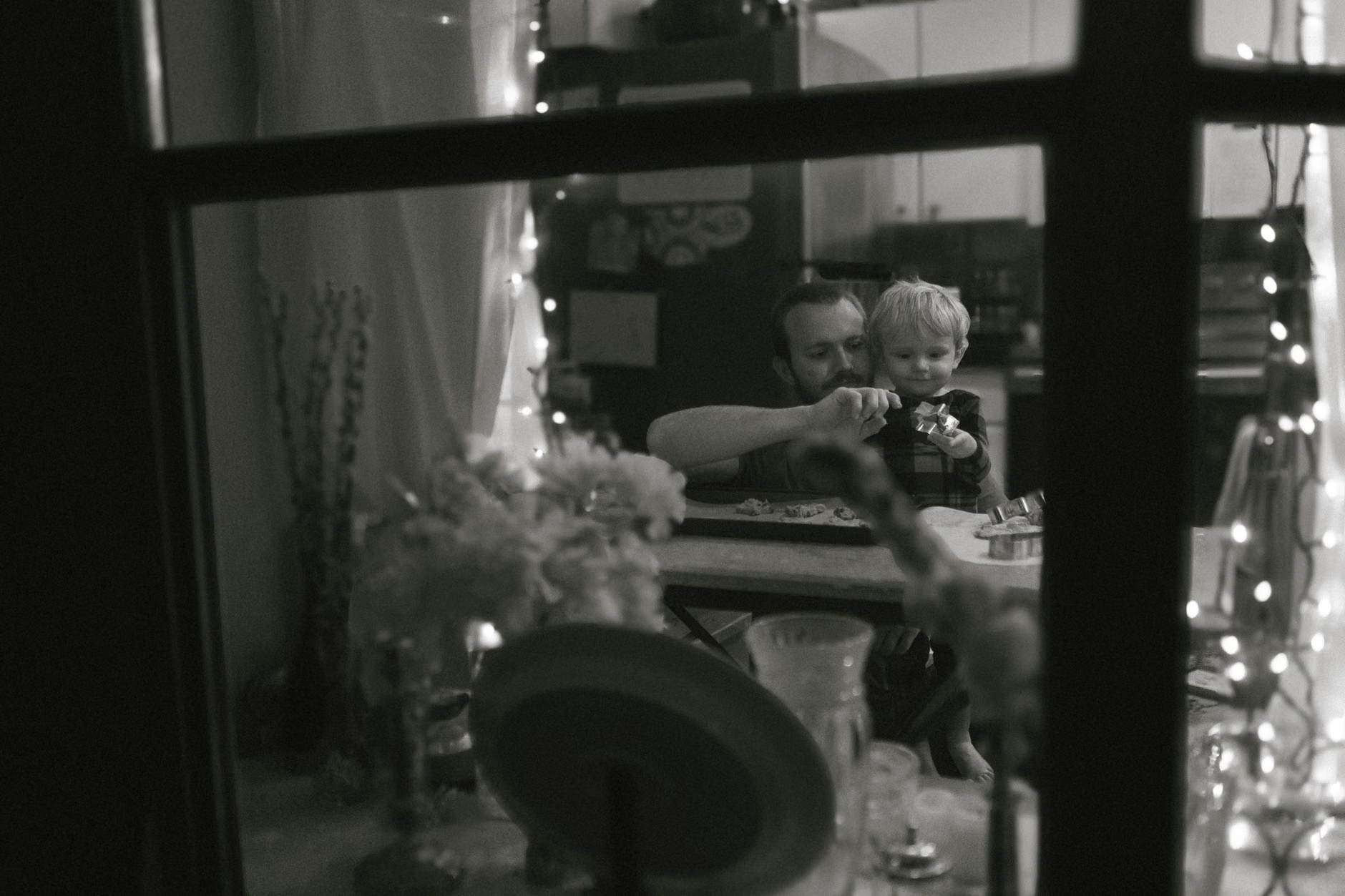
Encourage it! Nature-play is excellent for children. It helps them develop observation skills and can be a wonderful shared activity. You can keep a “family nature journal” where everyone adds their own findings. This turns a personal mindfulness practice into a bonding opportunity, which can be even more rewarding.
Start small, be kind to yourself, and remember: you are not failing if you aren’t doing it “perfectly.” You are succeeding simply by showing up for yourself, even for just a few minutes a day.