The most successful zero-proof event doesn’t center on what is missing from the glass, but on the quality and intentionality of what is poured into it.
- Prioritize Complexity: Use non-alcoholic spirits, shrubs, and bitters to build depth, moving away from sugary juices that feel like “kiddie drinks.”
- Manage the Narrative: Don’t apologize for the menu; treat your zero-proof selection as a curated, premium experience rather than a restriction.
- The “Third Space” Effect: Ensure your drink presentation is as aesthetically pleasing as a traditional cocktail to maintain the “ritual” of social drinking.
If you are in your 30s or 40s, you have likely noticed a shift in your social circles. Maybe you have become more health-conscious, perhaps the early-morning school run makes a hangover non-negotiable, or maybe you simply realized that the “social lubricant” of alcohol isn’t actually helping you connect with the people you care about. Yet, the anxiety remains: “If I don’t serve wine, will my guests feel like they are at a child’s birthday party?”
The secret is that the “alcohol-free” movement has evolved. It is no longer about drinking juice in a plastic cup. It is about the rise of sophisticated, botanical-driven, and complex beverages that demand to be sipped, not chugged. Hosting a zero-proof event is not about deprivation; it is about elevation.
Moving Beyond Sugar: The Anatomy of a Sophisticated Zero-Proof Drink
The biggest mistake hosts make when transitioning to a zero-proof menu is relying on high-sugar mocktails. When you replace a complex, dry spirit with pineapple juice and grenadine, you aren’t creating a sophisticated drink—you are creating a sugar bomb. To host a successful event, you must understand the “flavor architecture” of a drink.
In a traditional cocktail, you have four pillars: base (alcohol), modifier (vermouth, liqueur), acid (citrus), and texture (syrups, egg whites). To replicate this without alcohol, you must substitute the base with something that carries weight. Here is how you can build a menu that feels grown-up:
- Botanical Distillates: Brands like Seedlip or Lyre’s have pioneered non-alcoholic spirits that use distillation processes similar to gin or tequila. They provide the “burn” and the aromatic complexity that your palate expects.
- Shrubs (Drinking Vinegars): These are your best friend. A shrub is a mixture of fruit, sugar, and vinegar. The acidity of the vinegar provides the “bite” that alcohol usually supplies, making it a perfect base for a sparkling water mixer.
- Tea and Infusions: Lapsang Souchong (a smoked tea) can mimic the peatiness of a scotch. High-tannin black teas can provide the “grip” or mouthfeel of a red wine.
Decision Rule: If you are hosting a formal dinner, aim for a 3-part menu: a “sparkling” aperitif to start, a “complex/bitter” pairing for the main course, and a “rich/botanical” digestif. This mirrors the traditional drinking arc without the ethanol.
The Logistics of Hosting: Managing the “Non-Alcoholic” Conversation
There is a specific social friction that occurs when the host announces, “We aren’t drinking tonight.” Some guests may feel judged, while others may worry the party will be “boring.” Your job as the host is to lower the barrier to entry.
First, do not make it a “dry” party announcement. You don’t need to frame your evening around what you are not doing. Instead, frame it around the experience you are providing. “I’ve curated a selection of some really interesting botanical infusions I’ve been experimenting with” sounds infinitely more welcoming than “We’re doing a sober night.”
Setting the Scene: The Ritual is Everything
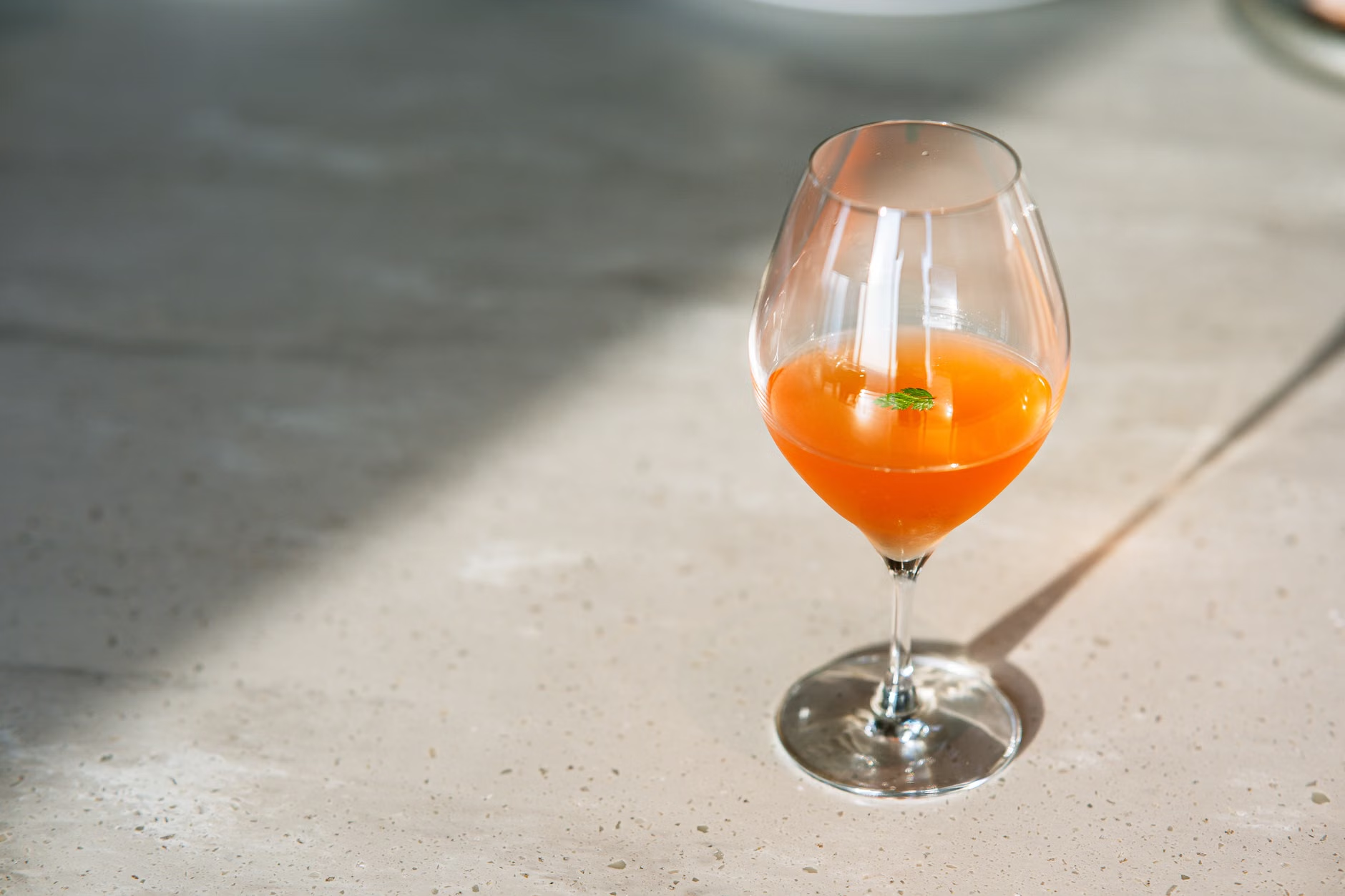
Much of the enjoyment of alcohol is the ritual: the clinking of ice, the garnish, the specific glassware. If you serve a sophisticated drink in a paper cup, the brain registers it as a “casual/childish” drink. If you serve the same drink in a heavy-bottomed crystal rocks glass with a perfectly expressed orange peel, the brain registers it as a “cocktail.”
Common Mistake: Providing only one option. If you have a guest who hates ginger, and your only non-alcoholic option is a ginger-based mocktail, they are stuck. Aim for variety: one bitter/herbal option, one bright/citrusy option, and one sparkling/neutral option.
| Drink Category | Flavor Profile | Best Pairing |
|---|---|---|
| Botanical/Bitter | Earthy, complex, dry | Heavy meats, roasted root vegetables |
| Citrus/Shrub | Sharp, acidic, refreshing | Seafood, salads, appetizers |
| Tea-based/Tannic | Deep, structured, bold | Rich pasta dishes, red meats |
This table isn’t just about flavors; it is a guide for your menu planning. If you serve a heavy, savory dinner, a cloyingly sweet soda will clash. You need the “tannic” profile of a cold-brewed tea or a non-alcoholic red blend to cut through the fat of the food.
The Economics of Zero-Proof: Understanding the “Hidden” Costs
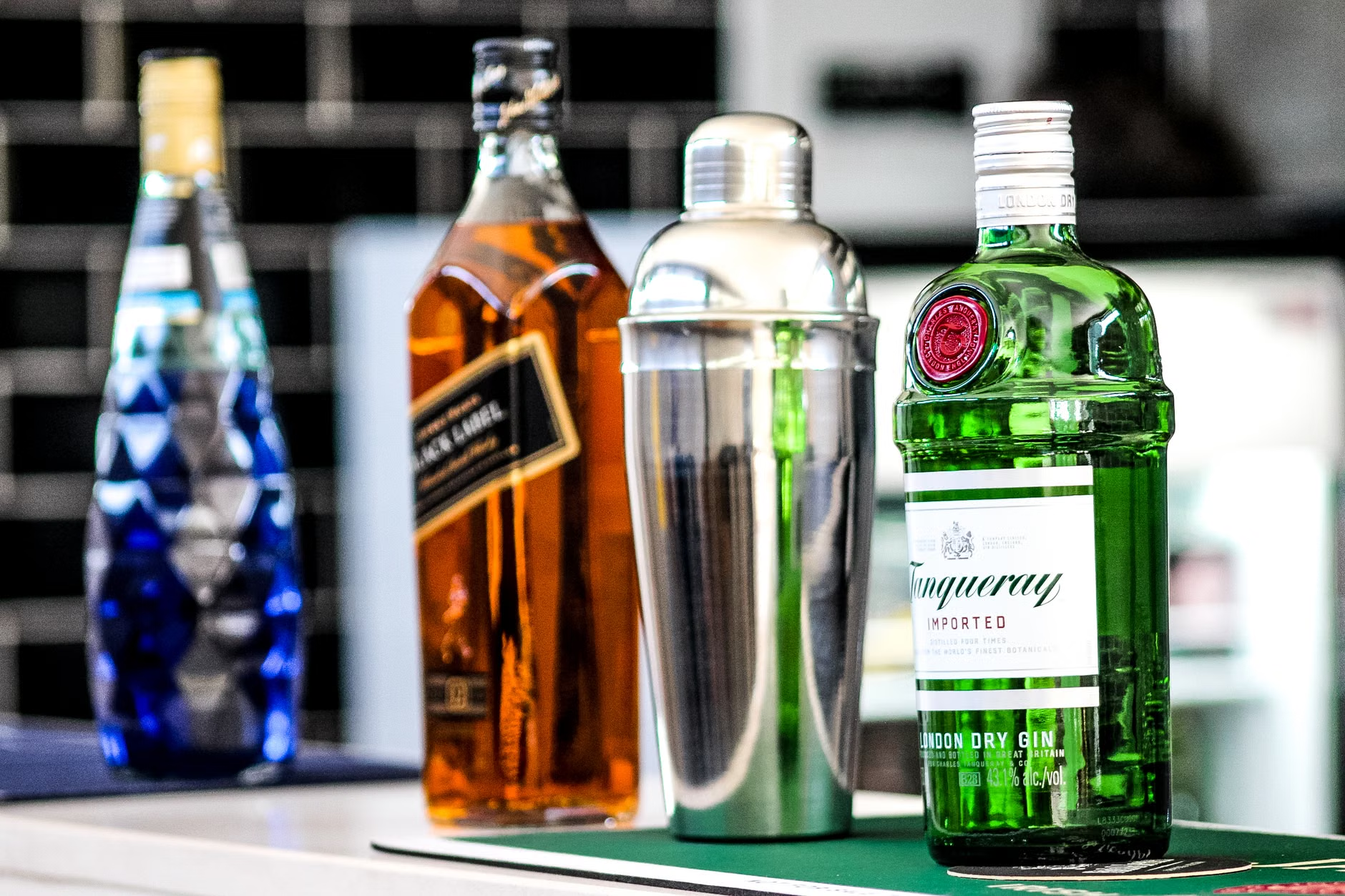
There is a common misconception that zero-proof hosting is cheaper because you aren’t buying wine or spirits. This is often false. Premium non-alcoholic spirits can cost as much as mid-range gin or vodka. Because these are often smaller-batch, specialized products, the price per bottle is high.
However, the value proposition is different. When you buy a $40 bottle of non-alcoholic spirit, you are paying for the R&D that went into creating a complex flavor profile without the ethanol. For your 30s and 40s budget, consider this a “quality over quantity” investment. You don’t need a massive bar cart. You need three solid, versatile bottles that can be mixed in different ways.
The “BYOB” Dilemma
What happens when a guest asks, “Can I bring my own wine?” This is the most common point of contention. If your event is strictly zero-proof for personal reasons (e.g., recovery or health), be firm but kind: “We’re keeping the evening focused on these non-alcoholic pairings, so we’d love for you to just bring yourself and enjoy the menu we’ve planned.”
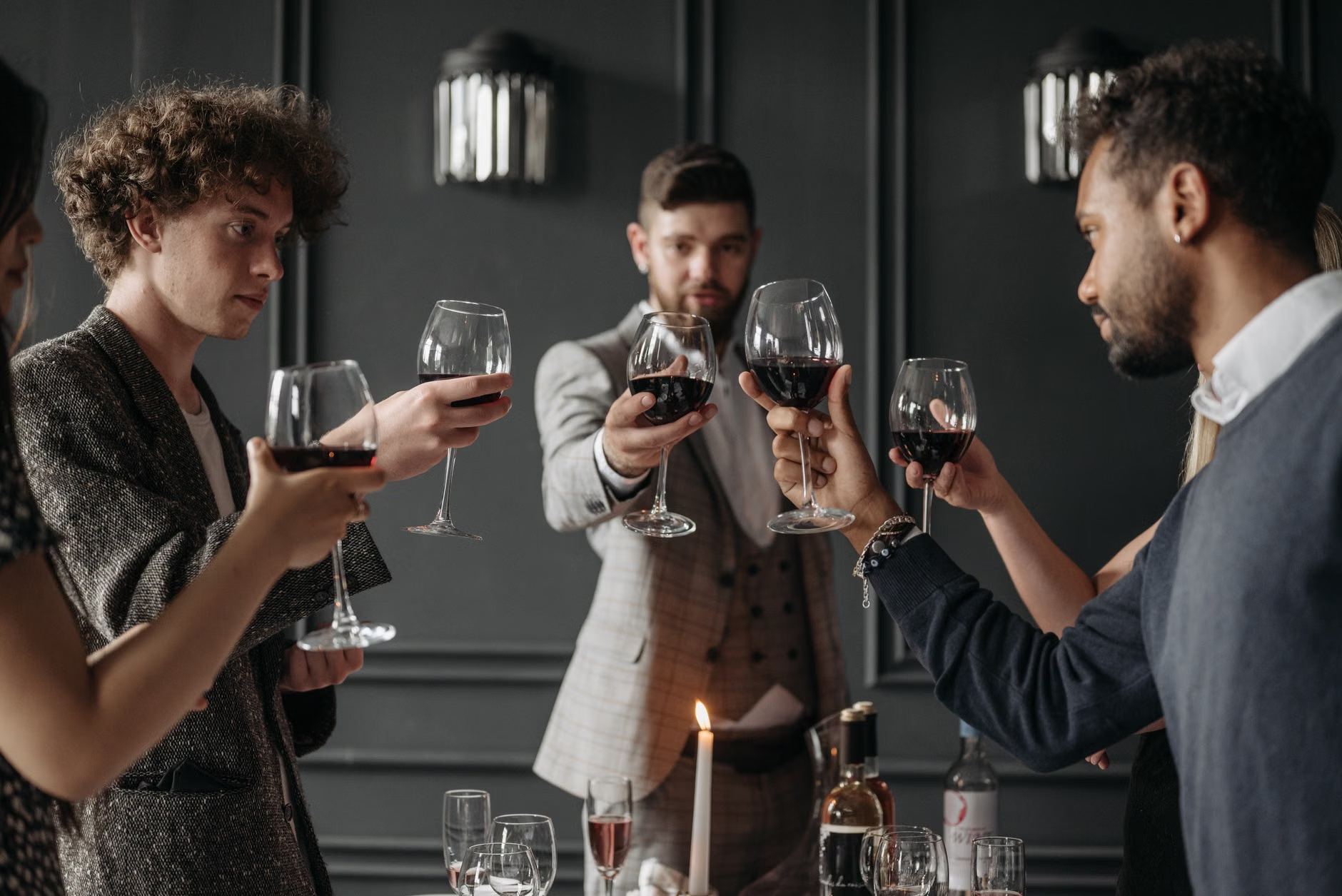
If you are simply experimenting with a zero-proof theme, you might choose to be flexible. However, if you want the “zero-proof” experience to work, you need the environment to be cohesive. If half the table is drinking wine and the other half is drinking mocktails, the “ritual” of the evening remains split. It is perfectly acceptable to host an event where you specify, “We’re going entirely alcohol-free for this dinner to try out some new pairings.”
Creating Atmosphere Without the “Buzz”
When the alcohol is removed, the pacing of the conversation changes. You might notice that things feel a little “quieter” or more intentional. This is a good thing. Without the blurring effect of alcohol, people are more present. As the host, you are the conductor of this energy.
To keep the social momentum going:
- Curate the Environment: Alcohol often covers up poor lighting or awkward silences. Without it, you need to be more mindful of the “vibe.” Invest in warm, dimmable lighting and a playlist that evolves with the evening.
- Keep the Hands Busy: People like to have something to do with their hands. An interactive component—like a “build your own garnish” bar or a small plate of finger foods—keeps guests engaged.
- Pacing is Key: In a standard party, people naturally slow down as they drink. With non-alcoholic beverages, people might drink faster because the drinks are refreshing. Ensure you have plenty of ice and high-quality sparkling water on hand so the “flow” of the evening isn’t interrupted by a lack of supply.
Planning Your First Zero-Proof Gathering: A Step-by-Step Guide
If you have never done this, don’t try to reinvent the wheel for a 20-person dinner party. Start small. Invite four friends over for a “tasting” night. Use this as your test run.
Step 1: The Inventory. Purchase one “spirit” (e.g., a non-alcoholic gin alternative), one “shrub,” and a variety of high-quality tonics or sparkling waters. This is your foundation.
Step 2: The Glassware. Use your best glassware. It sounds trivial, but the weight of a heavy crystal glass in the hand is a sensory signal that says “this is an event.”
Step 3: The Garnish. This is where the magic happens. A slice of lemon is fine, but a sprig of slapped rosemary (to release the oils), a dehydrated grapefruit wheel, or a star anise pod makes a drink feel like a $15 cocktail.
Step 4: The Narrative. When you serve the first drink, tell them what it is. “This is a botanical blend with notes of juniper and coriander, paired with a tonic that has a hint of cinchona bark.” You are inviting them into the complexity, not just giving them a glass of liquid.
Advanced Insights: The “After-Dinner” Slump
One overlooked variable in zero-proof hosting is the “after-dinner” phase. Usually, when the wine runs out, the party ends or shifts. Without alcohol, you might find that guests are more alert and energized. Have a plan for the final hour. This could be a transition to a high-quality coffee or loose-leaf tea service, or perhaps a different kind of activity (a board game, a focused conversation, or even a walk if the weather permits).
Don’t be afraid to end the night earlier than a traditional “boozy” party. Because your guests aren’t drinking, they might actually be more aware of the time. This is a feature, not a bug. Respecting your guests’ time is the ultimate mark of a good host.
Common Misconception: “Zero-proof means it tastes like water.” If your drinks taste like water, you haven’t used enough bitters or botanical density. If a drink is too thin, add a dash of orange bitters or a splash of non-alcoholic amaro to give it the “stiffness” it needs.
Finally, remember that your confidence as a host is the most important ingredient. If you act like you are providing a premium, thoughtful experience, your guests will perceive it as exactly that. If you act like you are “missing” something, they will feel that absence too.
Frequently Asked Questions
1. Will my friends be annoyed if I don’t serve alcohol?
Most people in their 30s and 40s are actually quite relieved to have a break. If you provide a high-quality alternative that feels intentional, most guests will appreciate the effort. If you are worried, you can always mention the “zero-proof” theme when you send the invite so people know what to expect.
2. Are non-alcoholic spirits safe for everyone?
While most non-alcoholic spirits contain 0.0% ABV, some “dealcoholized” wines or beers may contain trace amounts (up to 0.5% ABV). If you are hosting guests who are in recovery or have specific health requirements, always check the label of the specific bottle you are buying to ensure it meets your needs.
3. Where can I find good recipes for these drinks?
Instead of generic “mocktail” searches, look for “non-alcoholic mixology” or “botanical infusion” recipes. Websites like The Alcohol-Free Cocktail or professional bartender guides often provide the best techniques for layering flavors. Focus on learning the “ratios” rather than memorizing recipes.
Hosting without alcohol is a skill, and like any skill, it gets better with practice. Start with one or two well-executed drinks, focus on the presentation, and enjoy the fact that your guests—and you—will wake up the next morning feeling refreshed and connected.