The smartest way to handle home maintenance in your 30s and 40s isn’t to build a professional-grade workshop in your garage, but to borrow the tools you need through a community tool library.
- Significant Cost Savings: Borrowing specialized tools like power washers or tile saws can save you hundreds of dollars per project, as these items often cost $200+ to purchase but only a fraction to rent.
- Reclaiming Living Space: By utilizing a community library, you effectively outsource your tool storage, allowing you to reclaim valuable square footage in your garage or basement.
- Environmental & Social Impact: Tool libraries promote a circular economy, reducing the carbon footprint associated with manufacturing and shipping rarely used household goods.
If you are in your mid-thirties or forties, you likely know the feeling: you have a minor home repair, a sudden DIY urge, or a seasonal project like power-washing the deck. You head to the hardware store, spend an hour browsing aisles, and end up dropping $150 on a tool you will use exactly once every three years. That tool then spends the next 1,094 days gathering dust in a corner, taking up space that could be used for your child’s bike or a proper workspace.
This is where the community tool library (or “Library of Things”) changes the game. It functions exactly like a book library, but instead of novels, you check out sanders, ladders, circular saws, and gardening equipment. It is a practical, low-cost, and sustainable solution to the “I’ll probably need this later” syndrome.
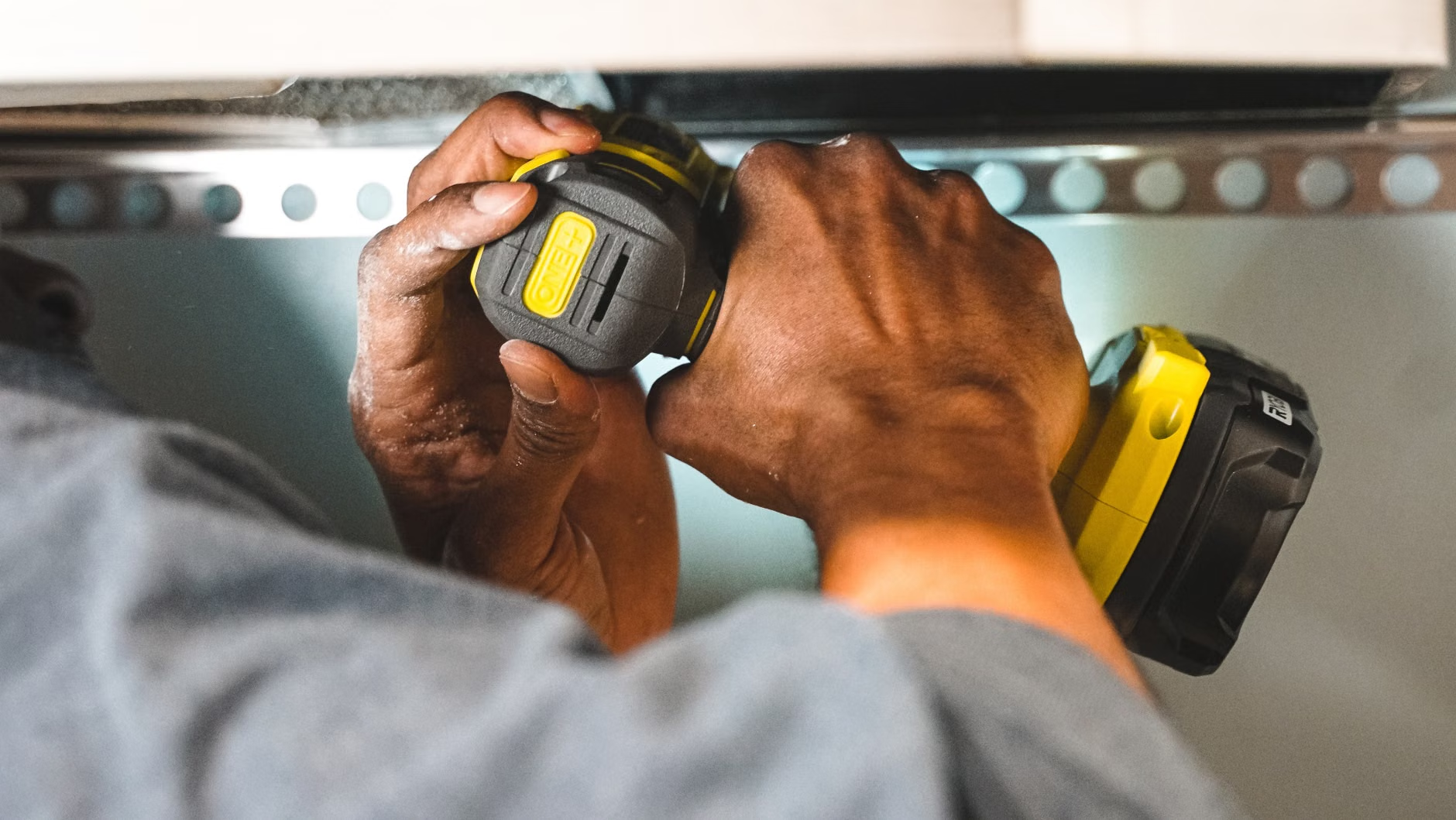
Why Owning Every Tool Is a Financial and Spatial Trap
Many of us fall into the trap of “just-in-case” ownership. We buy a heavy-duty drill set, a miter saw, and a wet-dry vacuum because we fear being unprepared. However, the hidden costs of ownership are rarely accounted for in our monthly budgets. Beyond the initial purchase price, you are paying for the storage of these items. If you live in an urban area where your square footage is priced at a premium, that dusty tile saw in the corner of your garage is essentially an expensive piece of furniture you never use.
Furthermore, tools degrade. Batteries lose their charge over time, metal parts rust if not maintained, and rubber components dry out. When you finally decide to use that tool you bought five years ago, you often find it needs a new battery or a repair, costing you even more time and money. Community tool libraries solve this by centralizing maintenance. The library staff ensures that tools are calibrated, cleaned, and properly stored, meaning you get a functional, high-quality tool every time you check one out.
Consider the math for a typical annual home project cycle:
| Tool | Avg. Purchase Price | Library Rental Fee | Savings |
|---|---|---|---|
| Power Washer | $250 | $15 (annual fee) | $235 |
| Miter Saw | $350 | $15 (annual fee) | $335 |
| Carpet Cleaner | $200 | $15 (annual fee) | $185 |
| Total | $800 | $15 | $785 |
The “savings” column isn’t just money; it is also the space you didn’t have to sacrifice. For a household in their 30s and 40s balancing the demands of work and parenting, this efficiency is invaluable.
How to Locate and Evaluate a Local Tool Library
Not every town has a formal “Tool Library,” but many communities have “Libraries of Things” housed within public library systems or neighborhood non-profits. To find one, start by searching for “Tool lending library near me” or “Library of things [Your City Name].”
When evaluating a potential library, check for these three criteria:
- Inventory Depth: Does the library carry both power tools and specialty items (e.g., plumbing snakes, tall ladders, gardening equipment)?
- Maintenance Standards: Ask how often tools are tested. A good library will have a visible maintenance log or a policy for checking functionality before and after every loan.
- Accessibility: Are the hours compatible with your schedule? Many community-run libraries have limited weekend hours, which can be a bottleneck for busy parents.
If your local public library doesn’t have a tool section, consider if there is a local “Maker Space” or a community college workshop that offers membership. These spaces often provide access to industrial-grade equipment that you could never justify buying for home use, such as table saws, welding gear, or CNC machines.

The Practical Steps to Borrowing Your First Tool
Once you have identified a library, the process is usually straightforward. However, there are nuances that can save you frustration.
1. Register and Verify Eligibility: Most community tool libraries require proof of residency. Some are restricted to specific neighborhoods, while others serve the entire city. Bring a utility bill or driver’s license.
2. Understand the Lending Agreement: This is a legal contract. It will outline your responsibility for damage or loss. Always inspect the tool at the counter before leaving. If the power cord is frayed or a blade is dull, point it out immediately. Do not assume the person at the desk knows the current state of every item.
3. The “Test Drive”: Before you start your actual project, ensure the tool works for your specific task. If you are borrowing a sander, do you have the right sandpaper grit? Does the library provide it, or do you need to bring your own? Never assume consumables (drill bits, sandpaper, blades) are included.
4. Respect the Return Window: This is the most critical part of community participation. Tool libraries rely on the honor system. If you keep a tool past its due date, you are preventing another neighbor from completing their project. If you find you need more time, call the library 24 hours in advance. Most are happy to renew the loan if there isn’t a waitlist.
Common Mistakes to Avoid
The most common mistake is overestimating your project speed. If you plan a weekend project, don’t check out the tool on Friday night if you aren’t starting until Saturday morning. You are essentially paying for “idle time.”
Another mistake is failing to ask for a demonstration. If you are checking out a tool you have never used, ask the librarian for a quick 2-minute run-through. Most tool library staff are volunteers with significant DIY experience. They are often eager to share tips, safety advice, and “hacks” that you won’t find in the user manual.
Finally, avoid the “everything or nothing” approach. You don’t need to borrow every tool for a project. If you have a reliable cordless drill, keep using it. Only borrow the specialized, high-cost, or bulky items. Mixing your own basic kit with borrowed specialty items is the sweet spot for efficiency.
Hidden Benefits: Community and Sustainability
Beyond the obvious financial gains, these libraries foster a sense of community. You meet neighbors who are working on similar projects. I once saw a fellow member at a local library who was struggling to figure out how to install a new kitchen faucet. Another member overheard, offered advice, and even lent him a specific wrench that made the job 10 times easier. This is the “human capital” that comes with shared resources.
Furthermore, sustainability is a major factor. The “stuff” we buy contributes significantly to environmental degradation. By sharing, we maximize the utility of every tool, reducing the demand for new production. For parents, this is also a practical lesson to teach children about consumption and stewardship of resources.
Final Strategy for Your Home Projects
To make this work for your life, create a “Project Queue.” Before you start any home improvement task, list the tools you need. Check your own inventory first. Then, check the library’s online catalog to see what is available. If you don’t have it and the library does, reserve it.
If you find that you are borrowing the same tool every single month, that is your signal to buy it. At that point, you have proof that the tool is an essential part of your life and justifies the storage space and cost. But for everything else—the wallpaper steamer, the heavy-duty stapler, the tall ladder—the library is your best friend.
Start small. Next time you think about buying a tool, pause. Visit your local library’s website. You might be surprised by what you find.
Frequently Asked Questions
Q: What if I break a tool while borrowing it?
A: Most libraries expect minor wear and tear. However, if you break a tool due to misuse or negligence, you are usually expected to cover the cost of the repair or replacement. Always check the specific liability policy of your local library before signing the membership agreement.
Q: Are the tools at a community library safe to use?
A: Generally, yes. Libraries have an incentive to keep their tools in good working order to ensure safety and longevity. However, always perform a visual check of the cord, the blade, and the housing before you use any tool. If it looks dangerous, return it and report it.
Q: How do I find out if my city has a tool library if it isn’t listed on major search engines?
A: Try searching for “Tool lending [Your City Name]” or check the website of your local municipal government or public library system. Sometimes, these services are listed under “Community Services” or “Sustainability Initiatives” rather than being advertised as a separate business.
For more information on the global movement of tool libraries, you can research resources from the Local Tools network, which provides software and support for these community initiatives.