- The 20-Minute Buffer: Implementing a non-negotiable 20-minute transition period prevents the “after-school restraint collapse” by allowing children to decompress before moving to chores or homework.
- Sensory Regulation is Key: Most after-school outbursts are physiological, not behavioral; addressing hunger, hydration, and sensory overstimulation immediately is more effective than discipline.
- The “Drop-Zone” Protocol: Physically separating the school environment from the home environment through a designated “landing pad” for bags and uniforms helps the brain signal that the school day is officially over.
The most effective way to end the daily after-school chaos isn’t better discipline or stricter rules; it is a structured 20-minute transition ritual that acts as a physical and mental buffer between the school day and home life.
If you are in your 30s or 40s, you likely know the drill: the moment your child walks through the door, the “after-school restraint collapse” begins. They have spent six or seven hours following rules, sitting still, and managing social pressures. By the time they hit your living room, their internal battery is at 0%, and they are ready to explode over something as trivial as the color of a snack plate. This isn’t a personality flaw; it is a biological reaction to sustained self-regulation.
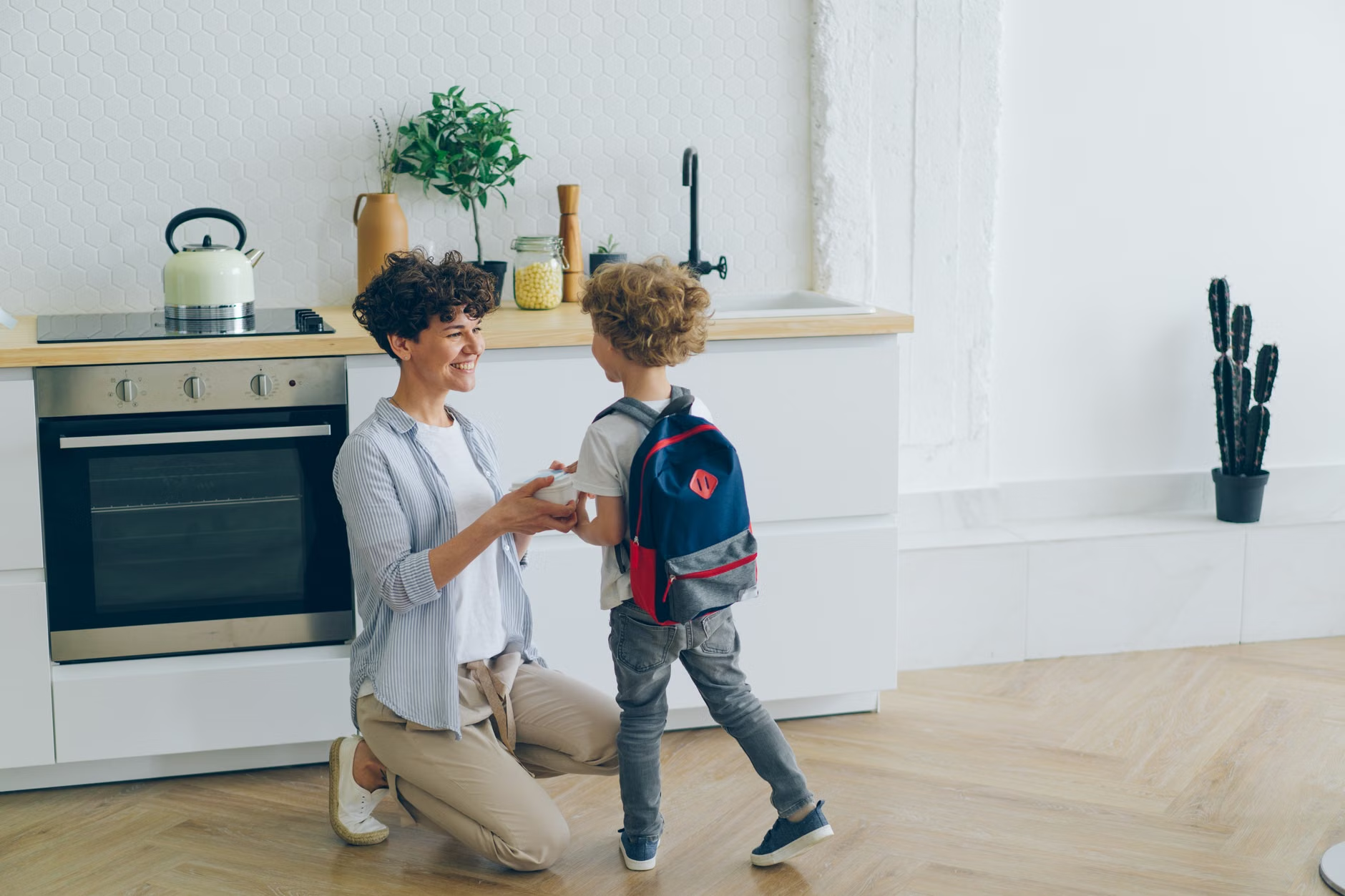
Why Your Child “Explodes” When They Get Home
Children—and to some extent, adults—operate on a finite reservoir of self-regulation. In psychology, this is often referred to as “ego depletion.” During the school day, your child is constantly suppressing impulses: they don’t talk when the teacher is speaking, they sit in a chair instead of running, and they navigate complex social hierarchies. When they walk through your door, they feel safe enough to finally let go of that suppression. The home is their “safe space” to release the tension they have been holding all day.
The mistake most parents make is trying to transition immediately from “school mode” to “home responsibilities.” When you ask, “How was your day?” or “Did you finish your math homework?” the moment they walk in, you are essentially asking them to perform more cognitive labor when they have none left to give. The 20-minute transition ritual is designed to bridge this gap, allowing the nervous system to shift from a “fight, flight, or freeze” state of school performance to a “rest and digest” state of home comfort.
The Anatomy of a Successful Transition
A transition ritual must be predictable, low-demand, and sensory-focused. It should look the same every day so that the brain doesn’t have to spend energy processing “what comes next.” If the routine is fluid or changes based on your mood, the child remains in a state of high-alert, waiting to see what is required of them next.
A successful protocol generally follows this sequence:
- The Physical Landing: Removing the school “armor” (backpacks, shoes, blazers).
- The Sensory Reset: Changing into comfortable clothing and immediate hydration/fueling.
- The Buffer Time: 15–20 minutes of “low-demand” activity where no questions are asked.
Step 1: The “Landing Pad” Protocol
The environment dictates behavior. If a child walks into a room where their school bag is a constant reminder of unfinished work, the transition never truly happens. Establish a “Landing Pad”—a specific area near the entrance that is only for school gear. This is not just about organization; it is a psychological boundary.
By placing the backpack in a dedicated spot, the child is performing a physical act of “closing” the school day. You can reinforce this by using a simple mantra or action. For younger children, a high-five or a specific phrase like “School is off, home is on” can be surprisingly powerful. For older children, simply having a shelf where the tech and books disappear is sufficient.
Common mistakes here include leaving bags in the middle of the hallway or asking questions while the child is still trying to unzip their bag. If you find yourself nagging, stop. If the bag isn’t in the right place, address it after the 20-minute transition, not during the critical “de-armoring” phase.

Step 2: The Sensory Reset (The “Fueling” Phase)
After-school irritability is frequently a symptom of low blood sugar. Schools often have rigid lunch times, and many children eat their lunch at 11:00 AM or 11:30 AM. By 3:30 PM, they are physically depleted. The “snack” should not be a negotiation. It should be a pre-set, nutritious option that is ready when they arrive.
Avoid high-sugar snacks that cause a spike and a subsequent crash. Instead, focus on protein and healthy fats. Think of this as the “reset button” for their metabolism. If you have a child who struggles with sensory overload, consider the temperature and texture of the snack. A cold glass of water or a crunchy apple can provide the sensory input needed to ground them in their physical body.
| Stage | Duration | Objective | Action |
|---|---|---|---|
| The Landing | 2–3 mins | Physical separation | Drop bag, change shoes, wash hands. |
| The Fueling | 5–7 mins | Biological reset | High-protein snack and water. No talking. |
| The Buffer | 10–15 mins | Nervous system calm | Low-demand activity (reading, drawing, LEGO). |
The table above is a framework, not a rigid law. If your child prefers to sit in silence for 20 minutes without a snack, that is fine. The key is the consistency of the “low-demand” nature of the time.
Step 3: Managing the “Buffer” Without Demands
The most difficult part for parents in their 30s and 40s is the silence. We are often eager to connect, to hear about their day, or to get the homework process started. However, the 20-minute buffer is a “no-demand zone.” This means no questions about grades, no reminders about chores, and no interrogation about their social life.
If you find that your child is agitated, suggest a low-demand activity. For some, this is listening to a podcast or audiobook while drawing. For others, it is playing with kinetic sand or simply lying on the floor. The goal is to lower the heart rate. If they want to talk, let them lead. If they don’t, respect the silence. By giving them this space, you are teaching them how to self-regulate, a skill that will serve them far better than a completed math worksheet.

Why This Matters for Your Own Mental Load
As a parent, you are also transitioning. You might be coming home from work, transitioning from a remote office, or finishing household management tasks. If you are also in a high-stress state, you will be unable to hold the space for your child’s transition. This is why the 20-minute ritual is as much for you as it is for them.
When you have a set routine, you don’t have to “think” about what to do when they get home. You have a script. This reduces your own decision fatigue. If you are feeling overwhelmed, use the 20-minute buffer to engage in your own transition. Put on a podcast, make a cup of tea, or do a quick chore that requires no thought, like folding laundry. By modeling the act of “winding down,” you show your children that transitions are a normal part of life.
Addressing Common Misconceptions and Edge Cases
One common misconception is that “giving in” to their need for space makes them lazy. In reality, the opposite is true. Children who are allowed to decompress are more capable of handling the cognitive load of homework later. When you force a child to do homework while they are in a state of emotional dysregulation, you are creating a negative association between “learning” and “stress.”
What if your child is an extrovert who needs to talk immediately? This is an edge case. If your child is “high-energy” and needs to vent, allow them to do so, but maintain the “no-demand” rule. Listen without offering advice. If they are just processing their day, they don’t need your input; they need your witness. The moment you start offering solutions to their problems, you turn the “buffer” into a “problem-solving session,” which is a high-demand activity.
Another potential issue is technology. Many parents allow “screen time” as the default after-school decompressor. While this is effective at stopping an immediate outburst, it often prevents the actual nervous system regulation that is needed. Screens provide high-stimulation dopamine hits that keep the brain in a state of engagement rather than rest. If you must use screens, opt for low-stimulus content like documentaries or slow-paced shows, or better yet, save screen time for after the homework window.
The Hidden Cost of Ignoring the Transition
Ignoring the need for a transition often leads to the “evening grind.” This is the period between dinner and bedtime where everything takes twice as long, tensions are high, and everyone is exhausted. By investing 20 minutes in the afternoon, you are effectively buying back two hours of peace in the evening. This is a high-return investment. The time you “lose” in the afternoon is reclaimed through higher efficiency and lower stress later in the day.
Consider the cumulative effect. If you have five school days a week, that is 100 minutes of planned transition time. Over a school year of 36 weeks, that is 60 hours of dedicated, intentional calm. This structure changes the culture of your home. It shifts the dynamic from “policing” your child to “supporting” your child.
Implementation Framework: A Step-by-Step Guide
If you want to start this tomorrow, do not announce it as a “new family rule.” Children, especially pre-teens and teens, often resist top-down changes. Instead, introduce it as an experiment. Tell them, “I’ve noticed we’re all a bit stressed when we get home. I’m going to try something different to help us all relax. For the first 20 minutes, I’m not going to ask you to do anything, and I’m going to focus on my own quiet time, too.”
Follow these steps for the first week:
- Day 1-2: Focus on the “Landing Pad.” Ensure the physical space is ready.
- Day 3-4: Introduce the “no-demand” rule. If you feel the urge to ask about their day, bite your tongue.
- Day 5: Assess. Ask your child, “Does it feel better to have that bit of quiet time when you first get home?”
If you encounter resistance, identify the cause. Are they hungry? Is the house too loud? Is there a transition barrier, like a sibling fighting for space? Adjust the environment, not the child. The goal is to create a rhythm that feels like a relief, not a chore.
The Role of Environment and Lighting
The physical environment plays a massive role in how we perceive the end of the day. As the afternoon light fades, our circadian rhythms begin to signal that it is time to wind down. If your home is brightly lit with overhead fluorescent lights, it can keep the brain in “work mode.” Try to dim the lights or use lamps as the sun goes down. This subtle environmental cue supports the transition from the busy, bright, high-stimulus environment of school to the cozy, lower-stimulus environment of home.
Also, consider the auditory environment. Is the TV on? Is there loud music? For a child with sensory processing sensitivities, a calm afternoon environment is critical. This doesn’t mean the house needs to be a library; it just means that the background noise should be conducive to settling down, not ramping up.
Sometimes, the after-school explosion is not just about fatigue; it is about anxiety. If your child is struggling with a specific teacher, subject, or peer issue, the “after-school restraint collapse” may be a sign of deeper distress. The 20-minute transition ritual doesn’t fix the school issue, but it gives your child the emotional bandwidth to eventually talk to you about it. When they are calm, they are much more likely to open up about why they are struggling.
If you suspect the behavior is related to school anxiety, keep a log of the outbursts. Are they worse on specific days? Are they worse after specific subjects? This data will be invaluable if you need to speak with teachers or school counselors. However, do not use the 20-minute transition time to analyze this. Keep the transition time sacred. Use the evening or a weekend time to discuss school issues.
Final Thoughts on Consistency
The beauty of a ritual is that it becomes automatic. Eventually, your child will walk in, drop their bag, grab a snack, and head to their room or their favorite chair without you saying a word. That is the goal. You are building a habit of self-regulation that will last a lifetime. In a world that is increasingly fast-paced and demanding, knowing how to intentionally transition between “doing” and “being” is perhaps the most valuable skill you can teach your child—and yourself.
Start small. Don’t worry if it doesn’t work perfectly on the first day. It takes time for the nervous system to learn that it is safe to let down its guard. Stay the course, keep the boundaries clear, and trust that the calm you are fostering today will pay dividends in your family’s well-being for years to come.
Frequently Asked Questions
Q: What if my child refuses to follow the transition ritual?
A: Focus on the “why” rather than the “what.” If they refuse to put their bag away, acknowledge their state: “I see you’re exhausted and it’s hard to move right now. Let’s just sit for a minute, and then we can deal with the bag.” Usually, once the initial physiological storm passes, they are much more willing to follow the structure.
Q: Can this work for teenagers?
A: Absolutely. In fact, it is often more important for teens. The “no-demand” rule is the most critical component for this age group. Teens are under immense pressure to perform; giving them 20 minutes of “non-performance” time is a gift they will rarely get elsewhere.
Q: What if I have multiple children with different needs?
A: The ritual should be individual but held in a shared space. If one child needs to read and another needs to draw, that is fine. The common thread is the “no-demand” zone. You don’t need to force them to do the same activity, just the same transition timeframe.
For further reading on child development and nervous system regulation, you can explore resources from the Child Mind Institute, which offers evidence-based insights into managing emotional regulation in children of all ages. Additionally, the American Psychological Association provides extensive research on the cognitive impact of ego depletion and the importance of restorative rest.