The most effective way to end sibling conflict isn’t by deciding who is right or wrong, but by shifting your role from a judge to a facilitator who teaches your children to solve their own disputes.
Three Key Takeaways
- Stop the “Judge” Trap: When you decide who is “guilty,” you remove the child’s incentive to develop empathy or negotiation skills.
- The 3-Step Mediation Framework: Use the “Stop, State, Solve” method to guide children through conflicts without imposing your own solutions.
- Focus on Process, Not Outcome: The goal isn’t to reach a perfectly fair solution immediately; it is to build the neural pathways for self-regulation and compromise.
If you have more than one child, you likely know the specific, high-pitched sound of a sibling argument starting from the other room. It usually starts with a toy, a perceived “unfair” turn, or a difference of opinion on what to watch on TV. Your immediate instinct—and mine—is to rush in, gather the facts, determine the culprit, and issue a verdict. It’s the “Judge” approach, and it is the primary reason why your children keep coming back to you for every single disagreement.
By constantly acting as the mediator, you are inadvertently teaching your children that they are incapable of solving their own problems. You are also creating a dependency where they view you as the ultimate source of justice. This isn’t just exhausting for you; it’s a missed developmental opportunity for them.
Why Your Current Mediation Style Might Be Backfiring
In our 30s and 40s, we are often juggling work, household management, and the emotional labor of parenting. When a fight breaks out, we want a quick fix. We want silence. So, we impose a compromise: “Give your brother the truck for ten minutes, then it’s your turn.”
While this ends the noise, it fails to teach the “why” or the “how” of conflict. Here is why the “quick fix” model is a long-term liability:
- External Locus of Control: Children learn that peace is something you force upon them, not something they create themselves.
- The “Victim-Perpetrator” Dynamic: When you assign blame, one child feels like the “bad” one, which often leads to resentment and future retaliation.
- Lack of Skill Acquisition: They aren’t learning how to express their needs or listen to the needs of another; they are only learning how to wait for your ruling.
The alternative is the Sibling-Mediation Roleplay. This is not about letting them fight it out; it is about providing the structure for them to navigate the conflict while you act as a “neutral coach.”
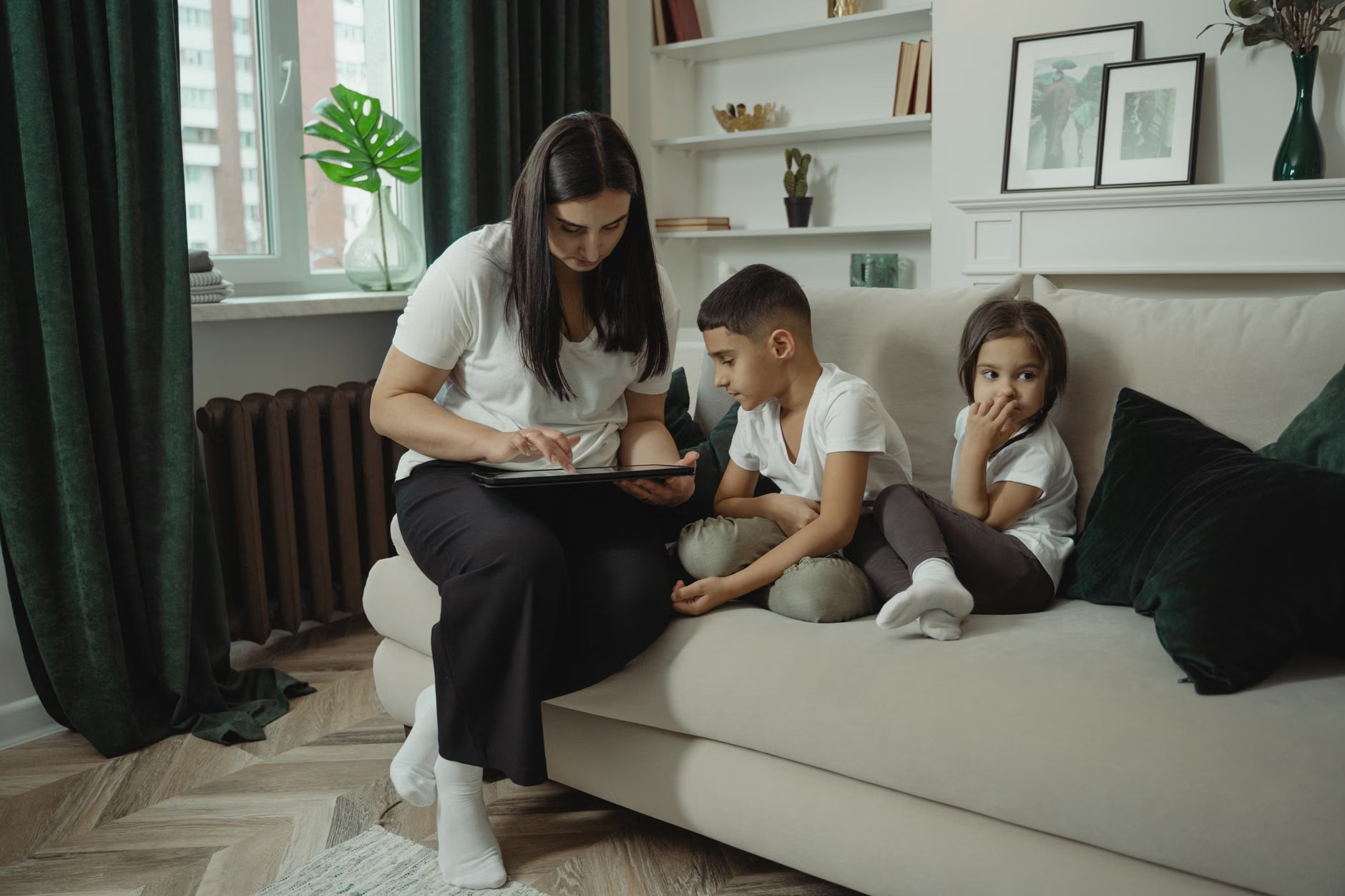
The “Stop, State, Solve” Framework
To move away from being a judge, you need a repeatable process. When the shouting starts, do not rush in to fix it. Instead, intervene only to ensure safety and then guide them through these three distinct phases.
Phase 1: Stop (Regulate)
Conflict triggers a fight-or-flight response. If a child is screaming, their prefrontal cortex—the part of the brain responsible for logic and empathy—is effectively offline. You cannot negotiate with a dysregulated child.
The Action: Separate the children if they are physically aggressive. Say, “I see you are both very upset. We are going to take a moment to calm down before we talk about this.” Do not force them to talk yet. Let them take five minutes to breathe or engage in a quiet activity. This is not a punishment; it is a prerequisite for communication.
Phase 2: State (Identify the Need)
Once calm, bring them together. Your role here is to ensure each child feels heard without you interjecting your opinion. Use the “I-Message” format. Ask Child A to explain what happened, and then ask Child B to repeat back what they heard.
Common Mistake: Allowing them to interrupt each other. Use a physical object, like a “talking stick” or a soft ball, to control the floor. If they start blaming (“He hit me!”), gently redirect: “Tell me what you needed in that moment instead of what he did.”
Phase 3: Solve (Brainstorming)
This is where the magic happens. Instead of you saying, “You share the toy,” ask, “What are some ways we can make sure everyone gets a turn?”
The Strategy: Write their ideas down. Even the silly ones. If they suggest, “We cut the toy in half,” write it down. Then ask, “What happens if we do that?” Let them realize the consequences. Often, they will come up with a solution that is fairer than what you would have imposed because they have “skin in the game.”
Creating a Sustainable Environment for Conflict Resolution
Mediation shouldn’t just happen during the heat of the moment. You need to build the infrastructure for it during times of peace. If you wait until a crisis to teach these skills, you are setting yourself up for failure.
The “Calm-Down” Corner
Create a dedicated space in your home—not a time-out chair, but a “reset” zone. It should have soft textures, maybe a book, or a sensory fidget toy. Explain to your children: “This is a place to go when your body feels too big and your voice feels too loud.” By making this a proactive choice rather than a punitive exile, you teach them to recognize their own emotional cues.
Visual Anchors
Children in the 4-to-10 age range benefit immensely from visual aids. A simple chart on the wall that outlines the steps of “How to Solve a Problem” acts as a neutral third party. When a fight starts, you can simply point to the chart instead of lecturing.
| Step | What to Say | Why it Works |
|---|---|---|
| 1. Stop | “We are all too upset to talk.” | Prevents escalation and physical harm. |
| 2. State | “What do you need right now?” | Validates feelings without assigning blame. |
| 3. Listen | “Can you repeat what she said?” | Builds empathy by forcing active listening. |
| 4. Solve | “How can we fix this together?” | Develops problem-solving and negotiation. |
When using this table, realize that consistency is your biggest hurdle. In the first few weeks, your children will resist. They want you to make the decision because it’s easier. Stick to the script. If they refuse to participate, the consequence is simply that the item or activity causing the conflict is removed until they are ready to talk. This isn’t a punishment; it’s a logical consequence of being unable to share.
The Hidden Variables: Why Some Children Struggle More
Not all conflict is created equal. Understanding the nuance helps you tailor your approach. Are they fighting for attention? Is one child naturally more impulsive? Are they hungry or tired?
The “Attention” Variable: Often, sibling rivalry is actually a competition for the parent’s attention. If you notice a pattern where fights happen precisely when you sit down to work or talk to your partner, the conflict is a tool for connection—even if it’s negative connection. The solution here is to provide “proactive attention” before the fighting starts, rather than “reactive attention” when it breaks out.
The “Power” Variable: A child who feels they have no control over their day (school, chores, bedtime) will often use their sibling as a target for their frustration. Giving them choices in other areas—what to wear, what to eat, which chore to do—can lower the baseline tension in the household.

Common Misconceptions and Troubleshooting
One of the biggest misconceptions is that the goal of mediation is to have two happy, smiling children who agree immediately. This is unrealistic. Sometimes the solution is, “I get the toy for 15 minutes, then you get it,” and one child is still annoyed because they wanted it now. That is okay.
Troubleshooting: The Child Who Refuses to Negotiate
If a child consistently refuses to engage in the “State and Solve” process, you have to shift your strategy. This usually means they are testing your boundaries. In these cases, use the “When-Then” rule: “When you are ready to use your words and come up with a solution, then we can talk about the toy. Until then, the toy stays in the closet.” This puts the responsibility back on them.
Troubleshooting: The Age Gap
If you have a 3-year-old and an 8-year-old, the mediation process looks different. The 8-year-old can articulate needs; the 3-year-old cannot. You will need to “translate” for the younger child. “Your brother is frustrated because he wants the block you are holding. Can we show him where the other blocks are?” This provides the 8-year-old with a model for how to handle the younger sibling without resorting to force.
Data-Driven Insights on Conflict Resolution
Research into child development consistently shows that conflicts between siblings are actually “laboratories” for social and emotional learning. According to studies on sibling interaction, children who learn to negotiate during these disputes show higher levels of emotional intelligence and social competence in their peer groups outside the home. By removing yourself as the absolute arbiter, you aren’t just saving your sanity; you are essentially acting as a tutor for their future social lives.
However, there is a caveat: parental intervention is necessary when the power dynamic is abusive or when bullying is present. Mediation is for disagreements between relative equals. If you see a consistent pattern of one child dominating or harming the other, this is no longer a “sibling dispute” that requires mediation; it requires a direct parental intervention to set firm boundaries on safety and respect.
Actionable Steps for This Week
Don’t try to change your entire household dynamic overnight. Start with these three steps this week:
- Audit your reactions: For the next three days, count how many times you intervene in a fight. Just count. Don’t change your behavior yet. This will give you a baseline of how often you are acting as the “Judge.”
- Introduce the concept: During a quiet moment (not during a fight), tell your kids: “I’ve noticed I jump in too quickly when you guys argue. From now on, I’m going to help you solve it together instead of deciding for you.”
- Practice with low-stakes scenarios: If they are arguing over something trivial, like which color plate to use, use the “State and Solve” method then. It’s easier to practice when you aren’t feeling stressed.
The Long-Term Perspective
Parenting in your 30s and 40s often feels like a series of fires to be extinguished. It is easy to view sibling rivalry as just another fire. But if you can reframe these moments as opportunities for your children to build the cognitive and emotional muscles they will need as adults—negotiation, empathy, self-regulation, and patience—you will find yourself feeling less like a referee and more like a mentor.
The goal isn’t a house without conflict; the goal is a house where conflict is handled with maturity, calm, and respect. It takes time, and there will be days when the volume goes back up, but every time you step back and ask, “How can you two solve this?” you are giving them the tools to handle the much bigger conflicts they will face in the real world.
Stay consistent, keep your own voice calm, and remember that your role is to guide the process, not to provide the answer. Your peace of mind is worth the extra effort it takes to teach them these skills.
Frequently Asked Questions
1. Does this mean I should never intervene, even if they are screaming?
Not at all. You must intervene if there is physical danger or bullying. Your intervention should be to stop the behavior and ensure safety, but once the immediate danger is gone, shift to the mediator role rather than the judge role.
2. What if they just keep yelling and won’t talk?
If they cannot calm down, the “solution” is that they need space. Explain that you will be available to help them solve the problem as soon as they are ready to talk calmly. By removing the audience (you), you often find that the intensity of the conflict drops significantly.
3. Is it fair to expect a young child to negotiate?
It is not about expecting them to be perfect negotiators. It is about exposing them to the process. Even a 3-year-old can understand “I want it” and “You want it.” The more you walk them through the logic, the more they will internalize the habit of considering the other person’s perspective.
For further reading on child development and conflict resolution, you can refer to resources from the American Psychological Association on Parenting, which offers evidence-based insights into managing family dynamics.