Transforming your urban balcony into a “nature-play” sanctuary is the most effective way to provide your children with daily outdoor sensory experiences without leaving your home. By prioritizing structural safety, choosing non-toxic vegetation, and creating modular play zones, you can turn a neglected concrete slab into a thriving ecosystem that supports child development and your own mental well-being.
- Safety First: Structural integrity and height-appropriate railings (minimum 1.2 meters) are non-negotiable; always install high-tensile safety netting if gaps exceed 10cm.
- Sensory-Led Design: Focus on “nature-play” by selecting plants with varying textures (lamb’s ear, lavender) and incorporating water or sand elements that require minimal cleanup.
- The 70/30 Rule: Dedicate 70% of your balcony space to modular, movable elements to ensure you can still use the area for laundry or evening relaxation once the kids are asleep.
If you live in a high-rise, you know the “balcony struggle.” It’s often used as a graveyard for empty delivery boxes, a drying rack for wet clothes, or a storage unit for things you’ll “eventually” sort out. But for parents in their 30s and 40s, this square footage is a goldmine. Nature-play—a pedagogical approach that emphasizes unstructured interaction with the natural world—doesn’t require a backyard. It requires a balcony and a shift in perspective.
The Structural Audit: What Your Balcony Can Actually Handle
Before you buy a single bag of potting soil, you need to treat your balcony like a construction site. Most residential balconies are designed to hold a certain amount of weight (dead load vs. live load), but they aren’t always built for heavy permanent landscaping. A common mistake is overloading one corner with large, ceramic pots filled with wet, heavy soil.
Step-by-step structural assessment:
- Check your local building code: In many urban centers, the standard balcony load capacity is approximately 2.0 to 3.0 kN/m² (kilonewtons per square meter). This includes furniture, people, and pots.
- Use lightweight materials: Swap heavy ceramic for high-density resin or fabric grow bags. Fabric bags are excellent for urban balconies because they are lightweight, breathable, and can be folded away in winter.
- Distribute the weight: Place your heaviest items (like a wooden bench or a large planter) against the wall shared with the building, rather than against the railing. This is where the balcony is best supported by the structure.

The Non-Negotiables of Child Safety
When children are involved, “good enough” isn’t good enough. If you have a glass or metal railing, your primary concern is the climbing potential. Kids are natural explorers, and a chair placed near a railing becomes an instant ladder. Keep all furniture at least 50cm away from the edge. If your railing has horizontal bars, these act as a ladder. You must cover them with a vertical barrier—plexiglass or high-tensile safety netting—to prevent climbing.
Decision Rule: If you cannot guarantee that your child cannot reach the top of the railing via a “step” (like a planter or chair), you must remove the step or install a permanent barrier. Never rely on supervision alone when dealing with heights.
Curating the Nature-Play Experience: Beyond Just “Plants”
Nature-play is about interaction. A balcony filled with ornamental plants that you “can’t touch” is a museum, not a playground. You want a “touch-and-feel” garden. This engages a child’s tactile senses and helps them understand the lifecycle of growth.
Plants that thrive in small, child-friendly spaces:
| Plant Type | Why it’s great for kids | Maintenance Level |
|---|---|---|
| Lamb’s Ear (Stachys byzantina) | Incredibly soft, tactile foliage. | Low |
| Cherry Tomatoes | Fast-growing, edible reward. | Moderate |
| Snapdragons | “Interactive” flowers that talk when squeezed. | Low |
| Mint / Lemon Balm | Strong scent, hardy, easy to propagate. | Very Low |
When selecting plants, avoid anything with sharp thorns (roses, certain cacti) or those that are toxic if ingested. While most common balcony plants are safe, it is always worth checking your local poison control center’s database—many common plants like Oleander or certain lilies are highly toxic.
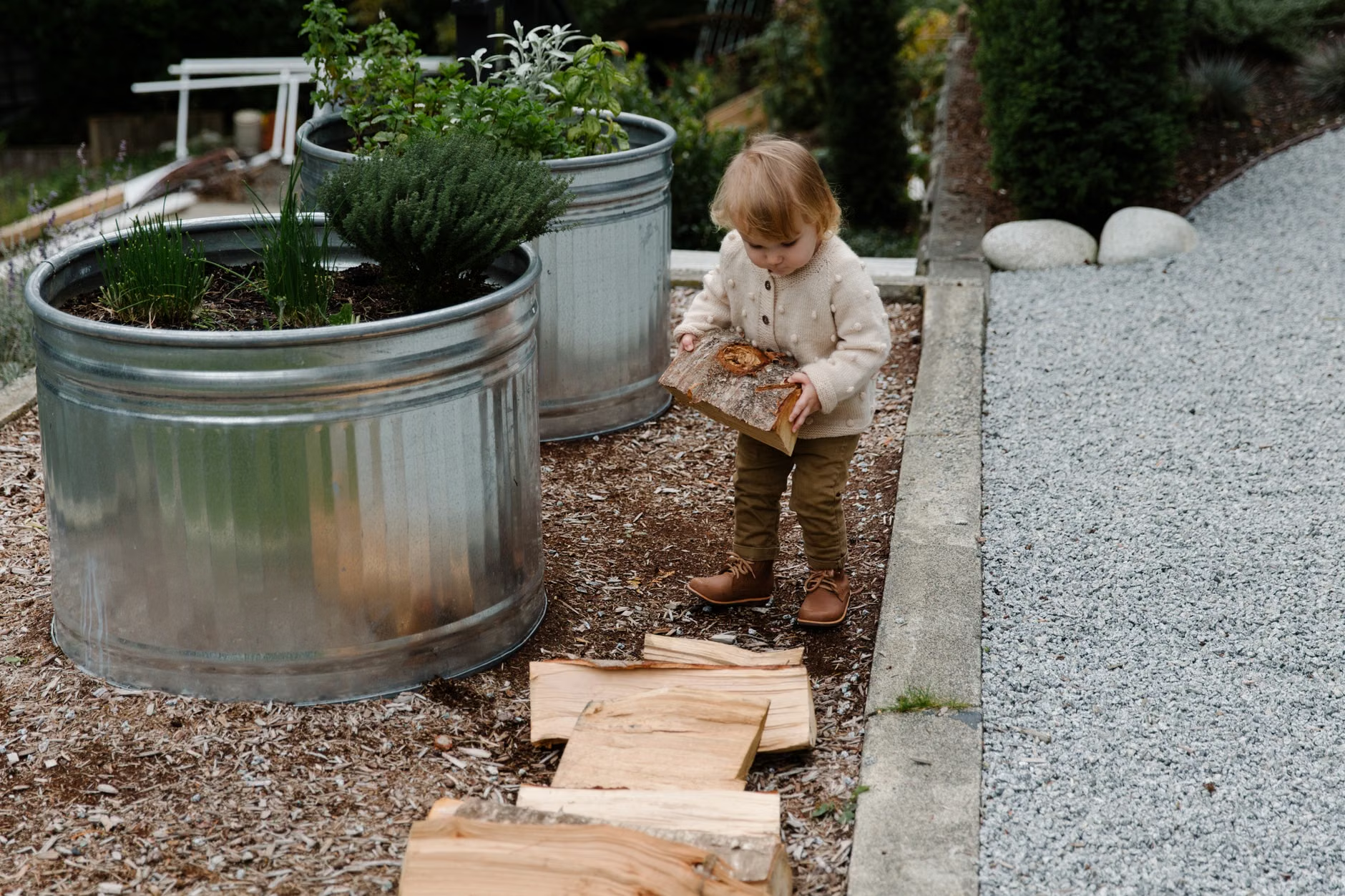
Building a Sensory Station
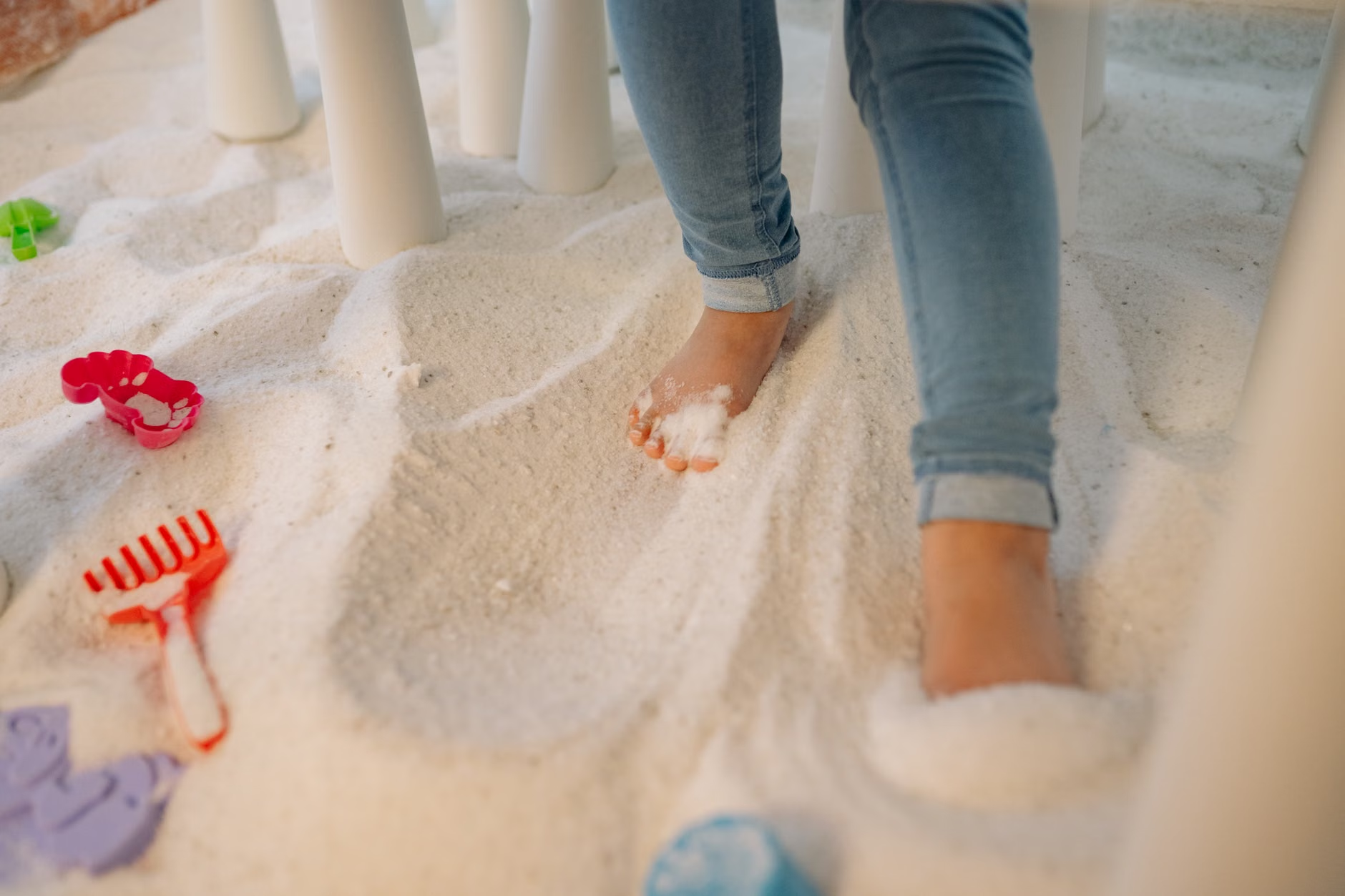
If you have the space, a sensory station is the “holy grail” of balcony play. This doesn’t need to be fancy. A simple plastic bin filled with a mix of dried chickpeas, kinetic sand, or smooth river stones provides hours of quiet, focused play. Add a few kitchen utensils—a ladle, a sieve, a small bucket—and you have a “mud kitchen” without the actual mud.
The “Less Mess” Trick: Use a large, shallow tray (often sold as a boot tray or a painter’s tray) to contain the sensory materials. This keeps the mess confined to the tray rather than all over your balcony floor or, worse, falling off the edge.
Managing the Urban Environment: Wind, Sun, and Pests
Urban balconies are often “micro-climates.” You might be on the 10th floor with high winds, or in a “canyon” of tall buildings with only two hours of direct sunlight. Understanding your specific environment is the difference between a thriving garden and a collection of dead stems.
Common Mistakes in Urban Balcony Gardening:
- Ignoring Wind Shear: High winds dry out plants rapidly and can topple lightweight pots. If you live above the 5th floor, use heavier pots or secure them to the floor with simple brackets.
- Over-watering: Because of the intense heat trapped by concrete, many people over-water. Always check the soil moisture with your finger (up to the second knuckle) before watering. If it’s damp, leave it alone.
- Ignoring Vertical Space: You only have so much floor space. Use wall-mounted pockets or hanging baskets to move the garden upward. This creates a “green wall” effect that blocks noise and adds privacy.
For parents in their 30s and 40s, time is the scarcest resource. Do not aim for a perfect garden. Aim for a “resilient” garden. Choose native species that are adapted to your local climate; they will require less water and fertilizer than exotic varieties, making them more likely to survive if you miss a watering session during a busy week.
The Daily Maintenance Framework
How do you actually integrate this into a hectic life? You treat it like a chore, not a hobby. If it becomes a “project,” it will fail. Make the maintenance part of your child’s daily routine.
A Simple 5-Minute Routine:
- Morning (The “Check-In”): While your coffee is brewing, take the kids out. Check the soil, remove any dead leaves, and “feed” the plants. This teaches responsibility and observation.
- Evening (The “Reset”): Before heading inside for dinner, ensure the play items are back in their bins. This prevents the “clutter creep” that makes balconies feel small and overwhelming.
If you travel, consider a simple self-watering spike or a drip irrigation kit. These are surprisingly affordable (often under $30) and can be connected to a simple timer. This allows you to go away for a long weekend without coming back to a balcony of dead plants.
Why This Matters for Your Family
The benefits of nature-play are well-documented. Exposure to “green spaces,” even on a small scale, reduces cortisol levels, improves concentration, and fosters a sense of wonder. For a child living in an urban environment, the balcony is often their first introduction to the concept of stewardship—the idea that they are responsible for the life and health of another living thing.
Furthermore, it changes how you experience your own home. A balcony that is a “room” rather than “storage” effectively increases your living space. In a city where square footage is expensive, reclaiming those 3 to 5 square meters is a significant quality-of-life upgrade.
Beyond the Basics: Overlooked Variables
There are two things people rarely talk about: noise pollution and light pollution. If your balcony faces a busy street, consider installing a sound-dampening feature. A simple outdoor rug can absorb a surprising amount of sound, and the soft texture is much better for a child’s knees than cold, hard concrete. Also, if you use your balcony at night, swap harsh white LED lights for warm-toned, low-lumen solar lamps. This creates a cozy, “night-time nature” environment that is much more relaxing for everyone.
Finally, consider the legal and strata aspects. If you live in a building with a homeowners’ association or strata council, check your bylaws before making any permanent changes. Most buildings allow for pots and furniture, but some restrict structural additions or specific types of lighting. It is always better to check the rules first than to be asked to remove your hard work later.
Frequently Asked Questions
1. How do I keep my balcony garden alive if I have very little direct sunlight?
Many plants thrive in partial shade. Focus on leafy greens like lettuce, spinach, or kale, and foliage plants like ferns or hostas. These require less direct sunlight than flowering plants and are very forgiving for beginners. Avoid plants that require “full sun” (like tomatoes or peppers) unless you can supplement with grow lights, which is generally not practical for a balcony.
2. Is it safe to use soil on a high-rise balcony?
Yes, provided you use professional-grade potting mix. Avoid “garden soil” or dirt dug up from a local park, as these are too heavy, drain poorly, and can contain pests or diseases. Potting mix is formulated to be lightweight and well-draining, which is essential for container gardening. Always ensure your pots have drainage holes at the bottom to prevent root rot.
3. How do I protect my child from bees or other insects attracted to the plants?
It is a common misconception that a balcony garden will be “swarming” with insects. While bees will visit, they are generally focused on the flowers and are not aggressive unless threatened. To minimize interaction, place flowering plants further away from the primary play area and stick to herbs or non-flowering plants in the immediate vicinity of the sensory zone. Most children learn to respect these insects quickly with a bit of guidance.
Moving Forward
Your balcony isn’t just a place to store things you don’t use; it’s an extension of your home and a vital piece of your family’s daily environment. Start small—perhaps with one vertical planter and a single sensory bin. Observe how your children interact with it, and expand only when you feel the space is being used effectively. The goal isn’t to build a show-garden; it’s to build a space that invites curiosity, encourages movement, and provides a much-needed breath of fresh air in the middle of the city.
For more information on safe gardening and child-friendly plant selections, you can consult resources like the Royal Horticultural Society (RHS) for plant-specific guidance or your local regional agricultural extension office for climate-appropriate advice.