- Financial ROI: Repairing a $150 pair of quality trousers costs roughly $5 in materials and 30 minutes of time, yielding a significantly higher return than replacing them with fast-fashion alternatives.
- The “Invisible” vs. “Visible” Choice: Choose invisible mending for professional office wear, but embrace “visible mending” (Sashiko or embroidery) for casual items to turn flaws into unique style statements.
- Maintenance > Repair: The most effective repair strategy is preventative care, such as air-drying garments instead of using high-heat tumble dryers, which accounts for 70% of fabric degradation.
You have probably noticed that the clothes you bought five years ago seem to hold up better than the ones you bought last month. It isn’t just your imagination; the rise of ultra-fast fashion has shifted the industry toward disposable garments designed for a handful of washes rather than a lifetime of wear. For those of us in our 30s and 40s—juggling school runs, career demands, and the constant need to declutter—the “slow fashion” repair movement isn’t just a trend for hobbyists. It is a practical, financial, and mental health strategy for regaining control over your closet.
Why Repairing Outperforms Replacing in the Modern Economy
When a button pops off a shirt or a small hole appears in a sweater, the immediate instinct for most is to discard the item. We often tell ourselves, “It’s not worth the time to fix it,” or “I’ll just buy a new one for twenty dollars.” This is the core trap of the fast-fashion cycle. You aren’t just losing twenty dollars; you are losing the time it took to shop for the replacement, the environmental cost of production, and the quality of the original garment.
Consider the math: If you have a pair of high-quality denim jeans that cost $120, a professional tailor might charge $20 to mend a crotch blowout or replace a zipper. If you do it yourself, the cost is essentially zero. Even if you factor in the cost of a basic sewing kit, you are looking at a one-time investment of $25 that can handle dozens of repairs. By keeping that pair of jeans in rotation for an extra two years, you save the cost of at least one, if not two, new pairs of comparable quality.
Beyond the raw currency, there is the issue of fit. Finding a pair of trousers or a blazer that actually fits your body shape is difficult and time-consuming. Once you find that “perfect” item, it makes zero logical sense to discard it due to a minor structural failure. Repairing is the ultimate way to maintain a “capsule wardrobe” that actually works for your lifestyle.
Understanding the “Visible Mending” Trend
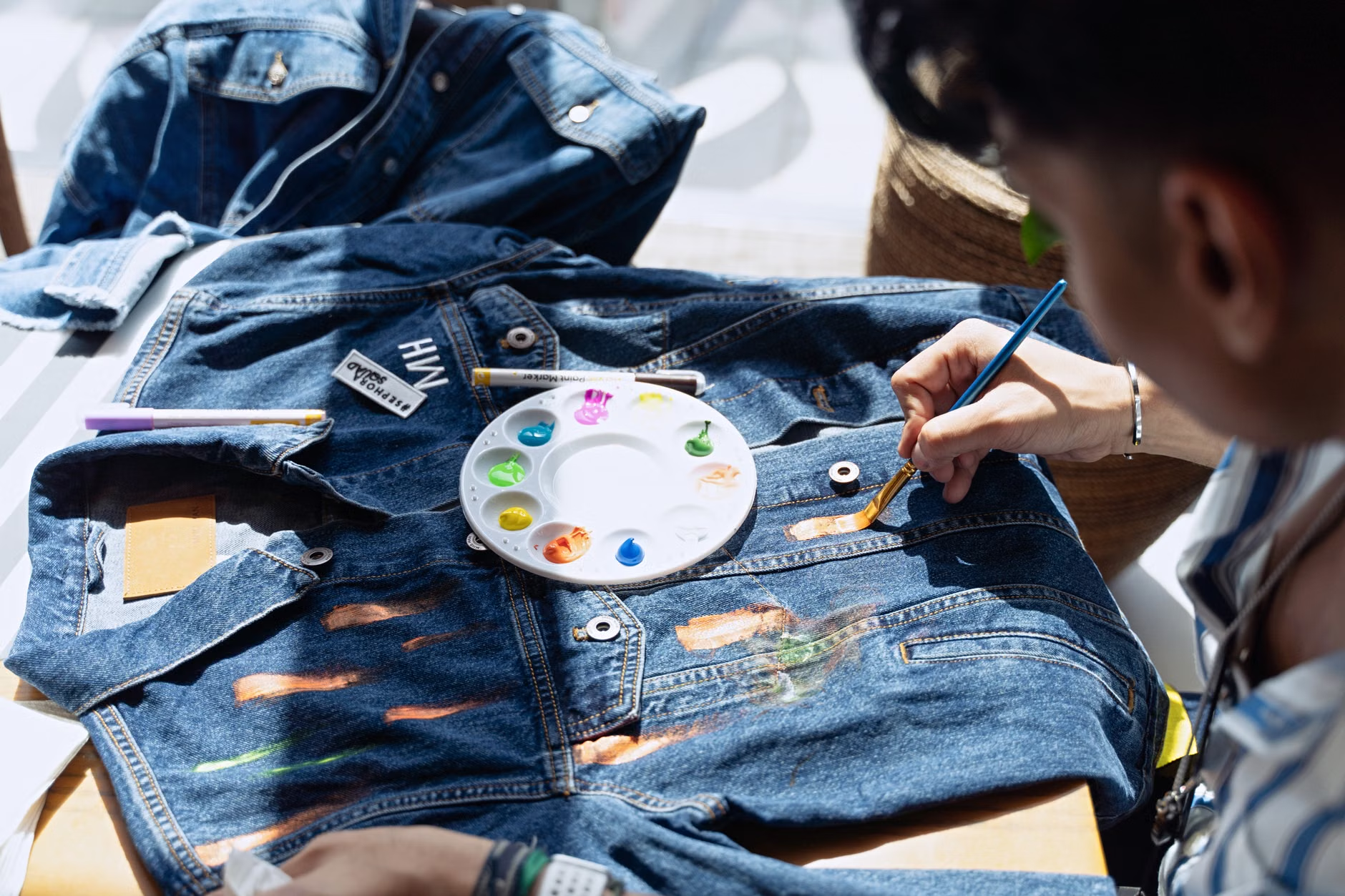
If you have scrolled through Instagram or Pinterest lately, you might have seen jeans with intricate, geometric stitching or jackets with colorful patches. This is “Visible Mending.” Unlike traditional repair, which aims to make the fix invisible, visible mending celebrates the history of the garment. It treats the tear not as a death sentence for the clothing, but as a canvas for customization.
For parents, this is a game-changer. Children are notoriously hard on clothing. Instead of throwing out a pair of knees-torn leggings or a sweater with a snag, you can use Sashiko—a Japanese embroidery technique—to reinforce the area. It makes the item stronger than it was when it was new, and it creates a unique aesthetic that mass-market brands try (and fail) to replicate.
When to choose visible vs. invisible:
| Context | Recommended Method | Why? |
|---|---|---|
| Business Professional | Invisible Mending | Maintains the sleek, uniform aesthetic required for office environments. |
| Casual / Weekend | Visible Mending | Adds personality and prevents future tears in the same spot. |
| Children’s Clothing | Visible Mending | More durable for high-activity play and easier to maintain. |
The Essential Toolkit for Beginners
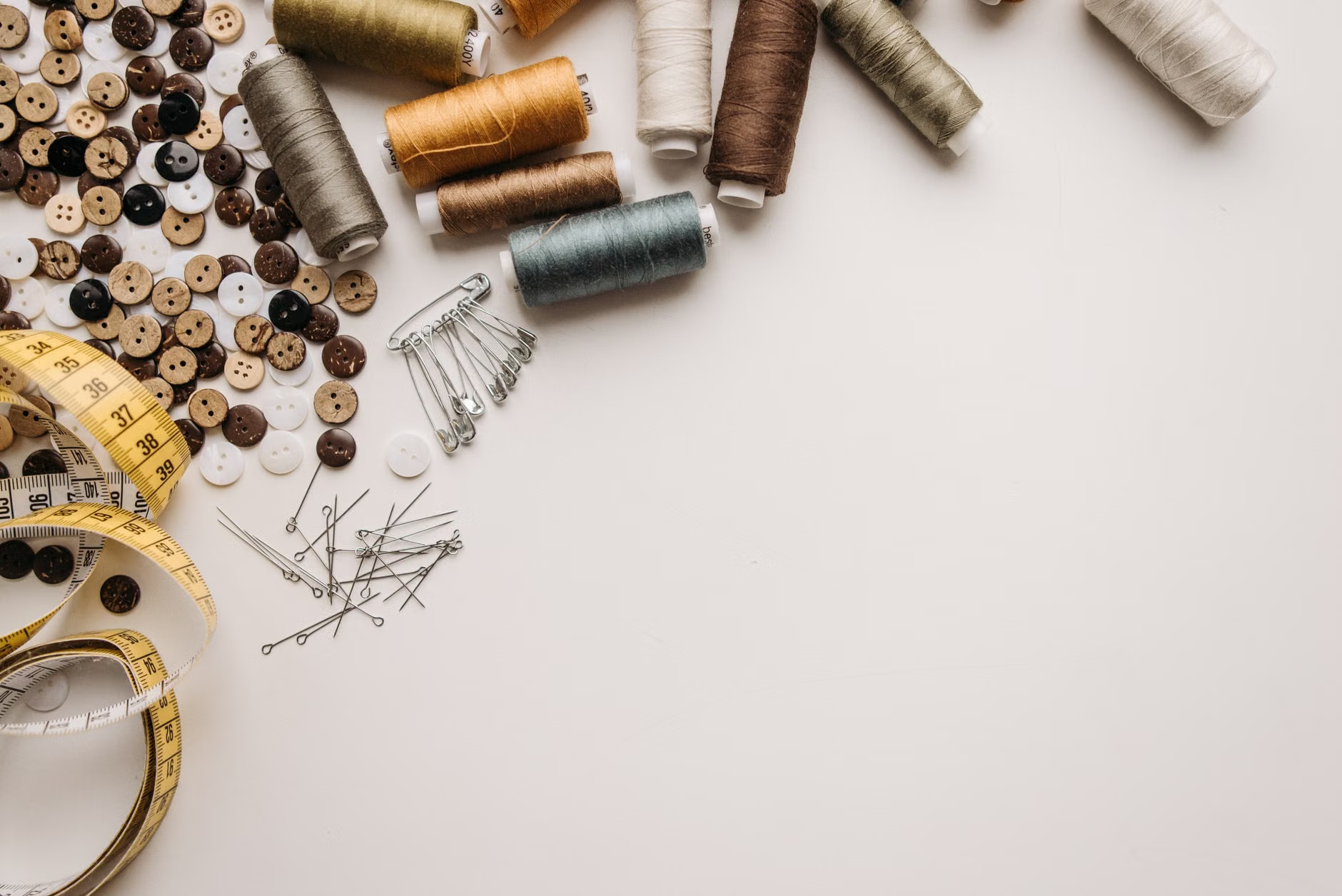
You do not need a sewing machine to participate in the slow-fashion movement. In fact, most of the most durable repairs are done by hand. The strength of a hand-stitched seam often exceeds that of a mass-produced machine chain stitch, which is designed to be fast and cheap, not long-lasting. To get started, you only need a few basic items.
The “Essential Five” for your home repair kit:
- High-quality fabric scissors: Never use these for paper. Dull scissors will fray your fabric edges, making a repair harder to execute.
- Assorted hand-sewing needles: Keep a mix of embroidery needles (for thicker threads) and sharps (for fine fabrics).
- Polyester-wrapped cotton thread: This offers the best balance of strength and ease of use. Avoid 100% cotton thread for repairs, as it can snap under the tension of high-movement areas like elbows or knees.
- A thimble: It sounds old-fashioned, but it allows you to push the needle through thick denim or canvas without hurting your finger.
- A seam ripper: This is the most important tool. It allows you to undo a bad stitch without damaging the fabric.
Preventative Care: Stopping the Damage Before It Starts
The most successful repair is the one you never have to make. Modern clothing often degrades because of how we wash and dry it. The heat of a tumble dryer is essentially a fabric destroyer. It breaks down elastic fibers in your leggings and strips the natural oils from cotton and wool, making the fibers brittle and prone to snapping.
If you want your clothes to last, the single most impactful change you can make is to stop using the high-heat setting on your dryer. Use an air-drying rack. It takes more space, yes, but it extends the life of a garment by an average of 40-60%. Furthermore, wash your clothes inside out. This reduces the friction against the surface of the fabric during the wash cycle, which is why your favorite dark jeans start to turn grey at the seams after just a few months.
Another common mistake is over-washing. Unless an item is visibly dirty or smells, you likely do not need to wash it after one wear. Spot-cleaning with a damp cloth or using a fabric freshener spray can often suffice for items like blazers, cardigans, or even denim. If you must wash, use a mesh laundry bag for delicate items to prevent them from getting tangled with zippers or buttons from other garments in the same load.
Involving the Family: Repair as a Life Skill
Teaching your children to repair their own clothes is one of the most practical life skills you can pass on. It moves them away from the “disposable” mindset. When a child understands how much effort goes into a single stitch, they treat their belongings with more respect. It is not about turning them into master tailors; it is about teaching them that items have value and that they have the agency to fix things when they break.
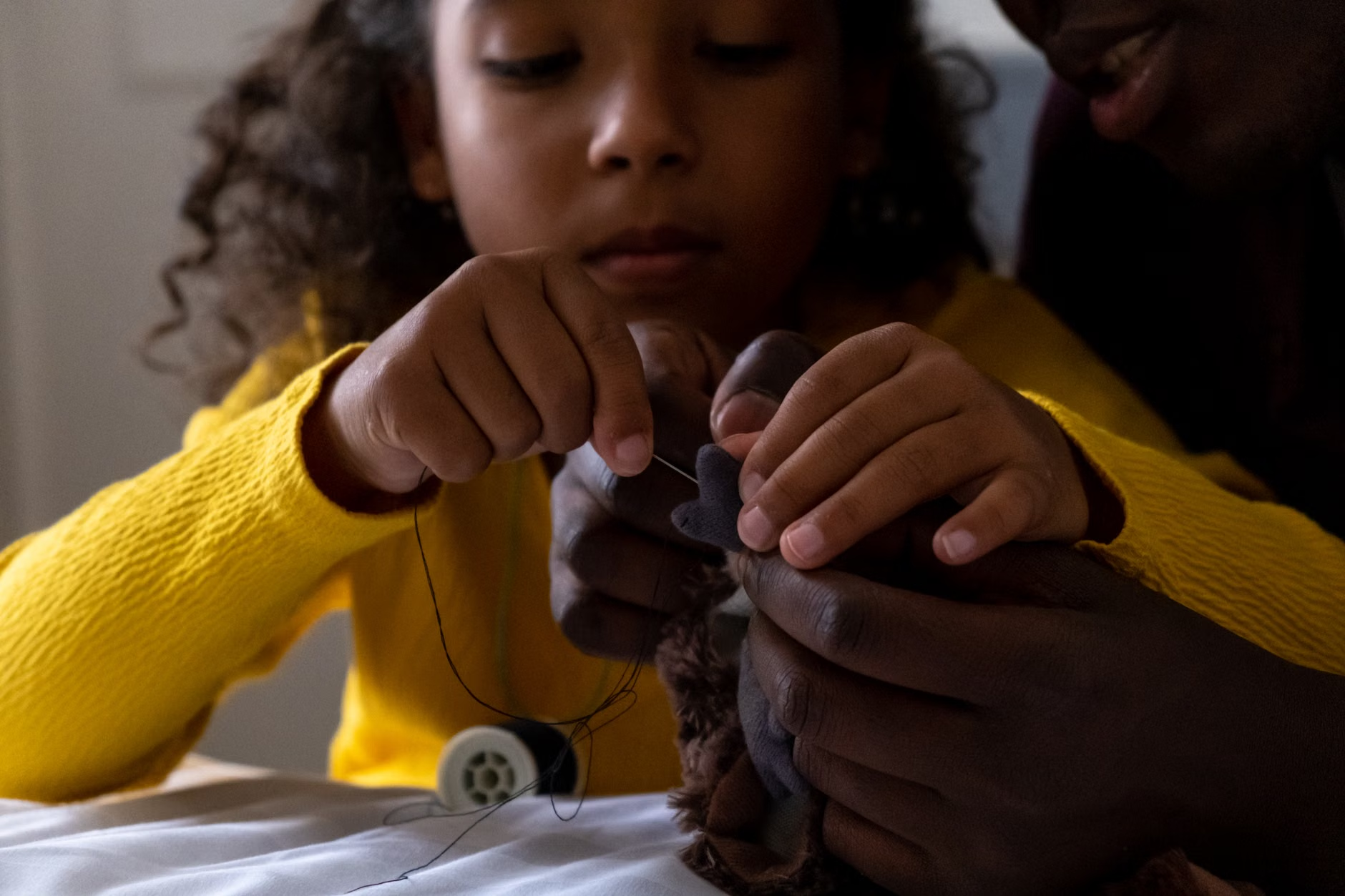
Start small. Let them choose their own buttons for a shirt that has lost one. Teach them to sew a simple running stitch on a scrap piece of fabric. Use this time as a “slow moment” in your week—no screens, just a quiet activity that yields a tangible result. It is a fantastic way to bond while simultaneously reducing the amount of textile waste your household generates.
Addressing Common Misconceptions
There is a persistent myth that “if you can see the repair, it’s a failure.” This is simply not true. While there are times when you want a repair to be invisible—like on a formal suit or a delicate silk blouse—there is no shame in a functional repair. A patch on the elbow of a sweater is not a sign of poverty; it is a sign of someone who values their things enough to keep them in service.
Another misconception is that you need a lot of time. If you wait until a pile of clothes needs mending, it becomes a chore. Instead, adopt the “one-item” rule. Keep your sewing kit in an accessible place, like a drawer in your living room. When you notice a loose thread or a missing button, fix it immediately. A single button takes less than three minutes to sew. If you do it in the moment, it never becomes a “project.”
There are times when a repair is beyond your skill level or requires specialized equipment, such as heavy leather work or complex tailoring. In these cases, finding a reliable local tailor is an investment. Do not look for the cheapest option; look for someone who has a reputation for “restoration” rather than just “hemming.”
When you take an item to a professional, be specific about your goals. If you want to keep the original hem of a pair of jeans, ask for “original hem” or “re-attached hem” service. If you have a high-end coat with a lining tear, ask if they can match the lining fabric. Being a knowledgeable customer helps the tailor provide the best service for your specific garment.
The Environmental Impact of Your Closet
The fashion industry is responsible for roughly 8-10% of global carbon emissions. A significant portion of this comes from the production of new items that are worn only a handful of times. By extending the life of your clothing by just nine months, you can reduce the carbon, water, and waste footprint of that garment by up to 30%. This is not just a lifestyle choice; it is a measurable contribution to a more sustainable future.
For those of us in our 30s and 40s, we are the generation that grew up as fast fashion took over the world. We have seen the shift from durable clothing to disposable trends. We also have the power to shift it back. By choosing to repair, we are voting with our time and our wallets against a system that relies on constant consumption.
Making the Decision: When to Repair and When to Recycle
Not everything can or should be repaired. If a garment is made of low-quality synthetic blends that are pilling, losing shape, and falling apart at multiple seams, it might be at the end of its life. In this case, do not just throw it in the trash.
Check if your local area has textile recycling programs. Many brands now offer take-back schemes, though be cautious—some of these are just “greenwashing.” Look for organizations that turn old textiles into insulation, carpet padding, or industrial rags. If the fabric is natural (cotton, wool, linen), it can often be composted if it is 100% organic, but check your local municipal guidelines first.
Decision Criteria for Repair:
- Is the fabric still structurally sound? If the fabric is thinning or “dry-rotting” (tearing like paper), it cannot be saved.
- Is the item a staple or a trend? Repair your high-quality basics; don’t waste time on cheap, trendy pieces that you no longer like.
- Does the repair cost exceed 50% of the item’s current value? If it does, consider if you truly love the item enough to pay the premium.
Practical Steps to Build Your Mending Habit
To integrate this into your life without it becoming another source of stress, follow these steps:
- Audit your closet: Once every six months, pull out the items you haven’t worn because they need a fix.
- Sort by difficulty: Put the “easy” ones (loose buttons, small holes) in one pile and the “hard” ones (lining tears, broken zippers) in another.
- Start with the easy pile: Dedicate 30 minutes on a Sunday afternoon to clear the easy pile while listening to a podcast or watching a show.
- Build your skills: Use resources like the Fashion Revolution website for tutorials on specific repair techniques.
The goal is not to be perfect. The goal is to be intentional. Every time you pick up a needle instead of a shopping app, you are reclaiming your autonomy from a system that wants you to be a perpetual consumer. You are saving money, you are keeping your favorite clothes in rotation, and you are teaching the next generation that “new” is not always “better.”
Frequently Asked Questions
1. Is it worth repairing cheap fast-fashion items?
Generally, no. If the fabric quality is poor, the garment will likely fail again in a different spot shortly after you repair it. Focus your repair efforts on natural fibers and high-quality construction that can withstand the stress of wear and washing.
2. I have no sewing experience. Where do I start?
Start by learning how to sew a button and how to do a “ladder stitch” (also known as an invisible stitch). These two skills alone will handle 80% of common household clothing repairs. There are thousands of free, high-quality video tutorials on YouTube that demonstrate these techniques in under five minutes.
3. How do I know if a tailor is good?
Ask for a small, simple job first, like hemming a pair of trousers. If they handle the fabric with care, respect the original seam finish, and give you a fair timeline, they are likely worth your business for more complex repairs later on. Avoid tailors who suggest using glue or tape for “quick fixes.”
Start small, be patient with your progress, and remember that every item you save is a victory. Happy mending.
Official Resources and Further Reading: