You do not need an entire library or a dedicated home office to reclaim your attention in a world dominated by endless digital notifications. The most effective way to carve out an “offline-reading” space in a small apartment is to prioritize vertical storage, sensory isolation, and a strict “no-screen” rule for that specific zone, regardless of your total square footage.
- The 1-Meter Rule: You only need one square meter of floor space to establish a functional, ergonomic reading nook that separates you from the chaos of household chores.
- Sensory Zoning: Use lighting and physical barriers, like curtains or room dividers, to signal to your brain that this area is exclusively for “offline” tasks, not for doom-scrolling or work.
- Verticality is Mandatory: In apartments smaller than 50 square meters, floor space is premium; use wall-mounted lighting and floating shelves to keep the ground clear for your legs.
If you are in your 30s or 40s, balancing the demands of parenting, a career, and the general “always-on” nature of modern life, you know the feeling of being perpetually scattered. We often blame the apartment size for our lack of focus, thinking, “If only I had a study, I would read more.” But the reality is that the physical environment is only half the battle. The other half is creating a psychological boundary. When you build a nook, you are building a trigger for your brain to switch into “analog mode.”
Defining the “Offline” Requirement: Why Proximity Matters
The biggest mistake people make when designing a reading corner is placing it too close to their primary “work” or “entertainment” hubs. If your reading chair faces your television or sits within arm’s reach of your laptop, your brain will struggle to transition into deep reading. The goal is to create a “friction-based” barrier against digital interference.
Why does this matter? Research into cognitive load suggests that the mere presence of a smartphone, even if it is turned over, reduces available cognitive capacity. By placing your reading nook in a “dead zone” of your apartment—a corner that receives little foot traffic and is physically turned away from your workstation—you are reducing the willpower required to stay off your phone.
Consider the “Scenario of the Distracted Parent.” If you put your nook in the living room, you will be interrupted by toys, laundry, and the hum of the TV. If you place it in a corner of the bedroom or a quiet hallway, you create a physical threshold. When you cross that threshold, you leave the “parenting/work” persona behind. It is not just about the furniture; it is about the geography of your home.
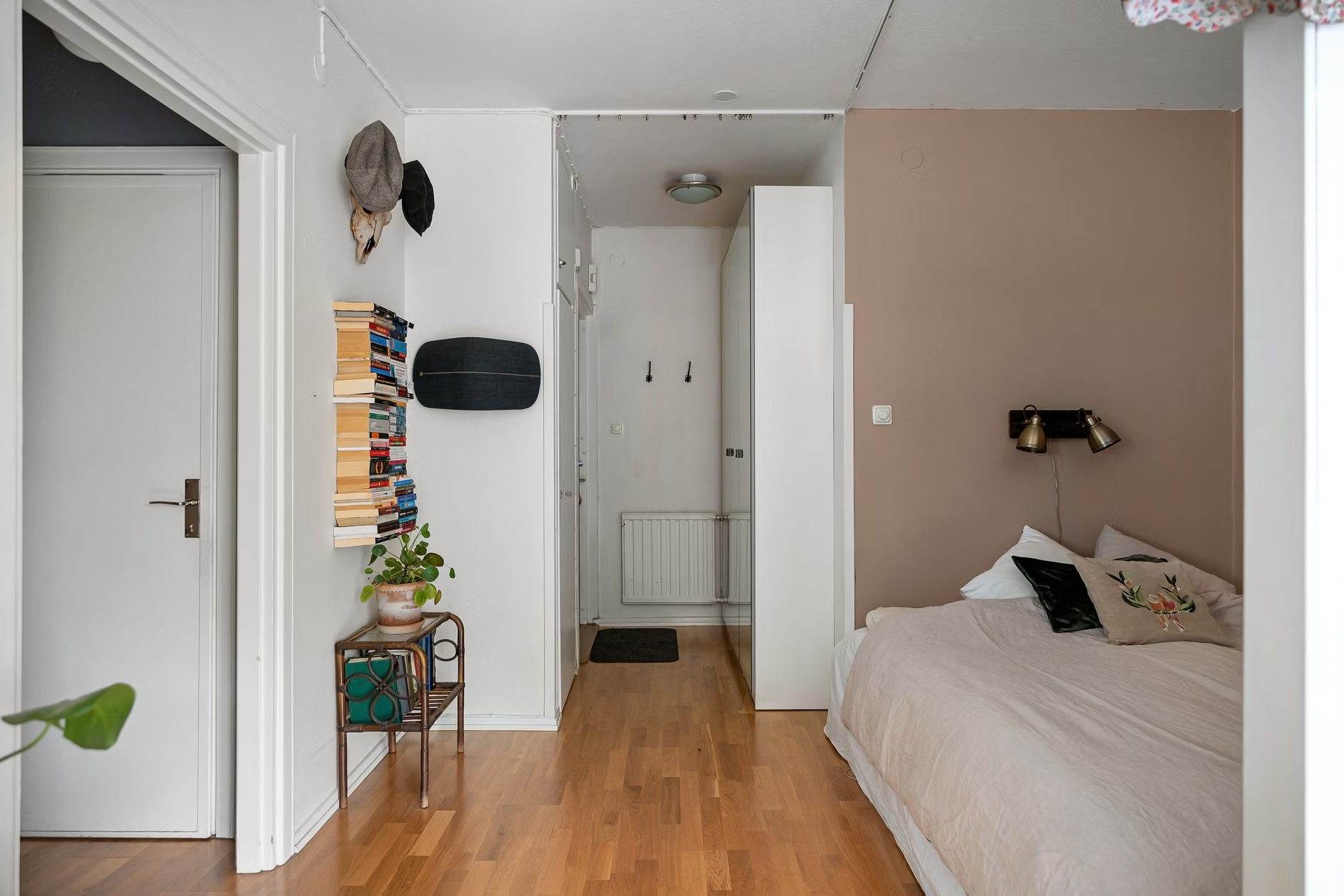
Selecting the Right Furniture for Minimalist Footprints
In a small apartment, every piece of furniture must serve at least two purposes, or it must be exceptionally compact. Avoid the “grand reading chair” trap. While a massive wingback chair looks great on Pinterest, it usually swallows a small room and makes the space feel claustrophobic.
Instead, look for low-profile, armless chairs or modular floor seating that can be pushed against a wall when not in use. If you have a window, utilize the “window seat” concept. Even if you don’t have a built-in bench, a simple, firm ottoman or a low-profile chair placed perpendicular to the window can transform a standard radiator or wall space into a functional reading spot.
The Ergonomics of the “Short-Session” Nook
Most readers in their 30s and 40s suffer from “tech neck” due to hours spent at desks or looking at devices. Your reading chair should prioritize lumbar support over “cushiness.” A chair that is too soft will cause you to slouch, leading to fatigue after just 20 minutes. Look for a firm seat with a backrest that sits at a 100-degree angle. This keeps your spine aligned and allows you to hold a book or e-reader at eye level without straining your neck.
| Furniture Type | Best For | Hidden Trade-off |
|---|---|---|
| Armless Occasional Chair | Tight corners, multi-purpose living rooms | Less support for long sessions (over 1 hour) |
| Wall-Mounted Sconce | Saving side-table space | Requires minor installation/drilling |
| Storage Ottoman | Stashing books and blankets | Can become a “clutter magnet” if not organized |
The table above highlights a critical decision rule: if your space is truly tiny, prioritize lighting that does not require floor space. Wall-mounted sconces are the secret weapon of the minimalist reader. They provide focused task lighting without the need for a bulky floor lamp that invites tripping or clutter.
Lighting and the “Analog” Atmosphere
Lighting is the most significant factor in shifting your mood. Bright, cool-toned LEDs are excellent for cleaning or working, but they are hostile to reading. They mimic daylight, which suppresses melatonin and keeps your brain in an “active/alert” state. For your nook, you need warm-spectrum lighting (around 2700K).
If you cannot install a wall sconce, use a clip-on light or a magnetic rechargeable light bar. These are often used for camping or closets, but they are perfect for small apartments because they can be attached to a shelf above your head. This creates a “pool” of light that illuminates only the pages of your book, effectively creating a spotlight effect that visually isolates you from the rest of the dark room.
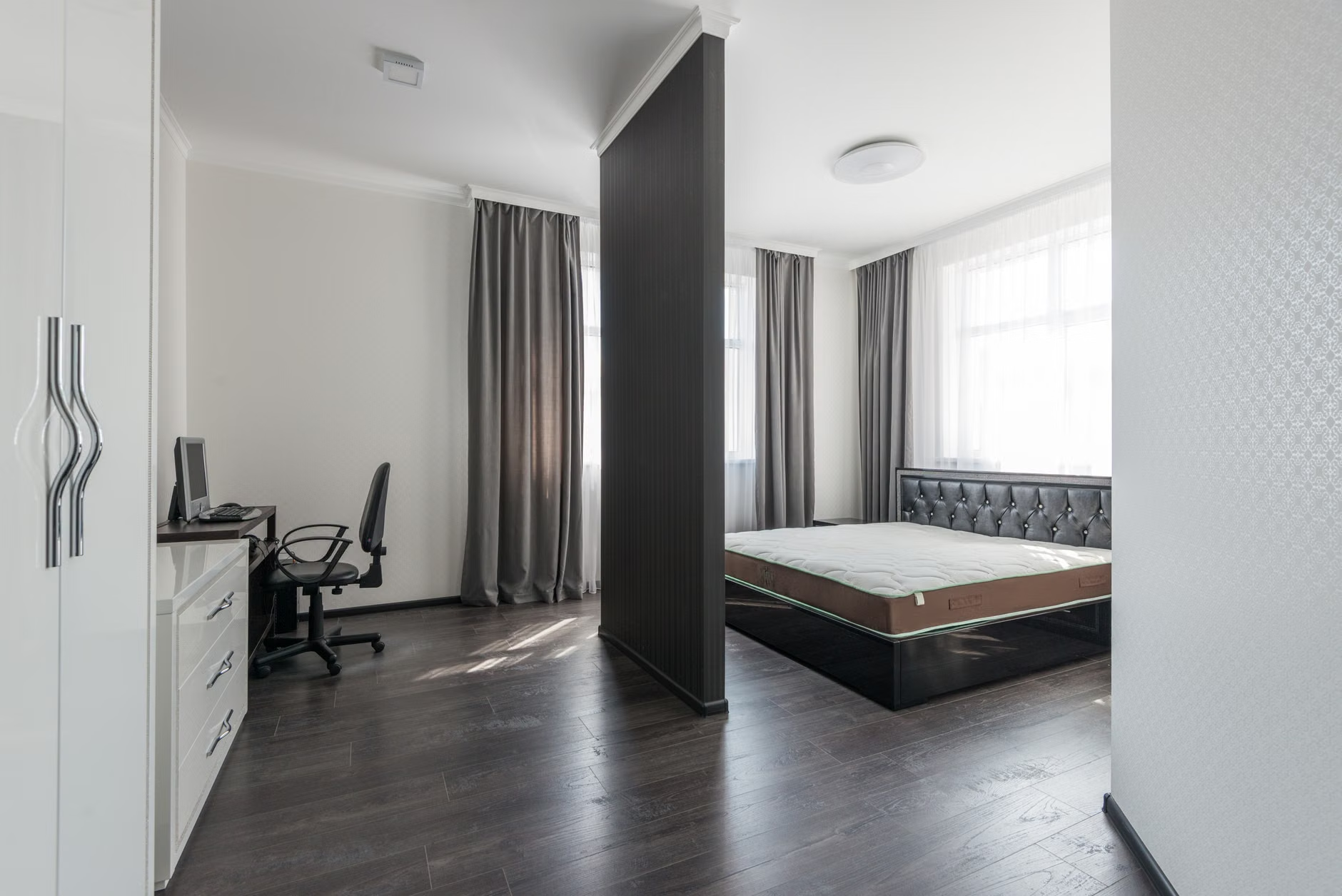
Creating Sensory Boundaries: The “Curtain” Trick
In a small apartment, you often lack the ability to build walls. However, you can create “visual walls.” A simple, floor-to-ceiling curtain on a tension rod or a ceiling track can transform a corner of your bedroom or living room into a private alcove. This is not just about aesthetics; it is about psychological closure.
When you pull a curtain shut, you are signaling to your family or roommates that you are in a “deep work” or “deep rest” state. It adds a layer of sound dampening—heavy linen or velvet curtains can absorb a surprising amount of ambient noise—and prevents you from glancing at the pile of laundry or the unwashed dishes in the kitchen. It is a boundary that says, “I am not available for the next 30 minutes.”
Common Mistakes to Avoid
The most common mistake is “The Bookshelf Overflow.” Many people try to store their entire library in their reading nook. In a small apartment, this is a recipe for visual chaos. A reading nook should only hold the books you are currently reading or planning to read this week. Everything else should be stored elsewhere. The nook is a sanctuary, not a warehouse.
Another mistake is failing to account for “Power-Free Zones.” If you have a wall outlet right next to your chair, you will be tempted to charge your phone there. Do not do it. If you use an e-reader (like a Kindle or Kobo), keep it charged in another room. When you sit in the nook, the device should be the only digital item allowed, and it should be in “Airplane Mode.” If you are reading physical books, the nook should be a “zero-screen” zone. If you find yourself bringing your phone to the nook, you have failed to create a boundary.
The “Five-Minute” Rule for Implementation
If you are struggling to start, use the “Five-Minute Rule.” Set up your nook, sit down with a book, and promise yourself you will only stay for five minutes. Often, the barrier to reading is not the lack of time, but the “activation energy” required to get started. By making the space inviting and ready at all times, you lower that activation energy. You don’t need to “set up” the nook; it should always be ready.
If you live with children, the reading nook will inevitably become a target for play. This is where the “Sacred Object” rule comes in. If you have a specific, high-quality cushion or a beautiful lamp that you only use for your reading time, teach your children that those items are “for reading only.” By assigning a specific, elevated status to the items in your nook, you create a respect for the space that mere words cannot achieve.
Furthermore, involve your children in the creation of their own “mini-nook.” If they have a space next to yours, they are more likely to respect your boundary while they are busy with their own books. This is a practical way to model reading behavior, which is one of the most effective ways to encourage literacy in children. You are not just building a nook; you are building a culture of reading in your home.
The Economics of the Nook: Hidden Costs and Smart Budgeting
You do not need to spend a fortune to create a high-quality reading environment. In fact, the “luxury” approach—buying a designer chair and expensive lighting—often fails because it feels too precious to use. The best nooks are utilitarian and durable.
Consider the “Second-Hand Quality” strategy. Look for vintage wooden chairs that have been reupholstered. These are often built better than modern flat-pack furniture and offer superior lumbar support. A vintage chair, a $20 floor lamp, and a $10 tension rod for a curtain can cost you less than $150 total. This is an investment in your mental health that pays dividends in reduced stress and increased focus.
Watch out for the “Hidden Cost of Clutter.” If you buy a small side table that has open shelving, it will inevitably become a dumping ground for mail, keys, and charging cables. Choose a table with a drawer or a solid top. If you cannot afford a table, use a wall-mounted floating shelf. It costs roughly $15–$30 and keeps the floor footprint at zero, which is the ultimate goal in a small apartment.
The Psychological Shift: Why Offline Matters
We live in an era of “continuous partial attention.” We are constantly scanning our environments, checking notifications, and switching between tasks. This is exhausting. The offline-reading nook is an antidote to this. It is a place where you practice “monotasking.”
When you read a physical book, you are engaging in a slow, linear process. You are training your brain to focus on one thing at a time. This has a “spillover effect.” The more time you spend in your offline nook, the more capable you become of focusing on other tasks—like playing with your children, cooking, or working—without the constant urge to check your phone.
This is not about being anti-technology; it is about being pro-intentionality. You are choosing when to be online and when to be offline. The nook is your physical anchor for that choice.
Conclusion: Your Next Step
Building an offline-reading nook is not a renovation project; it is a habit-design project. Start by identifying the quietest corner of your apartment. Clear it of all digital devices and clutter. Add one comfortable seat, one source of warm light, and a small surface for your book. Once the space is set, commit to using it for at least 20 minutes every day.
Do not wait for the “perfect” setup. Use what you have. A corner of your bed can become a nook if you add a dedicated reading pillow and a clip-on light. The goal is to create a ritual. When you sit down, you are there to read, nothing else. Over time, that chair or corner will become a Pavlovian trigger; simply sitting in it will make you feel calmer and ready to focus.
Your apartment might be small, but your mental space is infinite. Reclaiming that space starts with one square meter.
Frequently Asked Questions
1. My apartment is so small that I don’t have a dedicated corner. Can I still have a nook?
Absolutely. If you don’t have a corner, use a “zone” on your bed or a sofa. The key is to use sensory cues that signal “reading time.” For example, use a specific blanket that you only use when reading, or a specific scent (like a candle) that you only light when you open your book. These sensory associations can create a “mental nook” even if you are sitting in a shared space.
2. I struggle to stay off my phone while reading. Any tips?
The most effective strategy is the “Out of Sight” rule. If your phone is in the same room, your brain will subconsciously monitor it. Charge your phone in a completely different room—preferably one where you cannot hear the notifications. If you need your phone for an emergency, set it to “Do Not Disturb” with an exception for calls from specific family members, and place it face-down in a drawer.
3. Should I prioritize a physical book over an e-reader for my nook?
It depends on your preference, but physical books are generally better for the “offline” experience because they offer no digital distractions. If you prefer an e-reader, ensure it is a dedicated device (like a Kindle or Kobo) that does not have email or social media apps. Keep the device in airplane mode at all times to prevent the “pull” of the internet.
For further reading on the impact of physical spaces on cognitive focus and well-being, see the research published by the American Psychological Association on the relationship between environment and stress reduction.