- Carbon pricing is becoming a permanent fixture: By 2026, many jurisdictions are expanding carbon levies to residential heating fuels, meaning “business as usual” will inevitably lead to higher monthly utility bills.
- Efficiency is the best hedge: The most effective way to insulate your household budget from these tax hikes isn’t just switching fuel types, but dramatically reducing the heat energy your home loses in the first place.
- Early action beats late reaction: Government grants and tax incentives for home retrofitting are often time-sensitive; waiting for the tax to hit your peak winter bill in 2026 will likely be too late to secure subsidies.
If you have spent any time looking at your utility bills lately, you have probably noticed that the “cost per unit” of energy is moving in only one direction. As we approach 2026, governments across Europe, parts of North America, and other developed regions are rolling out or expanding carbon-pricing mechanisms. For those of us in our 30s and 40s—who are already juggling childcare costs, mortgage payments, and the rising price of groceries—this isn’t just an abstract climate policy debate. It is a tangible threat to your monthly household cash flow.
The “carbon tax” on heating is essentially a surcharge on fossil fuels—natural gas, heating oil, and propane—designed to make the “real cost” of carbon emissions visible to the consumer. The goal is simple: nudge us toward cleaner energy. But for a family trying to keep a drafty house warm during a freezing January, that “nudge” feels more like a shove. Let’s break down exactly what is happening, why it’s hitting your wallet, and how you can actually prepare for it.

Why 2026 is a Turning Point for Residential Energy
For years, carbon taxes were primarily targeted at heavy industries—power plants, refineries, and large-scale manufacturing. However, as international climate targets (like those established in the Paris Agreement) become more urgent, governments are shifting their focus to the “hard-to-decarbonize” sectors. Residential heating is one of the largest contributors to household carbon footprints, and it is firmly in the crosshairs.
In many regions, 2026 marks the implementation phase where these taxes move from the industrial supply chain directly onto the retail price of heating fuels. In the European Union, for instance, the expansion of the Emissions Trading System (ETS2) is set to impact buildings and transport, creating a direct link between the fuel you burn at home and the price you pay at the pump or the meter.
What this means for you: The cost of burning a cubic meter of natural gas or a liter of heating oil is going to rise. This isn’t a temporary spike due to market volatility; it is a structural change in the price of those commodities. If your home relies on a traditional gas boiler, your heating bill is effectively being “taxed” for its carbon intensity. The older and less efficient your system, the higher your exposure to these new costs.
The Math Behind the Surcharge: How Costs Accumulate
To understand the impact, we have to move beyond the headlines. Carbon taxes are usually levied at the wholesale level—meaning the fuel supplier pays the tax, but they pass the cost down to you. By 2026, the cumulative effect of these taxes will represent a significant percentage of your annual heating budget.
Imagine a typical family home that consumes 15,000 kWh of gas per year. If a carbon tax adds a nominal fee per ton of CO2, you might not notice it in the first month. But these taxes are designed to escalate. As the “price per ton” rises annually to meet climate targets, your heating bill will reflect a compounding increase that outpaces general inflation.
| Heating Method | Carbon Intensity | 2026 Tax Exposure |
|---|---|---|
| Heating Oil | High | Very High |
| Natural Gas | Moderate-High | High |
| Electric Heat Pump | Low (Variable) | Low (Dependent on Grid) |
| Wood/Biomass | Variable | Low/Medium |
The table above illustrates a crucial reality: your fuel choice is your primary financial variable. If you use heating oil or natural gas, you are essentially “renting” your carbon emissions from the government. If you switch to an electric heat pump, your exposure changes. While you still pay for electricity, the carbon tax is applied to the generation of that electricity, which is becoming cleaner every year. You are essentially shifting your risk from a direct, high-tax fuel to a cleaner, lower-tax grid.
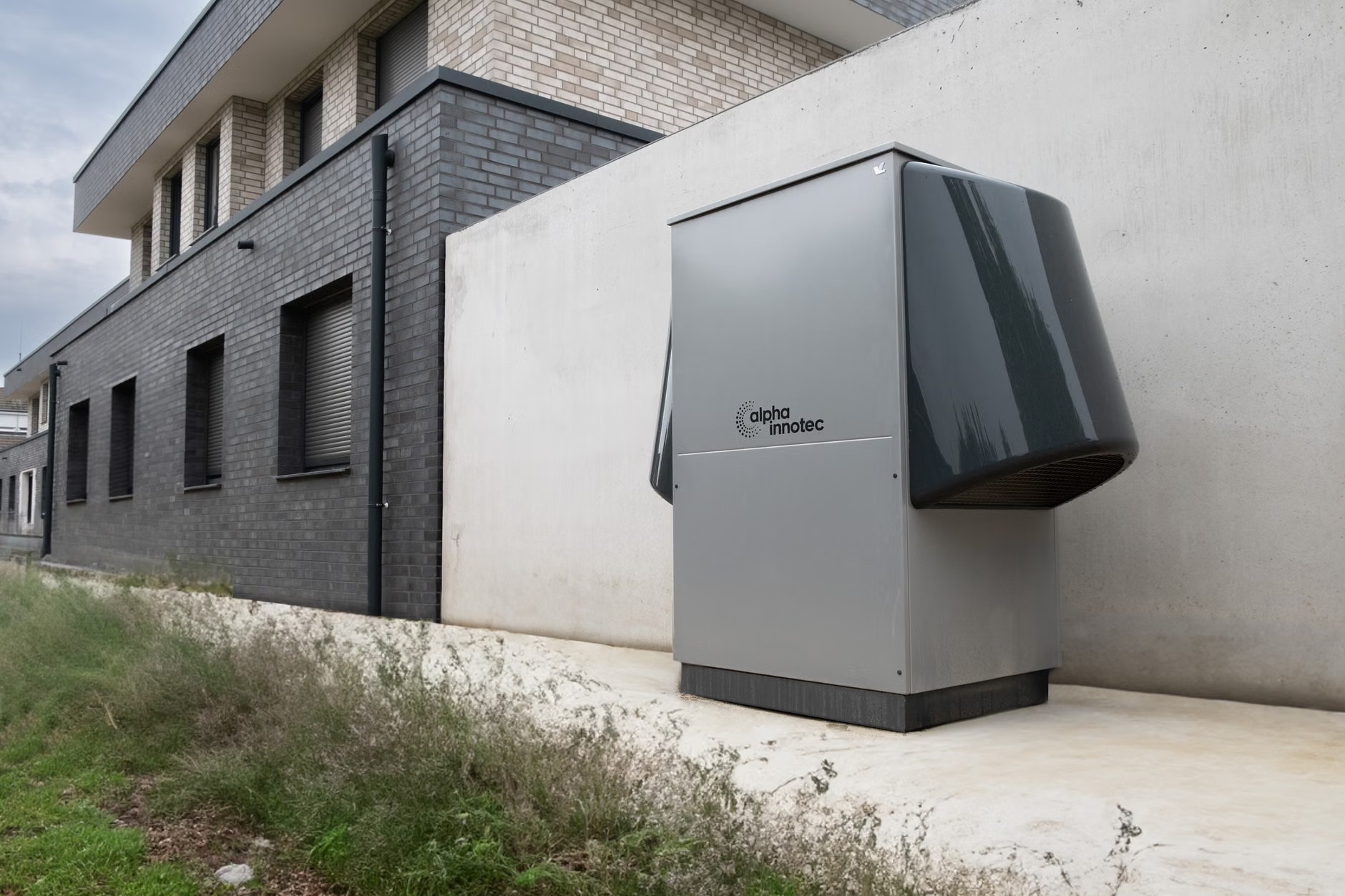
The “Envelope” First Strategy: Don’t Buy a New Boiler Yet
There is a common misconception that the immediate solution to rising carbon taxes is to rip out your old boiler and install a high-end heat pump. While that is a valid long-term goal, it is often a mistake to start there. If your home is an “energy sieve”—leaking heat through drafty windows, poor attic insulation, or unsealed doors—no heating system will save you money.
In the world of building science, we talk about the “thermal envelope.” This is the physical barrier between the conditioned air inside your home and the environment outside. Before you worry about the tax on your fuel, you need to worry about the efficiency of your building. A 20% improvement in insulation can often reduce your heating load by more than 20%, effectively nullifying the impact of a carbon tax increase.
Steps to Tighten Your Thermal Envelope:
- The Attic Audit: Most homes built before 2010 are significantly under-insulated in the attic. Adding extra mineral wool or blown-in cellulose is often the highest-ROI (Return on Investment) improvement you can make.
- Window Sealing: You don’t need to spend thousands on new triple-pane windows. Often, high-quality weatherstripping and window film can stop the convective heat loss that makes a room feel cold even when the thermostat is high.
- Thermostat Management: If you are still using a basic manual dial, you are wasting money. A smart thermostat learns your family’s schedule—it stops heating the house when you are at work or school, which is the easiest way to lower your carbon tax bill without sacrificing comfort.
Hidden Costs and Unexpected Trade-offs
When you start researching how to “future-proof” your home, you will encounter a lot of marketing fluff. It is important to look at the practical trade-offs. For instance, many people assume that “electric heating” is always cheaper. In many regions, electricity is significantly more expensive per unit of heat than natural gas. Even with a carbon tax, an inefficient electric baseboard heater might actually cost you more than a gas boiler.
The secret is the Coefficient of Performance (COP). A modern air-source heat pump can provide 3 to 4 units of heat for every 1 unit of electricity it consumes. This efficiency is what allows it to compete with gas, even when electricity rates are high. If you are considering a switch, do not just look at the installation cost; look at the COP rating of the unit and the local electricity-to-gas price ratio in your specific region.
Another overlooked variable is the infrastructure readiness of your home. Installing a heat pump might require an electrical panel upgrade. If your home has a 100-amp service, adding a heat pump, an EV charger, and an induction stove might overload your system. Always consult with a licensed electrician before committing to a major heating overhaul.

Governments know that these taxes are unpopular. To soften the blow, many regions offer “rebate schemes” or “green mortgages.” These are not just nice-to-haves; they are essential tools for anyone looking to upgrade their home before 2026.
In many countries, you can find official government portals that list current incentives. For example, in the UK, the “Boiler Upgrade Scheme” provides direct grants; in the US, the Inflation Reduction Act (IRA) offers substantial tax credits for heat pumps and insulation. The trick is that these funds are often allocated on a “first-come, first-served” basis. If you wait until the carbon tax is fully implemented in 2026, you will be competing with millions of other homeowners for the same limited pool of subsidies.
Actionable Rule for the Reader: Check your national energy authority’s website once every six months. If a grant becomes available for a project you were already planning (like replacing an old roof or upgrading insulation), apply immediately. Never assume these programs will be around next year.
Common Mistakes to Avoid
The most common mistake I see parents making is “panic spending.” They see a headline about a carbon tax, feel the pressure of rising costs, and hire the first contractor who promises a “green heating solution.” This often leads to overpaying for systems that are oversized for their home or inappropriate for their climate zone.
Another mistake is neglecting maintenance. A gas boiler that hasn’t been serviced in three years can be 10-15% less efficient than a well-maintained one. That 15% loss is now being taxed at a higher rate. Simple maintenance—bleeding your radiators, cleaning out your filters, and ensuring your vents aren’t blocked by furniture—is the cheapest “tax-avoidance” strategy you have.
Also, beware of “greenwashing” in the HVAC industry. Not every “smart” device actually saves energy. Some are just bells and whistles. Before buying a high-end system, ask for a “heat load calculation.” This is a scientific assessment of how much heat your home actually loses on the coldest day of the year. If a contractor tries to sell you a system without doing this calculation, they are likely just guessing, and you will end up paying for a system that is too large and inefficient.
Final Thoughts: Taking Control of Your Comfort
The 2026 carbon tax shift is a reality we have to live with. It represents a transition in how we pay for energy—moving from a model where we ignore the environmental cost to one where it is priced in. While this might feel like a burden, it is also a catalyst. It forces us to look at our homes not just as places to live, but as assets that need to be managed for efficiency and long-term cost stability.
You don’t need to panic, and you don’t need to spend your entire savings account tomorrow. Start by auditing your home’s efficiency, learning about the specific grants available in your region, and focusing on small, incremental improvements. By the time 2026 rolls around, you won’t be scrambling to figure out why your bills are rising; you’ll be sitting in a home that uses less energy, costs less to run, and feels significantly more comfortable.
Frequently Asked Questions
1. Will the carbon tax apply to all heating fuels equally?
No. Carbon taxes are usually tied to the carbon content of the fuel. This means fuels like coal and heating oil are taxed more heavily than natural gas, and natural gas is taxed more heavily than electricity (depending on how that electricity is generated). Your specific tax burden depends on your fuel source and your local government’s specific legislation.
2. Should I switch to a heat pump right now to avoid the tax?
Not necessarily. If your current heating system is relatively new and efficient, the cost of replacing it might outweigh the tax savings for several years. Calculate your “payback period”—the time it takes for the energy savings to cover the cost of the new equipment. If the payback period is longer than 7-10 years, it might be better to wait and focus on insulation first.
3. How can I find out about government grants in my area?
Search your government’s official energy department website (e.g., Energy.gov in the US, gov.uk in the UK, or the relevant EU climate action portal). Avoid third-party “lead generation” sites that promise to find you grants; they often just want to sell your data to contractors. Stick to official .gov or .eu domains for accurate, non-biased information.
Disclaimer: This article provides general information for educational purposes and does not constitute financial or professional engineering advice. Energy regulations and tax structures vary significantly by region. Always consult with a local, certified HVAC professional or your regional energy authority before making significant changes to your home heating system.
Useful Official Resources: