- The “Buffer Zone” Strategy: Adding a 15-minute “transition buffer” between waking up and the first task significantly lowers child cortisol levels and reduces morning defiance.
- Externalizing the Routine: Moving instructions from your voice to a visual checklist reduces power struggles by shifting the role of “boss” from the parent to the list.
- The “Night-Before” Rule: A successful morning is 80% preparation; if you aren’t doing it the night before, you are essentially asking for a high-stress start to the day.
The secret to a peaceful morning isn’t waking up earlier; it’s changing the nature of the transition from sleep to “go-mode.” Most parents in their 30s and 40s treat mornings like a series of commands: “Put your shoes on,” “Eat your breakfast,” “Where is your folder?” This constant stream of verbal pressure triggers a fight-or-flight response in school-age children, leading to the very resistance you are trying to avoid. The ‘Gentle-Transition’ method replaces commands with environmental cues, effectively turning the morning into a predictable, low-stakes flow.
Why Your Current Morning Routine Is Likely Failing
When we look at the biology of a child’s morning, we often ignore the “sleep inertia” factor. Sleep inertia is that groggy, disoriented state between being asleep and fully awake. For a school-age child, this can last anywhere from 30 to 60 minutes. If you are demanding complex tasks—like finding matching socks or eating a balanced breakfast—during this window, you are essentially asking a brain that is still half-asleep to perform executive functions it isn’t ready for yet.
The “Gentle-Transition” approach acknowledges this physiological reality. Instead of treating the child like a small adult who can just “get it together,” we treat them like a participant in a biological process. When you move from a command-based morning to a process-based one, you stop being the “bad guy” and start being the “facilitator.”
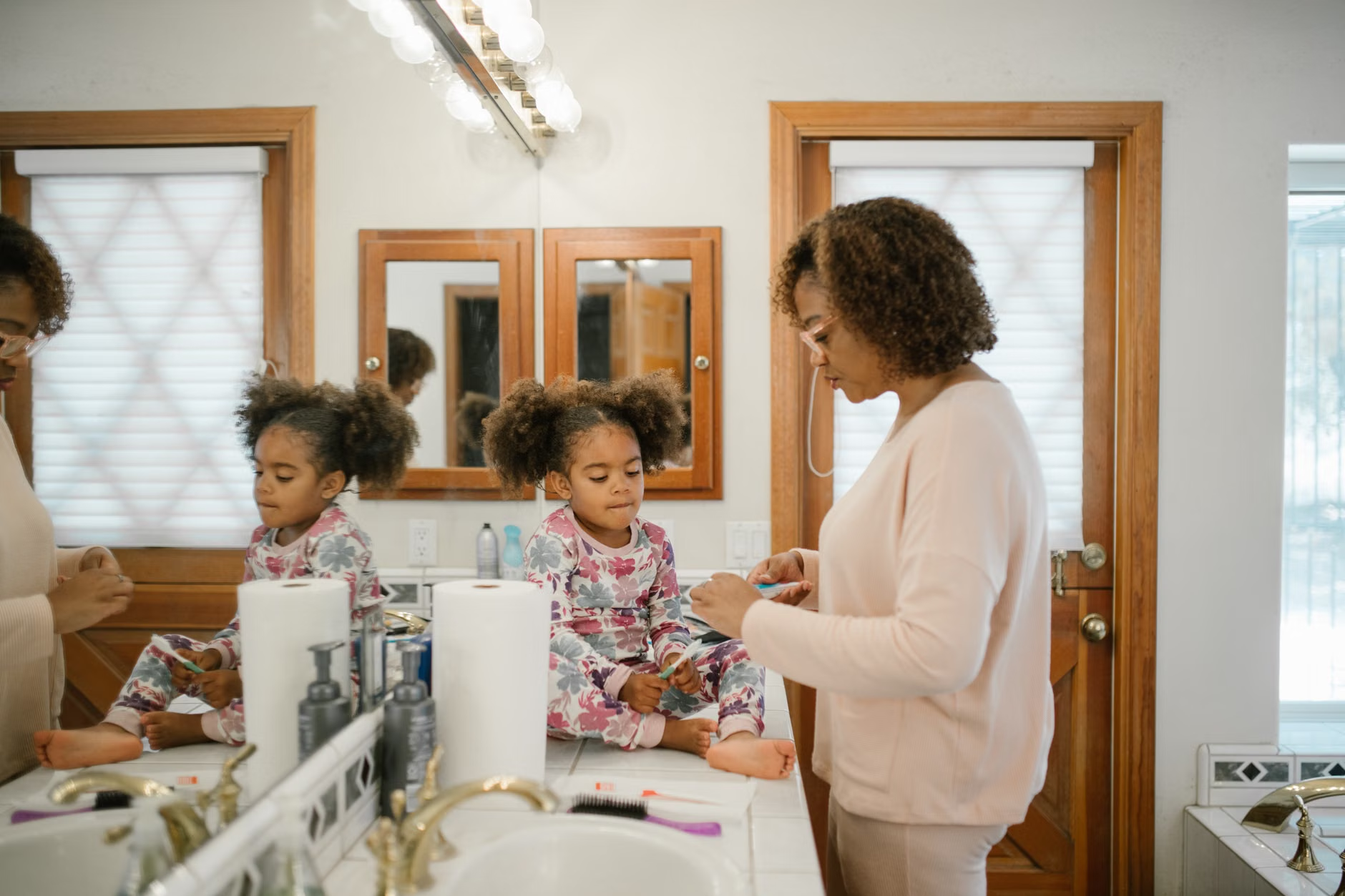
Step 1: Implementing the 15-Minute Buffer Zone
The most common mistake parents make is waking their child up at the absolute latest possible moment to maximize their sleep. While sleep is vital, a child who is jolted out of bed and immediately thrust into a high-speed, high-pressure environment arrives at school with elevated cortisol—the stress hormone. This doesn’t just make the morning hard; it makes their first few hours of learning at school significantly less effective.
The Fix: Shift the wake-up time 15 minutes earlier, but dedicate that time to a “buffer.” This is not time for chores or dressing. This is time for a “soft landing.” It could be reading one book together, sitting in the kitchen while you drink your coffee, or listening to a calm morning playlist. This 15-minute window allows the child’s brain to fully wake up before the “to-do” list begins. During this time, you are not a manager; you are a companion.
Why this works: When a child feels connected to you first, they are less likely to seek connection through resistance or “acting out” later in the morning. A child who feels heard and calm is a child who is neurologically primed to follow instructions.
Step 2: Externalizing the Authority (The Power of the Checklist)
In many households, the parent becomes the “external frontal lobe” for the child. You are the one remembering the library book, the gym kit, and the signed permission slip. When you constantly remind your child, you are essentially training them to wait for your voice before they act. This is why they don’t do it the first time you ask—they are waiting for the “serious” voice that indicates you are actually going to enforce it.
The Strategy: Move the authority from your mouth to the wall. Create a visual, physical checklist. It shouldn’t be a generic chart from the internet; it should be specific to your home. If your child struggles with the same three things every day—brushing teeth, putting on socks, getting the backpack—those three things go on the list. When they ask, “What do I do next?”, you don’t answer. You point to the list. You are no longer the nagging parent; you are just the person pointing at the piece of paper.
Common mistake: Parents often make checklists too long or complex. For a 7- to 10-year-old, a list with more than five items becomes overwhelming. Keep it focused on the “must-haves” to get out the door. If they forget their water bottle, let them forget it. The natural consequence is a much more effective teacher than your repeated warnings.
Step 3: The Night-Before Architecture
If you are deciding what to eat for breakfast or looking for a clean shirt at 7:00 AM, you have already lost the morning. The “Gentle-Transition” requires that the physical environment be ready for the child before they even wake up. This is called “environmental design.”

Consider the “Launchpad” method. Create a specific, dedicated space by the front door where everything—backpack, shoes, jacket, and any school-related items—lives. If it isn’t on the launchpad, it doesn’t exist in the morning. By having the child pack their own bag and place it on the launchpad the night before, you are teaching them ownership. If they wake up and realize they forgot their lunch, they learn to manage that anxiety in the moment, rather than blaming you.
Table: The “Night-Before” Checklist for Parents
| Category | Task | Why it matters |
|---|---|---|
| Clothing | Lay out the exact outfit (including socks). | Removes “decision fatigue” in the morning. |
| Nutrition | Pre-prep breakfast or set out the dry ingredients. | Ensures blood sugar is stable without a 10-minute hunt. |
| Logistics | Backpack packed and placed on the “Launchpad.” | Prevents the “where is my folder?” panic. |
Step 4: Managing the “High-Intensity” Moments
Even with a perfect plan, there will be mornings where the routine breaks. Maybe they woke up on the wrong side of the bed, or there was an unexpected school event. The key to the “Gentle-Transition” isn’t perfection; it’s your reaction to the disruption. When you react with anger or urgency, you validate the child’s stress. When you react with calm, you show them that the situation is manageable.
If a child is stalling, instead of saying, “Hurry up, we’re going to be late,” try a “Time-In” approach. Sit down next to them and say, “I see you’re having trouble getting your shoes on. Do you need a hand, or do you need a minute?” This empowers the child to articulate their struggle. Often, the “stalling” is actually a manifestation of anxiety about the school day. Giving them a moment to acknowledge that feeling—even for 30 seconds—can clear the blockage.
Step 5: The “Exit Ritual”
The final transition—leaving the house—is often where the most tension occurs. The “Gentle-Transition” ends with a specific exit ritual. It could be a specific song you play in the car, a high-five at the door, or a “secret” handshake. This creates a psychological boundary between the home environment and the school environment.

Rituals are powerful because they provide a sense of completion. When the ritual happens, the brain knows the “morning phase” is over and the “day phase” has begun. This reduces the transition anxiety that many children feel as they approach the school gates. It’s a signal that no matter how the morning went, you are ending it on a positive, connected note.
Common Misconceptions and Hidden Variables
One common misconception is that “gentle” means “slow” or “lack of discipline.” It is actually the opposite. It requires more discipline from the parent to remain calm and consistent than it does to yell. Another hidden variable is the role of technology. If your child is using screens in the morning, stop. Even if it’s “just for 10 minutes,” screens provide a dopamine hit that makes the transition to the boring, repetitive tasks of getting dressed feel like a punishment. Keep the morning screen-free until the “must-dos” are finished.
Also, watch for the “Sunday Scaries” effect on a Monday morning. Children are often more anxious on Mondays because the transition from the unstructured weekend to the structured school week is jarring. On these days, consider extending your “buffer zone” by an extra five minutes. It is a small investment that yields massive returns in the form of a child who enters the classroom ready to engage rather than ready to crumble.
Addressing the “But My Kid Won’t Listen” Dilemma
If you find that your child is completely ignoring the new routine, it is likely because they have become accustomed to your “nagging” as the primary signal that it is time to move. You have to break this cycle. The first week of implementing a new routine will be difficult. They will test you. They will wait for you to start yelling. If you hold firm and point to the checklist, they will eventually realize the rules have changed.
Consistency is your most important tool. If you give in once, you reinforce the idea that the routine is optional. You are building a new neural pathway for your child. Just like learning to ride a bike, it takes repetition. Stick to the, “I see you haven’t checked off your list yet, let me know when you’re ready to go,” approach. Keep your tone neutral. They will eventually choose to move because they want to get to school or to their activity, and they realize you are no longer the obstacle.
Deepening the Connection: The Role of the Parent
As parents in our 30s and 40s, we are often managing our own stress from work or household responsibilities. It is easy to project that stress onto our children. The beauty of the Gentle-Transition is that it forces you to slow down as well. When you aren’t rushing, you are modeling the behavior you want to see. You are showing them that life doesn’t have to be a frantic race to the finish line.
If you find yourself getting angry in the morning, ask yourself: “Am I angry because they are being difficult, or am I angry because I am running late?” Usually, it’s the latter. By owning your own schedule and your own stress, you take the burden off your child. You are the architect of the home’s emotional climate. If you are calm, the house is calm.
Next Steps for Your Family
Start by picking one element of this routine to implement this weekend. Don’t try to change everything at once. Maybe start with the “Launchpad” tonight. Once that is established, add the visual checklist. Finally, adjust the wake-up time for the buffer zone. This gradual implementation ensures that both you and your child have the space to adapt to the new system.
Remember that the goal isn’t a perfect, silent morning. The goal is a morning where everyone feels heard, prepared, and ready for the day. If you have a bad day, don’t scrap the system. Just reset the next morning. You are teaching your child life-long habits of self-regulation and organization, and that is worth every bit of effort.
Frequently Asked Questions
Q: What should I do if my child refuses to follow the checklist?
A: If they refuse, don’t engage in a power struggle. Stay neutral. State, “The checklist is the guide. We can’t leave until the items are checked off. I’m going to finish my coffee, and I’ll check back in five minutes.” By removing the emotional reaction, you remove the “payoff” they get from the conflict. They will eventually follow the list because they want to get to school.
Q: Is this routine suitable for children with ADHD or sensory processing issues?
A: Yes, in fact, it is often more effective. Children with neurodivergent needs often struggle with executive function—the ability to plan and execute tasks. A visual checklist acts as an external executive function aid. For sensory issues, ensure the morning environment is low-stimulus (e.g., quiet, no flashing lights, comfortable clothing pre-selected).
Q: How do I handle mornings when we are genuinely running late?
A: Prioritize the “must-dos” and skip the “nice-to-haves.” If you’re late, it’s better to have a child who is fed and dressed than one who has read a book but hasn’t brushed their teeth. Keep the exit ritual, even if it’s shortened. The goal is to maintain the connection even when the schedule fails.
For more information on child development and stress management, you can refer to the following resources:
– American Academy of Pediatrics (AAP) – HealthyChildren.org
– CDC – Essentials for Parenting Toddlers and Preschoolers (applicable concepts for school-age)
– Zero to Three – Resources on Early Childhood Development and Stress