Repairing your clothes is the most effective way to stop the cycle of endless consumption, saving you hundreds of dollars annually while drastically reducing your household’s textile waste footprint. When you choose to mend rather than discard, you aren’t just saving a shirt; you are reclaiming your autonomy from a retail system designed to make you feel obsolete after six months.
- The 30-Wear Rule: Before buying, ask if you will wear an item at least 30 times; if the answer is no, skip the purchase.
- Maintenance beats Mending: Proper storage, low-heat washing, and air drying prevent 70% of the damage that leads to “needing” repairs.
- Visible Mending is a Skill, Not a Defect: Using contrasting thread or patches turns a repair into a design feature, increasing the garment’s character.
If you are in your 30s or 40s, you likely remember a time when clothes were expected to last until they were physically worn through. Today, we face a “fast-fashion” paradox: clothes are cheaper than ever, yet they fall apart after three washes. For parents, this is a double-edged sword. Between the constant growth spurts of children and the high-maintenance demands of professional workwear, the closet becomes a source of stress rather than satisfaction.
Why Your Wardrobe Costs More Than the Price Tag
The “true cost” of a garment is not just the $30 you paid at the register. It is the cost of the replacement, the time spent shopping for the replacement, and the environmental impact of disposing of the original. When a zipper breaks on a pair of jeans, the default reaction for most is to throw them into a donation bin—or worse, the trash—and click “buy now” on a new pair.
However, the repair movement is shifting this narrative. Repairing is an act of defiance against planned obsolescence. Consider the math: If you spend $15 on a basic sewing kit and 30 minutes learning a ladder stitch, you can save a $60 pair of trousers. That is a 300% return on your time investment. More importantly, you avoid the “fast-fashion trap,” where the replacement item is likely of the same low quality as the one you just discarded.
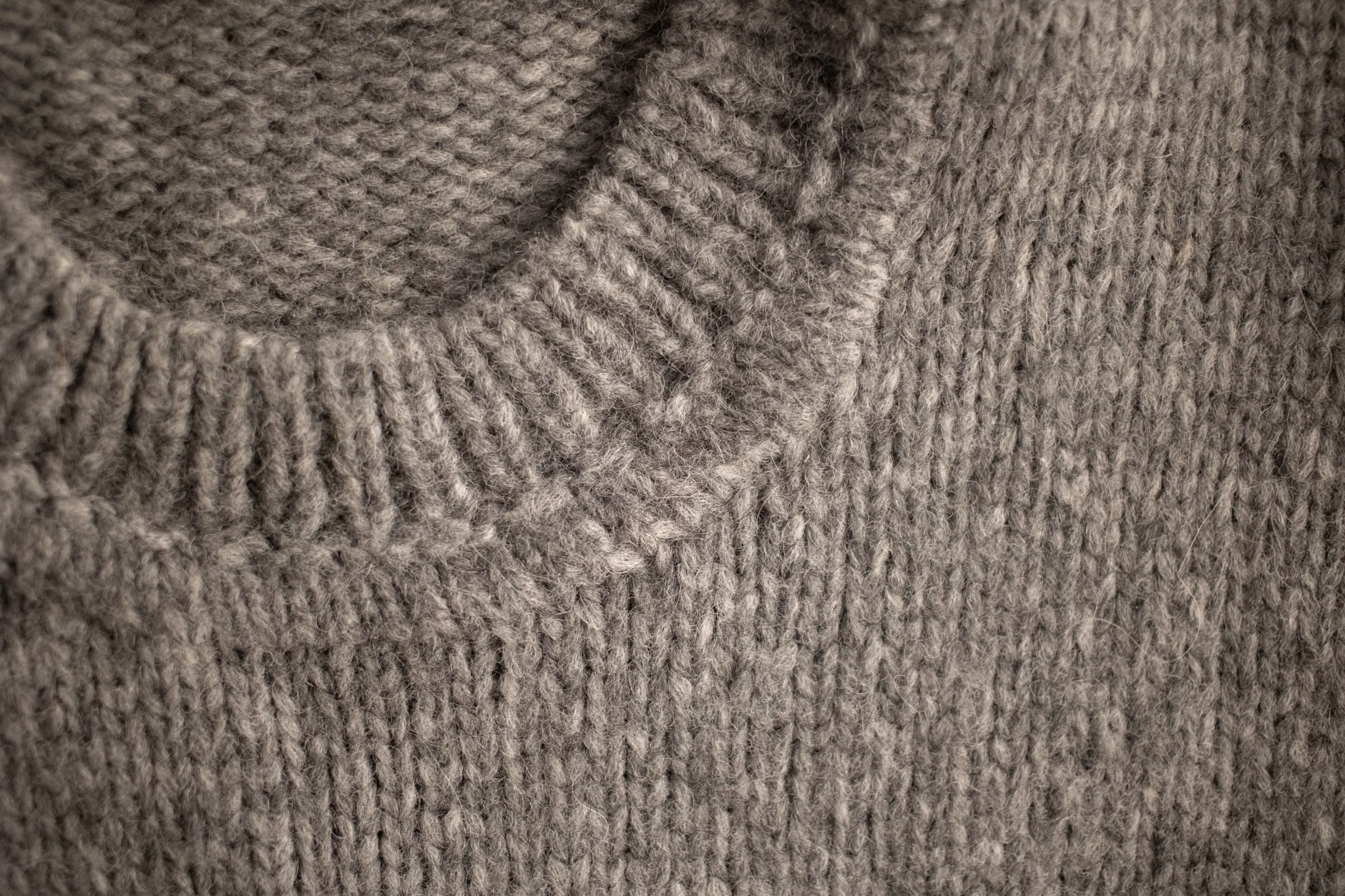
The Psychology of Disposability
We are conditioned to view a loose button as a signal that the item is “finished.” This is a marketing triumph by retailers. In reality, a garment’s life cycle should be measured in years, not seasons. When you start viewing your closet as a collection of assets that require maintenance—much like your car or your home appliances—the stress of “having nothing to wear” begins to dissipate. You aren’t replacing; you are curating.
Building Your “Repair Arsenal”: The Essential Toolkit
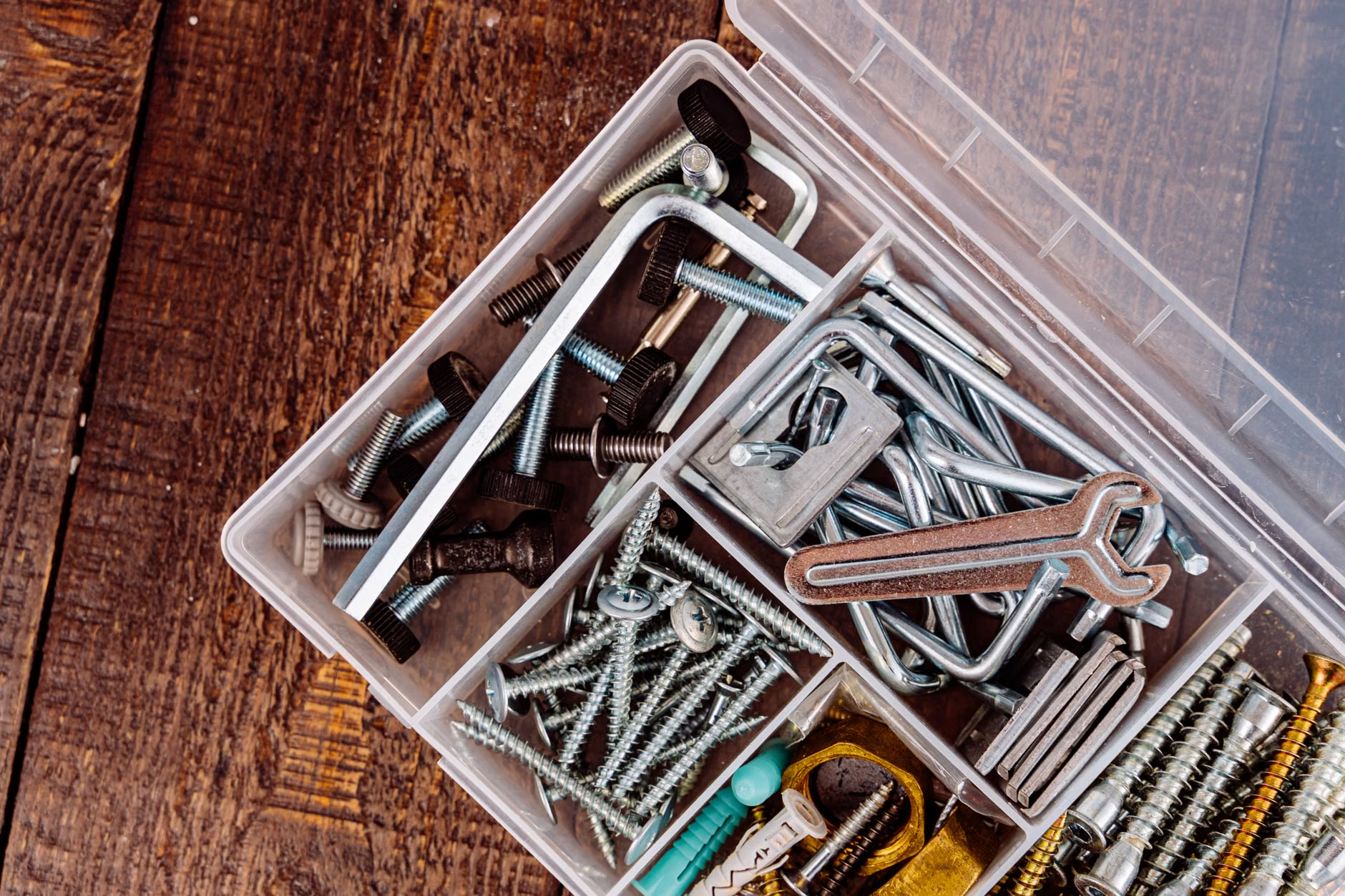
You do not need a professional sewing machine to start. Most clothing failures occur at stress points: seams, buttons, and hemlines. These can be fixed with a basic kit that costs less than a single fast-fashion top. Your “Repair Arsenal” should be stored in a central, accessible location—if it’s hidden in a deep drawer, you won’t use it.
| Tool | Primary Use | Why it Matters |
|---|---|---|
| Fabric Shaver | Removing pilling/fuzz | Instantly refreshes sweaters and coats to look new. |
| Needle & Thread | Buttons and small tears | The most common failure point in all clothing. |
| Fabric Glue | Quick fixes for non-sewers | Good for hemlines or small decorative repairs. |
| Cedar Balls | Pest prevention | Prevents holes from moths, saving your expensive woolens. |
The most important tool, however, is the decision rule. Before you throw anything away, ask three questions: Is the fabric still structurally sound? Is the item a staple piece I reach for often? Does the repair require a skill I can learn in under 20 minutes? If the answer to all three is yes, the item is worth keeping.
Preventative Care: Stopping the Damage Before it Starts
The best repair is the one you never have to make. Most of us are inadvertently destroying our clothes through aggressive laundry habits. The “modern” way of washing everything on warm cycles and tumble-drying until bone-dry is a death sentence for fibers.
The 80/20 Rule of Laundry: 80% of your clothes can be washed on cold and air-dried. The remaining 20%—mostly socks and undergarments—can handle the heat. By switching to cold water, you prevent fibers from shrinking and breaking, which is the primary cause of holes in cotton t-shirts.
The Hidden Cost of Over-Washing
There is a pervasive myth that clothes must be washed after every wear. Unless you have been exercising or working in a physically demanding environment, most garments (especially jeans and sweaters) do not need to be washed every time. Over-washing strips natural oils from fibers like wool and weakens the tension in synthetic blends. Try the “sniff test” or simply airing them out on a hanger overnight. Your clothes will last twice as long.

Step-by-Step: The “Visible Mending” Philosophy
If you are intimidated by the idea of “invisible” repairs, embrace visible mending. Popularized by the Japanese art of Sashiko, this approach uses decorative stitching to reinforce damaged areas. Instead of hiding the hole, you highlight it, turning a flaw into a unique design element.
How to execute a simple patch:
- Assess the area: Trim loose threads around the hole.
- Choose your fabric: Use a scrap of denim, linen, or flannel. Contrasting colors add personality.
- Placement: Place the patch behind the hole. If you want it to be visible, place it on top.
- The Stitch: Use a simple “running stitch” (in-and-out) around the perimeter of the patch. You don’t need to be perfect; the texture of the stitches is part of the aesthetic.
This approach is particularly effective for parents. Children’s knees are constantly getting holes in them. Rather than buying new jeans every month, use iron-on patches or simple embroidery to cover the damage. It turns a “worn-out” pair of pants into a “customized” pair that your child might actually prefer.
Common Mistakes and How to Avoid Them
The biggest mistake beginners make is attempting a “perfect” repair on a high-stakes garment. Do not start by trying to fix a silk dress or a tailored blazer. Start with your “at-home” clothes—the sweatpants, the old t-shirts, the socks. This builds your muscle memory without the anxiety of ruining something expensive.
Another common pitfall is ignoring the integrity of the fabric. If a garment is already thinning out (you can see light through the weave), a patch will only rip the surrounding fabric. In this case, it is better to repurpose the fabric into cleaning rags or a tote bag rather than attempting a structural repair.
When to Outsource
There is no shame in visiting a professional tailor. For complex repairs—like replacing a suit jacket lining or shortening a coat sleeve—the cost of a professional is often far less than the cost of a high-quality replacement. If you have a piece that you love but don’t have the skills to fix, find a local tailor. It supports your local economy and keeps a high-quality item in circulation.
The Long-Term Impact: Curating a “Forever Closet”
When you stop buying for the sake of novelty, your style actually stabilizes. You stop chasing trends that are designed to disappear in three months and start investing in items that can be maintained. This is the essence of the “Slow-Fashion” movement. It is not about asceticism or never buying anything new; it is about intentionality.
Look at your closet today. How many items do you own that are currently “out of commission” because of a minor issue? If you spent one Saturday afternoon addressing these, you might find you don’t need to go shopping for the next six months. This isn’t just about saving money; it’s about reducing the mental load of managing a massive, ever-changing wardrobe.
Practical Next Steps
Start small. This weekend, perform a “wardrobe audit.” Identify three items that have been sitting in your closet waiting for a fix. Gather your tools, put on a podcast, and commit to fixing just one. Once you realize how simple it is, the barrier to entry will vanish.
Remember that the fashion industry spends billions of dollars to convince you that “new” is better. By choosing to repair, you are opting out of that cycle. You are choosing quality, character, and sustainability over the fleeting dopamine hit of a package arriving on your doorstep.
For further inspiration and tutorials on advanced techniques, you can explore resources like the Fashion Revolution repair guides, which provide excellent visual aids for various sewing techniques.
Frequently Asked Questions
Q: Is it really worth the time to fix cheap clothes?
A: If the garment is made of low-quality, thin fabric, it may not be worth the time. However, if the item is a staple like a basic cotton tee that you wear constantly, a 5-minute repair can extend its life by months. Use your time as the currency: if the repair takes longer than the item is worth, it is better to recycle it.
Q: I have no sewing skills. Where do I even start?
A: Start with “no-sew” repairs. Fabric tape and adhesive patches are excellent for hemlines and small tears. YouTube is your best resource—search for “basic ladder stitch” or “how to fix a button.” These skills take less than an hour to master and will serve you for the rest of your life.
Q: Does “slow fashion” mean I can never buy new clothes again?
A: Not at all. It means buying with intent. When you do buy new, look for natural fibers (cotton, wool, linen) that are easier to repair and maintain. Prioritize quality over quantity, and always consider the “cost-per-wear” rather than the initial sticker price.
Taking care of what you own is a quiet, radical act. It is the most practical way to live a more sustainable life while keeping your personal style intact. Start with one stitch, one button, or one wash cycle, and watch how your relationship with your wardrobe changes for the better.