The most effective way to reduce daily anxiety in an apartment isn’t by buying more furniture, but by systematically removing the hidden “sensory friction” that your brain is processing subconsciously every single hour of the day.
- The 20-Minute Audit: You can identify 80% of your home’s sensory stressors by simply sitting in the center of each room for 20 minutes without screens or music.
- The Noise Floor Matters: Most apartment dwellers underestimate how much “infrasound”—vibrations from HVAC, appliances, or neighbors—drains cognitive energy.
- Visual Clutter is Cognitive Load: Research indicates that visual stimuli compete for neural resources; reducing surface-level clutter directly correlates to improved task-switching ability for adults in their 30s and 40s.
Why Your Apartment Feels “Heavy” Despite Being Clean
If you are in your 30s or 40s, your home is likely doing double duty. It is a workspace, a playroom, a kitchen, and a sanctuary. Often, the feeling of “heaviness” or irritability you experience after a long day isn’t just work fatigue; it is sensory overload. Your brain is a filter, and when that filter is constantly bombarded by flickering LED lights, humming appliances, and mismatched visual patterns, it eventually stops filtering effectively.
A sensory audit is a deliberate process of mapping your living space based on the five primary senses. Unlike a traditional “spring cleaning,” this isn’t about dust or organization. It is about input management. We are looking for the “background noise” of your home—the things you have stopped noticing because you have lived with them for so long, yet your nervous system is still reacting to them.
Consider the “fridge hum” scenario. You don’t consciously hear your refrigerator, but if it has a high-pitched mechanical whine, your cortisol levels may be slightly elevated whenever you are in the kitchen. By identifying these inputs, you can systematically dampen them.
Step 1: The Auditory Baseline and the “Infrasound” Trap
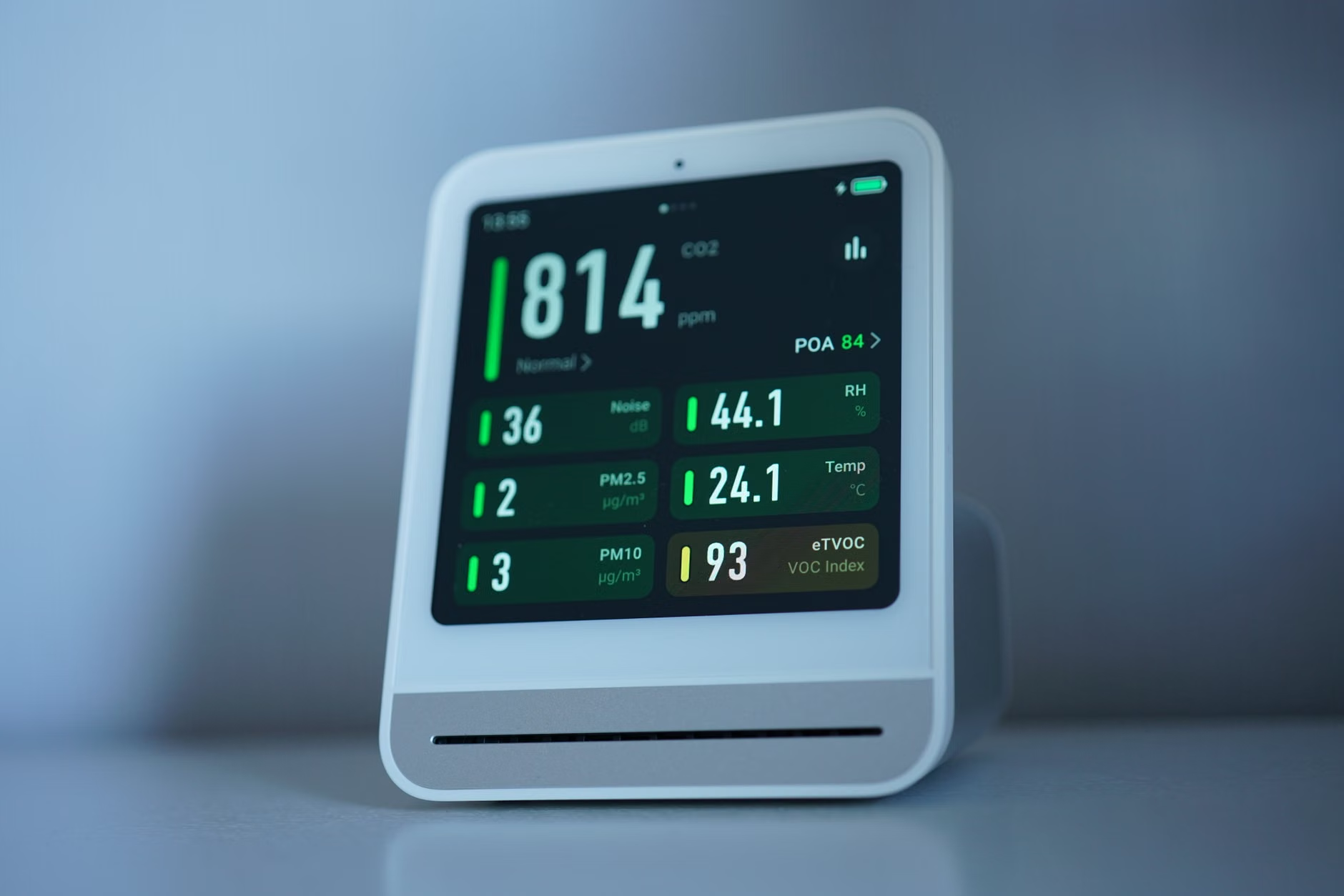
Noise is the most significant contributor to home-based stress, especially in apartments where shared walls and shared mechanical systems are standard. Start your audit by downloading a free decibel (dB) meter app on your phone. It doesn’t need to be professional grade; you are looking for relative differences, not scientific precision.
Walk through your apartment at 8:00 PM on a weeknight. Measure the decibel level in the center of each room. Anything consistently above 45-50 dB is considered “noisy” for a home environment. If you find your living room is at 55 dB, you are effectively working or relaxing in a low-grade coffee shop environment.
Identifying and Mitigating Mechanical Noise
In apartments, the culprits are rarely loud music from neighbors. They are usually “infrasound”—low-frequency vibrations from HVAC units, poor-quality ceiling fans, or even the vibration of a washer/dryer against a shared wall. If you hear a constant “thrum,” try these mitigations:
- Vibration Dampening: If a washing machine or dishwasher is the source, install rubber anti-vibration pads under the feet. This is a $20 fix that can drop the noise floor of an entire kitchen by 5-10 dB.
- Acoustic Decoupling: If you have a desk against a shared wall, place a thick cork or felt board between the desk and the wall. This stops the wall from acting as a resonator for your neighbor’s TV or footsteps.
- Soft Surfaces: Sound bounces off hard surfaces (wood, tile, glass). If your apartment is echoey, it multiplies every sound. Adding a high-pile rug or heavy curtains isn’t just for decor; it is a critical acoustic absorption tool.
Step 2: The Visual Audit—Reducing Cognitive Load
Visual clutter is not just an aesthetic issue; it is a processing issue. Every object in your line of sight provides information to your brain. A bowl of mail, a stack of unread magazines, and a tangle of charging cables are “open loops”—items that your brain acknowledges as needing attention. When you have dozens of these in your field of vision, your brain is constantly “scanning” for information, which prevents true relaxation.
The “Surface-Level Sweep” Protocol
To conduct a visual audit, stand in the doorway of your most-used room. Take a photo of the room. Look at the photo on your phone screen. You will immediately notice things that you don’t see in person because your brain has “blinded” you to them. Is there a pile of shoes? A shelf overflowing with knick-knacks? A chaotic array of remote controls?
The Decision Rule for Visual Auditing:
| Category | The “Audit” Test | The Fix |
|---|---|---|
| Flat Surfaces | Does it have more than 3 items? | Move to closed storage; leave only “intentional” items. |
| Cables/Wires | Are they visible? | Use cable sleeves or Velcro ties to group them by color. |
| Color Palette | Are there more than 5 clashing colors? | Use neutral-colored bins to hide colorful kids’ toys or books. |
Step 3: Lighting as a Circadian Regulator
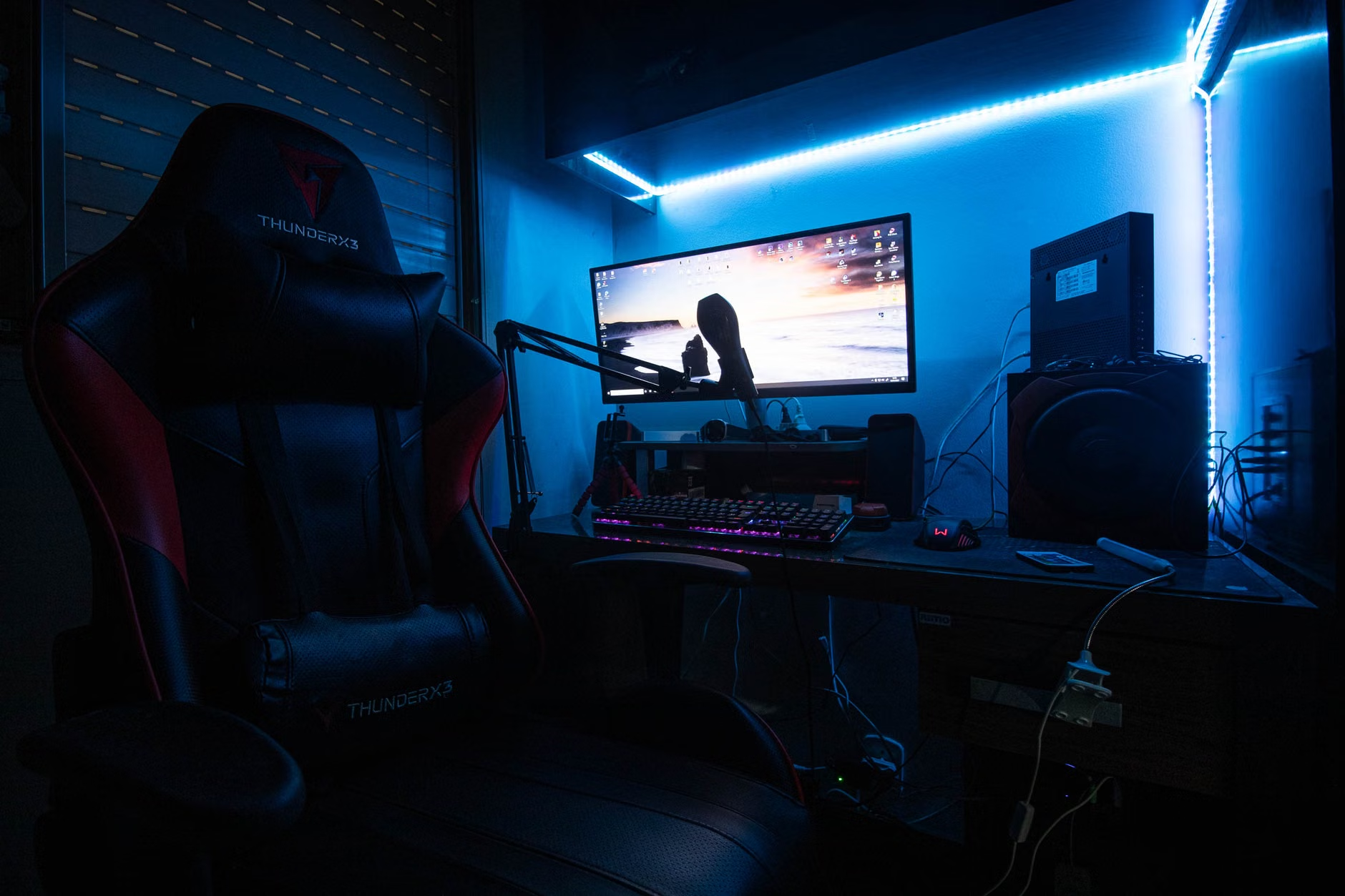
Most apartments come with “builder-grade” lighting: a single, harsh, cool-toned (blue-spectrum) light source in the center of the ceiling. This is the worst possible lighting for a home. It mimics daylight at 2:00 PM, which suppresses melatonin production and keeps your body in a “go” state when you should be winding down.
For your sensory audit, look at the color temperature of your bulbs. Most modern LED bulbs allow you to choose the Kelvin (K) rating. For a sanctuary-like apartment:
- Living/Bedroom: Use 2700K to 3000K (Warm White). This mimics the sunset and signals the brain to prepare for sleep.
- Work/Task Areas: Use 4000K (Cool White). This is better for focus but should be strictly limited to the office area.
Common Mistake: Relying on one central light source. Instead, use “layered lighting.” Place lamps at eye level or below. Light hitting a wall or a floor is much more calming than light shining directly down from the ceiling. If you have a child, consider dimmable smart bulbs that can transition to a soft orange hue 30 minutes before bedtime.
Step 4: The Olfactory and Tactile Experience
We often overlook smell and touch, yet these are the most direct pathways to the limbic system (the part of the brain that controls emotion). An apartment that smells “stale” or feels “tacky” (due to cheap synthetic materials) creates an immediate, albeit subconscious, sense of unease.
Managing the Sensory Environment
Olfactory Control: Avoid synthetic plug-in air fresheners. They are often overwhelming and can trigger headaches. Instead, focus on air quality. If you have an open-plan apartment, the kitchen odors are your biggest challenge. A high-quality HEPA air purifier with an activated carbon filter is the single best investment for neutralising cooking smells. It also handles dust, which is a major tactile irritant.
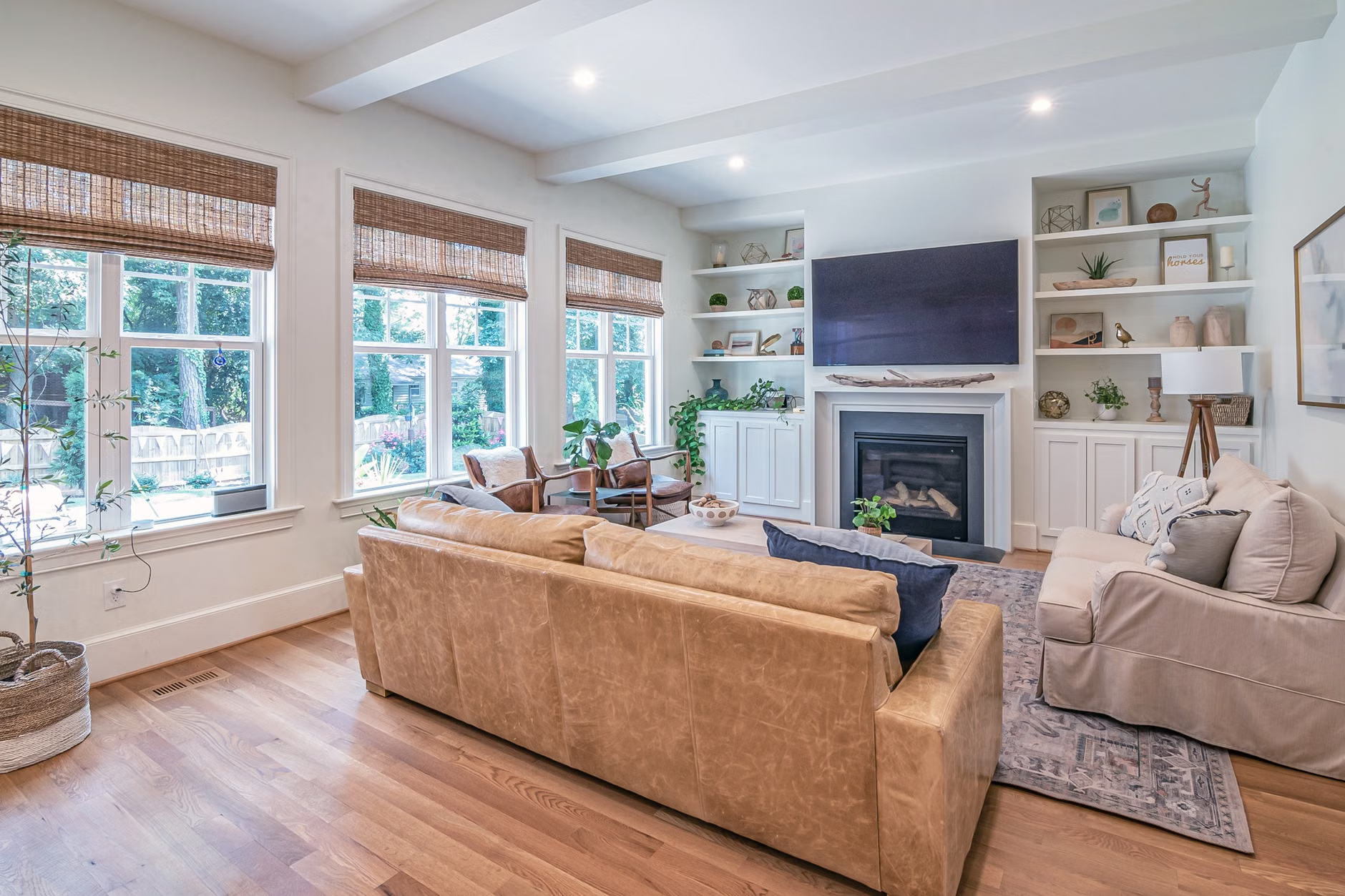
Tactile Audit: Run your hand over the surfaces you touch most: your sofa, your dining chair, your desk. Are they cold, hard, or scratchy? If you spend your evenings on a sofa that feels “stiff” or “cheap,” you won’t fully relax. Add a high-quality wool throw or a cotton-covered cushion. The goal is to introduce variety in texture—soft, natural materials provide a sense of safety and grounding.
Implementation: The 7-Day Sensory Reset
Do not try to change your entire apartment in one weekend. You will exhaust yourself and likely give up. Instead, follow this 7-day, low-effort schedule:
- Day 1: The Decibel Sweep. Identify the loudest appliance or corner and move it or dampen it.
- Day 2: The Lighting Shift. Replace all “daylight” bulbs in the living room with warm-spectrum bulbs.
- Day 3: The Cable Purge. Buy a $10 pack of cable ties and clear your desk/TV area.
- Day 4: The Visual Audit. Take photos of three rooms and remove 10 items from each that don’t need to be there.
- Day 5: The Air Quality Check. Move your air purifier to the high-traffic area.
- Day 6: The Texture Audit. Add one soft, natural-fiber item to your main seating area.
- Day 7: The “No-Screen” Evening. Spend one evening in your “audited” space with only lamps on and no digital noise.
Why This Matters for Parents
If you have children, your apartment is likely a battlefield of sensory input. Brightly colored plastic toys, constant high-pitched noises, and chaotic visual patterns are designed to stimulate a child’s developing brain—but they are the opposite of what a parent needs to recover. The goal is not to remove your children’s world, but to create “sensory islands.”
Use opaque, neutral-colored storage bins for toys. When the kids are asleep, the visual clutter is hidden. This simple act of “closing the box” is a psychological signal to yourself that the day is done. It is a boundary between the role of “parent” and the role of “adult.”
Hidden Costs and Unexpected Trade-offs
Be careful of the “minimalism trap.” Some people believe that removing everything makes a home better. It doesn’t. A sterile, empty space can actually feel cold and anxiety-inducing. The goal is curated sensory input, not sensory deprivation. You want your home to reflect your personality, but in a way that is controlled.
Another overlooked variable is the “window glare.” If your apartment has large windows, the glare during the day can be a significant visual stressor. If you find yourself squinting or feeling “on edge” in your living room during the afternoon, it is likely the contrast between the bright window and the dark room. Invest in sheer curtains that diffuse the light rather than blocking it entirely.
Final Thoughts: The Priority of Peace
Your apartment should be the place where your nervous system goes to recharge, not where it continues to work. By performing a sensory audit, you are taking control of the environment that influences your mood, your sleep quality, and your ability to connect with your family. Start small, focus on the loudest and brightest stressors first, and treat your home as a tool for your well-being rather than just a place to store your belongings.
If you feel overwhelmed, remember: you don’t need to fix everything at once. Even just changing the lighting in your bedroom or adding a rug to dampen the sound in your office will provide immediate, tangible relief. Your home is the stage for your life—make sure it’s one that supports you, not one that drains you.
Frequently Asked Questions
1. Does an apartment really need a sensory audit, or is this just interior design?
This is distinct from interior design because it focuses on your nervous system’s reaction to the environment, not the aesthetic value. While design is about how a room looks, a sensory audit is about how a room feels to your brain. It prioritizes noise, light, and tactile comfort to reduce cortisol levels.
2. What is the most important change I can make if I have a very limited budget?
The most impactful change is lighting. Replacing harsh, overhead cool-white bulbs with warm-spectrum (2700K) lamps costs very little but fundamentally changes the mood of a room. Combined with decluttering flat surfaces, these two actions provide the highest return on investment for your mental state.
3. How do I deal with noise I cannot control, like a neighbor’s loud dog or heavy footsteps?
While you cannot control the source, you can control the “noise floor” of your own apartment. White noise machines are excellent for masking unpredictable, intermittent sounds like barking or footsteps. By creating a consistent, gentle background sound, you make the brain less likely to “spike” in reaction to sudden outside noises.
For further reading on acoustics and home environment, refer to the resources provided by the World Health Organization on Environmental Noise Guidelines and the WELL Building Standard for insights on how indoor environments impact human health.