Key Takeaways
- Prioritize high-impact repairs: Focus on structural failures like broken zippers or large holes in high-friction areas (knees/elbows) first to extend garment life by 1-2 years.
- The “15-minute rule”: Don’t aim for perfection. If you can’t finish a repair in 15 minutes, use temporary fixes like iron-on patches or fabric glue to keep clothes in rotation.
- Visible mending as a tool: Using contrasting colors for repairs reduces the pressure to match fabrics perfectly, turning a chore into a creative, low-stress activity.
You’ve finally sat down after a long day of school runs, work emails, and meal prep, only to notice that your child’s favorite pair of jeans has a gaping hole at the knee, or your own sweater has a snag that’s unraveling by the second. The immediate urge is often to toss it in the “donate” bin—or worse, the trash—and add “buy new clothes” to your already overflowing to-do list. But here is the reality: the modern “fast-fashion” cycle relies on the assumption that you don’t have the time or skills to fix what you own. By reclaiming just a fraction of your time for basic maintenance, you break that cycle and save your household hundreds of dollars annually.
Why Mending is a Parenting Survival Skill
For parents in their 30s and 40s, the “slow-fashion” movement often feels like an impossible luxury. We see beautiful Instagram posts of intricate embroidery and hours-long darning projects, and we feel discouraged. However, the version of slow fashion that actually fits into a busy life isn’t about being a master tailor; it’s about triage. It is the ability to keep a garment functional so you don’t have to spend your Saturday morning at a department store.
Think of mending as a form of home maintenance, similar to changing a lightbulb or tightening a loose cabinet screw. When you view it as a necessary life skill rather than a “hobby,” the pressure to be perfect vanishes. The goal is utility, not runway quality. A patch that holds is infinitely better than a perfectly invisible repair that you never got around to doing because you were waiting for the “right” thread color.
The Essential “Slow-Fashion” Toolkit
You do not need a sewing machine or a dedicated craft room to be effective. In fact, keeping your tools minimal makes it more likely that you’ll actually use them. If your kit is buried in a closet, you won’t use it. If it’s in a small, accessible box, you can grab it during five minutes of downtime.
| Tool | Primary Purpose | Why You Need It |
|---|---|---|
| Fabric Glue (Washable) | Hemming/Quick Patches | The fastest “no-sew” solution for fraying cuffs or small tears. |
| Iron-on Patches | Knee/Elbow Reinforcement | Prevents holes before they start; requires only an iron. |
| Embroidery Needles | General Mending | Larger eye makes threading easier when you’re tired. |
| Needle Threader | Efficiency | Saves time and frustration during low-light hours. |
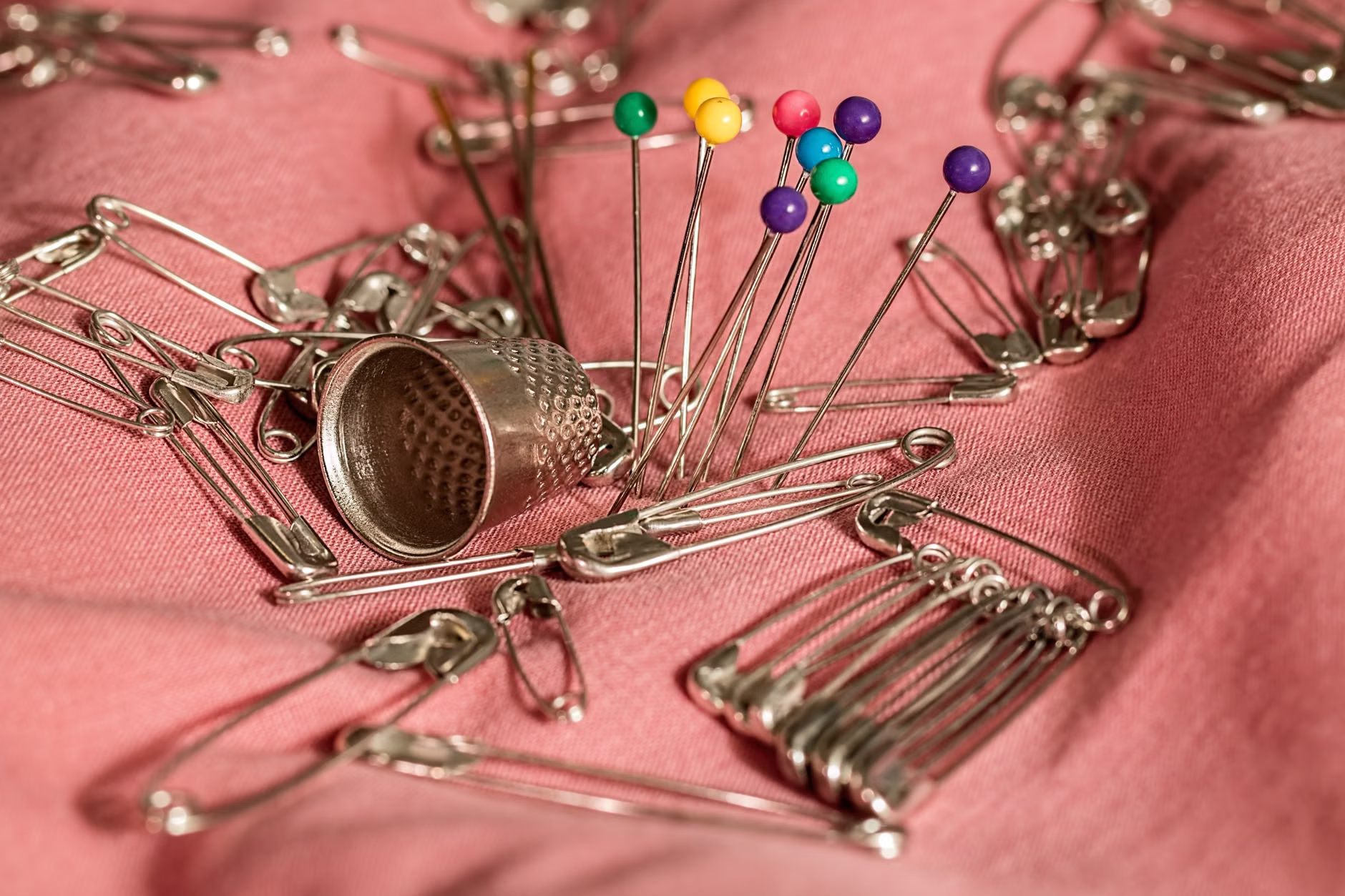
The biggest mistake parents make is buying a massive, expensive sewing kit filled with items they will never use. Stick to the basics: a few needles, a spool of neutral-colored thread (grey or navy works for almost everything), a pair of sharp fabric scissors, and a small pack of iron-on patches. Keep this in a clear container in your living room or kitchen drawer. If you can see it, you’ll use it.
The Strategic Approach: What to Fix vs. What to Recycle
Not every damaged item is worth the effort. A key part of the slow-fashion mindset is knowing when to let go. Ask yourself these three questions before attempting a repair:
- Is the fabric integrity still there? If the fabric around the tear is paper-thin and falling apart, a patch will only rip through the surrounding area. That is a sign the garment has reached the end of its life.
- Does the item still fit? If your child is on the verge of a growth spurt, spending an hour mending a pair of pants that will be too short in a month is a poor use of your limited time.
- Is it a structural or aesthetic issue? A missing button is a structural issue—the garment is unusable without it. A small, decorative embroidery snag is aesthetic. Prioritize the structural.
When you encounter a “hopeless” case, don’t just throw it in the trash. Cut it up into cleaning rags. Old cotton t-shirts make excellent, lint-free dust cloths. This keeps the material out of the landfill and saves you from buying paper towels or specialized cleaning cloths.
Visible Mending: Why “Perfect” is the Enemy
There is a misconception that a repair must be invisible to be successful. This is a standard inherited from an era when clothes were cheaper to replace than to repair, and “pristine” clothing was a status symbol. In the current context, visible mending is your best friend. It celebrates the fact that you are maintaining your belongings.
If you have a hole in a blue denim jacket, don’t hunt for the exact shade of blue thread. Use a bright yellow or red. It turns a “damaged” item into a “customized” one. This approach is much more forgiving. If your stitching isn’t perfectly straight, it just looks like a deliberate design choice. For busy parents, this removes the anxiety of failure. You aren’t “fixing” a flaw; you’re adding a detail.
For those interested in learning more about the history and techniques of this, organizations like Fashion Revolution provide excellent resources on why extending the life of clothes by just nine months can reduce their carbon, waste, and water footprints by 20-30%. You can find their guides at fashionrevolution.org.
Involving Your Kids: A Lesson in Responsibility
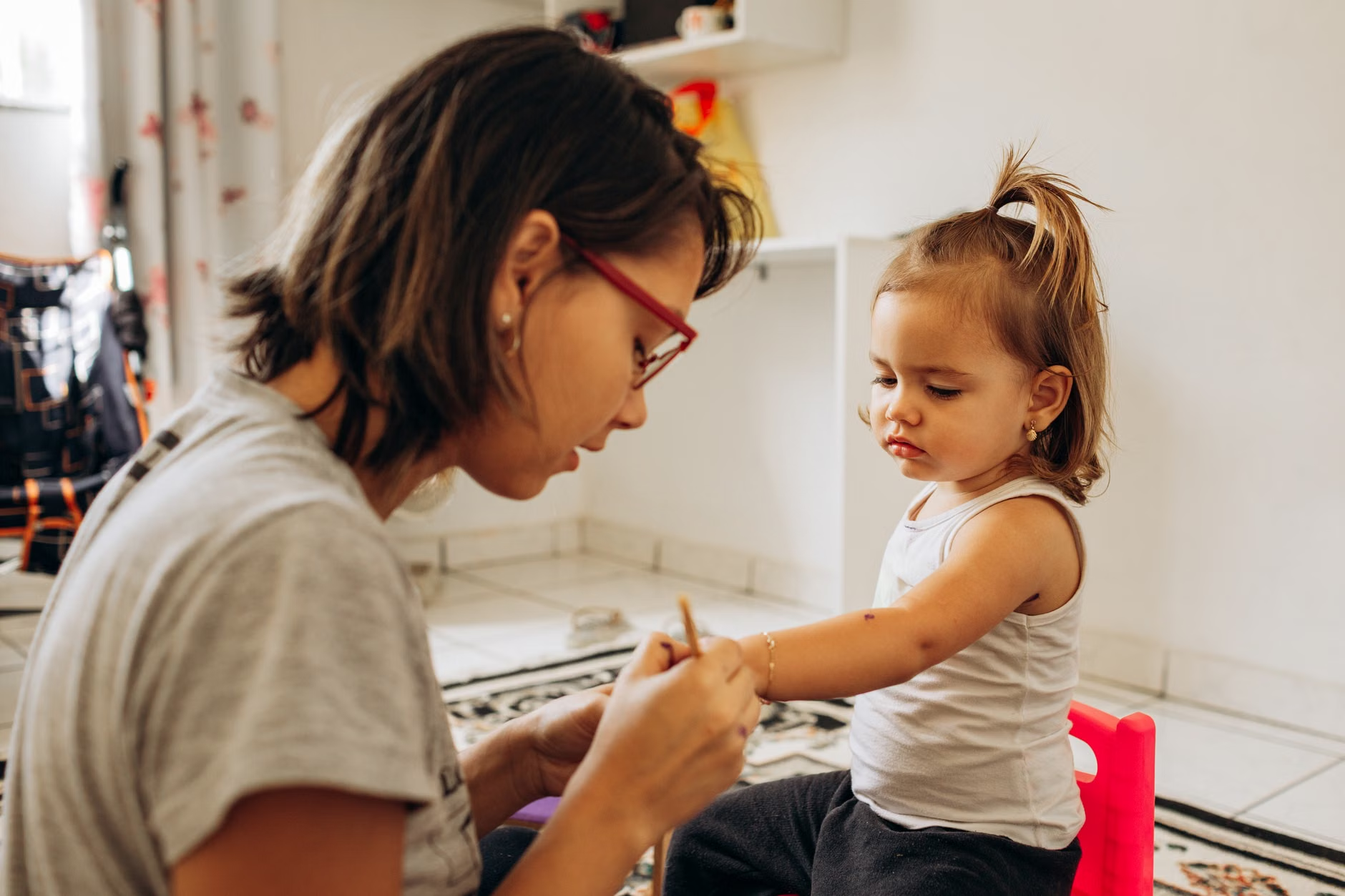
If your children are old enough to hold a dull needle, involve them. Teaching a child that their clothes are valuable resources helps combat the “disposable” mindset that fuels fast fashion. Start with simple tasks like choosing the patch color or helping to thread the needle. It turns a chore into a calm, focused bonding activity.
When a child understands the effort it takes to repair a tear, they are often more careful with their clothes in the future. It’s a subtle but powerful way to teach them about the value of goods and the impact of their consumption. If they are too young, explain what you are doing. “I’m fixing these pants so we can keep wearing them,” is a simple sentence that frames the action as a positive, proactive choice.
Common Roadblocks and How to Clear Them
“I don’t have enough time.” You don’t need a block of two hours. If you have a tear, fix it while watching a show or waiting for the kids to finish their homework. If you can only do one seam at a time, that’s fine. It doesn’t have to be completed in one sitting.
“My repairs look messy.” Everyone starts with messy repairs. The more you do, the better you get. If a repair is truly bothersome, cover it with a decorative patch or a piece of trim. The goal is to keep the item in circulation, not to win a sewing competition.
“I’m afraid I’ll ruin it further.” If you are working on a high-value item (like an expensive wool coat), take it to a professional. But for everyday jeans, t-shirts, and sweaters, the “worst-case scenario” is that you have to toss it anyway. You have nothing to lose by trying.
Beyond Mending: The Maintenance Cycle
Slow fashion isn’t just about fixing broken things; it’s about how you treat them daily. Simple changes in how you wash clothes can prevent the need for repairs. Always wash clothes inside out to reduce friction, and use the cold water setting to preserve fabric fibers. If you have a dryer, use the lowest heat setting or air-dry when possible. High heat is the primary culprit behind broken elastic and brittle fabrics.
By shifting your focus from “buying new” to “maintaining current,” you are essentially giving yourself a raise. Every item you repair is money you don’t have to spend at the mall. It’s a quiet, radical act that saves your budget and your sanity. Start with one small item this week—a button, a hem, or a tiny hole. You’ll be surprised at how satisfying it feels to extend the life of something you love.
Frequently Asked Questions
Q: What if I don’t have an iron for iron-on patches?
A: You can use a hair straightener! It works perfectly for small patches on cuffs or pockets. Just be careful to use a piece of scrap fabric between the straightener and the patch to prevent burning the garment.
Q: How do I know if a hole is too big to fix?
A: If the hole is larger than the palm of your hand, it’s usually better to use the fabric for a different project (like a tote bag or cleaning rags) rather than trying to patch it. The structural integrity of the garment is likely too compromised at that point.
Q: Where can I find more inspiration for simple mending?
A: Look for “Sashiko” or “Visible Mending” tutorials on platforms like YouTube or Pinterest. Focus on channels that emphasize “beginner” or “no-sew” techniques to keep the learning curve manageable for your busy schedule.
Note: All repair techniques mentioned are suggestions based on standard textile maintenance. For high-end garments or specialized fabrics like silk or leather, consult a professional tailor to avoid permanent damage.