Key Takeaways
- Direct vs. Indirect Costs: Expect a moderate increase in energy and transport prices as carbon pricing mechanisms expand to cover broader supply chains by 2026.
- The “Green Premium” Reality: Household goods with high carbon footprints will likely see price hikes, while sustainable alternatives may become more competitively priced.
- Proactive Budgeting: Prioritizing energy-efficient appliances and localized consumption now will insulate your household from the volatility of carbon-linked inflation.
By 2026, the term “carbon tax” will move from the peripheral noise of political debates into the core of your monthly credit card statement. If you are in your 30s or 40s, you are likely already juggling childcare costs, mortgage interest rates, and the general creep of inflation. Adding a layer of carbon-related pricing to your household goods isn’t just an abstract climate policy; it is a structural change in how we pay for the energy, transport, and manufacturing that sustains our daily lives.
The transition is not meant to be a sudden shock, but rather a slow, deliberate ratcheting up of costs on carbon-intensive processes. Understanding how this works—and where it will hit your wallet first—is the best way to avoid being caught off guard.

The Mechanism: How Carbon Pricing Reaches Your Kitchen Table
To understand the 2026 impact, we have to move past the idea that a carbon tax is just a “gas tax.” In many global jurisdictions, governments are implementing broader “Carbon Border Adjustment Mechanisms” (CBAM) or expanded emission trading schemes. These systems effectively put a price on the carbon emitted during the production of goods, from the steel in your refrigerator to the plastic in your children’s toys.
When a manufacturer has to pay for their emissions, that cost does not simply disappear. It is amortized across the price of the final product. By 2026, as these regulations mature, the “carbon content” of a product will become a hidden variable in its retail price. If you buy a product that requires heavy fossil fuel usage for both production and shipping, you will be paying a premium compared to a locally sourced or low-carbon alternative.
For a household managing a tight budget, this means the “cheapest” option on the shelf might no longer be the best financial choice in the long run. We are entering an era where the carbon footprint of a product is a proxy for its future price volatility. If a product relies heavily on energy-intensive manufacturing, its price will be tethered to the rising price of carbon credits.
Energy and Utilities: The First Line of Impact
The most immediate impact for most families will be in the home utility sector. Electricity grids are being forced to decarbonize, and the cost of maintaining older, carbon-heavy infrastructure while investing in renewables is being passed down to the consumer. In 2026, the “carbon component” of your electricity bill will likely be more transparent.
This is where the “household efficiency” conversation shifts from being “nice to have” to “financially essential.” If your home is poorly insulated or relies on aging, inefficient heating systems, you are essentially renting your comfort from the energy market at a premium. As carbon prices rise, that premium grows.
Decision Rule: If you are planning a home renovation, prioritize “envelope” improvements—insulation, windows, and draft-proofing—before investing in fancy smart-home tech. These passive improvements reduce the baseline energy demand, effectively shielding you from future carbon-tax-related hikes on every kilowatt-hour you consume.
We often hear about the “green premium”—the idea that eco-friendly products are more expensive. By 2026, this dynamic is expected to invert for many product categories. As carbon taxes make traditional, high-emission production methods more expensive, the cost gap between standard goods and sustainable alternatives will narrow.

Consider the lifecycle of a household product. A high-quality, durable piece of furniture made from locally sourced materials has a lower carbon tax liability than a cheap, mass-produced item imported from halfway across the world, which incurs carbon costs for both manufacturing and long-distance shipping.
When you are shopping for household goods, start looking for products with transparent supply chains. Companies that have already invested in low-carbon logistics are future-proofing their prices. Companies that rely on legacy, high-emission supply chains will be forced to hike prices to cover their tax obligations. You aren’t just paying for the product; you are paying for the manufacturer’s ability to navigate the 2026 regulatory environment.
| Product Category | 2026 Cost Risk | Budget Strategy |
|---|---|---|
| Imported Electronics | High | Prioritize durability over features; repair rather than replace. |
| Local Seasonal Food | Low | Shift toward local farmers’ markets to avoid shipping-related carbon surcharges. |
| Fast Fashion/Home Decor | High | Buy second-hand; focus on timeless pieces that don’t need frequent replacement. |
The table above illustrates a clear trend: the more complex and global the supply chain, the higher the exposure to carbon-tax-driven price hikes. By choosing goods with shorter, more transparent supply chains, you are naturally hedging your household budget against these shifts.
Transportation and the Hidden Costs of Convenience
Transport is perhaps the most visible area of carbon pricing. Whether it is fuel taxes or road pricing, the cost of moving people and goods is being recalibrated to reflect the environmental reality. For families, this creates a specific set of challenges regarding commuting and logistics.
If you live in a suburban area and rely on a large, internal combustion engine (ICE) vehicle, the cost of “getting around” will likely trend upward as carbon pricing continues to influence fuel costs. By 2026, the total cost of ownership (TCO) for an ICE vehicle may look significantly different than it did in 2020. When you factor in potential carbon-linked fuel surcharges, the economic argument for electric vehicles (EVs) or hybrid alternatives becomes much stronger, even if the upfront cost remains higher.
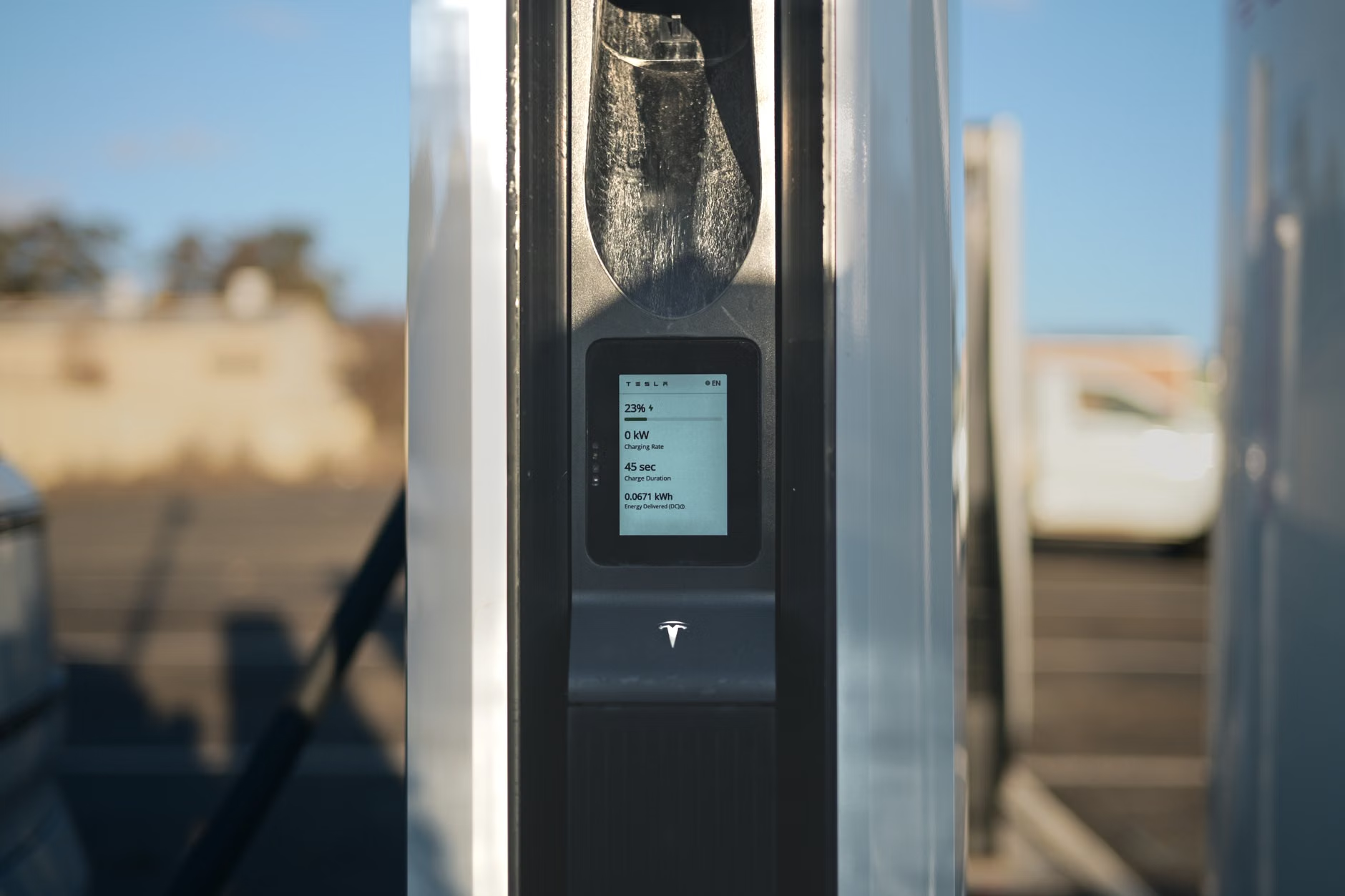
However, the advice here is not to rush into an expensive purchase. Instead, evaluate your family’s actual mobility needs. Can you consolidate errands? Is there a reliable public transit option that you have ignored because of the perceived convenience of your car? The “carbon tax” era is essentially a tax on inefficiency. The more efficiently you move, the less the tax impacts your bottom line.
Practical Steps to Future-Proof Your Household
If you feel overwhelmed by these shifts, remember that you do not need to overhaul your life overnight. Start by focusing on the “big three”: heat, transport, and consumption habits. These three areas account for the vast majority of a household’s carbon footprint—and therefore, their exposure to carbon-related price increases.
- Perform a Home Energy Audit: Many local utility companies offer these for free. They provide a roadmap of where your home is “leaking” money.
- Shift to “Repair-First” Mentality: The most carbon-efficient product is the one you already own. Before buying new, check if a repair or a simple upgrade can extend the life of your appliance.
- Localized Consumption: When shopping for groceries or home essentials, prioritize items produced within your region. This reduces the “carbon-tax-per-mile” baked into the final shelf price.
It is also worth noting that many governments provide subsidies or rebates for energy-efficient upgrades. As carbon tax revenue is collected, it is often recycled back into the economy through these programs. Keep an eye on your local government’s environmental or housing department websites—you might find that the cost of your next appliance upgrade is partially covered by a state or federal grant.
Common Misconceptions About Carbon Pricing
One common mistake is believing that carbon taxes will lead to an immediate, uniform price hike on everything. The reality is much more nuanced. Some products will see minimal impact, while others—particularly those relying on heavy industry or long-distance shipping—will see significant jumps. The market will react, and manufacturers will innovate to keep their prices competitive.
Another misconception is that individual action is futile. While it is true that systemic change is required, the aggregate effect of millions of households shifting their consumption patterns is exactly what drives manufacturers to innovate. When consumers stop buying high-emission products, the market responds. Your household budget is a vote for the type of economy you want to support.
Looking Ahead: The 2026 Landscape
By 2026, we will likely see a clearer distinction in the marketplace between “carbon-optimized” brands and those that are lagging. The brands that are transparent about their carbon footprint will likely be the ones you want to partner with for the long term. They are the ones who have done the work to ensure their products remain affordable in a carbon-constrained world.
The transition to a lower-carbon economy is a marathon, not a sprint. The goal is not to eliminate your carbon footprint entirely—which is impossible for most modern families—but to reduce your vulnerability to the costs associated with that footprint. By making small, informed adjustments now, you are building a more resilient financial foundation for your family.
Stay curious, keep an eye on your local energy policies, and don’t be afraid to ask questions about the products you buy. The most powerful tool you have in the face of these changes is your own purchasing power. Use it wisely, and you will find that the shift to a greener economy can be managed without breaking your household budget.
Frequently Asked Questions
Q: Will a carbon tax make all my groceries more expensive by 2026?
A: Not necessarily. While items with long, complex supply chains may see price increases due to shipping and logistics costs, local produce and goods with shorter supply chains are likely to remain more stable. Focus on local sourcing to mitigate these risks.
Q: Is it better to buy an electric vehicle now to avoid future fuel taxes?
A: It depends on your current vehicle’s condition and your annual mileage. If your current car is reliable and you don’t drive much, it may be more cost-effective to keep it for a few more years. However, if you are planning a replacement soon, factor in the projected increase in fuel costs over the next five years when calculating the total cost of ownership for an EV vs. an ICE vehicle.
Q: Are there any hidden benefits to these carbon regulations for families?
A: Yes. Many governments use the revenue generated from carbon pricing to fund subsidies for home energy efficiency, such as heat pump installations or solar panels. These programs can significantly lower your long-term utility bills, effectively offsetting the higher costs of carbon-intensive goods.
For further reading on how these policies are being implemented in your specific region, please consult official government climate action portals, such as the International Energy Agency (IEA) for global trends or your national government’s environmental department website for local subsidies and specific tax implementations.