- Standardize your medical kit: Combine all essential medications and prescriptions into one “master bag” to avoid searching through multiple suitcases during emergencies.
- The 1:1 Rule for Tech: Ensure every senior traveler has a dedicated power bank and a simple “cheat sheet” card for their devices, reducing the need for constant technical troubleshooting.
- Prioritize “Ease of Movement”: Use lightweight, four-wheel spinner luggage for everyone; the ability to roll bags upright prevents strain for both children and seniors, significantly reducing airport fatigue.
The secret to surviving a multi-generational trip—where you are juggling the needs of a toddler, a teenager, and a grandparent—isn’t about packing more; it’s about packing for the “lowest common denominator” of convenience. When you travel as a group spanning three or more generations, the primary goal shifts from “having everything” to “having the right thing at the right time.” If you are in your 30s or 40s, you are likely the de facto project manager of this operation. You are the one carrying the extra snacks, the chargers, and the emergency Tylenol. This guide breaks down exactly how to organize your gear so that the trip remains a vacation rather than a logistics nightmare.
The Strategy of Modular Packing
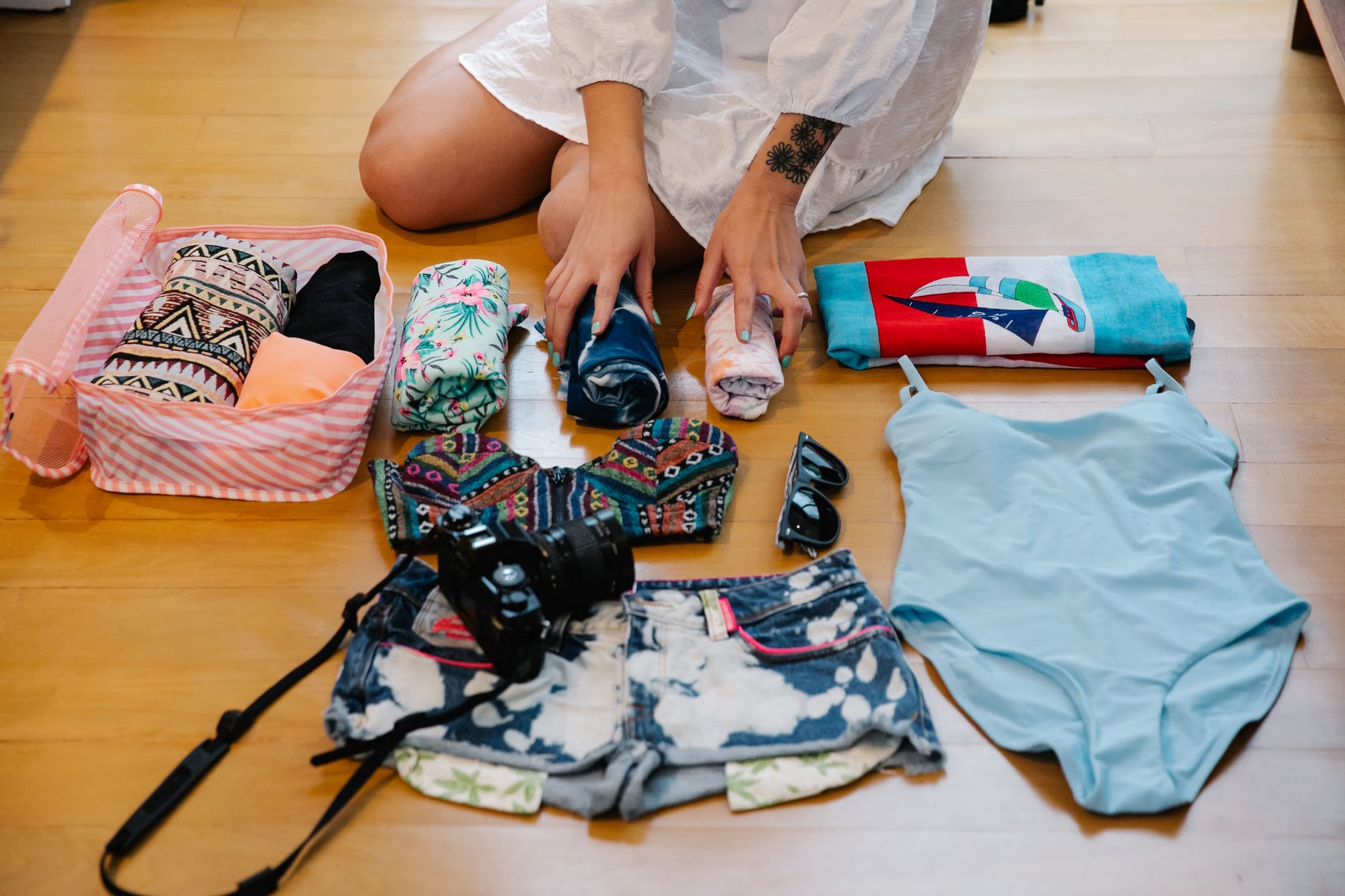
The biggest mistake most families make is “bulk packing”—throwing everything into one massive suitcase or, conversely, letting everyone pack their own bags without a central system. When you are moving through a hotel lobby or a train station with a group, you cannot afford to wait while a grandparent searches for their glasses in a disorganized duffel or a child loses their tablet in a mountain of clothes. The solution is modular packing.
Use color-coded packing cubes for each family member. This isn’t just for aesthetic satisfaction; it’s a functional necessity. If you have three kids, assign a color to each. If you have parents traveling with you, assign them their own distinct color. When you arrive at your destination, you don’t need to unpack everything at once. You simply pull out the cubes. This keeps the environment tidy and, more importantly, keeps the “who has what” question to a minimum.
For seniors, prioritize accessibility. Their cubes should be placed at the top of the suitcase. Why? Because seniors often require more frequent changes of clothing or access to specific items like compression socks or comfort layers. If their gear is buried, you will find yourself repacking the entire suitcase in the middle of a check-in line. It is a small trade-off in space that pays dividends in reduced stress.
The Master Medical and Tech Kit
In a multi-generational group, you are managing three distinct sets of health and tech needs. Children need entertainment and basic first aid; adults need connectivity and documentation; seniors need medications and mobility support. Do not keep these separate. Create a “Master Kit.”
Your Master Kit should be a lightweight, hard-shell or padded pouch that stays with you, the primary caregiver, at all times. It should contain:
- Medication copies: A physical printout of all prescriptions for everyone in the group.
- Backup Power: Two high-capacity power banks (at least 20,000mAh) that can charge multiple devices.
- The “Emergency” Tech: A universal adapter, a multi-port charging hub, and long-reach charging cables (at least 2 meters).
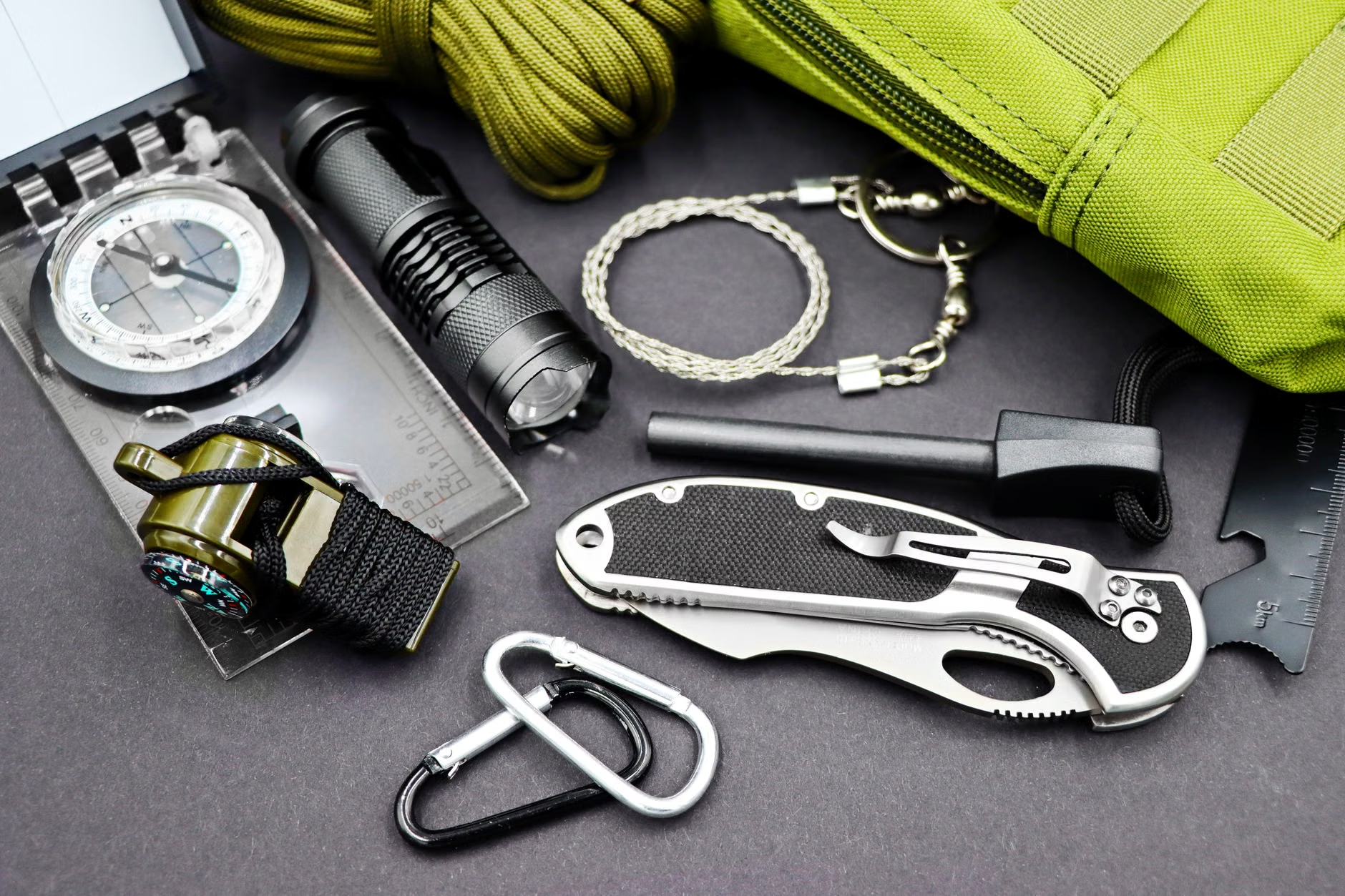
Why does this matter? If you are at a foreign airport and a device dies or a medication is misplaced, you don’t want to be digging through five different bags. By centralizing the “critical path” items, you eliminate the panic factor. If a senior traveler forgets their charging cable, you have a spare. If a child has a minor scrape, the antiseptic is right there. This is your “survival” layer. Everything else—clothes, shoes, extra books—can be replaced or forgotten without ruining the trip.
Choosing the Right Luggage for Diverse Mobility
Not all luggage is created equal, and when you are traveling with seniors, the type of bag they use can determine the speed at which your entire group moves. Avoid two-wheeled suitcases. They require the user to pull the weight behind them, which causes strain on the wrist, shoulder, and lower back. For an older traveler, this is a recipe for physical fatigue before the flight even takes off.
Invest in four-wheel “spinner” luggage. These bags glide alongside the traveler, requiring almost no effort to maneuver. For children, choose lightweight, hard-shell bags that they can sit on if necessary (if they are young enough) or that are small enough to be easily managed. If a child is under 10, they should not be carrying more than 10% of their body weight. The rest of their “must-haves” should be distributed into your own bags.
Common mistake: Allowing children to bring “everything.” Limit each child to one small backpack for their personal entertainment. If they cannot carry it themselves, it does not come. This forces them to prioritize what they actually want to play with, which usually results in them choosing one or two items rather than bringing a haul of toys that will end up being carried by you.
The “Senior-Friendly” Packing Checklist
Packing for seniors requires a different mindset than packing for yourself. You are likely packing for efficiency, but for them, you are packing for comfort and security. Here is a breakdown of what often gets overlooked:
| Category | Item | Why it matters |
|---|---|---|
| Comfort | Compression socks | Prevents DVT and swelling during long flights or train rides. |
| Health | Extra prescription supply | Always pack 7 days more than the trip duration. |
| Safety | Digital/Physical ID card | Contains emergency contacts and medical conditions in the local language. |
| Ease | Slip-on shoes | Essential for security checkpoints and minimizing bending. |
The “extra supply” rule is non-negotiable. If you are going for a 10-day trip, bring 17 days of medication. You never know when a flight will be canceled or a transit strike will occur. This is not “being pessimistic”; it is “being prepared.” For the local language ID card, use a simple translation tool to write: “I have [condition] and take [medication]. Please contact [name] at [phone number].” Laminate this card and attach it to their bag or keep it in their wallet.
Managing the “Tech Gap”
If you are in your 30s or 40s, you are likely the family IT department. To avoid spending your vacation troubleshooting Wi-Fi connections or explaining how to use a boarding pass app, prepare the seniors in your group *before* you leave. Create a “Cheat Sheet” for their phone.
This cheat sheet should be a simple A5 card with screenshots of the apps they will use most: the airline app, the hotel booking app, and the map app. Add a section for “What to do if the internet stops.” For instance, “Download offline maps for [Destination]” or “Take a screenshot of the hotel address.” This empowers them to solve minor problems themselves, which increases their confidence and saves you from constant interruptions.

Another overlooked variable is the charging environment. Most hotel rooms have limited outlets, and they are rarely where you need them. Carry a small, multi-port USB-C wall charger. This allows you to charge your phone, the kids’ tablets, and the seniors’ e-readers from a single wall socket. It’s a small, inexpensive piece of hardware that prevents the “who gets the outlet” argument that inevitably happens in a hotel room.
The Psychology of Space and Expectations
Packing is as much about managing expectations as it is about physical items. When you are traveling with multiple generations, you are merging different lifestyles. Seniors may want to wake up early; kids may want to stay up late. Your packing list should reflect this. If you are the one planning the itinerary, ensure you have “buffer gear.”
What is buffer gear? It’s the items that allow for independence. If the seniors want to rest while you take the kids to a park, they need a small, portable way to stay entertained—a Kindle, a deck of cards, or a puzzle book. If the kids are having a meltdown, you need a pre-packed “distraction kit” with snacks, stickers, or noise-canceling headphones. If you pack items that facilitate independent downtime, you won’t feel the need to be “on” 24/7.
One common mistake is bringing items that assume a “perfect” trip. For example, packing formal wear for every night. In a multi-generational setup, you are usually exhausted by 7:00 PM. Instead, pack versatile, comfortable clothing that works for a casual dinner or a walk through the city. The easier your clothing choices are, the more mental energy you have for the actual family bonding.
Refining Your Travel Workflow
The final step in your packing process is the “rehearsal.” Two days before you leave, lay out everything. Not just the clothes, but the tech, the medical kits, and the documents. Walk through your travel day in your head. Start from the moment you leave your house to the moment you walk into your accommodation.
Ask yourself: “Where is the passport?” “Where is the medicine?” “Where is the snack for the kid?” If you have to dig for any of these items, your packing is not optimized. Adjust your bag layout until the most critical items are in the most accessible pockets. This “mental rehearsal” is the most effective way to identify gaps in your planning.
Remember that the goal isn’t to be a professional travel agent. It’s to ensure that when you are at the airport, you aren’t the one sweating and stressed while your family looks on. By centralizing your logistics, simplifying the gear for each generation, and preparing for the “what ifs,” you create a buffer of calm that allows the entire group to actually enjoy the journey together.
For further reading on international travel requirements, always check the IATA Travel Centre for the latest visa and health entry requirements, as these change frequently and can vary significantly based on your citizenship and destination.
Frequently Asked Questions
Q: How do I handle heavy medical equipment or mobility aids for seniors?
A: Most airlines allow you to bring mobility aids (like canes, walkers, or folding wheelchairs) as additional items that do not count toward your baggage allowance. Always contact your airline at least 48 hours in advance to register these items. For medical equipment, ensure you have a doctor’s note, as some devices require specific battery types for flight safety.
Q: What is the best way to handle different time zones for medication?
A: For time-sensitive medication, keep your watch or phone set to your “home” time zone for the first 24 hours of travel, or use a pill organizer that is clearly marked by time of day rather than just “morning/night.” If you have a complex schedule, consult your pharmacist before you leave to see if a slight adjustment is safe to align with the destination’s time zone.
Q: Should I pack snacks for everyone, or rely on airport food?
A: Always pack your own snacks. Airport food is expensive, often unhealthy, and can be a source of stress if the kids are hungry and the lines are long. Pack non-perishable, high-protein snacks like nuts, dried fruit, or protein bars. This is especially important for seniors who may have specific dietary needs or blood sugar management requirements.
Final Note: Travel is rarely perfect, but good preparation is the difference between a minor hiccup and a ruined day. Focus on the essentials, keep your systems simple, and don’t be afraid to leave behind anything that doesn’t serve a clear, practical purpose.