Traveling during the off-peak season is the single most effective way to reclaim the joy of a city break, allowing you to bypass the crushing crowds and inflated prices that define modern tourism while enjoying a more authentic, relaxed experience. For those of us in our 30s and 40s—who are likely juggling demanding work schedules, school calendars, and the relentless hum of daily responsibilities—the traditional “peak” travel window is often more of a stress-inducing logistical nightmare than a restorative holiday. Shifting your travel lens toward the shoulders of the season—the weeks just before or after the primary summer or holiday rush—transforms a frantic, overpriced trip into a genuine opportunity for cultural immersion and personal reset.
- The 20% Rule: By shifting your travel dates by as little as 10 to 14 days outside of peak school holidays, you can reliably reduce flight and accommodation costs by 20% to 40%.
- The “Shoulder” Advantage: Visiting major cultural hubs in the late spring (May) or early autumn (late September to October) offers a superior climate—avoiding the sweltering heat of summer—while ensuring all major attractions remain fully operational.
- Authenticity Over Efficiency: Off-peak travel allows you to engage with local businesses that are actually run by residents, rather than seasonal staff, providing a more genuine window into the city’s true character.
You know the feeling: you finally get a few days off, but instead of relaxing, you spend your time dodging selfie sticks, waiting in two-hour queues for a museum that’s too crowded to see the art, and paying double for a hotel room that feels like a storage closet. It’s a common frustration, and frankly, it’s unnecessary. Let’s talk about how to hack the calendar to make your next city break actually feel like a break.

Why “Off-Peak” Is More Than Just a Budget Hack
When we talk about “off-peak,” most people immediately think about saving money. While the financial benefits are undeniable, the real value lies in the cognitive bandwidth you reclaim. When you travel during a peak period, you are in a constant state of “queue management.” You are perpetually checking apps for wait times, fighting for a table at dinner, or navigating crowded transit systems. This is essentially an extension of the administrative load we all carry at home.
Off-peak travel—specifically the “shoulder season”—flips this dynamic. You aren’t just saving money; you are buying back your time and your patience. Imagine wandering through the Uffizi Gallery in Florence or the Louvre in Paris without being shoved by a tour group. You can actually look at the art. You can hear the guide. You can sit on a bench and think. This isn’t just “traveling cheaply”; it is upgrading the quality of your experience by orders of magnitude.
Furthermore, the “off-peak” experience is often more sustainable for the cities themselves. Overtourism is a genuine crisis for many European and global hubs. By visiting during quieter months, you are spreading the economic impact of your travel throughout the year, which helps local businesses survive and reduces the strain on city infrastructure. It’s a rare instance where doing what is best for your own mental health aligns perfectly with being a more responsible global citizen.
Defining Your Window: The Science of Shoulder Seasons
To execute this successfully, you need to understand the geography of time. There is no universal “off-peak” calendar, but there are reliable patterns. For most of the Northern Hemisphere, the peak travel periods are July, August, and the weeks surrounding major religious or national holidays (like Christmas or Easter). The “shoulder” is the sweet spot: late April to early June, and mid-September to late October.
However, you must account for regional variations. For example, a “city break” in a southern European city like Seville or Athens is significantly more pleasant in late October than in August, when temperatures can exceed 40°C (104°F). Conversely, a city like Edinburgh or Copenhagen might be bracingly cold in November, but that cold is often accompanied by a cozy, local-focused atmosphere that you simply don’t get in the frantic summer months.
| Region/Type | Peak Season | Shoulder Season (Recommended) | Key Consideration |
|---|---|---|---|
| Southern Europe | June – August | May, Oct – Nov | Avoid the heat; better food quality |
| Northern Europe | July – Aug | May, Sept | Longer daylight hours in late spring |
| Major US Metros | June – Aug, Dec | March – April, Oct – Nov | Conference schedules impact hotel rates |
When using this table, consider your specific goal. If your goal is “outdoor exploration,” prioritize the shoulder months where the weather is temperate. If your goal is “museum-hopping and fine dining,” you can even consider the dead of winter (January/February), provided you are comfortable with colder temperatures. The trade-off is usually shorter daylight hours, but the advantage is absolute solitude in major cultural sites.
The Hidden Costs of “Peak” Thinking
There is a common misconception that “off-peak” means “nothing is open.” This is a relic of the 1990s travel era. In the modern, hyper-connected world, major cities are 365-day destinations. Unless you are visiting a specialized beach resort, the city itself doesn’t close. The only things that might be “closed” are some seasonal tourist traps, which, honestly, you’re better off avoiding anyway.
One of the most overlooked variables for parents in their 30s and 40s is the dynamic pricing of family travel. If you are traveling with children, you are often tethered to school holidays. The industry knows this, which is why prices spike exactly when your kids are out of school. The strategy here is to look for “micro-breaks”—long weekends that overlap with local professional development days or regional holidays that don’t align with the massive, global, school-holiday surges.
Another common mistake is failing to account for “business surge” pricing. A city might be “off-peak” for tourists, but if there is a massive international trade conference or a major sporting event, hotel prices will skyrocket. Always perform a quick check on the city’s major convention center calendar before booking your flights. A five-minute search can save you hundreds of dollars in hotel surcharges that have nothing to do with the “travel season.”
Step-by-Step: How to Plan Your Off-Peak Break
Planning an off-peak trip requires a slightly different workflow than the “book and forget” model. Follow these steps to ensure you don’t fall into the common traps:
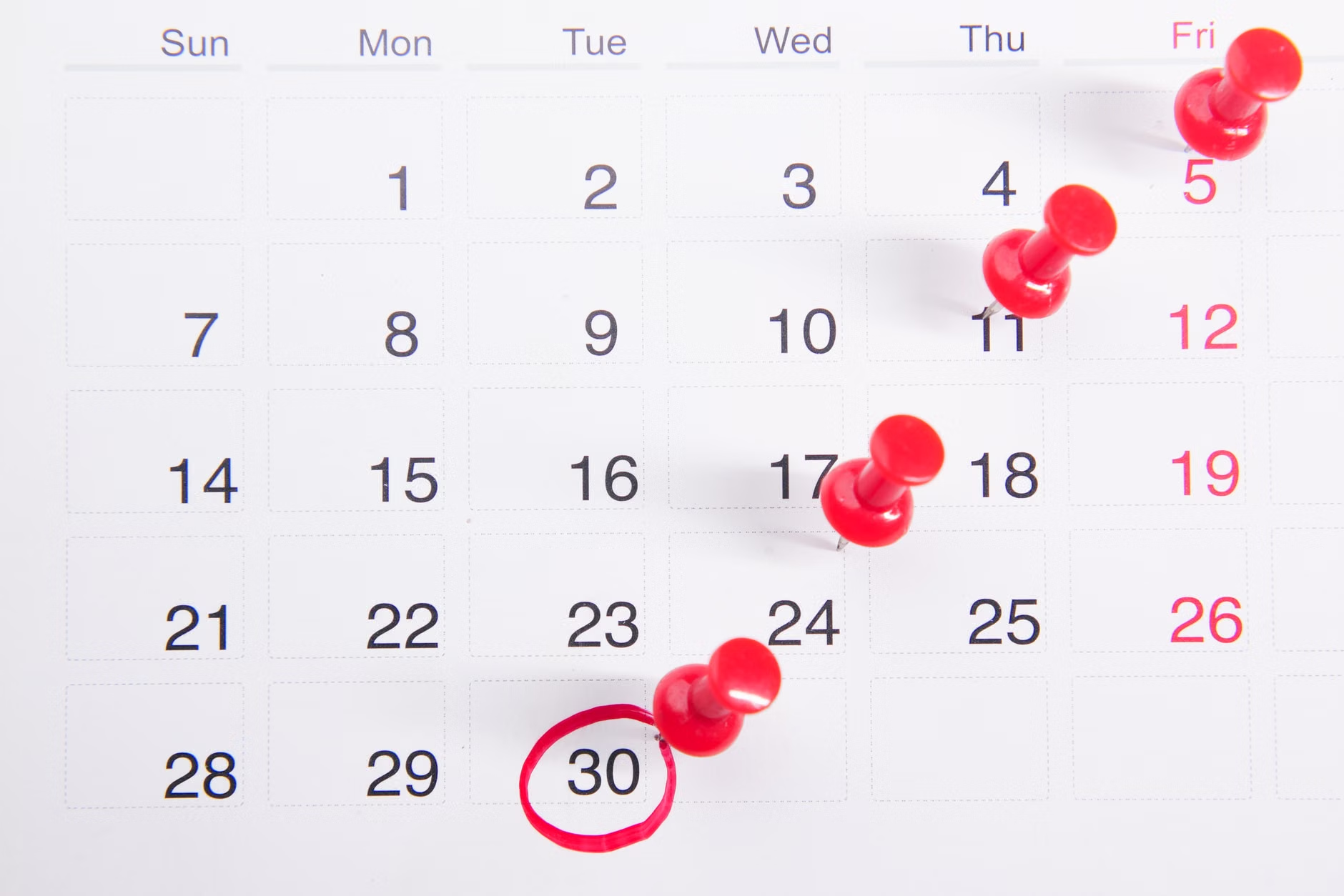
Step 1: The Calendar Audit
Identify your target destination and look for their “local” calendar. Search for “[City Name] annual events calendar.” You want to avoid the “peak of the peak”—the one week where the local festival happens and prices triple. Instead, aim for the two weeks immediately preceding or following that event.
Step 2: The “Climate Buffer” Strategy
Don’t just look at the average temperature. Look at the average rainfall and daylight hours. In your 30s and 40s, you’re likely looking for a balance of activity and relaxation. A rainy city can be romantic, but if you’re planning on walking 15,000 steps a day, a rainy week will ruin your gear and your mood. Use sites like Weather Spark to see the historical daily weather patterns, not just the averages.
Step 3: The “Local-First” Accommodation Check
During the off-peak season, luxury hotels often drop their rates significantly to fill rooms. This is the time to splurge on a property that would be double the price in July. Conversely, look for boutique apartments in neighborhoods where locals actually live. Because you aren’t fighting for space, you can afford to stay in the heart of the city rather than being relegated to the periphery to save costs.
Step 4: Managing Expectations
Be aware that some seasonal attractions (like outdoor rooftop bars or specific park activities) might have reduced hours. This is the trade-off. If your entire trip depends on one specific outdoor activity, check their official website for their “seasonal operating dates” before you book your flights. Don’t assume everything is open just because it’s a major city.
Why Your 30s and 40s Require a Different Approach to Travel
In our 20s, we might have been fine with a hostel bunk and a 6:00 AM flight to save $50. Now, we value sleep, decent coffee, and a sense of calm. The off-peak strategy is essentially a “lifestyle optimization.” You are choosing to spend your money on quality of time rather than quantity of access. By traveling when everyone else is working or in school, you are effectively buying a more premium version of the same destination.
Consider the logistical reality of traveling with children. Navigating a crowded airport terminal or a packed city square with kids is a recipe for sensory overload. In the off-peak, the pace is slower. You aren’t constantly worried about losing a child in a sea of tourists. You can take your time. You can stop for a long lunch. This shift in pace is exactly what makes a trip “restorative” rather than “exhausting.”
If you are traveling solo or as a couple, the benefits are even more pronounced. You can engage with the city’s culture. You can spend an hour in a bookstore without feeling guilty about occupying space. You can strike up conversations with local shopkeepers who, in the off-peak, are actually happy to chat because they aren’t being run ragged by thousands of visitors every day.
The Unexpected Trade-offs You Need to Know
It’s important to be realistic. Off-peak travel isn’t a magic bullet that fixes every logistical challenge. There are trade-offs. The most significant is limited daylight if you travel in the deep off-peak (November to February in the Northern Hemisphere). You need to plan your activities for the morning and early afternoon, leaving your evenings for long, slow dinners and cultural performances.
Another trade-off is the “maintenance cycle.” Many cities take advantage of the off-peak season to perform construction on historical buildings or public infrastructure. You might encounter scaffolding on a cathedral or a closed wing of a museum. This is the price of maintenance. Always check the “news” or “announcements” section of the major museums you intend to visit. If a specific sight is non-negotiable for you, a quick email to their visitor services can save you from a disappointing arrival.
Lastly, be prepared for “seasonal shift” in restaurant menus. You won’t get the same produce in October that you get in July. This is a feature, not a bug. If you are a foodie, this is a chance to experience the city’s cuisine as the locals eat it, rather than the “tourist menu” designed for summer visitors. Embrace the root vegetables, the stews, and the seasonal specialties of the region. It’s a more authentic culinary experience.
Final Thoughts: Take Control of Your Calendar
The decision to travel off-peak is a decision to prioritize your well-being over the herd mentality. It requires a bit more research and a willingness to step outside the conventional “vacation calendar,” but the payoff is a deeper, more meaningful connection to the places you visit. You aren’t just a consumer of tourism; you are an observer of the city as it actually exists.
Start small. If you have a long weekend, don’t look at the major holidays. Look at the quiet weeks. Book a flight, find a boutique hotel that would normally be out of your budget, and give yourself the gift of space. You’ll find that the best travel experiences aren’t found in the middle of a crowd, but in the quiet corners of a city that has finally, for a few days, stopped trying to accommodate the world and started being itself again.
If you want to dive deeper into official tourism data to identify your next destination’s quietest months, look at the UN Tourism (formerly UNWTO) reports on seasonal distribution of visitors. Their regional statistics provide excellent, data-backed insights into when cities are at their most and least busy: UN Tourism Data Portal. Additionally, most major city tourism boards publish “visitor statistics by month” on their official websites, which are invaluable for identifying the exact weeks when the crowds drop off.
Frequently Asked Questions
1. Is it true that everything is closed during the off-peak season?
No. This is a common myth. While some seasonal outdoor attractions or specific tourist-focused shops might have reduced hours or close for the season, the core infrastructure of any major city—museums, galleries, historical sites, restaurants, and public transit—remains fully operational. In fact, many cultural institutions increase their programming during the off-peak months to attract local visitors.
2. How do I handle the weather if I travel during the shoulder season?
The key is “layering” and “flexibility.” Instead of relying on a single heavy coat or summer attire, pack a versatile range of clothing that can handle a 10-degree Celsius (18-degree Fahrenheit) swing in temperature. Use reliable, long-term weather tracking tools like Weather Spark to understand the historical reality of the city’s climate, rather than just the “average” temperature, which can be misleading.
3. Will I really save money, or are the flight prices just the same?
Flight pricing is dynamic, but the “shoulder season” rule holds firm. Airlines use sophisticated algorithms to price seats based on demand. By traveling just two weeks outside of the peak holiday blocks, you are avoiding the surge in demand from families and vacationers. You will almost always find lower base fares, and more importantly, you will have access to better-value accommodation that would be sold out or priced at a premium during peak times.