The most effective way to experience a major metropolitan hub without the soul-crushing fatigue of peak-season tourism is to embrace the “Quiet-Tourism” approach—prioritizing off-peak timing, hyper-local neighborhood exploration, and a deliberate rejection of “must-see” bucket lists.
- Timing is everything: Shifting your daily schedule by just three hours—starting your day at 7:00 AM—allows you to visit major landmarks before the tour bus crowds arrive.
- The 15-Minute Rule: Most tourists never venture more than 15 minutes on foot from a city’s primary transit hub or famous landmark; moving just beyond this radius guarantees a significantly more authentic and quiet experience.
- Quality over Quantity: For parents and busy professionals, attempting to see three major sites in one day leads to “decision fatigue.” Limiting yourself to one intentional activity per day preserves your energy and prevents burnout.
Why the “Must-See” Mentality is Sabotaging Your City Break
If you are in your 30s or 40s, you know the feeling: you have finally secured a few days of annual leave, the kids are settled, and you arrive in a city like Rome, Tokyo, or New York with a list of twenty places you “have to” see. By noon on the first day, you are hot, tired, and surrounded by thousands of other people doing the exact same thing. This is the “Tourist Trap Cycle,” and it is the antithesis of a restorative vacation.
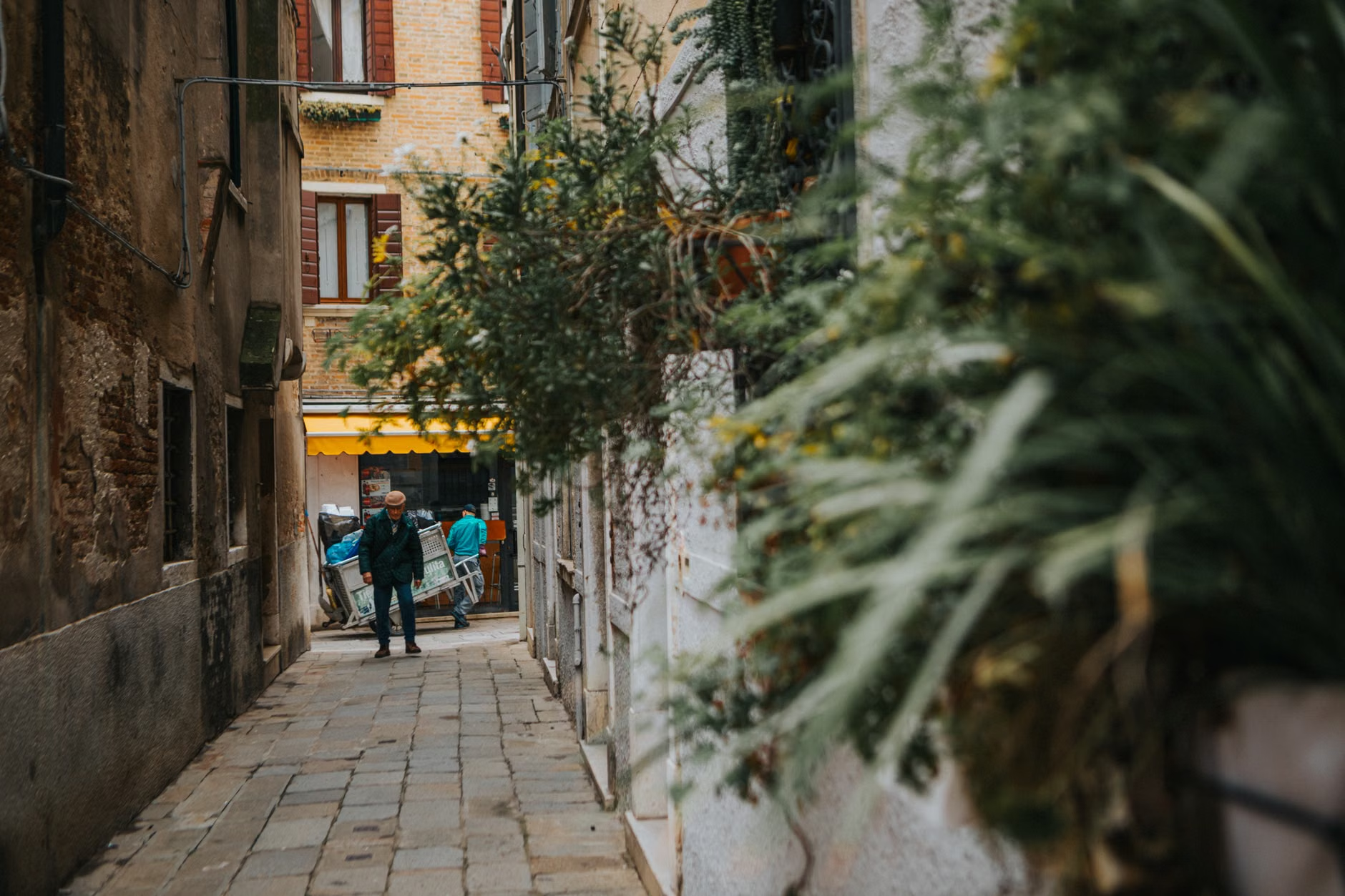
Quiet-Tourism isn’t about avoiding cities; it’s about changing your relationship with them. It acknowledges that major cities are not just monuments and museums; they are living, breathing ecosystems. When we treat a city as a checklist, we ignore the local bakeries, the quiet residential parks, and the rhythm of actual life. By slowing down, you aren’t just avoiding crowds—you are actually seeing the city as it exists for the people who live there, which is almost always more rewarding than standing in a two-hour queue for a photo op.
The Science of Crowd Dynamics: Why Shifting Your Schedule Works
Crowds in major metropolitan hubs follow a predictable pattern. They generally wake up around 9:00 AM, hit the major sites between 10:30 AM and 2:00 PM, and congregate in central dining districts at 7:00 PM. If you are a parent trying to navigate a stroller or a professional looking for a quiet moment, these times are your enemy.
The “Early Bird” Strategy: Many of the world’s most famous landmarks, such as the Trevi Fountain in Rome or the Meiji Jingu in Tokyo, are public spaces. While the museums have set opening hours, the squares and parks do not. By arriving at 7:00 AM, you get the site to yourself, the light is better for photography, and the temperature is significantly more comfortable. You are finished with your “major” activity by 10:00 AM, just as the chaos begins to unfold.
The “Reverse Dining” Rule: In major cities, restaurants in the tourist center are often overpriced and crowded. By eating your main meal at 11:30 AM or 5:00 PM, you avoid the peak rush, get better service, and are more likely to find a seat in a restaurant that serves locals. This isn’t just about avoiding crowds; it’s about experiencing the quality of food that a local would actually pay for, rather than the “tourist menu” designed for people who won’t be returning.

Mapping Your “Quiet Zone”: The 15-Minute Radius
One of the most overlooked variables in travel planning is the “tourist gravity” of a city. Most tourists are creatures of habit; they stick to the main thoroughfares, the streets immediately adjacent to train stations, and the areas surrounding world-famous cathedrals or towers. This creates an incredibly dense concentration of people in a very small percentage of the city’s total area.
If you walk just 15 minutes away from the center of a major hub, the density of tourists drops by roughly 70-80%. For example, in Paris, the area immediately around the Eiffel Tower is a logistical nightmare. However, if you cross the river and head into the 15th or 16th Arrondissement, you find quiet streets, local markets, and charming cafes where the staff might actually have time to chat with you.
How to Identify Your Quiet Zone:
- Use Satellite View: Before booking accommodation, look at a satellite map. Avoid blocks that look like pure tourist infrastructure (souvenir shops, chain hotels). Look for blocks with green space or residential density.
- Check the “School Run”: If you see schools, pharmacies, and small grocery stores on Google Maps, you have found a neighborhood. This is where you want to spend your downtime.
- Avoid the “Main Drag”: Never stay on the street that connects the main train station to the main attraction. It will be the loudest, most crowded, and least authentic part of the city.

Managing Expectations for Parents: The “One-Big-Thing” Rule
Traveling with children in your 30s or 40s requires a different set of rules. The biggest mistake parents make is trying to maintain an adult-paced itinerary. The “One-Big-Thing” rule is a simple decision-making framework: you pick exactly one major activity for the day. That is it. If you manage to do more, that is a bonus. If you don’t, you haven’t “failed” your vacation.
| Activity Type | Crowd Level | Recommended Strategy |
|---|---|---|
| Major Landmarks (Museums/Towers) | Extreme | Book the first slot of the day; exit by 11:00 AM. |
| City Parks / Botanical Gardens | Low to Medium | Great for afternoon downtime; bring a picnic to avoid queues. |
| Shopping Districts | High | Avoid these entirely; choose local markets instead. |
Why this works: When you remove the pressure of a schedule, you remove the stress. If your child wants to spend two hours chasing pigeons in a local park, you let them. In a standard “checklist” trip, that would be seen as “wasted time.” In a Quiet-Tourism trip, that is simply an afternoon of authentic local life.
The Hidden Costs of “Efficiency”
We are often told that buying “Skip-the-Line” tickets or taking “Express Tours” is the smart way to travel. While these services can be useful, they often trap you in a cycle of constant movement. They encourage you to see more things, which leads to higher levels of cognitive load. For professionals who are already burnt out from work, adding a “high-efficiency” travel schedule is essentially just moving your work stress into a different zip code.
The Trade-off: You might see fewer “famous” things, but you will remember your trip much more clearly. Research into memory formation shows that we remember experiences that are unique and emotionally resonant, not experiences that we simply “checked off” a list. Sitting in a quiet neighborhood cafe, watching the morning commute of locals, is a memory that sticks. Standing in a crowded elevator to the top of a skyscraper is often just a blur of noise and waiting.
Practical Steps to Begin Your Quiet-Tourism Journey
If you are ready to shift your travel style, start with these actionable steps on your next trip:
- Research the “Local” Neighborhoods: Spend 30 minutes on Reddit (specifically city-based subreddits) or local blogs searching for “best neighborhood for families” rather than “best hotels for tourists.”
- Adjust Your Sleep/Wake Cycle: If you are traveling across time zones, use the first two days to lean into the early morning. Be the person in the cafe at 7:30 AM. You will be amazed at the difference in service and atmosphere.
- Ditch the “Famous” Restaurants: Use a tool like Google Maps to find restaurants with 4.5+ stars that are located at least a 20-minute walk from the main tourist hubs. Look for menus that are written only in the local language; this is often a sign of a place that doesn’t rely on transient tourist foot traffic.
- Embrace the “Slow” Transit: Instead of taking the high-speed subway, take a bus or walk. You see more of the city, and you avoid the claustrophobia of underground transit systems during rush hour.
Common Misconceptions About Quiet-Tourism
People often worry that by avoiding the “main” sites, they are missing out on the “real” city. This is a common misconception. The “real” city is found in the way people get their bread, how they interact in parks, and how they navigate their daily routines. The major landmarks are the *monuments* of the city, not the city itself.
Another concern is that Quiet-Tourism is “expensive” or “exclusive.” On the contrary, it is usually cheaper. By staying in residential neighborhoods and eating at local-focused establishments, you avoid the “tourist tax” that is baked into the prices of central hotels and restaurants. You are effectively living as a local, which is almost always more cost-effective than being a tourist.
Addressing the “FOMO” (Fear of Missing Out)
The biggest hurdle to Quiet-Tourism is the internal feeling that you are “missing out” because you didn’t see the specific statue or palace that every Instagram post highlights. Remind yourself that the goal of a vacation is rest and connection, not the accumulation of digital content. Your memories will be far richer if they are grounded in the quiet, peaceful moments of discovery rather than the chaotic, loud moments of shared consumption.
Start small. On your next trip, commit to just one “Quiet Day.” Spend the entire day in a neighborhood you discovered on a map, without a single planned tourist activity. Walk, sit in a park, browse a local bookstore, and eat at a place that looks like it has been there for fifty years. You will likely find that this one day becomes the highlight of your entire trip.
Final Thoughts on Intentional Travel
Quiet-Tourism is not a rigid set of rules; it is a philosophy of intentionality. It is about taking back your time and your energy from the industry of tourism that seeks to move you as quickly as possible from one consumption point to another. In your 30s and 40s, your time is your most valuable resource. Don’t spend it waiting in lines or fighting through crowds.
By choosing to step off the beaten path, even just by a few blocks, you gain a perspective on a city that most people never see. You gain peace, you gain better food, and you gain the ability to actually enjoy your family or your own company. That is the true value of travel—not the photo you take, but the space you create for yourself to experience the world as it actually is.
Frequently Asked Questions
1. Does Quiet-Tourism mean I should skip all major landmarks?
Not at all. It means being strategic. Visit the landmarks, but do so at the absolute earliest opening time or the latest possible slot in the evening. Avoid the “mid-day rush” at all costs.
2. How do I find “local” neighborhoods if I don’t speak the language?
Use modern tools like Google Maps and TripAdvisor, but filter by distance. If a restaurant has high ratings from locals, you will see it in the reviews. Look for keywords like “neighborhood gem” or “family favorite” in English-language reviews left by expats or frequent travelers.
3. Is this approach suitable for small children?
It is actually ideal for children. Avoiding crowds reduces the risk of losing someone in a mass of people, and residential neighborhoods often have playgrounds and parks that are much better suited for young children than the concrete-heavy tourist centers.
For further reading on sustainable and mindful travel, you can explore the resources provided by the UN World Tourism Organization regarding responsible tourism practices.