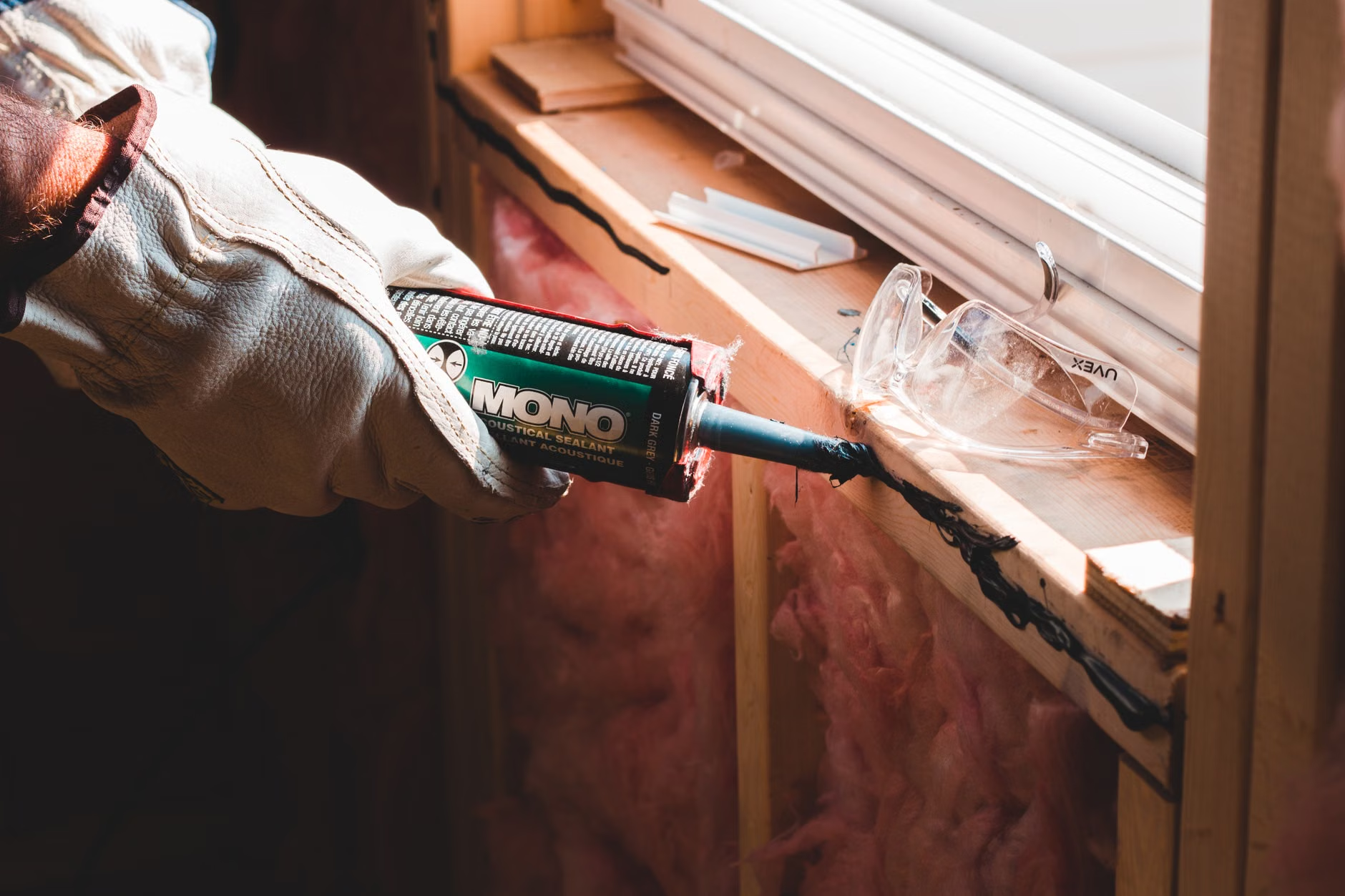
- Seal the air gaps: 80% of sound transmission in residential homes occurs through air leaks around doors and windows; installing high-quality weatherstripping is the most cost-effective first step.
- Mass is the enemy of noise: Adding soft, dense materials like heavy curtains, thick rugs, or bookshelves to your office space converts airborne sound energy into heat, significantly reducing echo and outside noise.
- Prioritize the door: A standard hollow-core interior door acts like a drum skin; upgrading to a solid-core door or adding an automatic door bottom sweep provides the single biggest improvement in acoustic privacy.
If you are a parent working from home, you know the specific, high-frequency sound of a toy being dropped—or a tantrum starting—just as you hit the unmute button on a high-stakes client call. The “home-office” dream often hits a wall of reality when residential architecture meets the demands of professional video conferencing. Most homes are designed for living, not for acoustic isolation. When you need to concentrate, the ambient noise of a household isn’t just an annoyance; it’s a direct hit to your cognitive load.
Soundproofing is often misunderstood as a project that requires construction crews and thousands of dollars. While you can certainly go that route, most parents need immediate, actionable, and incremental improvements that don’t require moving walls. The goal here is to manage sound transmission and reverberation so you can maintain a professional environment without compromising your family’s comfort.
Why Sound Travels and How to Stop It
To fix the noise problem, you have to understand the two ways sound moves: airborne sound and impact sound. Airborne sound is what you hear when someone talks in the next room—the sound waves travel through the air, move through cracks, and vibrate walls. Impact sound is the thud of footsteps or the dragging of a chair on the floor above you.
In a standard residential setting, the biggest culprits are usually the “leaks.” If air can pass through, sound will follow. This is why the gap under your office door is the first place you should look. If you can see light coming through the bottom of the door, you have an acoustic highway for noise. You don’t need a soundproof studio; you need a sealed perimeter.
For parents in their 30s and 40s, the priority is usually “good enough for a Zoom call.” You don’t need to eliminate the sound of a jet engine; you need to suppress the sound of a toddler’s cartoon or a dog barking in the hallway. This is achievable by focusing on mass, damping, and sealing.
| Strategy | Effectiveness | Best For |
|---|---|---|
| Weatherstripping | High (Cost-effective) | Sealing door gaps and window frames. |
| Heavy Curtains | Moderate | Reducing echo and blocking street noise. |
| Bookshelves | Moderate-High | Adding mass to thin partition walls. |
| Solid-Core Door | High | Replacing hollow-core interior doors. |
Sealing the Perimeter: The Doorway Strategy
The interior doors in most homes are “hollow-core.” They are essentially two thin sheets of plywood with a cardboard honeycomb inside. They are excellent at keeping pets out, but terrible at keeping sound out. If you cannot replace the door with a solid-core version—which is heavy, expensive, and requires professional installation—you have to work with what you have.
Start with a door bottom sweep. This is a rubber or brush strip that attaches to the bottom of the door to close the gap between the door and the floor. When you close the door, the sweep creates an airtight seal. For even better results, look for an “automatic” door bottom that drops a seal when the door closes and retracts when it opens, preventing friction with your carpet or hardwood floors.
Next, apply adhesive weatherstripping around the door frame. You are looking for a “compression seal.” When you close the door, the weatherstripping should be squeezed tightly. If you can see light between the door and the frame, you haven’t installed it tightly enough. This small step can reduce noise transmission by up to 30% in many cases.

Managing Interior Acoustics: Reducing Echo
Have you ever been on a call where the other person sounds like they are in a bathroom? That is “reverb.” Even if you block external noise, if your office has hard, flat surfaces (like empty walls, hardwood floors, or glass windows), your voice will bounce around and create a muddy, unprofessional sound for your microphone.
This is where soft furnishings become your best friend. A thick, high-pile area rug is one of the most effective ways to kill floor-based reflections. If you have hardwood floors, the sound bounces off the hard surface and hits your microphone directly. A rug absorbs that energy.
For your walls, consider acoustic panels. You don’t need to cover every inch of your office. Placing a few 2×2 foot acoustic foam or fabric-wrapped fiberglass panels at “first reflection points”—the spots on the walls directly to your left and right when you are sitting at your desk—will significantly clarify your voice. If you want a more aesthetic approach, heavy, floor-to-ceiling velvet or blackout curtains over windows and even over walls can mimic the effect of professional soundproofing.
Using Mass to Block Low-Frequency Noise
Low-frequency sounds, like a bass-heavy television in the living room, are the hardest to stop. They pass through light walls like they aren’t even there. To stop these, you need mass. The heavier the object, the harder it is for sound waves to move it.
If your office shares a wall with the main living area, placing a tall, heavy bookshelf against that wall is a classic, highly effective trick. Fill the bookshelf with books—the denser, the better. Paper is surprisingly good at absorbing and blocking sound. If you don’t have space for a bookshelf, hanging heavy tapestries or even a “sound blanket” (a moving blanket specifically designed for acoustic control) on the wall can add that extra layer of density required to dampen the thumping sounds that usually interrupt your meetings.
Common Mistakes Parents Make
The most common mistake is assuming that “egg cartons” or cheap foam triangles from online marketplaces will soundproof a room. They won’t. Those materials are meant for acoustic treatment (improving the sound inside the room), not soundproofing (stopping sound from entering or leaving). They are too thin to stop sound waves from passing through walls.
Another mistake is neglecting the air vents. In many homes, the heating and cooling ducts are shared between rooms. They act like a megaphone, carrying sound directly from the playroom to your office. If you notice most of the noise is coming through the vents, you can purchase “acoustic baffles” for ducts, or simply ensure that your furniture is not positioned directly in front of the vent, as the sound will bounce off the furniture and into the room.
Actionable Steps for Immediate Improvement
If you have one weekend to improve your workspace, follow this order of operations for the highest return on investment:
- Check the door seals: Install high-quality weatherstripping and a door sweep. This is your foundation.
- Add floor coverage: Place a thick rug with a felt underlay under your desk and chair.
- Address the walls: If you have a shared wall, move a bookshelf or heavy dresser against it.
- Test your microphone: Sometimes the best “soundproofing” is a directional microphone that ignores sound coming from behind or to the sides of you. Invest in a cardioid microphone rather than relying on your laptop’s built-in mic.
Remember that soundproofing is a game of diminishing returns. You will get 80% of the benefit from the first 20% of the effort. Don’t feel pressured to turn your home office into a hermetically sealed bunker. By focusing on the gaps and adding mass to your surfaces, you can create a space that allows you to be both a present parent and a productive professional.
For more technical details on sound transmission classes (STC) and building materials, you can refer to the National Research Council of Canada’s guide on residential acoustics, which provides a great baseline for understanding how different materials handle sound.
Frequently Asked Questions
Does acoustic foam actually block sound from leaving the room?
No. Acoustic foam is designed to absorb echoes inside a room to improve audio quality for recording or speaking. It is not dense enough to stop sound from traveling through walls. To block sound, you need mass (like drywall, heavy furniture, or solid wood).
Is it worth replacing my interior door with a solid-core one?
Yes, if you work in an area with high household traffic. A solid-core door is significantly heavier and denser than a hollow-core door, providing a much stronger barrier against noise. It is often the single most effective structural change you can make without doing a full renovation.
How do I know if my office has a sound leak?
Turn off all the lights in your office and have someone stand in the hallway or the adjacent room with a bright flashlight. If you can see light coming through the gaps around your door frame or at the floor, you have an air leak. Wherever air can pass, sound can follow.
Take these steps one at a time. You will be surprised at how much quieter your workday becomes once you stop the air from moving and add a bit of mass to your surroundings. It is a small investment that pays off every time you hit that unmute button with confidence.