The 2026 Global Food Security outlook indicates that while supply chains have stabilized post-pandemic, the persistent “inflationary floor”—a baseline of higher costs for energy, labor, and climate-adjusted logistics—will continue to compress household grocery budgets for the foreseeable future. For families in their 30s and 40s, this means that food security is shifting from a macro-policy concern to a daily tactical management challenge.
- The “Inflationary Floor” is permanent: Don’t wait for pre-2020 prices; your budget must adapt to a 15-20% higher baseline for staple goods.
- Strategic Bulk Buying is essential: Moving from “just-in-time” shopping to “buffer-stock” management acts as a hedge against unpredictable price spikes.
- Nutrient Density vs. Caloric Density: As prices rise, focusing on high-nutrient, low-cost staples (legumes, grains, frozen produce) is the most effective way to maintain health without ballooning costs.
The Reality of the 2026 Food Economy
If you feel like your weekly grocery trip costs significantly more than it did a few years ago, you aren’t imagining it. The 2026 food security landscape is defined by “sticky” inflation. Unlike previous cycles where prices surged and eventually retreated, the current environment is marked by structural changes: climate-driven crop volatility, higher transportation costs due to fuel transitions, and labor shortages in the agricultural sector.
For most of us, this translates into the “grocery creep.” You go in for essentials—milk, eggs, flour, fresh vegetables—and the total at the register consistently hits 20% higher than your internal mental estimate. This isn’t just a temporary blip; it is the new baseline. Understanding this allows you to stop waiting for a “return to normal” and start building a system that works in the current reality.
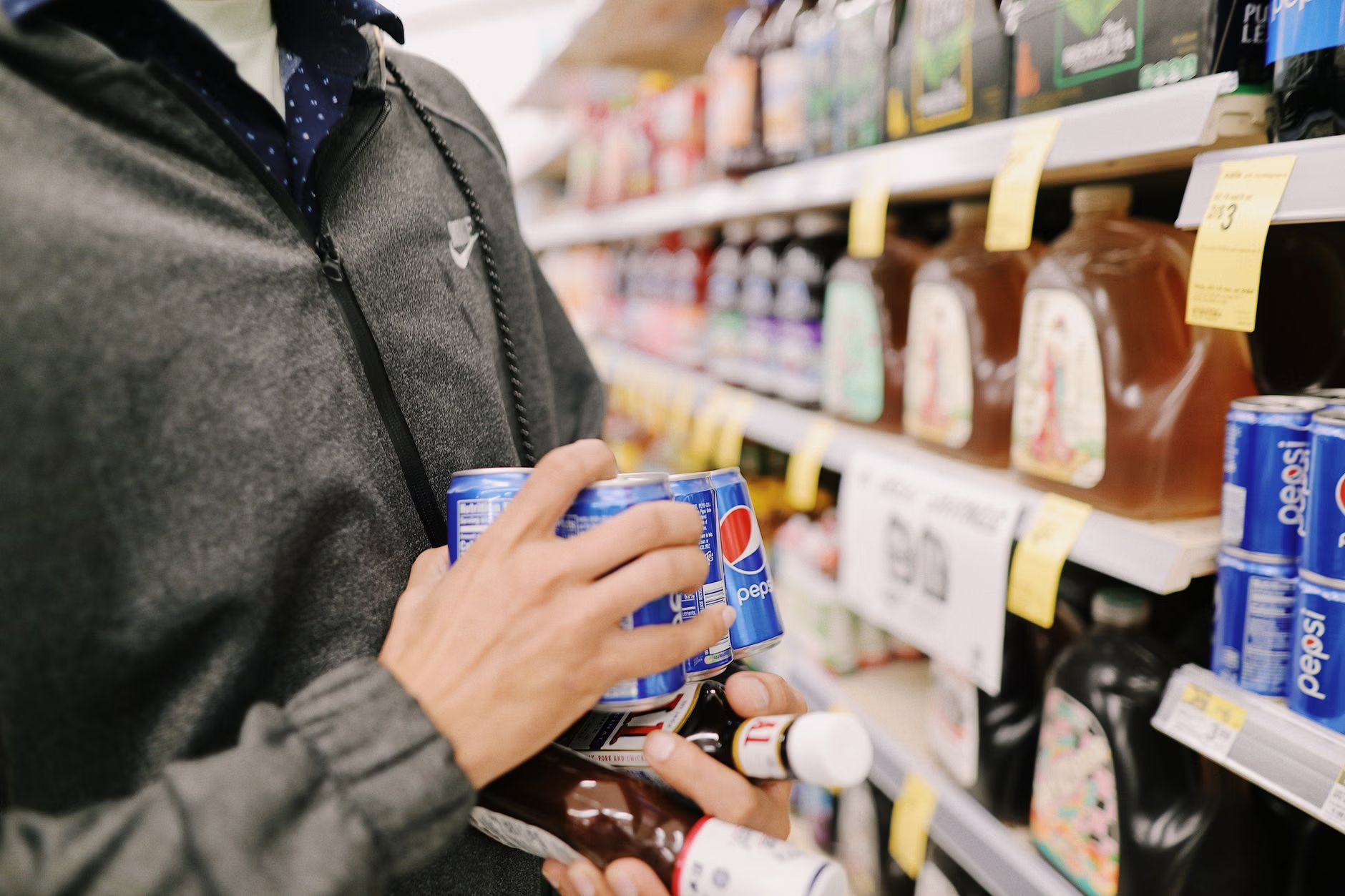
Why does this matter for your 30s and 40s? This is the peak period for family expenses. Between mortgage payments, childcare, and saving for education, your food budget is often the most flexible—and therefore the most vulnerable—part of your monthly cash flow. When food costs rise, the “squeeze” forces you to either cut back on quality or sacrifice savings. Neither is a sustainable long-term strategy.
Shifting from Passive Consumption to Active Inventory Management
In the past, many of us treated grocery shopping as an errand: we go to the store, we buy what we need for the week, and we repeat. In 2026, this passive approach is your biggest financial leak. To combat the inflationary floor, you need to adopt a “buffer-stock” strategy. This doesn’t mean hoarding or panic-buying; it means maintaining a rolling inventory of non-perishable staples that you buy only when they are on sale.
The 3-Tier Pantry System
To implement this, categorize your kitchen inventory into three distinct tiers. This helps you manage your budget and reduce the frequency of “emergency” grocery runs, which are almost always more expensive.
| Tier | Items | Management Strategy |
|---|---|---|
| Core | Rice, dried beans, pasta, canned tomatoes, spices. | Maintain a 3-month supply. Buy in bulk when unit prices drop. |
| Weekly | Milk, eggs, fresh produce, bread. | Strict menu planning. Buy only what is required for 7 days. |
| Luxury/Fresh | Specialty cheeses, exotic fruit, pre-made items. | Budget-capped. Only added if the Core and Weekly budgets are met. |
The logic here is simple: by securing your “Core” items at lower prices through bulk purchasing, you insulate your household from the weekly volatility of food prices. When the price of fresh produce spikes due to a regional weather event, you have the flexibility to lean on your pantry-based meals, keeping your total weekly spend stable.
The Hidden Cost of “Convenience”
Convenience is the most expensive item in your shopping cart. In 2026, food manufacturers are increasingly shifting toward “value-added” products—pre-chopped vegetables, ready-to-heat sauces, and portioned snacks. While these save time, they often carry a 50% to 100% markup over the raw ingredients. For a family of four, this “convenience tax” can easily add hundreds of dollars to your monthly food bill.
Let’s look at a practical example: A bag of pre-washed, pre-cut salad mix versus a whole head of romaine lettuce. The pre-cut version might cost $5.00 for 10 ounces. A whole head of lettuce costs $2.00 and provides roughly 12–14 ounces of usable greens. By spending five minutes washing and chopping, you are effectively paying yourself $15 to $20 an hour in savings. When you multiply this across all the “convenience” items in your cart, the annual savings are enough to fund a significant portion of a family vacation or retirement contribution.
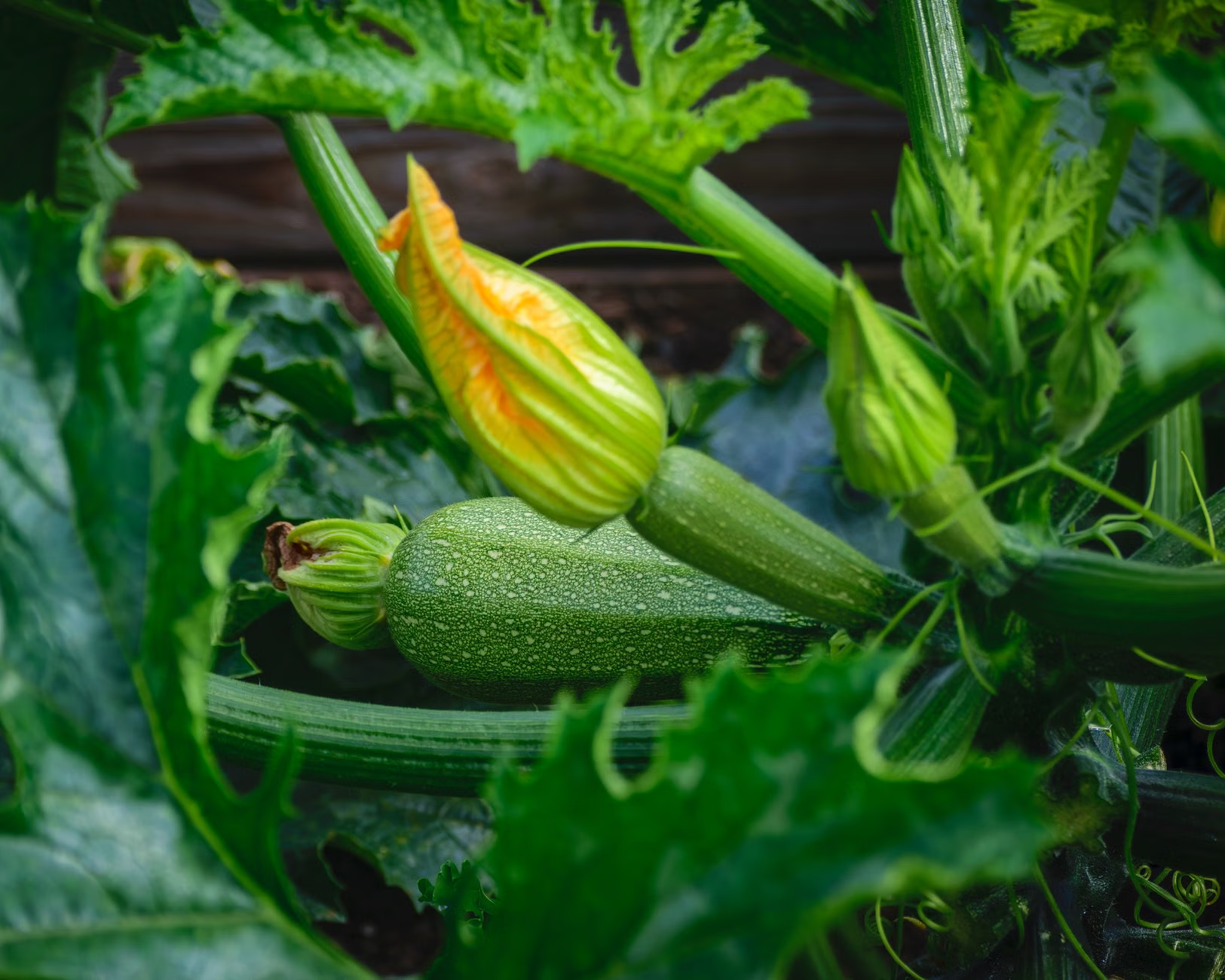
One of the most common mistakes families make when prices rise is shifting toward cheaper, calorie-dense, nutrient-poor foods (like processed cereals or pasta-heavy meals). While this lowers the immediate bill, it increases the “hidden costs” of health down the road. The 2026 food security goal is to maintain nutrient density without breaking the bank.
The “Frozen First” Rule: Frozen fruits and vegetables are often picked at peak ripeness and flash-frozen, preserving their nutritional profile better than “fresh” produce that has spent a week in transit. In 2026, supermarkets are increasingly prioritizing frozen stock to reduce waste. For your household, this is a win-win: you get consistent quality, lower prices, and zero food waste because you only use what you need.
Protein Diversification: Animal protein remains the most volatile sector of the food index. If your household relies solely on beef or chicken, you are at the mercy of feed prices and supply chain shocks. Integrating plant-based proteins—lentils, chickpeas, and beans—isn’t just a dietary choice; it is a vital economic hedge. These items have a long shelf life, are inexpensive, and provide a stable protein base that doesn’t fluctuate with livestock market trends.
Strategic Shopping: The Rules of Engagement
Effective shopping in 2026 requires a different mindset. You are no longer just a consumer; you are a procurement manager for your household. Here are the rules that will define your success:
- Unit Price is King: Never look at the total price of an item. Always look at the price per 100g or per kilogram. This is the only way to compare different brands and packaging sizes accurately.
- The “Sale” Trap: A sale is only a saving if it is an item you already use. If you buy a heavily discounted “gourmet” item that you wouldn’t normally purchase, you haven’t saved money—you have spent money on an unnecessary luxury.
- Store Brand Superiority: In 2026, the quality gap between private-label (store brand) and name-brand goods has narrowed significantly. In many cases, they are produced in the same facilities. Always test the store brand for staples; you will rarely notice a difference in quality.
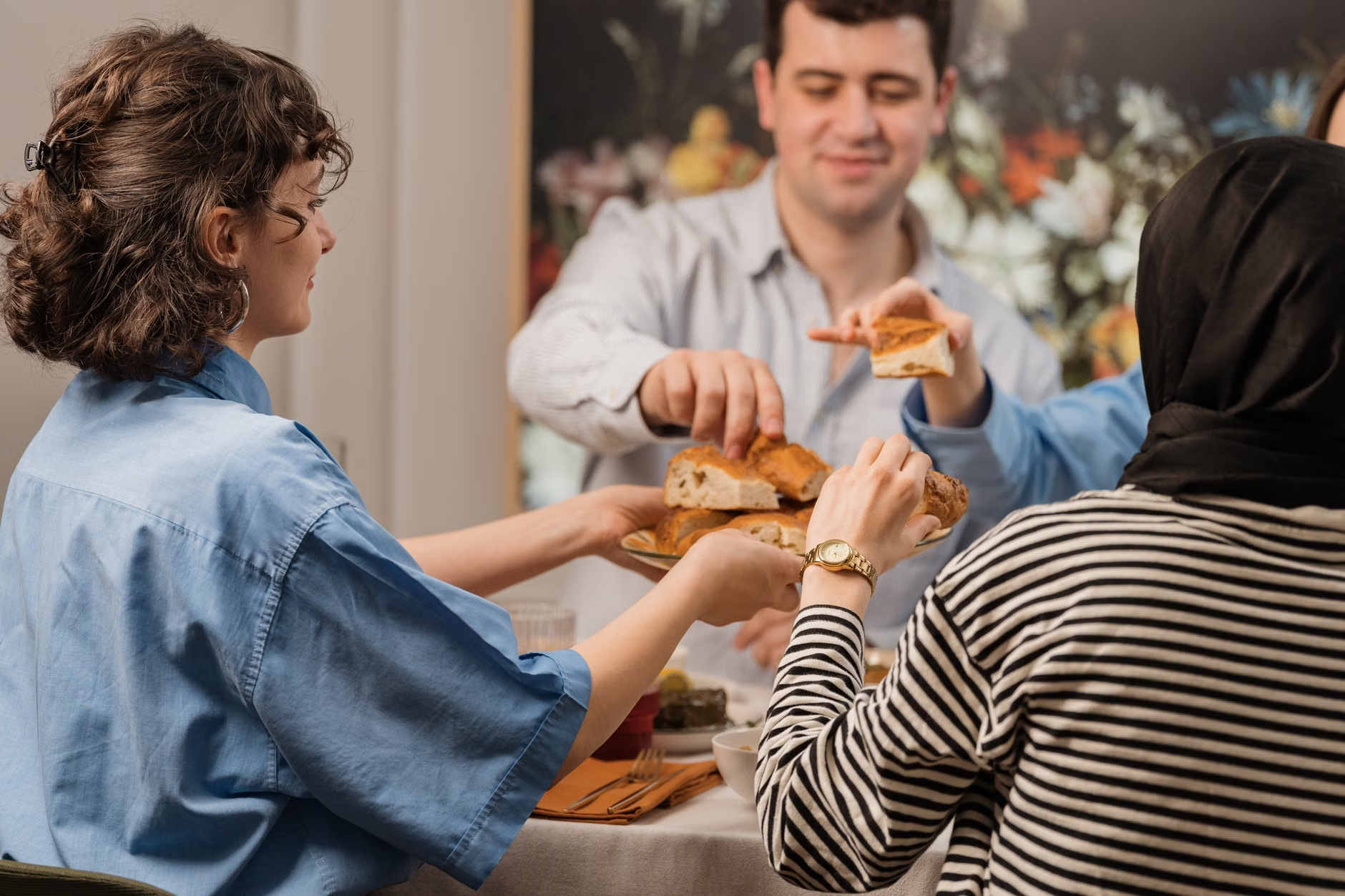
Building Resilience: Beyond the Grocery Store
True food security in 2026 involves looking outside the supermarket. Depending on your living situation, there are ways to reduce your dependency on industrial food chains. Even if you live in an urban apartment, small-scale changes can have a cumulative impact.
The Micro-Garden: You don’t need a farm to grow food. Herbs are the most expensive item in the supermarket relative to their weight. Growing basil, parsley, or rosemary on a windowsill can save you hundreds of dollars a year. More importantly, it teaches children where food comes from, fostering a connection to the lifecycle of their meals.
Community-Supported Agriculture (CSA): By subscribing to a local farm box, you are effectively “pre-buying” the harvest. This helps the farmer manage their risks and, in exchange, you get seasonal produce at a price that is often lower than retail, while also avoiding the markup of the traditional supermarket distribution chain.
The Psychological Aspect of Food Security
It is easy to feel overwhelmed by the constant headlines about inflation and global supply chain issues. However, the most effective way to combat this anxiety is through action. When you have a pantry that is well-stocked with staples and a system for managing your budget, the news headlines become less threatening. You move from a position of “reactivity” to “preparedness.”
This isn’t about fear; it’s about agency. By taking control of your food procurement, you are insulating your family from the stresses that many others face. You are teaching your children, through your daily actions, the value of planning, the importance of nutrition, and the reality that money is a tool to be managed, not a force to be feared.
The 2026 landscape is challenging, yes, but it is entirely manageable for those who are willing to adjust their habits. Start by auditing your pantry, identifying your core staples, and making the shift toward intentional, inventory-based shopping. The savings will materialize, but the peace of mind will be the real reward.
Frequently Asked Questions
1. Is it actually cheaper to buy in bulk, or is it just a marketing tactic?
It is genuinely cheaper, but only if you have the storage space and the discipline to use the items. The key is to calculate the unit price (price per kg or liter). If the unit price of a 5kg bag of rice is 30% lower than a 1kg bag, and you know your family will consume that rice within 6–9 months, it is a significant saving. The “marketing trap” occurs when you are encouraged to buy bulk items that spoil quickly or that your family doesn’t actually eat, leading to food waste.
2. How can I eat healthy on a budget when organic and fresh produce is so expensive?
Prioritize your spending. The “Dirty Dozen” list (a guide to which fruits and vegetables have the highest pesticide residues) is a great tool for deciding where to spend your organic budget. For everything else, focus on seasonal produce and frozen alternatives. Frozen vegetables are often more nutritious than “fresh” produce that has been shipped across the globe, and they are almost always cheaper. Prioritize nutrient-dense staples like legumes and whole grains, which are inexpensive, to offset the costs of higher-priced fresh produce.
3. My family is busy and we rely on convenience foods; how do I transition without losing all my free time?
Don’t try to change everything overnight. Start with “batch-cooking” just one component of your meals. For example, instead of buying pre-made pasta sauce, make a large batch of tomato sauce on a Sunday and freeze it in portions. Or, focus on one “convenience” item you buy regularly and find a way to replace it—like buying a whole chicken and roasting it yourself instead of buying pre-cooked rotisserie chicken. Small, incremental changes are sustainable; drastic, overnight shifts usually lead to burnout and a return to old habits.
For further reading on global food trends and price tracking, you can monitor the FAO Food Price Index, which provides the most accurate, independent data on international food commodity price trends.