The most effective way to improve your child’s academic performance at home isn’t a new curriculum or a private tutor—it is eliminating the “sensory noise” that sabotages their brain’s ability to process information.
- Visual noise is a primary focus killer: Excessive decor, open shelving, and bright, mismatched colors trigger constant subconscious scanning, which depletes cognitive battery.
- Acoustic control is non-negotiable: Even low-level background noise like a humming refrigerator or distant traffic forces the brain to expend energy on “auditory filtering,” leaving less capacity for learning.
- The 20-minute reset: A physical “sensory audit” should be performed every quarter, as a child’s tolerance for stimuli changes as they grow and academic demands increase.
We’ve all been there: it’s 4:00 PM, you’re trying to finish a work email, and your child is hovering over their math workbook, complaining that the chair is “itchy,” the light is “too yellow,” or they simply can’t find the right pencil. You assume they are just procrastinating. But what if they aren’t? What if their environment is literally vibrating at a frequency their nervous system can’t handle?
In the world of occupational therapy, sensory processing is a foundational element of learning. If a room is too loud, too bright, or too cluttered, the brain spends its limited energy trying to regulate those inputs rather than tackling long division or essay writing. This is where the “Sensory Audit” comes in. It is a systematic review of your home-schooling space, designed to strip away the distractions that you have likely stopped noticing yourself.
What is a Sensory Audit and Why Your Brain Needs It
A sensory audit is a deliberate, systematic evaluation of how a space affects the five primary senses: sight, sound, touch, smell, and proprioception (the sense of body position). For adults, we often adapt to our environments over time. We learn to ignore the hum of the air conditioner or the flickering of a light bulb. But for school-aged children, whose executive function—the mental processes that enable us to plan, focus, and multitask—is still developing, these stimuli are not easily filtered out.
When a child is in a “high-sensory” environment, their brain is in a state of constant, low-level fight-or-flight. They aren’t just doing homework; they are actively managing their environment. This is why a simple 30-minute assignment can turn into a two-hour ordeal. By auditing the space, you aren’t just “cleaning up.” You are creating a cognitive buffer zone that allows your child to allocate 100% of their mental bandwidth to their studies.
Think of it like this: if you were trying to read a complex legal contract in the middle of a busy train station, you might manage, but it would take you three times longer, and you’d likely make mistakes. That is what you are forcing your child to do if their desk faces a window with heavy foot traffic, or if their chair is slightly too high, forcing them to constantly adjust their posture.

Step 1: The Visual Sweep (Reducing Cognitive Load)
The eyes are the primary source of sensory input. If your child’s desk is covered in posters, stray papers, and a collection of toys, their brain is constantly processing that information. This is called “visual clutter,” and it has been linked to increased cortisol levels in children attempting to complete tasks.
The Action Plan:
- The “Zero-Baseline” Rule: Clear the desk completely. Only the materials needed for the current subject should be visible. Everything else goes into opaque bins or drawers.
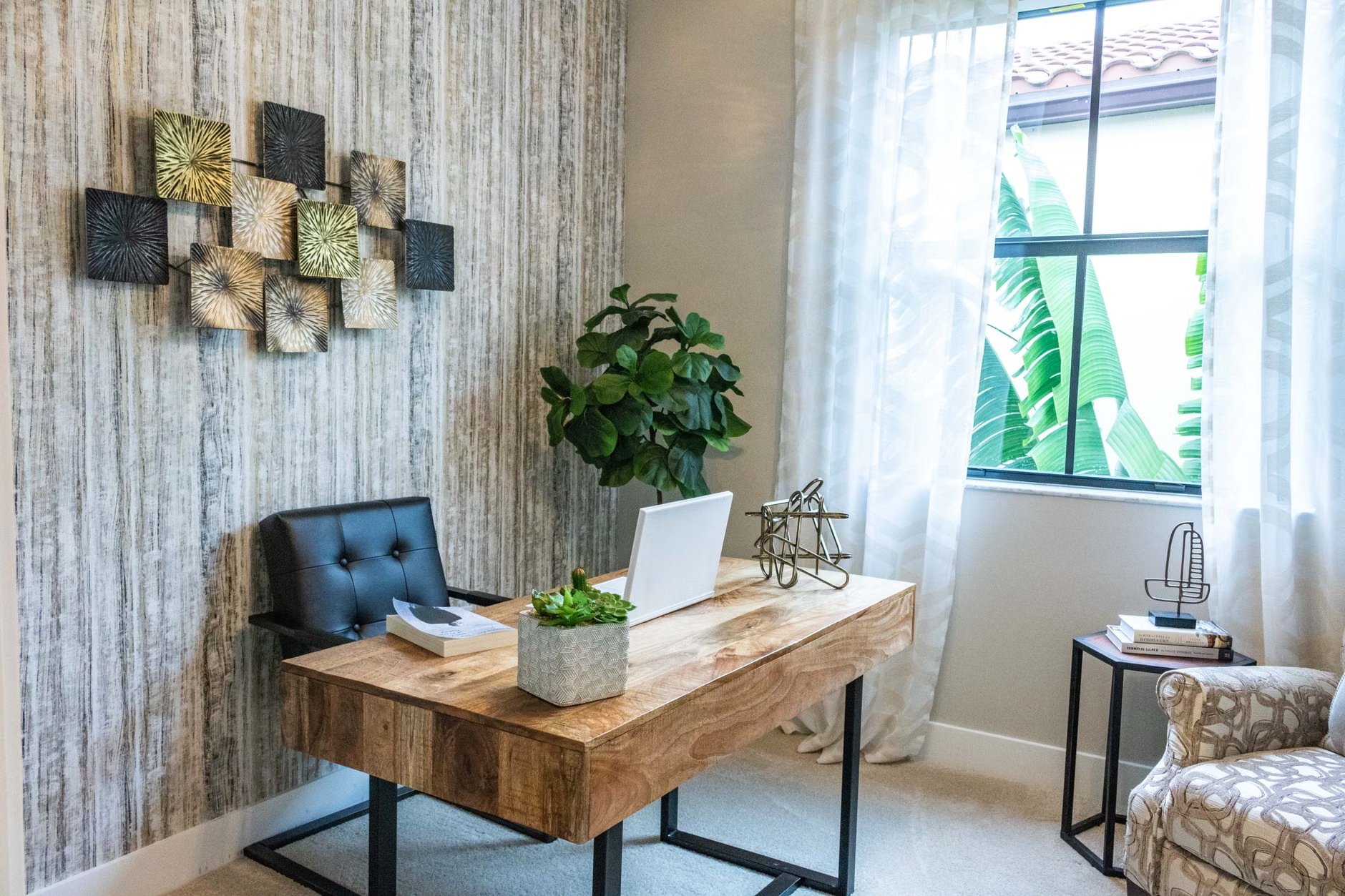
- Neutralize the Backdrop: If the desk faces a wall, ensure that wall is not covered in distracting patterns or busy art. A neutral grey, beige, or soft blue is best. If you must have educational charts, place them behind the child’s field of vision, not in front.
- Lighting Balance: Avoid harsh overhead fluorescent lighting, which can cause subtle, rapid flickering that induces headaches and fatigue. Opt for a warm-spectrum LED desk lamp with a dimmable feature.
Common Mistake: Many parents think that “colorful” equals “stimulating for learning.” While some color is good, an over-abundance of primary colors in a workspace creates a chaotic visual environment. Use color sparingly for organizational purposes (e.g., a blue folder for math, a red folder for history), not as wall decor.
Step 2: The Acoustic Audit (Managing Auditory Filtering)
Noise is the invisible thief of productivity. It isn’t just loud noises that are the problem; it is the *unpredictable* noises. A dog barking, a phone pinging, or the hum of a dishwasher creates a “startle response” that breaks the child’s flow state. Once focus is broken, it takes an average of 15 to 20 minutes to return to the same depth of concentration.
The Strategy:
| Noise Source | Mitigation Strategy |
|---|---|
| Appliances | Use “white noise” or “brown noise” machines to mask sudden, sharp sounds. |
| Sibling/Family chatter | Invest in high-quality, comfortable noise-canceling headphones (passive or active). |
| Hard surfaces (echo) | Add a rug or soft wall hangings to absorb sound reflection. |
When you use white noise, ensure it is set to a level that is barely audible. The goal is not to drown out the world, but to create an “acoustic blanket” that makes sudden, external noises seem less jarring to the brain.
Step 3: Proprioception and Ergonomics (The Body-Brain Connection)
Proprioception is the sense of where your body is in space. If a child is uncomfortable, they will fidget. Many parents interpret fidgeting as a lack of focus, but it is often the body’s way of trying to find the sensory input it needs to stay alert. If the chair is too high, the feet dangle, which removes the sense of grounding. If the desk is too low, the child hunches, which restricts breathing and increases fatigue.
The Checklist:
- The 90-90-90 Rule: When sitting, the child’s elbows should be at 90 degrees, hips at 90 degrees, and knees at 90 degrees. If their feet are dangling, provide a stable footrest.
- The “Wiggle” Alternative: Instead of asking them to “sit still,” provide a sensory outlet. A wobble cushion or a resistance band tied to the front legs of the chair allows them to exert energy without leaving their seat.
- Tactile Comfort: Ensure the desk surface is smooth and the chair material is breathable. If the surface is too cold or the chair is too scratchy, the brain will constantly “check in” on that physical discomfort.
Step 4: Managing the “Sensory Diet” (Tools for Regulation)
Every child has a different “sensory threshold.” Some are “seekers” (they need more input to focus) and some are “avoiders” (they get overwhelmed by too much input). Understanding where your child falls is the key to the final part of the audit.
For the Sensory Seeker: These children often need to move, touch things, or hear background noise to focus. Provide them with a fidget tool (a silent one, like a stress ball or a silent clicker) and perhaps a slightly slanted desk surface to allow for better writing posture. They might actually prefer to do their work standing up at a high counter.
For the Sensory Avoider: These children are easily overwhelmed. Their space should be as minimalist as possible. They benefit from a “sensory retreat” period before starting work—a 5-minute transition of quiet, low-light time to shift gears from the chaos of the rest of the day.

Step 5: The Quarterly Maintenance Cycle
The sensory audit is not a “one and done” task. Children grow, their interests shift, and the seasons change. A desk that worked perfectly in the winter might be too hot or too sunny in the summer. Set a recurring reminder on your calendar for the first week of every new school term to perform a 15-minute “Reset Audit.”
Walk into the room when it is empty. Sit in the chair. Look at the wall. Listen to the room. Ask yourself: “If I had to solve a complex math problem here, what would annoy me?” By taking this perspective, you shift from being a “taskmaster” to being an “environment architect.” You are not forcing them to work; you are setting the stage for their success.
Common Misconceptions and Hidden Variables
One of the most common mistakes parents make is the “idealized office” trap. We see photos on social media of beautiful, Pinterest-perfect study nooks with matching stationery and aesthetic decor. Often, these spaces are the *worst* for a child with sensory sensitivities. They are designed for the adult’s aesthetic, not the child’s neurological needs.
Another hidden variable is the “scent” of the room. Many parents use essential oil diffusers to “help with concentration.” However, for a sensory-sensitive child, an overpowering scent—even a pleasant one like peppermint or lavender—can be a major distraction. It acts as an olfactory “noise” that the brain must process. If you use scents, keep them subtle and ensure the room is well-ventilated.
Finally, consider the “digital sensory load.” If the child is using a computer, the screen itself is a massive source of sensory input. Blue light exposure, the speed of animations, and even the “glare” of the screen can cause eye strain that mimics ADHD symptoms. Ensure the screen is set to a “night mode” or warmer temperature, and use a matte screen protector if glare is an issue.
Implementing the Change Without the Resistance
If you decide to change your child’s study space, do not do it while they are at school. They may feel like their “territory” has been invaded. Instead, involve them in the audit. Explain that you are helping them “upgrade their focus station.” Show them the sensory audit checklist and let them choose between two options—e.g., “Do you prefer the desk in the corner or against this wall?” or “Which color folder helps you find your math work faster?”
When children have agency in the design of their space, they are much more likely to respect the boundaries of that space. It transforms the environment from a place of “schoolwork” into a place of “personal accomplishment.”
Conclusion: The Long-Term Benefit
A sensory audit is about more than just getting the homework done faster. It is about teaching your child how to recognize their own needs. As they get older, they will need to know how to create their own productive environments in university, in the office, or in their own homes. By showing them how to manage their sensory landscape now, you are giving them a life-long skill in self-regulation.
Start small. You don’t need to renovate the entire room. Pick one sensory category—say, visual clutter—and tackle that this weekend. Once you see the change in their focus, you will realize that the most powerful tool in your parenting arsenal isn’t a strict schedule; it’s the quiet, calm environment you’ve built for them to thrive in.
Frequently Asked Questions
1. How do I know if my child is a “sensory seeker” or a “sensory avoider”?
Observe them during free time. Seekers often crave movement, rough-and-tumble play, or loud music. Avoiders often prefer quiet activities, might be sensitive to tags in clothes or specific food textures, and often retreat to smaller, enclosed spaces to feel safe. If you aren’t sure, try the “A/B test”: give them a fidget toy for a week and observe if their focus improves or degrades.
2. Is it really necessary to remove all decorations from the study area?
Not necessarily. The goal is to remove *distracting* items. If your child is highly visual, keep the wall space in front of them completely clear. You can place posters or fun items on the walls *behind* them or to the sides, where they aren’t in the direct line of sight during deep work.
3. My child has to do homework at the kitchen table. How can I perform a sensory audit there?
The kitchen table is a “high-traffic” zone. Use a portable “study carrel”—a three-sided cardboard partition that you can set up on the table when it’s time for work. It creates an instant visual boundary, blocks out the rest of the room, and signals to the rest of the family that the child is in “focus mode.” Store the carrel in a closet when it’s time for dinner.
Official Resources for Further Reading: