The most effective way to improve a coastal vacation isn’t booking a more expensive hotel—it’s choosing the train over the car to avoid the inevitable gridlock of seasonal seaside traffic.
- The “Last Mile” Rule: Coastal rail networks are designed to drop you at the center of the action; use local bike rentals or ride-shares to cover the final distance instead of hauling a car.
- Dynamic Cost-Benefit: While train tickets can seem pricey, they eliminate hidden costs like daily parking fees at resorts, which average $30–$50 per day in peak regions.
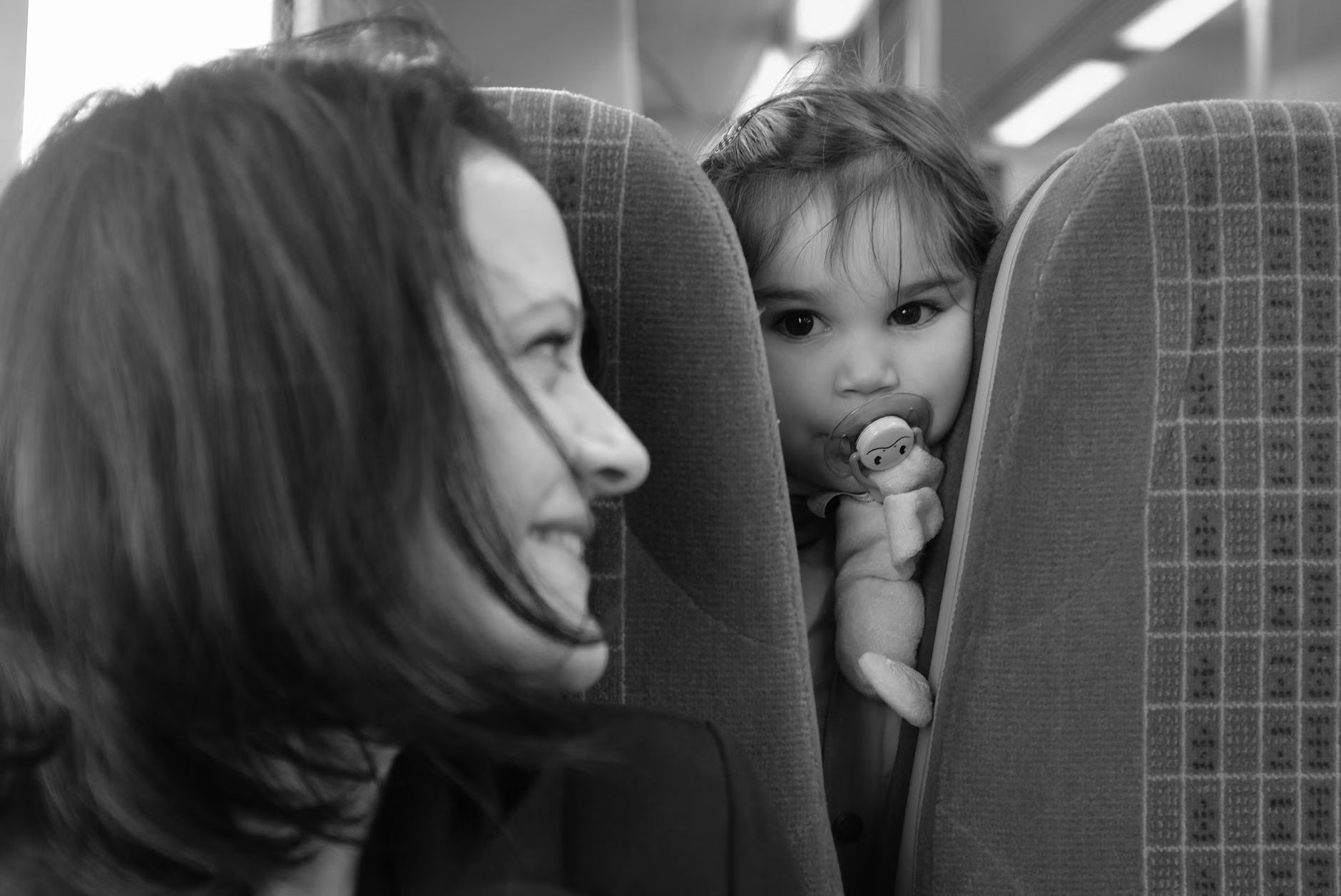
- Parenting Sanity: Trains offer physical space for children to move and amenities like tray tables, turning transit time into active play or rest rather than a high-stress driving environment.
If you are in your 30s or 40s, you likely remember the “family road trip” as a staple of childhood. But let’s be honest: that memory usually includes a parent white-knuckling the steering wheel through three hours of bumper-to-bumper traffic just to reach a beach that is already at capacity. When you arrive, the stress of finding parking ruins the dopamine hit of seeing the ocean for the first time.
The “Train-First” itinerary is a shift in philosophy. It treats the journey not as a hurdle to clear, but as the first phase of your relaxation. By prioritizing rail connectivity in coastal regions—whether in Europe, parts of North America, or Asia—you trade the driver’s seat for a window seat, effectively reclaiming hours of your life that would otherwise be spent navigating narrow, congested coastal roads.
Why Coastal Driving is Firing Back
Coastal regions face a unique set of logistical challenges that make driving the least efficient way to travel. Geography is the primary culprit: most coastal towns were developed decades or centuries ago, meaning their infrastructure is built on narrow, winding roads that cannot scale to accommodate the sheer volume of modern tourism. When you add seasonal peaks into the mix, you are essentially funneling thousands of vehicles into a bottleneck.
For parents, this is a nightmare. A two-hour drive can easily stretch into five. When the car stops moving, the “Are we there yet?” chorus begins, and the lack of a bathroom or a space for a toddler to stretch their legs creates a high-tension environment. By the time you reach your accommodation, the “vacation” has been preceded by a taxing period of labor.
Furthermore, coastal parking is a hidden tax. In many popular destinations, beachfront parking is not just expensive—it is scarce. You may spend 45 minutes circling a lot, only to pay a premium that could have covered your family’s lunch. The Train-First approach removes this volatility. Train schedules are fixed, and while delays occur, they are rarely the result of the type of unpredictable, multi-mile traffic jams that define peak-season coastal driving.
The Logistics of the Train-First Model
Transitioning to a rail-based itinerary requires a different set of planning muscles. It isn’t just about showing up at the station; it’s about choosing your base of operations based on its “walkability score” and its proximity to transit hubs.
1. The Hub-and-Spoke Strategy
Instead of trying to stay at the most remote, “hidden gem” location that requires a car to reach, choose a primary coastal hub that is well-served by regional rail. From this hub, you can take local transport, regional buses, or even ferries to reach smaller beaches or coves. This allows you to keep your base in a high-connectivity area while still exploring the more secluded spots.
2. Luggage Management
The biggest barrier to train travel for families is gear. If you are traveling with a stroller, a portable crib, and enough toys to occupy three kids, the train can feel daunting. The solution is the “modular luggage” system. Instead of two massive suitcases, use four smaller, rolling carry-ons that can be easily stowed in overhead racks. If you are staying at a rental property, look for one that provides “parenting essentials” (cribs, high chairs) so you don’t have to carry them.
3. The “Last Mile” Mapping
Before you book, use a mapping tool to view the distance between the train station and your accommodation. A 15-minute walk is manageable; a 40-minute walk with kids and luggage is a recipe for disaster. If the distance is over 20 minutes, pre-book a local taxi or check if your accommodation offers a shuttle service. Many coastal hotels in regions like the Mediterranean or the UK coast offer complimentary pickups for guests arriving by train—you just have to ask.
Comparing the Real Costs: Car vs. Train
Many travelers assume the train is “too expensive.” However, this is often a failure of accounting. When you calculate the total cost of a car-based trip, you are often ignoring the depreciation of your vehicle, the cost of fuel, the high price of parking, and the potential for toll roads. Below is a breakdown of how the costs actually compare for a typical four-day coastal trip for a family of four.
| Expense Category | Car Travel | Train Travel |
|---|---|---|
| Fuel / Tickets | Variable (High) | Fixed (Predictable) |
| Parking | $150 – $200 | $0 |
| Rental Car/Insurance | $300+ | $0 |
| Stress/Time Loss | High | Low |
As shown in the table, the “hidden” costs of a car trip often exceed the cost of train tickets. For a family of four, the train is frequently the more economical choice once you factor in the elimination of rental car fees and parking surcharges. Furthermore, the “time value” is significant. On a train, you are gaining four or five hours of productive or restful time that you would have otherwise spent in a state of high-alert driving.
The Psychology of the Window Seat
There is a psychological benefit to the train that is often overlooked: the perspective shift. When you drive, your world is the road ahead. You are focused on lane markers, traffic lights, and speed limits. When you are on a train, especially one that hugs the coast, your world expands. You see the landscape, the water, and the towns from an angle that cars rarely provide.
For children, this is an educational opportunity. Instead of being strapped into a car seat staring at the back of a headrest, they are looking at the changing terrain. It’s an immersive experience that turns the journey into an adventure. If you have a child who struggles with car sickness, the train is a game-changer; the smoother ride and the ability to look out at a horizon line significantly reduce motion sickness symptoms.
Moreover, the train creates a “transition zone.” It’s a space where you can slowly shift from the mindset of “everyday life” to “vacation mode.” You can read, play a board game with your kids, or simply watch the scenery. By the time you arrive at the station, you are mentally prepared to step into your vacation, rather than needing an hour to “decompress” from the stress of the drive.
Even the best-laid plans can go awry. Here is how to handle the most common issues associated with train-first travel.
Common Mistake 1: Not Booking Seat Reservations
In many regions, a ticket does not guarantee a seat. Always pay the small extra fee to reserve seats, especially if you are traveling with a family. Splitting up because the train is full is the quickest way to ruin the mood.
Common Mistake 2: Overestimating Walkability
Some coastal towns look walkable on a map but feature steep inclines or stairs that are impossible with luggage. Always check “street view” on map services to see if the route from the station to your hotel involves significant hills or lack of sidewalks.
Common Mistake 3: Ignoring Local Transit Apps
Don’t rely on global apps like Google Maps alone. Many coastal regions have local transit authorities with their own apps that provide real-time updates on bus delays or seasonal schedule changes. Download these before you leave your home.
The Future of Coastal Travel
The “Train-First” mindset is gaining traction as more travelers prioritize sustainable and low-stress vacations. Governments in coastal regions are beginning to realize that the “car-only” model is unsustainable for tourism. We are seeing more investments in regional rail, bike-sharing programs at stations, and “car-free” zones in city centers.
For those in their 30s and 40s, this shift is perfectly timed. You are at a stage in life where you likely have limited vacation time and high demands on your energy. You cannot afford to spend your limited time off dealing with traffic and parking disputes. By choosing the train, you are making a deliberate decision to prioritize your time and your family’s well-being over the convenience of a personal vehicle.
This isn’t about being “green” for the sake of it—it’s about being smart. It’s about recognizing that the best part of a coastal vacation is the ocean, not the highway. When you arrive at the beach relaxed, having spent your journey reading a book or watching the waves from a train window, you’ll realize that the car was never the best way to get there; it was just the most common one.
Frequently Asked Questions
1. What if I need to carry a lot of baby gear?
The key is to avoid bringing everything. Research “baby equipment rental” services in your destination city. Many coastal tourist towns have companies that will deliver a crib, high chair, and even a stroller to your accommodation, allowing you to travel light on the train.
2. How do I handle transfers between trains?
Always aim for a minimum of 45 minutes between connecting trains. If you are traveling with kids, a “tight” connection is a liability. If a delay occurs, having that buffer time allows you to manage the situation without the panic of missing your next leg.
3. Are trains actually cheaper than driving?
For a family of four, the ticket costs can sometimes be higher than the fuel cost of a car. However, when you add the “hidden” costs—parking ($30+ a day), rental car daily rates, and tolls—the train almost always wins. Calculate your total trip cost, not just the “gas money,” and you will likely see the savings.
Final Advice for Your Next Trip
The next time you plan a coastal getaway, open a rail map before you open a GPS. Look for the lines that connect your home city to the coast. Even if the journey takes an hour longer than driving, that extra hour is yours to keep. It is time spent playing with your kids, reading, or watching the world go by. That is not “lost” time; that is the start of your holiday.
Don’t be afraid to try the train for a shorter trip first. Use it as a trial run. See how it feels to arrive at your destination without the stress of the road. Once you experience the freedom of not being tethered to a steering wheel, you will find it very difficult to go back to the highway.
Helpful Resources:
- The Man in Seat 61 – An excellent resource for understanding train routes and booking tips globally.
- Rome2Rio – A useful tool for comparing transport options, including train, bus, and flight connections to coastal regions.
- Check your local national rail operator’s website for “family pass” discounts, which are often not highlighted on third-party booking sites.
SoCooly note: Always double-check your local station’s accessibility features if you are traveling with heavy strollers or mobility aids, as some older coastal stations may lack elevators.