Co-regulation is the biological process where a calm, regulated adult helps a child bring their nervous system back to a baseline of safety and calm. If you have ever felt like your child’s emotional meltdown was contagious, you have experienced the physiological reality of the nervous system seeking stability; by intentionally using “co-regulation playtime,” you can proactively teach your child to manage sensory overload before it turns into a full-blown tantrum.
- Co-regulation is not “fixing” behavior: It is about providing a physiological anchor for your child’s dysregulated nervous system through your own calm presence.
- Predictability reduces sensory load: Using rhythmic, repetitive play (like drawing, sorting, or gentle rocking) creates a “predictable environment” that lowers cortisol levels.
- The “Transition Buffer” is critical: Sensory needs often spike during transitions; using co-regulation during these windows prevents the “after-school restraint collapse.”
The Science of Why Your Presence Matters
We often talk about “self-regulation” as a milestone children should hit, but the reality is that the brain’s ability to self-regulate is built on a foundation of successful co-regulation. Think of it like a biological thermostat. When a child is overstimulated—whether by loud noises, too much visual input, or a long day at school—their “alarm system” (the amygdala) takes over. They literally cannot “think” their way out of that state because the logical part of their brain (the prefrontal cortex) has gone offline.
For parents in their 30s and 40s juggling work, household management, and child-rearing, it is easy to view a child’s sensory outburst as a behavioral problem that needs discipline. However, if we shift our perspective to see it as a sensory processing need, the solution changes from “correction” to “connection.” Co-regulation is the act of lending your calm, regulated nervous system to your child until theirs can stabilize. It is not about being a pushover; it is about providing the physiological safety required for their brain to return to a state of learning and connection.

What Co-Regulation Playtime Looks Like in Practice
Co-regulation playtime is not necessarily about “fun” in the high-energy, active sense. In fact, for a child who is sensory-seeking or sensory-avoidant, high-energy play can sometimes increase dysregulation. Instead, we are looking for activities that provide proprioceptive input (deep pressure) and rhythmic movement. These inputs are the “gold standard” for calming the nervous system.
1. The Power of Heavy Work
Heavy work refers to any activity that pushes or pulls against the body’s muscles and joints. This provides deep pressure sensation, which is incredibly grounding. In a practical home setting, this could look like:
- The “Human Burrito”: Rolling your child tightly in a blanket and “unrolling” them slowly. The firm pressure is sensory-organizing.
- Wall Pushes: Standing face-to-face and pushing against each other’s palms slowly. This is a great way to “get the wiggles out” while maintaining eye contact.
- Heavy Lifting: Asking your child to help carry a basket of books or laundry. The weight provides the sensory feedback their body is craving.
2. Rhythmic, Repetitive Patterns
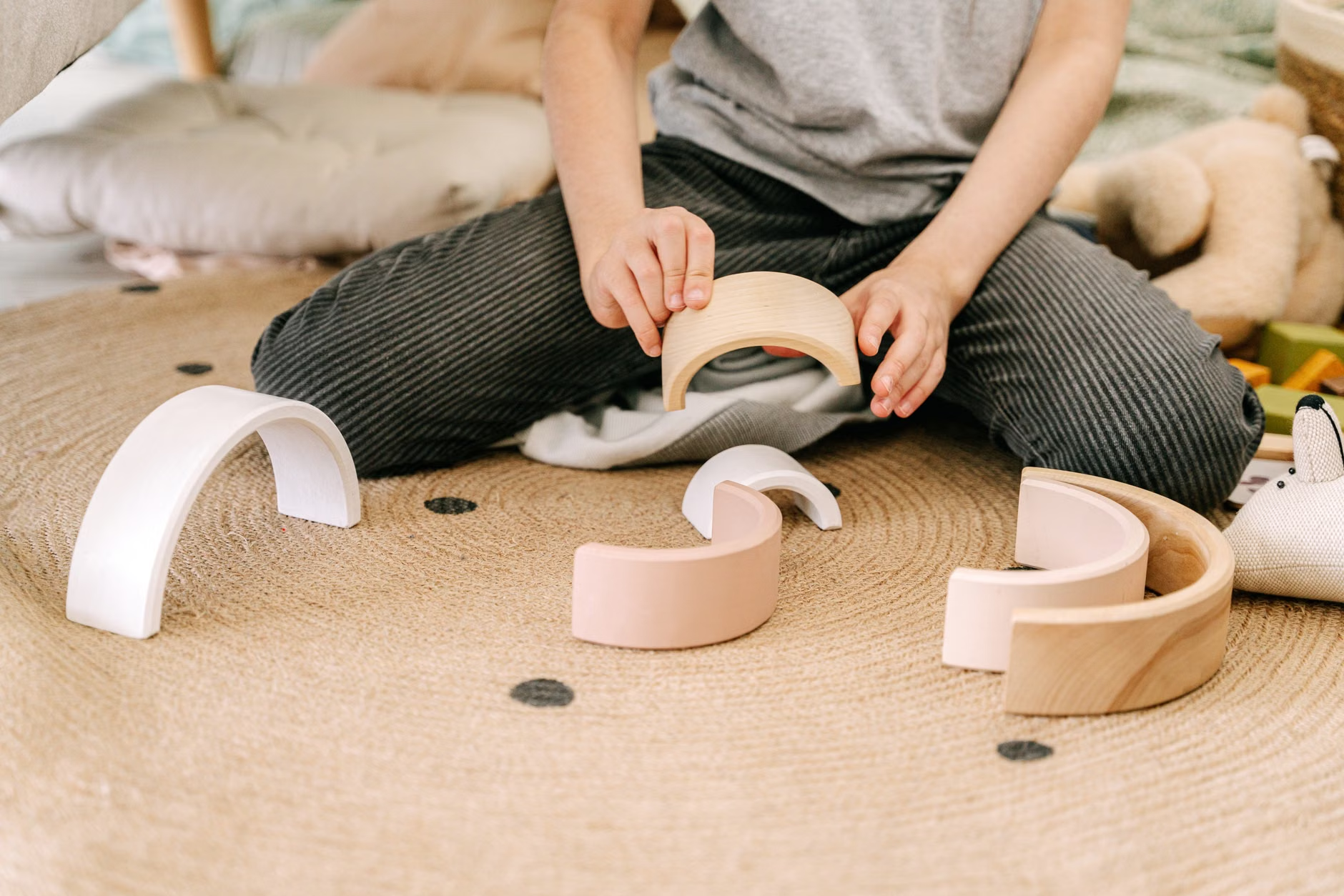
The human brain finds safety in patterns. When a child is overwhelmed, introducing a repetitive, predictable activity can help them “find their rhythm.” This is why things like coloring, sorting buttons by color, or building a tower of blocks just to knock it down are so effective. The key here is the adult’s pace. If you are rushing or stressed, your energy will be mirrored by the child. You must consciously slow your movements and your speech.
Common Mistake: Many parents attempt to “talk through” the emotion while playing. When a child is in a state of sensory overload, words are often just “noise.” Keep your instructions minimal and your voice low and slow. Focus on the physical activity, not the explanation of why they are upset.
Designing a Sensory-Friendly Environment
You don’t need a dedicated “sensory room” to practice co-regulation. Most of the time, our homes are already full of sensory triggers—bright overhead lights, background TV, the hum of appliances, and general clutter. Creating a “co-regulation zone” is about simplifying the environment for a short, intentional window of time.
| Sensory Input Type | Example Activity | Why it Works |
|---|---|---|
| Proprioceptive | Crawling, pushing, squeezing | Provides feedback to joints/muscles |
| Vestibular | Slow rocking, swinging | Calms the inner ear balance system |
| Tactile | Kinetic sand, playdough | Focuses attention on texture |
When choosing an activity, look at your child’s current state. Are they “high-energy” and bouncing off the walls? They likely need proprioceptive input (heavy work) to ground them. Are they “shut down” or lethargic? They might need vestibular input (gentle movement) to wake up their system. Using the wrong type of input can sometimes exacerbate the behavior, so observe what your child naturally leans toward when they are calm.
The Parent’s Role: Managing Your Own Nervous System
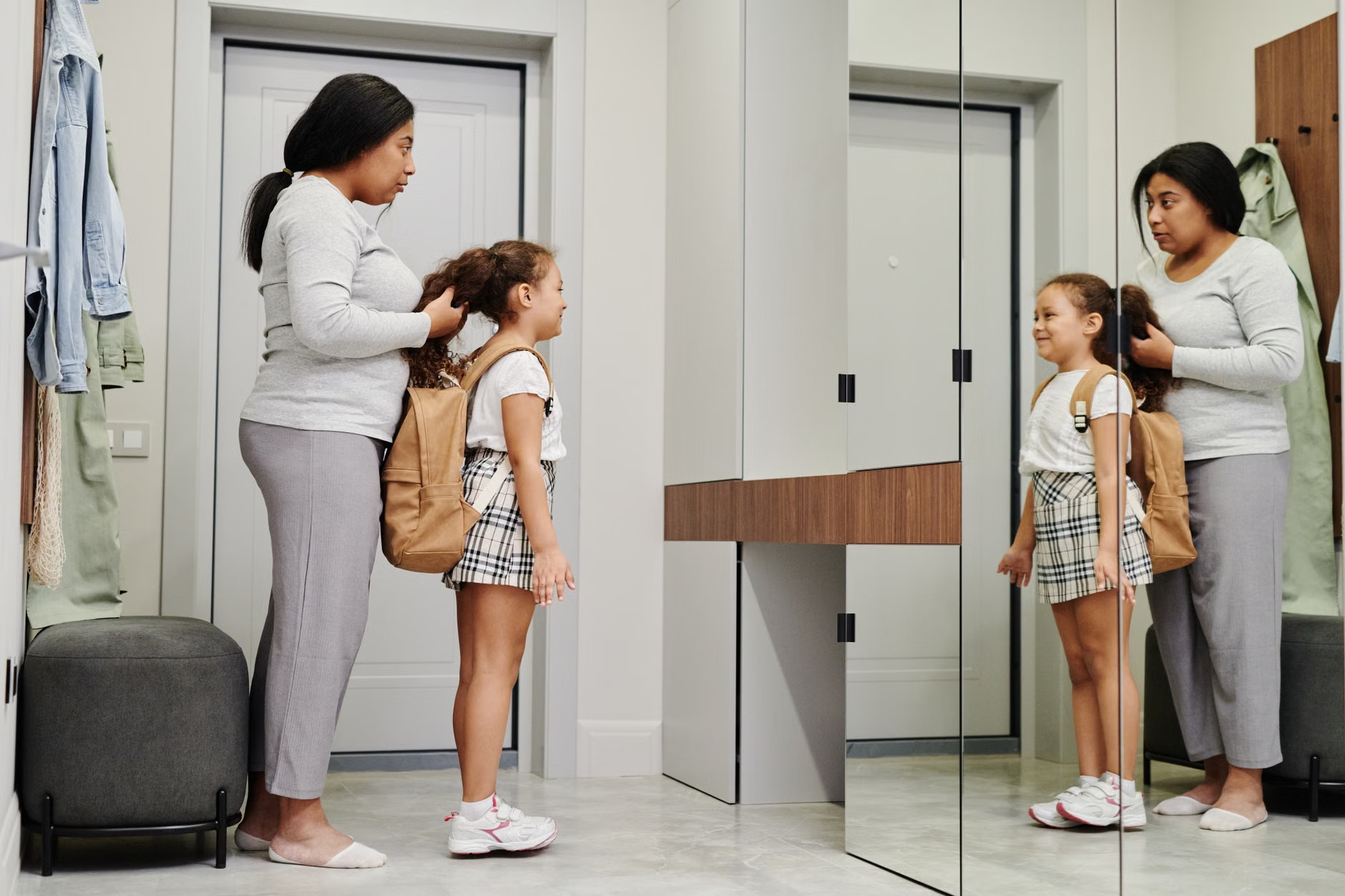
The most overlooked variable in co-regulation is the parent. You cannot co-regulate a child if you are dysregulated yourself. If you are frustrated, your heart rate is elevated, and your body language is tense, your child’s mirror neurons will pick up on that immediately. This is not about being a “perfect” parent; it is about being a “conscious” parent.
Before you start a co-regulation session, take 30 seconds to check in with yourself. Are your shoulders tight? Is your jaw clenched? Take a deep breath, exhale slowly, and consciously lower your energy. This is the “preparation” phase of co-regulation. If you find yourself unable to calm down, it is better to take a five-minute break (if the child is safe) than to force a play session that will only increase the tension.
Step-by-Step: The 15-Minute Co-Regulation Window
For parents balancing work and home life, the “after-school” or “after-work” transition is usually the hardest. This is when the nervous system has been pushed to its limit. Try this 15-minute framework:
- The Buffer Zone (5 minutes): Upon arriving home, do not immediately ask about the day or move to chores. Create a transition space. Dim the lights, turn off the TV, and offer a snack that requires “heavy work” to chew (like apple slices or carrot sticks).
- The Engagement (7 minutes): Move into the co-regulation activity. Mirror their movements or engage in a tactile task side-by-side. Do not ask questions. Just exist in the same space, focusing on the task.
- The Reconnection (3 minutes): Once you notice their breathing has slowed or their body has relaxed, offer a gentle verbal check-in or a brief hug. This signals that the “reset” is complete.
Common Pitfall: Do not use this time to teach lessons or discuss poor behavior. The goal is homeostasis. If you start “correcting” them during this window, you break the sense of safety you are trying to build. Leave the “teaching” for a time when their nervous system is fully regulated and they are receptive to conversation.
Hidden Costs and Unexpected Trade-offs
One common misconception is that co-regulation is a “quick fix.” It isn’t. It is a long-term strategy for building emotional intelligence. You might find that on some days, the 15-minute window isn’t enough, or that your child resists the activity. That is okay. The goal is not perfection, but the development of a shared language of calm. Another hidden cost is your own fatigue. Providing co-regulation is emotionally labor-intensive. If you feel like your “battery” is constantly empty, you must prioritize your own sensory needs as well. You cannot pour from an empty cup.
Furthermore, recognize that as children age, their sensory needs change. A toddler might need physical rocking, while an 8-year-old might need a quiet space with noise-canceling headphones. The principle of co-regulation remains the same, but the execution evolves. Stay flexible and keep observing how your child responds to different stimuli.
Expert Insights and Further Reading
Research in child psychology, particularly the work surrounding the “Polyvagal Theory,” emphasizes that human connection is the primary regulator of our nervous systems. When we feel “safe and social,” our bodies are in a state where healing and growth can occur. When we feel “threatened” (even by something as simple as over-stimulation), our systems shift into defense mode. By engaging in co-regulation, you are essentially telling your child’s nervous system, “You are safe, and I am here with you.”
For further reading on how the nervous system impacts child development and the importance of sensory integration, refer to the resources provided by the American Occupational Therapy Association (AOTA), which offers extensive, evidence-based insights into sensory processing. Another excellent resource for understanding the behavioral side of these needs is the CDC’s Child Development page, which provides context on how emotional regulation develops in school-aged children.
Final Thoughts
Co-regulation is not a magic wand that will eliminate all tantrums or sensory meltdowns. It is, however, a powerful tool to help your child build the internal infrastructure they need to eventually self-regulate. By staying calm, providing predictable sensory input, and focusing on connection over correction, you are teaching your child that they have the ability to return to a state of calm. Start small, be consistent, and remember that your presence is the most effective tool in your parenting kit.
Frequently Asked Questions
- Does co-regulation mean I should let my child do whatever they want?
No. Co-regulation is about managing the physiological state of the nervous system. You can absolutely hold boundaries while being a co-regulating presence. It is possible to say, “I see you are frustrated, and it is not okay to hit,” while sitting calmly with them to help them breathe through the anger. - How do I know if my child has a sensory processing disorder or just needs more co-regulation?
Occasional sensory overload is a normal part of child development. However, if you notice that sensory input consistently prevents your child from participating in daily activities, school, or social interactions, it is worth consulting with a pediatric occupational therapist. They can provide a professional evaluation and tailored sensory diet. - What if I’m the one who is overstimulated? Can I co-regulate myself?
Absolutely. The same principles of rhythm and deep pressure apply to adults. If you are feeling overwhelmed, try taking a few moments to do some “heavy work” (like pushing against a wall or doing a quick set of squats) or engaging in a rhythmic activity like folding laundry or walking. You are the primary model for your child; when you demonstrate healthy self-regulation, you are teaching them how to do it themselves.
Note: This article provides information for educational purposes and is not a substitute for professional medical or psychological advice. If you suspect your child has significant sensory processing challenges, please consult with a licensed professional.