- Demand response programs offer direct financial incentives or lower rates in exchange for allowing your utility to briefly adjust your high-energy appliances (like AC or EV chargers) during peak grid stress.
- The primary “hidden cost” isn’t just the minor loss of control, but the potential for comfort disruption if your home insulation or battery storage isn’t optimized for these cycling events.
- Before signing up, check your local utility’s “opt-out” policy; the most effective programs allow you to override the utility’s control via an app if you have an urgent need for full power.
You can effectively lower your monthly utility bill by participating in “demand response” programs, but the real question is whether the modest financial reward justifies the loss of control over your home’s climate and appliance usage. For those of us juggling school runs, work deadlines, and the endless logistics of family life, the idea of a “smart grid” managing our home energy sounds like a dream—until the air conditioning cuts out on a 95-degree afternoon.

What Is Demand Response and Why Is the Grid So Stressed?
At its core, the electrical grid is a massive, real-time balancing act. Utilities must produce exactly as much electricity as is being consumed at any given second. When everyone gets home at 5:00 PM, cranks the AC, starts the dishwasher, and plugs in their electric vehicle, the demand spikes. This is “peak load.” To meet this surge, utilities often have to fire up “peaker plants”—older, dirtier, and far more expensive power plants that sit idle most of the time.
Demand response is the utility’s way of asking you to help them avoid turning on those expensive plants. Instead of building more power stations to handle a few hours of peak demand per year, they pay you (or give you a discounted rate) to “shed” or shift your load. In a modern home, this happens automatically through smart devices like Wi-Fi thermostats, smart water heaters, or connected EV chargers.
Think of it like a subscription service for your home energy. You grant the utility permission to “nudge” your energy usage down by a few degrees or delay your charging cycle by an hour. In return, you receive a credit on your bill or a lower per-kilowatt-hour rate. It sounds simple, but the reality involves a few moving parts that every homeowner should understand before clicking “enroll.”
The Mechanics of Participation: How It Looks in Your Home
When you join a demand response program—often marketed as “Smart Rewards,” “Peak Saver,” or “Grid Perks”—you are essentially installing a software bridge between your home’s hardware and the utility’s control center. Most participants do this through their smart thermostat (like Nest or Ecobee). When the grid hits a critical threshold, the utility sends a signal to your thermostat to raise the setpoint by 2 to 4 degrees for a specified period, usually two to four hours.
This is where the distinction between “direct control” and “behavioral programs” matters. In a direct control program, the utility takes the wheel. You might see a notification on your phone saying, “Demand response event in progress.” In a behavioral program, they simply send you a text or email asking you to reduce usage, rewarding you if you comply. For busy parents, direct control is often the only way to ensure the “work” actually gets done, as we rarely have the mental bandwidth to manually manage our thermostat settings during a Tuesday evening rush.
The Equipment Factor: What Actually Gets Controlled?
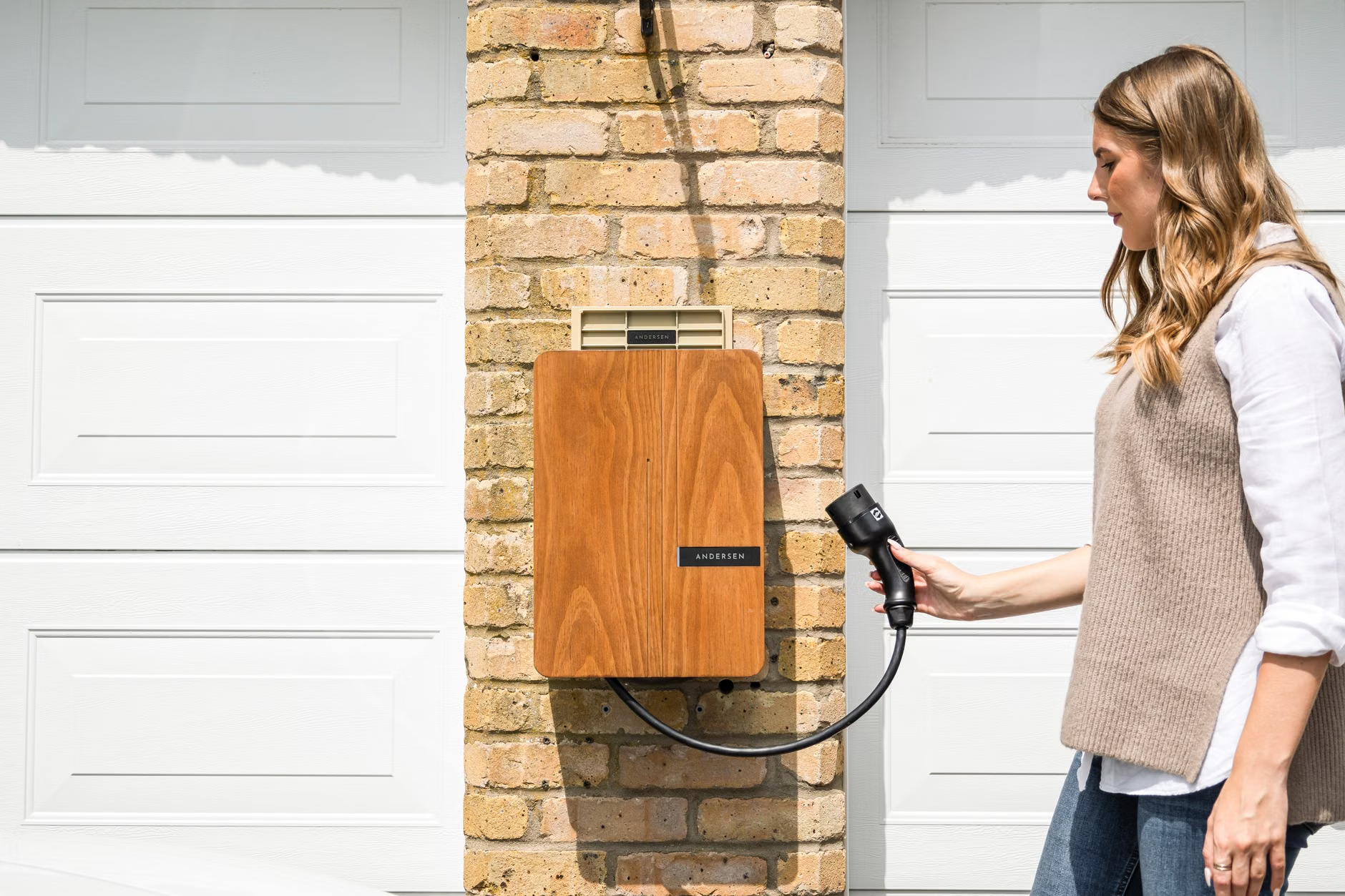
Modern programs are moving beyond just thermostats. If you have an electric vehicle (EV) charger or a heat pump water heater, these are prime targets for demand response. An EV charger is the single largest energy draw in a modern home. If the utility can shift your charging window from 6:00 PM to 2:00 AM, they solve a massive grid problem, and you might get a significant rebate on your electricity rate.
| Appliance | Control Level | Impact on Comfort |
|---|---|---|
| Smart Thermostat | Medium (Temperature shift) | Noticeable if the house is poorly insulated. |
| EV Charger | High (Charging pause) | Low, provided you don’t need a full battery immediately. |
| Water Heater | Low (Delayed heating) | Minimal, assuming the tank is well-insulated. |
The table above highlights that not all “load shedding” is created equal. An EV charger pause is usually invisible to the user because the car is likely sitting idle anyway. A thermostat adjustment, however, is felt physically. If your home has poor insulation, a 4-degree rise in setpoint can feel like a 10-degree rise, turning a comfortable living room into a sweltering space just as you’re trying to put the kids to bed.
Evaluating the Trade-offs: Is the Financial Incentive Worth It?
Financial incentives for these programs vary wildly by region and provider. In some parts of the US and Europe, you might receive a flat $50 or $100 annual “participation bonus.” In other areas, you get a “time-of-use” (TOU) rate structure where electricity is significantly cheaper overnight but very expensive during peak hours. If you can shift your major chores (laundry, dishwashing, EV charging) to the off-peak hours, you can save hundreds of dollars a year.
However, there is a hidden cost: the “rebound effect.” If your AC is turned off for three hours and the house heats up, the system has to work twice as hard to cool it back down once the event ends. If the utility’s peak pricing period overlaps with this recovery period, you might actually end up paying more than if you had simply run the system normally. You must look at the rate card for your specific utility to see if the “peak” pricing window ends before your equipment starts its heavy recovery cycle.
Common Misconceptions That Cost You Money
A common mistake is assuming that “smart” means “efficient” in every scenario. Many users set their smart thermostats to “Eco” mode 24/7, thinking they are saving money. In reality, if your home has a heat pump, frequent, drastic temperature changes can actually decrease efficiency. Heat pumps are designed to run at a consistent, steady state. Constant cycling can lead to higher wear and tear and higher electricity consumption. Before joining a program, check if your specific HVAC system is compatible with the “cycling” required by the utility.
Step-by-Step: How to Decide and Implement
If you are considering enrolling in a demand response program, follow this logical framework to ensure it fits your lifestyle:
- Audit Your Load: Check your smart meter data (most utilities provide this via an online portal). Identify your “peak” hours. If your highest energy usage is already happening at 2:00 AM, you are a perfect candidate for these programs because you aren’t actually “shifting” anything—you are already living in the off-peak zone.
- Check the Override Policy: This is the most critical step. Look for the “Opt-Out” or “Override” clause in the service agreement. Can you override the utility’s command from your phone? If the answer is no, or if there is a penalty for opting out more than three times a year, be very cautious.
- Test the “Event” Experience: Before committing to a multi-year contract, see if your utility offers a “pilot” period. Spend a week manually adjusting your thermostat to the settings the utility would impose during an event. Does the house become uncomfortable? If the kids are cranky or you can’t sleep, the $50 annual credit is not worth the stress.
- Optimize Your Hardware: If you do enroll, ensure your smart home equipment is updated. Older smart thermostats may not handle “demand response” signals as gracefully as newer models, leading to abrupt shutdowns rather than gradual cooling adjustments.
The Hidden Variables: Insulation and Battery Storage
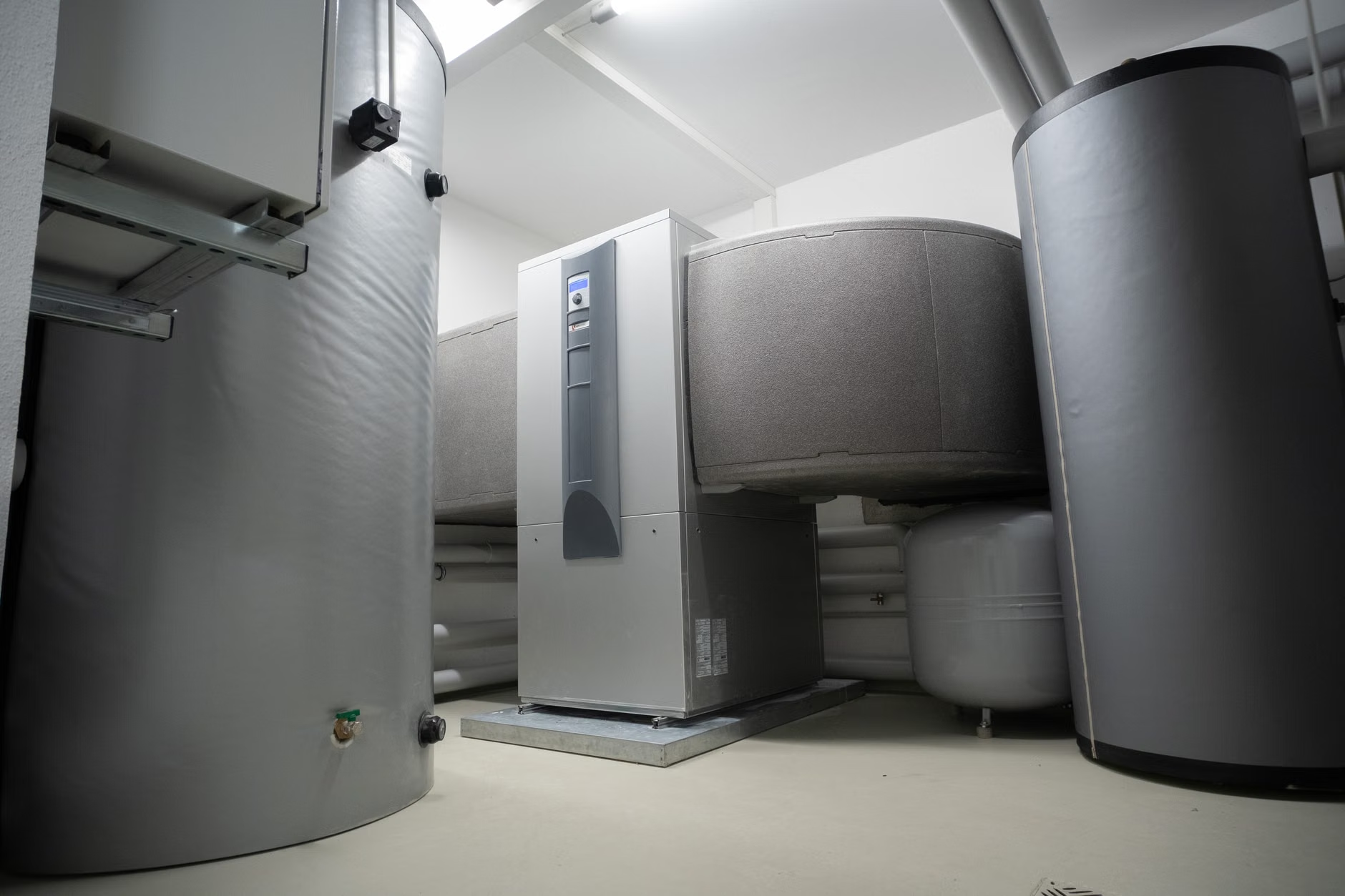
There is an overlooked variable in the demand response equation: the thermal mass of your home. A well-insulated home acts like a thermal battery. If your utility turns off your AC for two hours, a well-insulated house might only rise by one degree. A drafty house might rise by five. If you are serious about participating in these programs, the best “upgrade” you can make isn’t a new smart device—it’s adding insulation to your attic or weather-stripping your doors.
Similarly, if you have a home battery system (like a Tesla Powerwall or similar), you are in a unique position. You can use your battery to “island” your home during peak pricing events. You essentially draw from your own battery during the peak hours, avoiding the utility’s high prices entirely, and then recharge the battery when the grid is back to off-peak rates. This is the “gold standard” of demand response: you aren’t just reducing demand; you are shifting your entire home’s energy profile to be grid-independent when it matters most.
Final Verdict: Should You Join?
For most families in their 30s and 40s, the decision comes down to your personal tolerance for minor inconveniences. If you are someone who keeps a strict schedule and prefers a “set it and forget it” lifestyle, demand response is a fantastic way to lower your carbon footprint and your bills simultaneously. The technology is generally reliable, and the financial incentives, while not life-changing, are a nice bonus for doing nothing more than letting the grid breathe a little easier.
However, if your home is poorly insulated, or if your family’s routine is highly irregular (e.g., you work from home and need a consistently cool office during the day), the potential for comfort loss is real. Don’t feel pressured to join just because it’s the “green” thing to do. You can contribute to grid stability simply by being mindful of when you run your dishwasher or dryer. A few small, conscious choices—like waiting until the evening to run the laundry—can often yield the same results as a formal demand response program without the risk of an automated system overriding your preferences.
Ultimately, look for the flexibility. If a program gives you the final say, it’s a win-win. If it takes the control out of your hands entirely, proceed with caution. Your comfort and your family’s well-being should always be the priority over a few dollars in energy savings.
For further reading on how your local grid operates and to find specific programs in your region, check these resources:
- U.S. Department of Energy: Grid Modernization and Smart Grid
- International Energy Agency: Demand Response Overview
Frequently Asked Questions
Will participating in demand response programs damage my appliances?
Generally, no. Modern appliances are designed to handle power cycling. However, if you have a very old HVAC system, frequent forced shutdowns could potentially lead to premature wear. Most utility programs use “gradual” cycling rather than hard on/off switches to protect your equipment.
What happens if I have an emergency and need to override the utility control?
Most reputable demand response programs include an “override” button in their mobile app. If you are in the middle of a heatwave or have a health-related need for a specific temperature, you can usually hit “opt-out” for that specific event. Always check your service agreement for any penalties associated with frequent opting out.
Is there a risk of my data being sold or misused?
Your energy usage data is sensitive. When you enroll, you are giving the utility permission to monitor your device usage. Ensure you read the privacy policy to understand if your data is being shared with third-party marketing firms or if it is strictly used for grid management. Most utilities have strict data protections, but it is always worth a quick review.