- Prioritize “Slow Travel”: Never plan more than one major activity per day to accommodate different energy levels and mobility needs across generations.
- Centralize Communication and Documents: Use a shared digital folder (like Google Drive or iCloud) for all health records, insurance policies, and reservation confirmations accessible by at least two adults.
- The “Split-Option” Rule: Designate specific “free-choice” half-days where the group splits into smaller units based on interest or fatigue, preventing burnout and resentment.
The secret to surviving a multi-generational trip isn’t a bigger budget or a luxury resort; it’s treating the logistics like a military operation managed by a diplomat. When you are traveling with your parents in their 70s, your children in their primary school years, and yourself in the “sandwich generation” prime, you aren’t just a traveler—you are a project manager. The most common mistake is assuming that because everyone is related, everyone shares the same stamina, dietary needs, and interest in historical architecture.

Establishing the “Baseline” Mobility and Energy Profile
Before you book a single flight, you need to conduct a frank, non-judgmental audit of your group’s physical and mental capacity. We often underestimate the “hidden” fatigue that travel induces, especially when the age gap spans four decades. A 70-year-old might be active, but they likely cannot navigate a city with 20,000 steps a day, while a seven-year-old might be capable of walking but will melt down if they don’t have a consistent nap or snack schedule.
The Decision Rule: Define the “lowest common denominator” of mobility for your group. If one person requires a cane or has a restricted diet, the entire itinerary must be built around their needs. This does not mean limiting the fun; it means choosing activities that are accessible by design. For example, if you are visiting a city like Rome, look for “accessible” walking tours that focus on specific districts rather than massive, sprawling sites like the Colosseum, which can be exhausting for seniors and toddlers alike.
To implement this, create a simple spreadsheet or shared note. List each family member and mark their:
- Maximum continuous walking distance (e.g., 1km without a break).
- Preferred daily wake-up and sleep times.
- Essential dietary requirements.
- “Must-have” versus “Nice-to-have” activities.
This isn’t about being rigid; it’s about having a baseline to refer to when someone suggests a hike that might be physically impossible for your parents or boring for your children.
Digital Logistics: The Single Source of Truth
The biggest source of friction in family travel is the “Where is the confirmation email?” or “What time does the train leave?” conversation happening at the worst possible moment. When you are managing a group, you cannot afford to have information scattered across five different people’s email accounts.
Step-by-Step Setup:
- Create a Shared Master Folder: Use Google Drive, Dropbox, or iCloud. Create folders for “Travel Documents” (Passports, Visas, Insurance), “Reservations” (Flights, Hotels, Tours), and “Emergency Contacts.”
- Digital Wallets: Ensure every adult has the boarding passes and hotel addresses saved to their Apple Wallet or Google Wallet. Do not rely on a single smartphone; if that phone dies or is lost, the entire group is vulnerable.
- Offline Maps: Download offline Google Maps for your destination before you leave home. This is non-negotiable. Relying on roaming data in a foreign country is a recipe for a high-stress moment when you are trying to find a restaurant for six hungry people.
Common Mistake: Relying on one person to hold all the physical papers. If that person is in the restroom when you reach the border control, you will be stuck. Every adult should have a digital copy of all essential documents, and you should carry a physical backup folder that stays with the person least likely to be distracted by children or logistics.
The “Split-Option” Framework: Why You Shouldn’t Do Everything Together
A common misconception is that “family time” means being in the same physical space 24/7. This is the fastest way to ruin a vacation. When you have three generations, the interests are simply too disparate to force into one mold for seven days straight.
The Implementation: Incorporate the “Split-Option” into your daily schedule. For example, on Tuesday morning, the grandparents might want to visit a quiet local museum, while you take the kids to a park or a science center. You meet for lunch at 1:00 PM to share stories. This approach gives everyone a break from the social pressure of constant interaction, which is especially important for children who need play-time and seniors who need downtime.
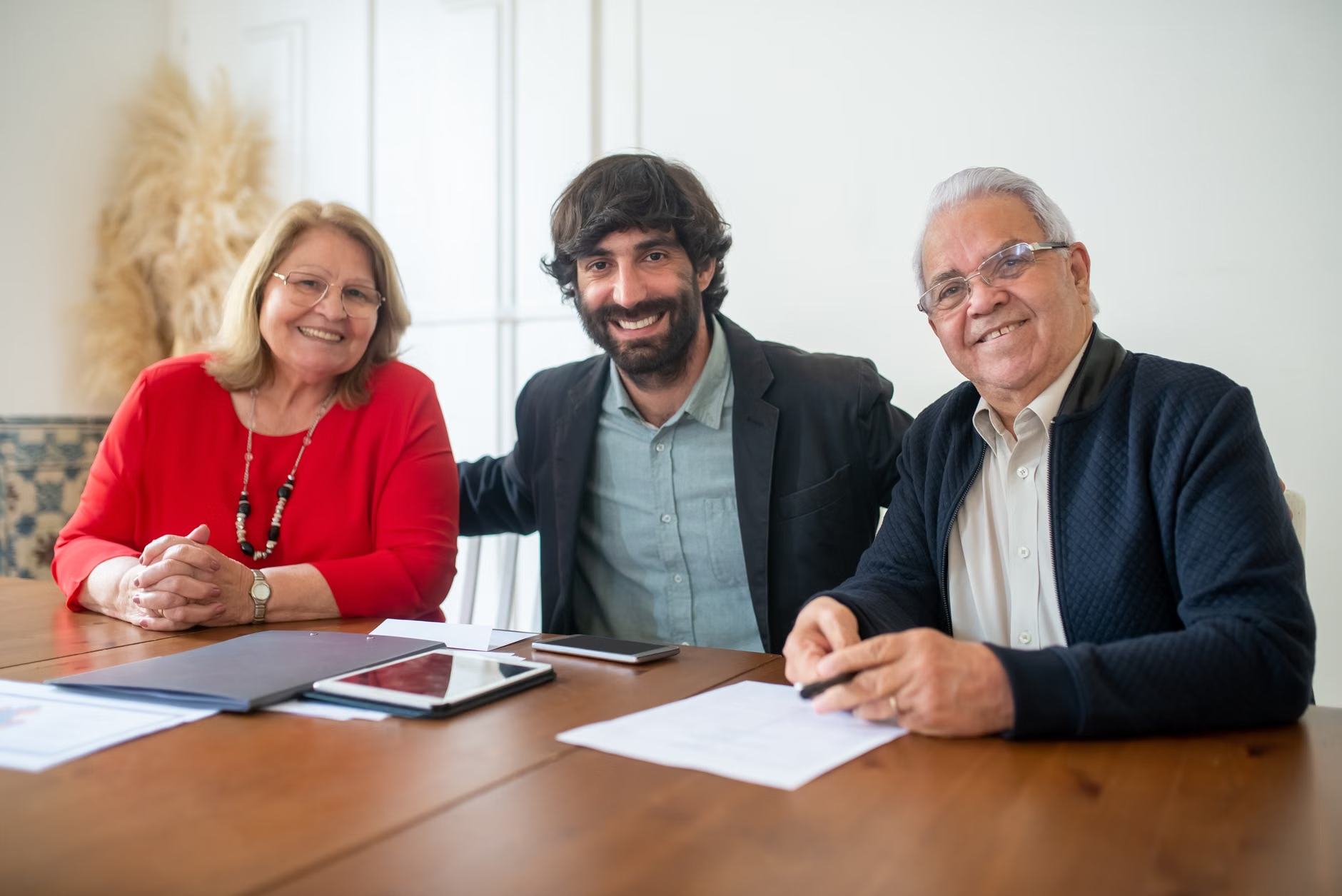
When to use this:
| Activity Type | Strategy |
|---|---|
| High-intensity (Hiking, long museum tours) | Optional attendance; split the group. |
| Low-intensity (Picnics, scenic drives, dinners) | Mandatory attendance; focus on bonding. |
| Rest/Free time | Strictly individual; do not plan anything. |
Managing Dietary and Medical Logistics
Traveling with seniors and children adds a layer of complexity to health. You aren’t just looking for a “good restaurant”; you are looking for a place that can handle allergies, provides easy access to restrooms, and offers a menu that doesn’t trigger a meltdown for a picky eater.
Actionable Steps:
- Medical Summary: Create a single-page PDF that lists every family member’s medications, dosages, and any severe allergies. Keep this in the shared folder and print a copy to keep in your wallet.
- The “Emergency Kit”: Do not just pack a generic first-aid kit. Include: motion sickness pills (for the kids), basic pain relief for adults, rehydration salts, and any specific supplements the seniors take. Carry this in your day-bag, not in the checked luggage.
- Dietary Cards: If you are traveling to a country where you don’t speak the language, print out cards in the local language that explain specific allergies (e.g., “This person has a severe nut allergy”). Show this to the server the moment you sit down.
Insight: Always research the nearest pharmacy or hospital to your hotel or Airbnb before you arrive. Knowing that there is a 24-hour pharmacy within a 10-minute walk provides a level of peace of mind that is worth its weight in gold when a child wakes up with a fever at 2:00 AM.
The Financial Logistics: Avoiding the “Who Pays?” Dance
Money is the most awkward topic in family dynamics. Don’t let it become a source of conflict during the trip. Before you leave, have a clear, written agreement on how expenses will be handled.
The Three-Bucket System:
- Shared Expenses: Use an app like Splitwise or Tricount. Everyone enters their shared costs (accommodation, rental cars, group dinners), and the app calculates who owes whom at the end of the trip.
- Individual Expenses: Each family unit pays for their own souvenirs, snacks, or spontaneous activities.
- The “Buffer” Fund: If the grandparents are treating the family, be clear about what that covers. If it’s “all dinners,” make sure everyone knows. If it’s “the hotel,” clarify if it includes the breakfast buffet.
Pro-Tip: Never assume that because someone is older, they want to pay for everything, or that because someone is working, they have the most money. Set the rules early and stick to them. If you are the organizer, take the lead in setting up the app and explaining how it works before the trip starts.
Packing for three generations is a logistical nightmare if you don’t have a system. The key is modularity. Use packing cubes to separate items by person, not by category. If you have to share a suitcase, use color-coded cubes so that everyone knows exactly which one belongs to them.
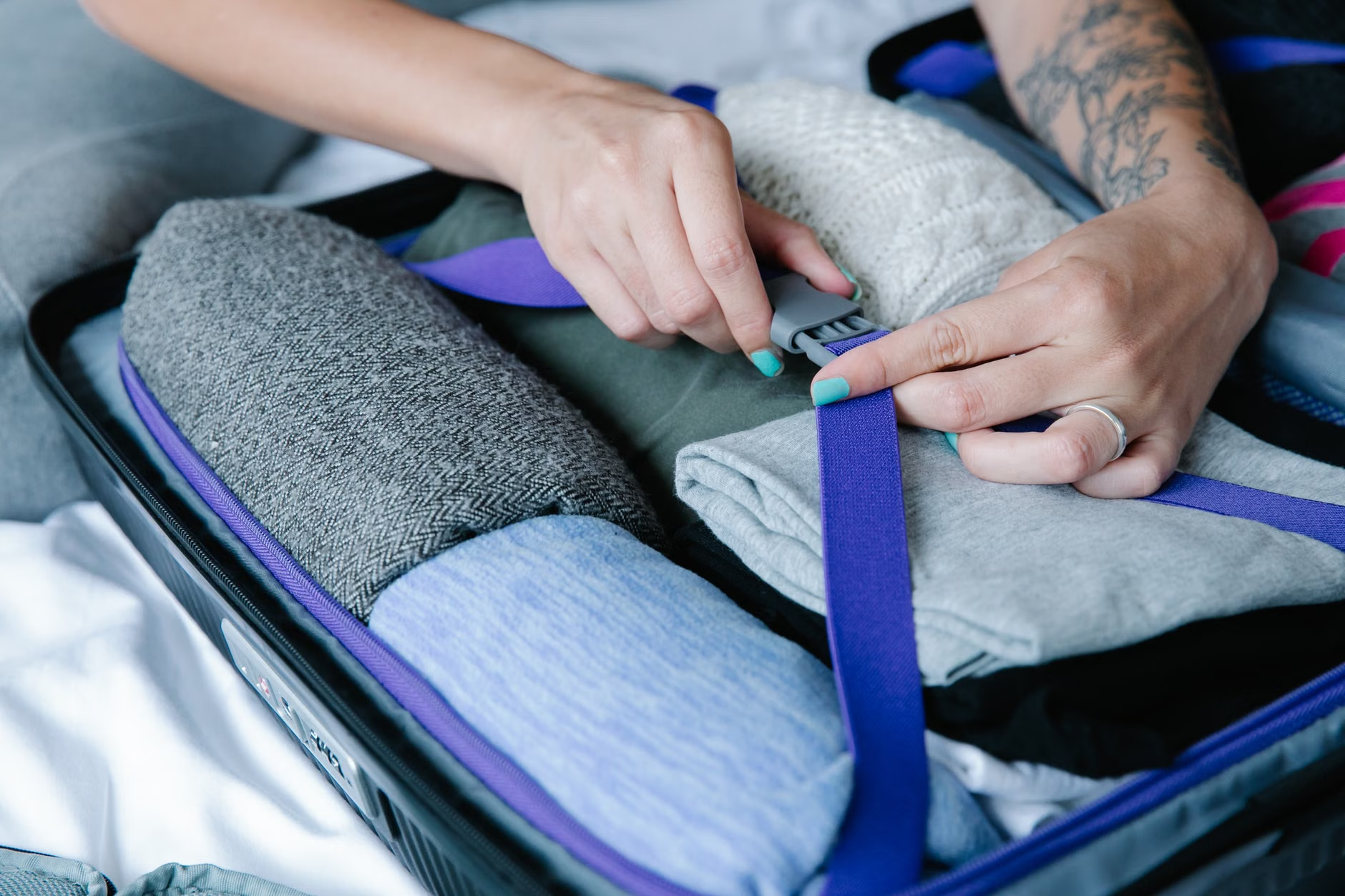
The Critical Packing List for Multi-Generational Travel:
- Universal Power Adapters: You will have a fleet of devices. Bring a high-capacity power strip (compatible with local voltage) so you can charge multiple devices from one outlet.
- Portable Power Banks: Everyone should have their own. When you are out for the day, a dead phone is more than an inconvenience; it’s a safety issue.
- Comfort Items: For the kids, a small toy or book that is “new” for the flight. For the seniors, a light, foldable travel cushion or a familiar neck pillow.
Airports and train stations are high-stress environments. When you have seniors with mobility issues and children who are prone to running off, your transit strategy needs to be conservative. Always add 60 minutes to your “estimated arrival time” for airports. If you are traveling by train, pay the extra for seat reservations to ensure the group sits together—trying to find six seats in a row on a busy commuter train is a recipe for disaster.
If you are renting a car, do not aim for the minimum size. If the rental agency says the car holds five, it holds three adults and two kids comfortably, but zero luggage. Always upgrade to the next size up. The cost of a larger vehicle is significantly lower than the cost of needing a second taxi because your luggage didn’t fit.
The Importance of “Buffer Time”
The most important element of your itinerary is “nothing.” If you try to pack 8:00 AM to 8:00 PM with activities, you will fail. The logistics of moving a multi-generational group—getting everyone ready, moving through crowds, finding restrooms—takes twice as long as you think it will. Plan for one major activity in the morning and one in the late afternoon, with a mandatory “rest” period in the middle of the day. This is when you return to the hotel, let the kids use the pool, and let the grandparents rest their feet. This isn’t wasted time; it’s the glue that holds the trip together.
Final Thoughts: Multi-generational travel is an investment in memories. The logistics are simply the scaffolding that allows those memories to be built. If you keep the pace slow, the communication clear, and the expectations realistic, you will find that the challenges are manageable and the moments shared—the look on your child’s face when they show their grandparent a new discovery, or the stories the older generation shares over a quiet dinner—are entirely worth the effort.
Be the calm center of your group. When things inevitably go wrong—a missed train, a closed museum, a rainy day—remember that your reaction sets the tone for everyone else. Stay flexible, stay organized, and keep your sense of humor. You’ve done the planning; now you have the freedom to enjoy the journey.
Frequently Asked Questions
Q: How do I handle different sleep schedules between children and seniors?
A: The best approach is to book accommodation with separate rooms or, ideally, an apartment-style setup with a living area. This allows the kids to have a bedtime routine while the adults can stay up to talk or read without waking them. If you are in a hotel, try to request adjoining rooms.
Q: What is the best way to handle a “meltdown” during a trip?
A: Have an “exit strategy.” Identify a nearby quiet spot (a park, a café, or even just a bench) where one adult can take the person having the meltdown to decompress while the rest of the group continues or waits. Never force someone to “push through” a meltdown; it only makes the situation worse for everyone involved.
Q: Should we use a travel agent for multi-generational trips?
A: If your group is larger than five people or includes individuals with specific accessibility needs, a travel agent can be a massive help. They can handle complex bookings, coordinate group transport, and provide a single point of contact if something goes wrong. If you prefer to plan yourself, focus on booking “flexible” tickets that allow for changes, as plans with large groups are more likely to change than solo travel plans.
For further reading on accessibility standards and travel rights, you may find the following resources helpful: