Key Takeaways for the Conscious Host
- Prioritize Complexity: Successful zero-proof events succeed by offering drinks with complex flavor profiles (bitter, botanical, spicy) rather than just sweet mocktails.
- Normalize the Narrative: Frame the event as an “elevated tasting experience” or “premium beverage showcase” to remove the stigma of sobriety and highlight the quality of the drinks.
- Strategic Planning: Always provide a clear, visible menu that highlights ingredients, ensuring guests with dietary restrictions or specific preferences feel informed and valued from the moment they arrive.
Hosting a professional event in your 30s and 40s often feels like a balancing act between maintaining a reputation for being “the person who knows how to throw a good party” and acknowledging that the “open bar” model is increasingly outdated, inconvenient, or simply unwelcome among your peers. Whether you are managing a corporate team, hosting clients, or coordinating industry networking sessions, the shift toward “zero-proof” hosting is not just a trend—it is a functional evolution of professional etiquette.
The goal is to move away from the assumption that alcohol is the social lubricant required for success. When you host a zero-proof event, you aren’t just cutting costs or removing a liability; you are curating an environment where the focus remains on the conversation, the connection, and the professional objective. If you have ever felt that a standard “happy hour” devolved into awkwardness or that your colleagues were checking their watches to see when it was “polite” to head home to their kids, you already understand why this shift matters.
Why the Zero-Proof Shift is Actually a Professional Advantage
In our 30s and 40s, time is our most limited asset. A late-night drinking event often results in a “lost” next morning, which is a luxury few of us can afford when juggling school runs, early meetings, or personal fitness goals. By opting for a zero-proof event, you provide a space that is inclusive, productive, and—crucially—memorable for the right reasons.
The “Inclusivity Multiplier”: When you remove alcohol as the primary feature of an event, you immediately remove the barriers for those who don’t drink for religious, health, or personal reasons. It is the ultimate form of professional hospitality; you are designing an experience that doesn’t alienate anyone in the room. Data from market research firms like IWSR (International Wine and Spirit Record) consistently shows that the “No/Low” alcohol category is one of the fastest-growing segments in the beverage industry globally. This isn’t just about people who don’t drink; it’s about the “sober-curious” demographic—professionals who enjoy a drink but are increasingly choosing to opt out for better sleep or performance.
Reframing the “Networking” Dynamic: Think about the last time you were at a standard bar event. How much of the conversation was actually meaningful, and how much was just noise? When the drinks are high-quality but non-alcoholic, the dynamic shifts. People are more present, the conversations are sharper, and the “hangover anxiety” of the next day is non-existent. You are essentially creating a high-performance networking environment.
The Anatomy of a High-End Zero-Proof Menu
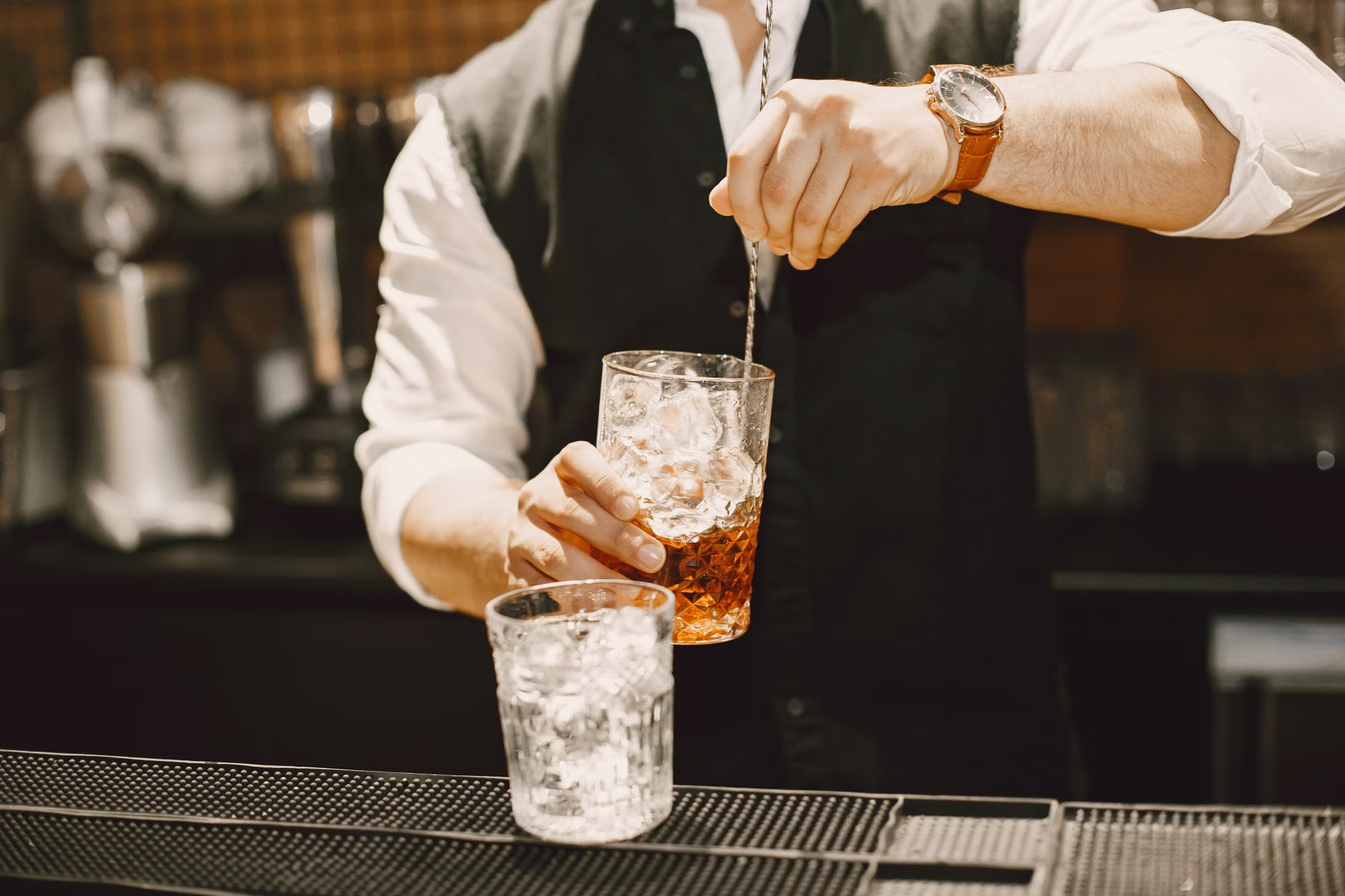
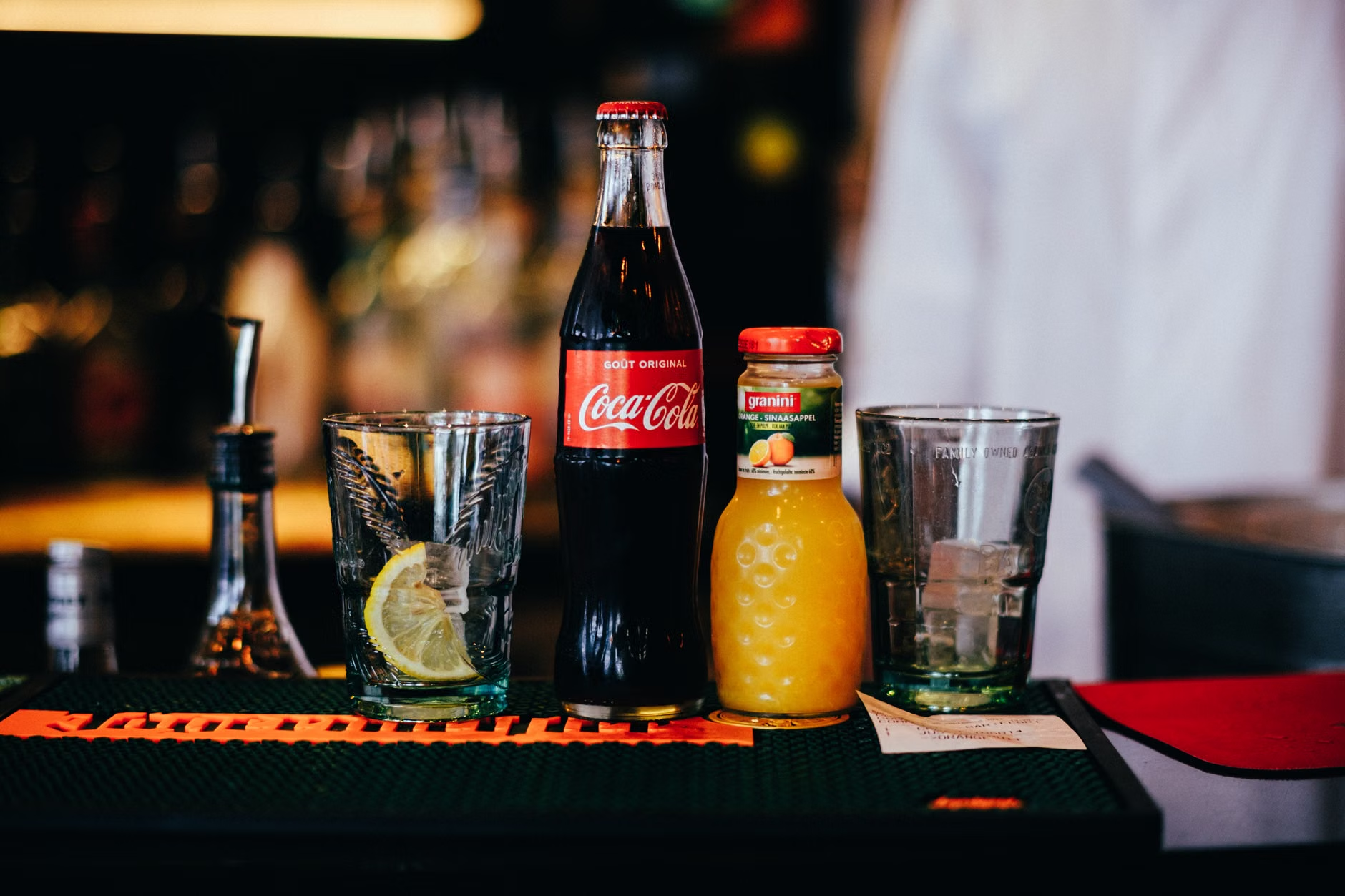
The most common mistake amateur hosts make is thinking that a “mocktail” is just a glass of fruit juice with a splash of soda. That approach is why so many people have a negative bias toward non-alcoholic options. To host a successful zero-proof event, you must treat your beverage selection with the same rigor you would apply to a wine list.
Focus on Botanical Complexity: Look for beverages that feature bitter profiles, herbs, spices, and tannins. These elements mimic the “bite” and satisfaction of alcohol. Think of house-made shrubs (vinegar-based fruit syrups), cold-brew teas, premium tonic waters, and non-alcoholic spirits that are distilled with juniper, clove, or cardamom.
The “A/B” Test for Your Bar Cart:
| Component | Amateur Approach | Professional Approach |
|---|---|---|
| Base | Sugary fruit juices | Distilled botanical spirits or shrubs |
| Garnish | A single maraschino cherry | Fresh rosemary, dehydrated citrus, or cracked peppercorns |
| Presentation | Plastic cups | Elegant glassware (coupes, highballs) |
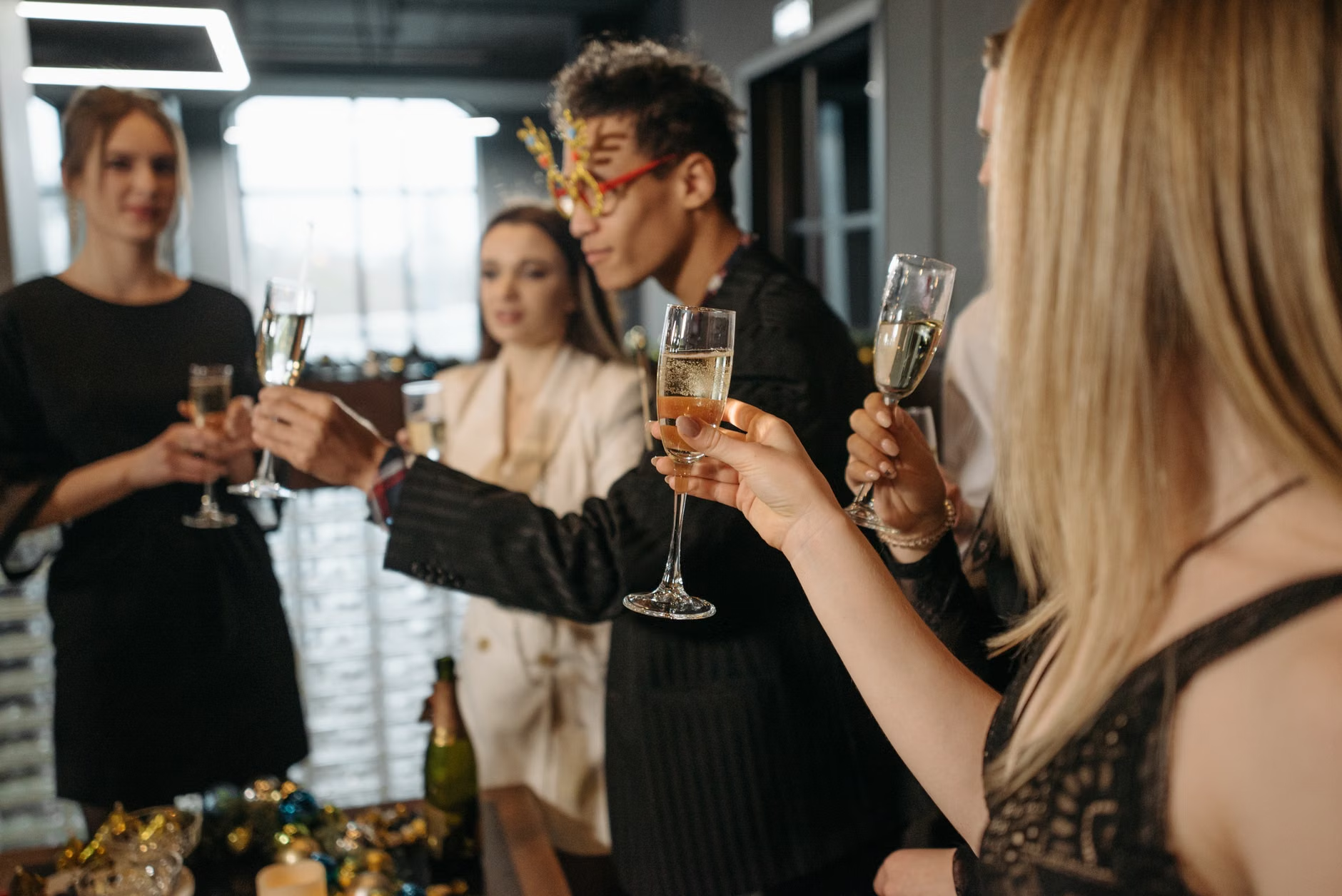
The goal is to provide a sensory experience that feels “grown-up.” When a guest holds a glass that looks and smells sophisticated, they don’t feel like they are “missing out” on alcohol. They feel like they are participating in a curated experience.
Setting the Stage: How to Communicate the “Why”
You don’t need to apologize for a zero-proof event. In fact, doing so undermines the professional nature of the gathering. Instead, frame it as a deliberate choice. If you are sending out invitations, use language that highlights the quality of the experience rather than the absence of alcohol.
The “Elevated Experience” Pitch: Instead of saying, “We are hosting a dry networking event,” try: “Join us for an evening of curated botanical refreshments and professional conversation.” This sets an expectation of quality. It tells your guests that you have put thought into the menu, which in turn makes them feel that their presence is valued.
Handling the “But Where’s the Wine?” Crowd: There will always be one or two people who are surprised by the lack of alcohol. The best way to handle this is with confidence and transparency. If someone asks, a simple, “We wanted to host an event where everyone could focus on the conversation without the distractions of a traditional bar scene,” is perfectly sufficient. You don’t need to debate the merits of sobriety. Just be a gracious host who offers them the best beverage you have available.
Logistics and Hidden Variables
Hosting without alcohol doesn’t mean your work is done. In many ways, it requires more attention to detail. Because you aren’t relying on the “crutch” of an open bar to keep people entertained, the environment itself needs to be engaging.
The Importance of Pacing: Without alcohol, the “ebb and flow” of an event is different. People tend to arrive and leave on a more predictable schedule. Use this to your advantage. If you are hosting a workshop or a presentation, schedule it for the first 30 minutes, followed by a 60-minute networking session. Without the “drunken drift” that happens at the end of many events, you will find that your guests are more attentive during the structured portion of your gathering.
The Hidden Cost of Quality: A common misconception is that zero-proof events are “cheap.” While you might save money on liquor taxes and bulk alcohol, high-end non-alcoholic spirits and artisanal tonics can be surprisingly expensive. Budget accordingly. If you are spending $40 on a bottle of premium non-alcoholic gin, you are spending roughly the same as a decent bottle of actual gin. Do not expect to save money by compromising on quality—the goal is to impress, not to cut corners.
Building Your “Zero-Proof” Hosting Toolkit
If you are ready to start, here is your step-by-step framework for the next event you host.
- Audit Your Guest List: Are there specific dietary restrictions? Ensure your non-alcoholic menu is as well-labeled as a buffet menu would be.
- Curate Three “Signature” Drinks: You don’t need a massive bar. One “bitter/herbal” option, one “citrus/refreshing” option, and one “sparkling/effervescent” option will cover 99% of preferences.
- Invest in Ice: This is a secret weapon. Large, clear ice cubes make any drink look intentional and high-end. Avoid the standard cloudy “refrigerator ice” if possible.
- Designate a “Beverage Host”: Even if it’s not a professional bartender, designate someone to manage the drinks. Having someone explain the ingredients (“This is a house-made ginger and lemongrass shrub with club soda”) adds a layer of sophistication that makes the drink feel like a “cocktail.”
The “Overlooked Variable”: Always provide a “neutral” option. Some people just want sparkling water with a slice of cucumber. Don’t force complexity on everyone. Having a high-quality, high-carbonation sparkling water available at all times is the baseline requirement for any professional host.
Managing Social Expectations in Your 30s and 40s
At this stage in our lives, our social and professional circles are often overlapping. Your peers are likely dealing with the same pressures you are: burnout, family obligations, and a desire to be more productive. By hosting a zero-proof event, you are essentially giving your guests permission to be their best selves. There is a quiet relief that sets in when people realize they don’t have to “keep up” with a drinking culture to be part of the group.
However, be prepared for the “social inertia.” Many people are so used to holding a glass of wine at a networking event that they feel physically awkward without one. By providing a glass that has weight, texture, and a complex flavor, you are solving that physical discomfort. The goal is for the drink to be an accessory to the conversation, not the focus of the night.
Common Pitfalls and How to Avoid Them
The “Sugar Trap”: Many non-alcoholic drinks are essentially soda. If your guests are drinking four or five high-sugar mocktails, they will experience a crash just like they would with alcohol, only without the buzz. Keep your sugar levels low. Use fresh herbs, citrus peels, and bitters (check labels, as some bitters contain trace alcohol—if you are strictly zero-proof, skip them) to drive flavor.
The “Empty Room” Syndrome: If you are hosting a professional event, the venue matters more when you don’t have the “bar crowd” to fill the space. Choose a venue with good lighting, comfortable seating, and clear acoustics. If your guests are standing in a sterile room with nothing but a table of juice, the “professional” vibe will evaporate instantly.
Forgetting the “Exit Strategy”: Because your event will likely end on time, make sure your guests know what comes next. If it’s a networking event, have a clear wrap-up. If it’s a social gathering, have a clear end time. This shows that you respect their time, which is the hallmark of a mature host.
Final Thoughts on Becoming a Modern Host
Hosting a zero-proof event is a statement of intent. It says that you value the people in the room more than the substance in their glasses. As we navigate the complexities of our 30s and 40s, this approach allows us to maintain our professional networks and social connections without the trade-offs that often come with traditional drinking culture.
Start small. Host a team lunch or a client meeting with a curated selection of botanical sodas. You will be surprised by how many people thank you for the change of pace. It turns out that when you remove the alcohol, you don’t lose the fun—you gain the clarity. And in the professional world, clarity is the most valuable currency you have.
Frequently Asked Questions
Q: Are bitters considered “zero-proof”?
A: Most traditional bitters contain alcohol as a solvent to extract the flavors. While the amount used in a drink is tiny, it is not strictly alcohol-free. If you are hosting for people who are alcohol-free for medical or serious personal reasons, look for “alcohol-free bitters” or use herbal tinctures made with glycerin or vinegar.
Q: How do I handle guests who insist on wanting alcohol at my event?
A: Stay firm but polite. You are the host. You can say, “We’ve curated a specific zero-proof experience for this event to keep the focus on the discussion. I hope you enjoy the selection we’ve put together.” Most people will respect the effort you’ve put into the menu once they try a high-quality drink.
Q: What is the best way to calculate how much to buy?
A: Assume each guest will have two drinks in the first hour and one drink per hour thereafter. If you are serving premium non-alcoholic spirits, these are often concentrated, so a 700ml bottle can go a long way when mixed with tonic or soda water. Always keep a surplus of sparkling water and fresh garnishes—these are the “hidden” essentials that run out fastest.
For further reading on the evolving landscape of professional social events, refer to the IWSR Drinks Market Analysis, which provides comprehensive data on the global rise of the no- and low-alcohol category.