Key Takeaways:
- Focus on the Journey, Not the Destination: Slow-transit rail eliminates airport anxiety and forced sedentary time, allowing children to move freely, which leads to lower cortisol levels for the whole family.
- Cost vs. Value Calculation: While rail can sometimes be pricier than budget airlines, it eliminates hidden costs like baggage fees, airport transfers, and expensive terminal meals, often resulting in a comparable total trip cost.
- Strategic Planning is Non-Negotiable: Booking “family-friendly” cabins or dedicated play carriages and packing modular “activity kits” are the two primary factors that dictate whether a long-haul train trip is relaxing or chaotic.
If your idea of a family vacation currently involves the frantic energy of an airport terminal—shoes off, liquids out, and the inevitable “are we there yet” chorus while strapped into a cramped middle seat—you are likely overdue for a shift in perspective. The “slow-transit” rail movement isn’t just a trend for backpackers; it is an increasingly practical, sanity-saving strategy for parents in their 30s and 40s who are tired of the logistical nightmare that modern air travel has become.
Why Slow-Transit Rail is the Antidote to Modern Travel Burnout
For parents juggling professional responsibilities and the demands of raising children, the “speed” of air travel is often an illusion. When you factor in the commute to the airport, the mandatory two-to-three-hour arrival window, security lines, boarding delays, and the post-flight transfer to your actual destination, a three-hour flight often consumes an eight-hour block of your day. And that’s before you factor in the stress of keeping toddlers contained in a pressurized metal tube.
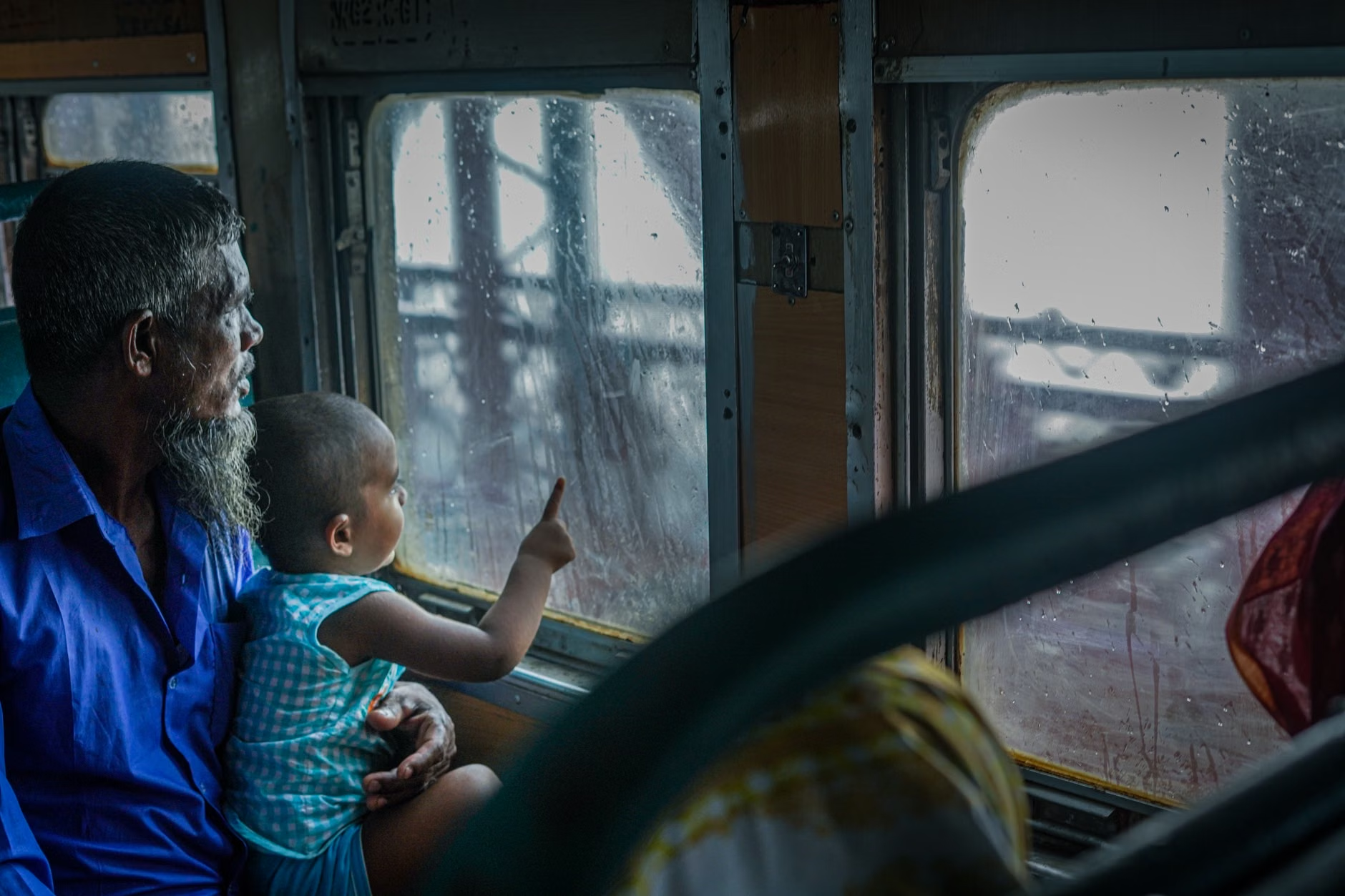
Slow-transit rail flips this script. It turns the “transit” portion of your trip from a hurdle into an experience. By choosing a route that prioritizes scenery over speed, you gain the ability to move through the environment rather than over it. For a child, the difference between staring at a screen in a dark cabin and watching a landscape shift from urban sprawl to rolling hills is profound. It provides a tactile, visual anchor that keeps them engaged and, crucially, keeps their nervous systems regulated.
From a psychological standpoint, the “transition” time on a train is significantly more gentle. You aren’t being processed through security checkpoints. You board, you find your space, and you settle in. This lack of constant, high-stakes movement is why many parents find that their children are notably calmer on trains than on planes. You are essentially bringing your “living room” with you, complete with the ability to walk to a bistro car or stretch your legs in the corridor.
The Real-World Math: Is Rail Travel Actually More Expensive?
A common misconception is that scenic rail travel is a luxury item reserved for the wealthy or the retired. While high-speed premium lines or luxury sleeper trains (like the Venice Simplon-Orient-Express) are undeniably expensive, the standard intercity rail network is often surprisingly competitive when you look at the “total cost of ownership” of a trip.
Consider the “hidden” costs of a typical flight-based family vacation:
| Expense Category | Air Travel | Rail Travel |
|---|---|---|
| Airport/Station Transfer | High (Taxi/Shuttle) | Low (City Center) |
| Baggage Fees | Frequent & Expensive | Usually Included |
| Onboard Comfort | Paid Extras | Included Space |
The most important variable here is the city-center to city-center advantage. Most major train stations are located in the heart of a city. This eliminates the need for expensive airport transfers, which, for a family of four, can easily run into the hundreds of dollars depending on the destination. When you aggregate the cost of baggage, the convenience of central arrival, and the ability to bring your own food and drinks on board without restriction, the price gap narrows significantly. For many families, the slight premium paid for a rail ticket is effectively a “stress-reduction tax” that pays for itself in avoided logistical headaches.
Strategic Planning: The “Rule of Three” for Rail Success
If you have decided to commit to a scenic rail route, you cannot approach it with the same “show up and go” mentality as a local commuter train. Long-distance rail travel requires a specific set of tactical decisions to ensure that the “scenic” part of the journey doesn’t become a “chaotic” one.
1. The Equipment Audit
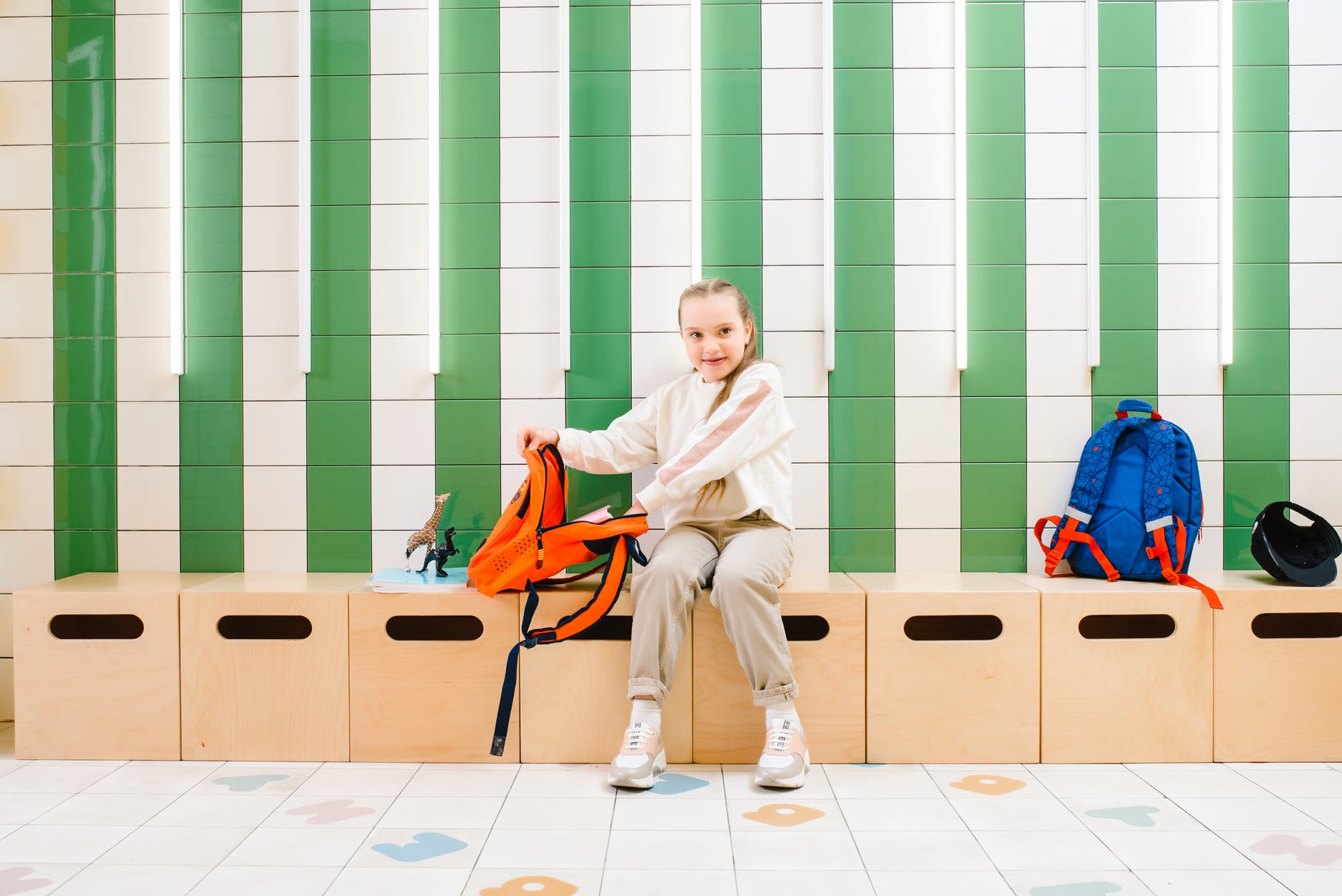
Unlike a plane, you are responsible for your luggage from the platform to the rack. The most common mistake parents make is overpacking. If you have to haul two massive suitcases, a stroller, and a toddler through a crowded train station, you will be exhausted before the train even departs. Use the “One-Bag Rule”: one manageable suitcase per adult, and one backpack per child containing only their “survival kit.”
2. The Activity Modularization
Do not rely on a single source of entertainment. Tablets run out of battery, and kids get bored of coloring. Divide your travel time into “modules.” For a six-hour trip, plan for four 90-minute blocks. The first block is for settling in and snacks. The second is for creative work (drawing, puzzles). The third is for “moving” (a walk to the bistro car or a game in the aisle). The fourth is for rest or a movie. By framing the journey in these smaller, predictable chunks, you make the time feel finite and manageable.
3. The Seating Strategy
Always prioritize seating that faces each other. Most modern trains offer “table seats” or “club seating.” These are non-negotiable for families. Being able to sit across from your child allows for card games, shared meals, and eye contact, which is essential for managing their behavior. If you are booking a long-haul night train, look specifically for “couchette” or private cabin options. While these are more expensive, they provide a secure, private space where your children can actually lie down and sleep, which is the difference between arriving at your destination refreshed or sleep-deprived.
Even with the best planning, things can go wrong. The reality of rail travel, especially in regions with older infrastructure, includes delays and signal failures. The key is to build “buffer time” into your itinerary. Never book a train that arrives one hour before a hotel check-in or a planned event. Assume a two-hour margin of error. This mindset shift is vital for parents in their 30s and 40s who are used to high-efficiency, time-sensitive schedules. In the world of slow-transit, the buffer is not “wasted time”—it is insurance against the stress of a missed connection.
Another overlooked variable is the temperature variance. Trains can be notoriously drafty or overly air-conditioned. Always pack light layers for every family member. It sounds like basic advice, but it is the single most common reason for a child becoming irritable mid-journey. When they are physically comfortable, they are exponentially more likely to engage with the scenery rather than complain about the boredom.
Choosing the Right Route for Your Family
Not all rail routes are created equal. Some are designed for commuters, while others are purpose-built for the experience. If you are looking for your first “slow-transit” experience, prioritize lines that are famous for their engineering or their natural beauty. Examples include the Bernina Express in Switzerland, which offers staggering views of glaciers and viaducts, or the California Zephyr in the United States, which cuts through the Rocky Mountains and the Sierra Nevada.
When researching these routes, look for the following criteria:
- Frequency of Service: Can you easily jump off and stay the night in a mid-route town if the kids need a break?
- Bistro Facilities: Does the train have a full dining car, or is it just a vending machine? For a family, a dining car is a destination in itself.
- Accessibility: Are there direct transfers from the station to your final accommodation, or will you need to navigate local public transport?
The Hidden Benefit: The “Digital Detox” Effect
We often talk about the importance of disconnecting, but we rarely create the environment to actually do it. On a plane, the lack of Wi-Fi is often a source of frustration. On a scenic train, it becomes an opportunity. Because the train is moving through areas where cellular reception can be spotty, it forces a natural break from the digital world. This is a rare, unintentional “digital detox” that can be incredibly restorative for parents who spend their entire work week tethered to emails and Slack notifications.
Use this time to engage in “analog” activities. Bring a deck of cards, a travel board game, or simply a book. The rhythmic motion of the train and the changing landscape act as a form of sensory grounding, which is remarkably effective at lowering the baseline stress levels of both adults and children. It allows you to actually talk to your family without the constant, nagging distraction of a phone buzzing in your pocket.
Final Thoughts and Next Steps
Transitioning to slow-transit rail is not about rejecting speed; it is about reclaiming your time. It is a decision to treat the travel process as a legitimate part of your vacation, rather than a tax you have to pay to get to the “real” fun. By carefully selecting your route, prioritizing table-seating, and modularizing your activities, you can turn a stressful travel day into a memorable highlight of your trip.
If you are new to this, start small. Find a scenic regional line for a three-to-four-hour journey before committing to a multi-day cross-country expedition. The goal is to build your family’s “rail muscles” and get comfortable with the pace. Once you experience the quiet, rhythmic satisfaction of watching the world go by from a panoramic window, you may find it very difficult to go back to the airport terminal.
For those interested in exploring specific routes, I recommend starting with the official national rail portals of your target region, as they often provide the most accurate information on family-specific discounts and seat reservations. Sites like Seat61 (the “man in seat 61”) offer perhaps the most comprehensive, independent advice for global rail travel available online.
Actionable Next Step: This weekend, pull up a map of your region’s rail network. Identify one major city within a 4-hour radius that you’ve never visited. Check the train schedule, look for a “table seat” option, and see if it’s feasible for a weekend trip. You might be surprised at how accessible and transformative a simple train ride can be.
Frequently Asked Questions
1. What should I do if my child gets motion sickness on trains?
Unlike planes, where you are often trapped in a seat, trains offer more stability. However, if your child is prone to motion sickness, try to book seats that face forward (in the direction of travel) and avoid the very last car, which can sway more. Keep them focused on the horizon or a fixed point rather than a screen, and ensure they have access to fresh air if the train has opening windows or a vestibule area.
2. Are there specific ages where rail travel is easier or harder?
Toddlers (ages 2–4) are often the most challenging because of their need for constant movement. For this age group, prioritize trains with “family carriages” or those that are less crowded. School-aged children (5–12) often thrive on trains because they can walk around, read, and look out the window, making them the ideal age for longer, more scenic journeys. Always check if the rail operator offers “kids’ zones” or activity packs.
3. How do I handle luggage if I’m traveling solo with kids?
The secret is to use a lightweight, high-quality stroller that can be folded easily, and to pack your clothing into a single, large backpack for each person rather than rolling suitcases. If you have a large suitcase, many European and North American trains have designated luggage areas at the ends of cars. If you are traveling solo, try to book a seat near these areas so you can keep an eye on your bags while keeping your children close.
Resources for further planning:
The Man in Seat 61 (Global rail travel guide)
Eurail (For European rail pass options)
Amtrak (For North American scenic routes)