- Privacy is the permanent cost: Once a child’s genetic data is uploaded to a commercial database, you cannot “delete” it from the company’s internal research or potential third-party partnerships.
- The ‘Right to Choose’: Genetic testing is a one-way street; your child loses the ability to decide for themselves whether they want their biological data shared or stored once they reach adulthood.
- Practical Alternatives: For children under 16, building heritage through physical archives, oral storytelling, and public genealogy records offers 100% data security while preserving the same cultural benefits.
You’ve probably seen the ads: a heartwarming montage of someone discovering they are 12% Scandinavian or finally finding a long-lost cousin across the ocean. It’s tempting to want that same sense of connection for your kids. In an era where we document every milestone on social media, treating our children’s “ancestral roots” as just another piece of digital data feels almost inevitable. But before you order that saliva kit for your eight-year-old, we need to talk about the reality of genetic genealogy—because this is one digital footprint that is literally etched into their cells.

Why Parents Are Turning to Genetic Genealogy
For parents in their 30s and 40s, the interest in ancestry tracking often stems from a desire to ground our children in a world that feels increasingly transient. We move cities, we change jobs, and we often lose touch with the extended family structures that defined our own childhoods. Genetic testing promises a shortcut to “identity.” By paying a company a hundred dollars or so, you get a pie chart that tells you exactly where your child’s ancestors walked.
Beyond the “where are we from” curiosity, there is the health factor. Many parents are initially drawn to these kits because they hope to find clues about hereditary health risks. However, it is crucial to distinguish between consumer ancestry kits and clinical genetic testing. Ancestry kits look at single-nucleotide polymorphisms (SNPs)—variations in your DNA—to estimate ethnic percentages. They are not diagnostic medical tests. If you are worried about specific genetic markers for diseases, you should be speaking with a pediatrician or a genetic counselor, not relying on a web-based service that focuses on geographic heritage.
The Privacy Trade-off: What Are You Actually Signing Away?
When you click “I agree” to the terms of service for a major DNA testing company, you aren’t just buying a report. You are often granting the company a non-exclusive, perpetual, royalty-free license to use your child’s genetic data. This is the part that gets buried in the fine print.
The Permanent Nature of Genetic Data: Unlike a social media account, you cannot simply “delete” your DNA. If a company suffers a data breach, or if they sell anonymized datasets to pharmaceutical companies (a common business model), that information is out there. While companies often claim the data is “de-identified,” geneticists have repeatedly shown that it is possible to re-identify individuals using nothing more than public records and genealogy databases. By testing your child, you are essentially making a permanent decision about their biological privacy before they are old enough to understand what a “database” even is.
Third-Party Access: Many of these companies have partnerships with researchers or insurance-adjacent entities. While they may tell you that your child’s data is safe, the definition of “safe” changes as laws change. In some jurisdictions, law enforcement has used public genealogy databases to solve cold cases. While this may seem like a social good, it highlights the fact that your child’s DNA could eventually be used in ways you never intended—or that you might find ethically questionable.

Comparing Methods of Heritage Tracking
If you want to teach your children about their roots, you have several paths. Let’s look at how they compare in terms of effort, privacy, and long-term value.
| Method | Data Privacy | Effort Required | Long-term Value |
|---|---|---|---|
| Commercial DNA Kits | Low (Permanent) | Very Low | High (Biological) |
| Family Tree Software | High (Local) | Medium | High (Historical) |
| Oral/Physical Archives | Maximum | High | Very High (Personal) |
The table above highlights a trade-off: convenience versus control. The “High” value of DNA kits is purely biological. But what does a child actually gain from knowing they are 20% Irish? Usually, very little. The “High” value of historical research—documenting names, dates, stories, and photographs—creates a narrative. It teaches them about the human experience, not just the biological one.
How to Research Family History Safely (The ‘Analog’ Way)
If you want to help your child understand their background without compromising their data privacy, you don’t need a lab test. Here is a step-by-step approach to building a “Heritage Project” that actually means something.
1. Start with the “Living History” Interview
The best record-keeper isn’t a database; it’s a living relative. If you have grandparents or older aunts and uncles, sit down with your child and record an interview. Ask about their childhood, their favorite foods, or the house they grew up in. This creates an emotional connection that a pie chart simply cannot provide.
2. Use Non-Genetic Genealogy Sites
Services like FamilySearch (which is free and often non-profit) allow you to build a family tree without uploading DNA. You can store photos, scanned documents, and stories. By focusing on the genealogy (the study of families) rather than the genetics (the study of DNA), you maintain control over the data.
3. Create a Physical “Heritage Book”
Technology is great, but a physical book in a child’s room is better. Use a scrapbook to store photos, maps of where ancestors lived, and copies of old letters. This makes the information tangible. When a child can touch a picture of their great-grandmother, they internalize their history far better than when they look at a screen.
The Ethics of “Genetic Consent”
We often talk about consent in the context of posting photos of our children online. Genetic consent is a more complex, invisible version of this. When you test your child, you are revealing information about their parents, their siblings, and their future children.
The “Right to Not Know”: Some people have strong feelings about their ancestry. Perhaps they prefer to view themselves as part of a specific culture based on how they were raised, or they have no desire to find out about potential biological surprises (like non-paternity events or hidden health predispositions). By testing a child, you take away their right to decide, as an adult, whether they want to open that box.
If you have already tested yourself, be aware that you have already revealed a significant portion of your child’s genetic information by proxy. Adding your child’s specific sample to the database simply increases the precision of that data. If you feel you must test your child for a medical reason, ensure you are using a clinical-grade medical facility, not a commercial ancestry site. The distinction is not just about accuracy—it is about the legal protections afforded to medical records (like HIPAA in the U.S. or GDPR in the EU) versus the much looser commercial terms of service.
Practical Decision Criteria: Should You Wait?
If you are still on the fence, use this decision matrix. If you answer “Yes” to these questions, you are likely in a safe position to move forward with a test—but always read the specific company’s privacy policy first.
- Is there a specific, non-medical historical mystery you are trying to solve that cannot be solved through public records? If yes, proceed with caution.
- Have you read the company’s “Privacy Policy” regarding the sale of data to third parties? If you haven’t read the policy, you haven’t given informed consent.
- Does the company allow you to opt-out of “research” and “third-party data sharing”? If they don’t, avoid them entirely.
If your goal is simply to “see what they are,” the best advice is to wait. Let your child grow up, develop their own sense of self, and let them decide at age 18 or 21 whether they want to pay for a service to analyze their DNA. Their heritage isn’t going anywhere; it’s waiting for them to discover it on their own terms.
Final Thoughts: The Stories Matter More
At the end of the day, our children are not defined by their DNA percentages. They are defined by the stories we tell them, the values we instill, and the connections we foster with our living family members. A DNA kit is a scientific tool, not a parenting tool. While it can be a fun conversation starter, it should never replace the hard work of family history research—which is where the real bonding happens.
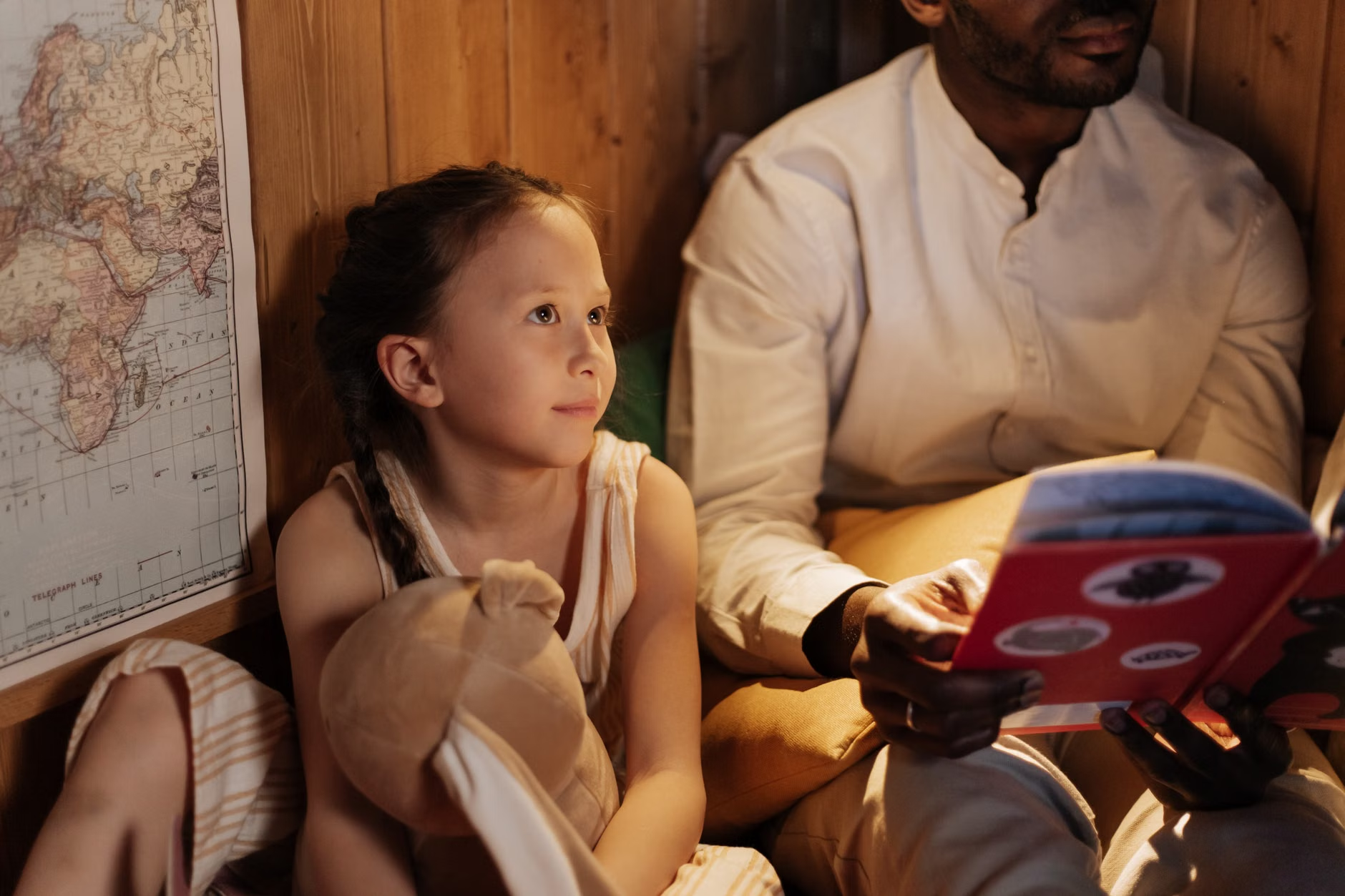
If you find yourself wanting to share your heritage, start with a map on the wall. Mark where your ancestors came from. Tell the stories of how they traveled, what they struggled with, and how they eventually led to the life you have today. That is a history they can understand, relate to, and carry forward without any risk to their privacy.
Frequently Asked Questions
1. Can I delete my child’s DNA data from the company’s database later?
Most companies allow you to “request deletion” of your account and data. However, once your data has been included in an aggregate research study or sold to a third-party partner, it is effectively impossible to pull it back. The “deletion” often only applies to the company’s internal active database, not the research datasets already in circulation.
2. Is there a difference between “ancestry” testing and “health” testing for kids?
Yes, significant differences exist. Clinical genetic testing for health is performed by medical professionals to identify specific, actionable mutations. Consumer “health” reports from ancestry companies are typically based on risk-factor correlations, which are less precise and can lead to unnecessary anxiety or, conversely, a false sense of security. Never use a consumer kit to make medical decisions for a child.
3. What if I want to use a DNA kit for my child to find biological relatives?
If you are searching for biological relatives, the privacy trade-off is often considered a “necessary evil” by many families. If you decide to proceed, use a service that allows you to set the account to “private” and keep your child’s profile hidden until you have vetted the platform. Always monitor the account yourself, and consider using a pseudonym for the profile rather than your child’s legal name.
Sources and further reading: