The most effective way to eliminate weekend sibling rivalry isn’t to separate the children, but to design a high-stakes, collaborative “mission” that makes their individual success impossible without the other’s input.
- Interdependence is Key: Use “linked rewards” where one child cannot unlock a privilege unless they have assisted the other in completing their respective tasks.
- Structured Roles: Assign specific, rotating roles (e.g., Architect vs. Builder) to prevent power struggles and ensure both children feel essential to the outcome.
- The 70/30 Rule: Design activities that are 70% cooperative and 30% individual, allowing for autonomy while maintaining the collaborative framework.
If you are a parent in your 30s or 40s, you know the specific, grating sound of a Saturday morning argument escalating from a minor disagreement over a toy to a full-blown living room standoff. It’s exhausting, and it usually happens right when you’re trying to finish that last bit of work or enjoy a quiet cup of coffee. The traditional approach—sending them to their rooms or refereeing the dispute—rarely works because it doesn’t address the underlying dynamic: the lack of a shared goal.
When children compete for your attention or resources, they are essentially playing a zero-sum game. If one wins, the other loses. To change this, you have to shift the game design of your weekend from “competition” to “cooperation.”
The concept of “Sibling-Collaboration” design isn’t about forcing children to play together; it’s about creating a structure where their goals are mutually dependent. If they want the “Weekend Reward”—whether that’s a movie night, a trip to the park, or a special dessert—they must demonstrate a completed project that required both of their skill sets.
Consider the difference between a task and a mission. A task is “clean your room.” A mission is “reorganize the playroom to create a secret base.” The former is a chore; the latter is a design challenge. When you frame the weekend through missions, you stop being the referee and start being the “Game Master.”
Common Mistake: Giving children the same task. If you tell two siblings to “clean the kitchen,” they will immediately compare who is doing more work, leading to accusations of unfairness. Instead, assign non-overlapping roles that are equally vital. One child is the “Supply Manager” (gathering items), and the other is the “Lead Architect” (organizing the space). They cannot succeed without each other, and because their roles are distinct, they cannot directly compare their labor.

Designing the ‘Linked Reward’ System
The most robust way to ensure collaboration is the use of “linked rewards.” This is a psychological principle where the benefit is only accessible if the collaborative effort is verified. For example, if you have planned a family excursion, tell them: “We are going to the museum, but the ‘Navigator’ (Child A) needs the ‘Map’ (Child B) to tell us which bus to take.”
This creates an artificial necessity for communication. When you implement this, you must be firm. If they argue, the mission is paused. Do not lecture them on “being nice.” Instead, treat the conflict as a “system failure” in the game. Ask them, “The mission is currently stuck in a deadlock. What is the protocol to clear this error?”
Setting the Rules: The ‘Game Master’ Framework
To make this work, you need a set of rules that are clear, visible, and non-negotiable. This prevents the “I didn’t know that was the rule” excuse, which is the cornerstone of most sibling arguments.
| Rule Component | Purpose | Actionable Tip |
|---|---|---|
| The Role Card | Prevents power struggles by defining scope. | Use physical cards they carry to signify their current role. |
| The Verification Point | Ensures quality without micro-management. | They must present their completed work to you together. |
| The Timeout Protocol | Provides a neutral exit for frustration. | If they reach a stalemate, they must both take a 5-minute ‘system reboot’ separately. |
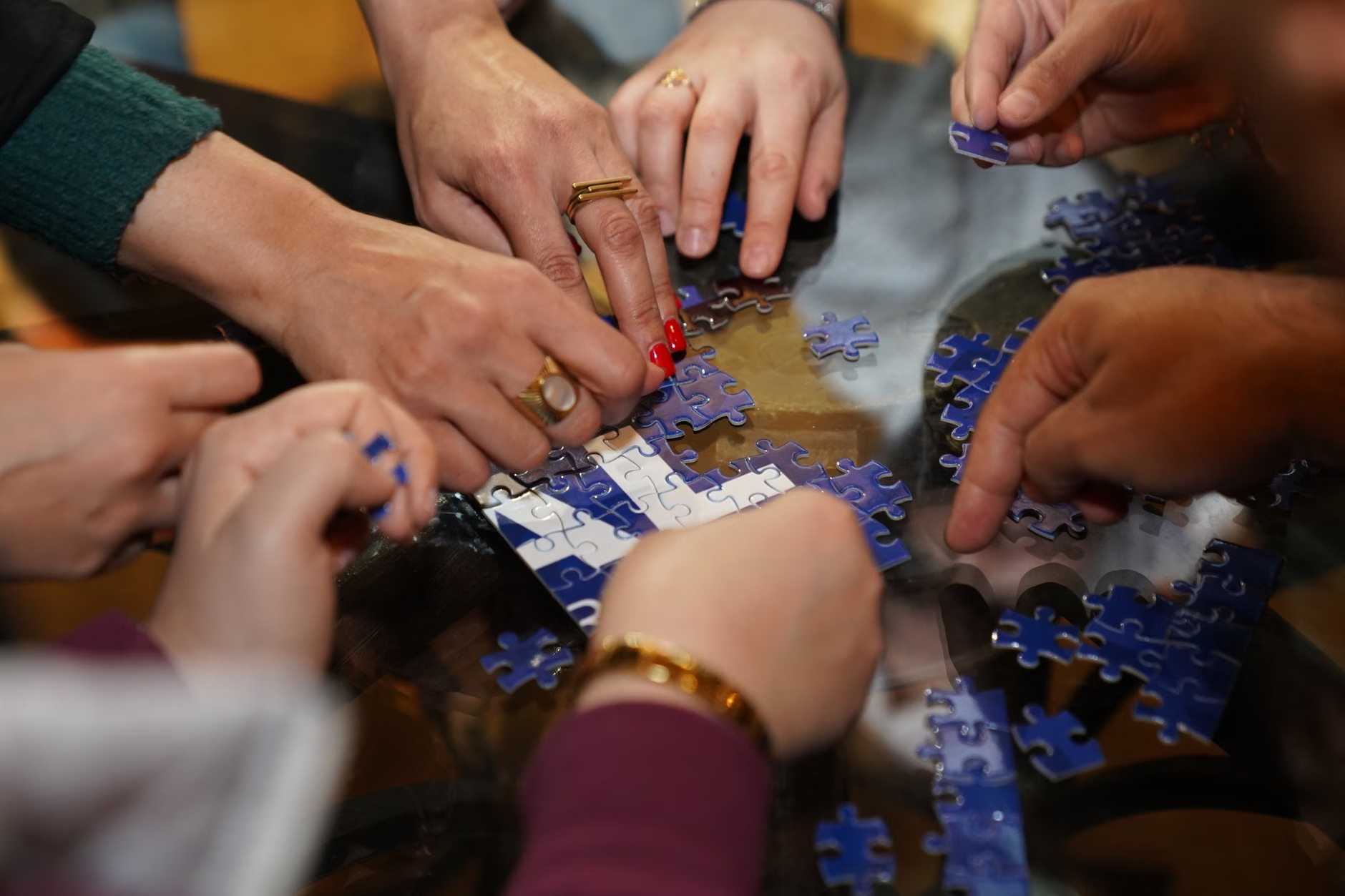
When you use the table above, ensure that the “Verification Point” is the most important part. If one child finishes their part and the other hasn’t, the first child is incentivized to help the second, because their own reward is tied to the completion of the *entire* mission. This creates a peer-to-peer accountability system that is far more effective than parental nagging.
Why This Matters for Your Weekend Sanity
The reason this design works is that it shifts the parent’s role from “policeman” to “facilitator.” When you are constantly breaking up fights, you are emotionally drained by the end of the day. By setting up a system where the children resolve their own disputes to get to the reward, you are teaching them negotiation, project management, and empathy without you having to intervene.
This is not about avoiding conflict entirely. It is about changing the *nature* of the conflict. Instead of “She took my toy,” the conflict becomes “We need to figure out how to build this structure before our time limit expires.” This is a productive, problem-solving conflict, which is a vital skill for their future development.
Handling ‘System Failures’ (The Argument)
What happens when, despite your best design, they start screaming at each other? Do not jump in. Use the “Game Master” approach. Walk in, look at the project, and ask, “The mission is currently failing. Is this a resource issue, a communication issue, or a goal-alignment issue?”
By using professional, slightly detached language, you force them to step out of their emotional state and analyze the situation logically. It sounds strange, but it works. It stops the “he said, she said” cycle and forces them to articulate the actual problem. If they cannot identify the problem, the mission is officially “paused” until they can.
The Long-Term Impact of Collaborative Play
Research into child development, such as the studies conducted by the Center on the Developing Child at Harvard University, consistently points to the importance of “executive function” skills—the ability to plan, focus, and manage emotions—in children. By creating these structured collaborative games, you are essentially providing a laboratory for them to practice these skills.
For parents in their 30s and 40s, this is a long-term investment. You are not just buying an hour of quiet time; you are training your children to view each other as partners rather than rivals. This reduces the friction in your household significantly, which is the most valuable resource you have.
Steps to Launch Your First Mission
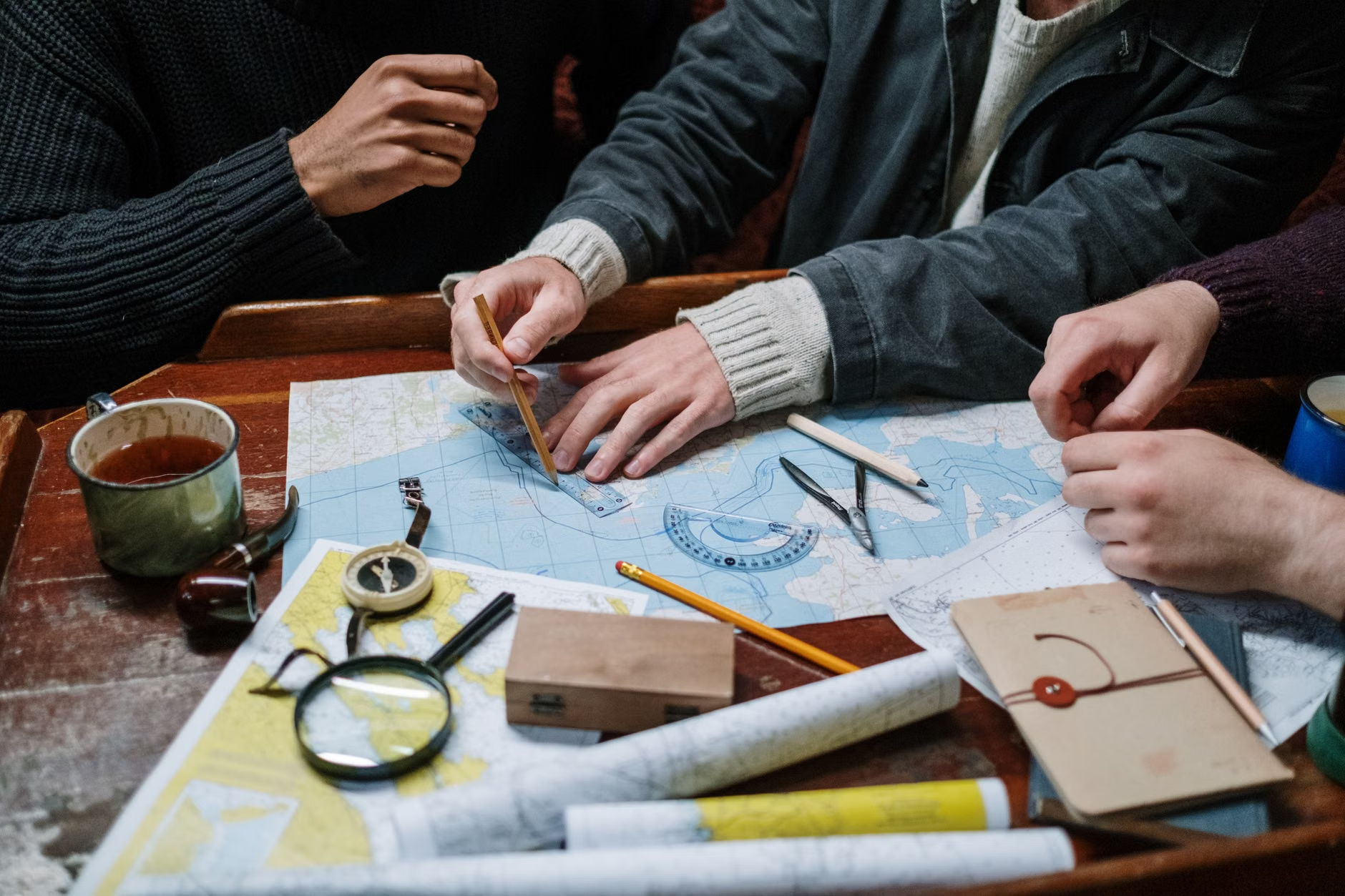
To begin, do not start with a massive project. Start with a “Micro-Mission.”
- Select a Low-Stakes Goal: Something like “Make a lunch menu” or “Create a map of the backyard.”
- Define the Roles: Clearly state who is the “Creative Lead” and who is the “Technical Lead.”
- Set a Time Limit: Use a timer. This adds a sense of urgency that forces them to move past minor disagreements.
- The Review: Once the timer goes off, they must show you their work. If it’s done, they get the reward. If it’s not, they have to negotiate a “mission extension.”
It is important to remember that the “reward” should be something they value, but it should not be something you were going to give them anyway. If you were already going to give them dessert, that’s not a reward; that’s a bribe. The reward should be an “add-on”—extra screen time, choosing the afternoon activity, or a “parent-free” zone for an hour.
Common Misconceptions About Sibling Dynamics
A common mistake parents make is believing that “fairness” means “equality.” In sibling dynamics, equality is often the enemy of harmony. If you give both children the exact same task, they will compete to see who does it better or faster. True fairness is giving each child a role that matches their strengths, even if those roles are different.
Another misconception is that siblings “should” just get along. The reality is that siblings are often the first people we learn to navigate conflict with. It is a natural part of their development. By providing them with a framework for collaboration, you are giving them the tools to navigate that conflict successfully, rather than just suppressing it.
Refining Your Strategy
As you get better at this, you will find that you need to intervene less and less. Eventually, your children might even start creating their own missions. When you see them doing that, you know the system has worked. They have internalized the logic of collaboration.
Remember to keep the stakes reasonable. If the mission is too hard, they will give up and start fighting again. If it is too easy, they will finish it in seconds and be bored. The “sweet spot” is a mission that requires them to negotiate for about 10-15 minutes.
Addressing Potential Edge Cases
What if one child is significantly older or more capable than the other? This is a classic problem. The solution is to use “asymmetric roles.” The older child can have a “Strategic Role” (e.g., planning the steps), while the younger child has a “Tactical Role” (e.g., executing the steps). This ensures that the older child feels challenged and the younger child feels included, while both are necessary for the mission’s success.
What if they refuse to play? If they don’t want to do the mission, that is fine. But then they don’t get the reward. Do not force them. If they choose not to collaborate, they choose not to have the reward. This is a natural consequence, and it is the most powerful teacher you have.
Be prepared for the first time you try this. It will likely not go perfectly. They might argue, they might quit, or they might try to manipulate the rules. This is part of the “testing phase” of any new system. Stay calm, stick to the rules you set, and treat the “testing” as part of the game design.
Essential Resources for Further Learning
For those interested in the science behind child cooperation and executive function, the following resources provide deep, data-driven insights:
- Harvard Center on the Developing Child: Executive Function – A deep dive into how children learn to manage their focus and behavior.
- American Psychological Association: Sibling Relationships – Evidence-based insights into the dynamics of sibling rivalry and how to support healthy development.
- ZERO TO THREE: Collaborative Play – Practical resources for fostering positive interactions between siblings in early development.
Frequently Asked Questions
1. What if my children are too young to understand ‘roles’ or ‘missions’?
If your children are under the age of 5, focus on “shared physical tasks” rather than complex roles. For example, “We need to move all the blue blocks to this side of the room. You take the left side, and I’ll take the right.” Keep it simple, visual, and highly supervised. As they grow, you can introduce more complex “mission” structures.
2. How do I handle a child who constantly tries to ‘cheat’ or ignore the rules?
Cheating is usually a sign that the reward is too high or the task is too difficult. If they are cheating, the system has failed. Re-evaluate the mission. Is it too frustrating? Is the reward worth the effort? Adjust the parameters of the game to make it more achievable. If they still cheat, the mission is simply “void” for the day. No lecture, no anger, just a neutral “The mission was voided due to a rules violation. We can try again tomorrow.”
3. How often should I implement these ‘sibling missions’?
Start with once or twice a week, ideally on a weekend morning when you have the time to supervise the setup. Don’t try to make every interaction a mission. The goal is to provide a structure for when they are bored or when you need a window of time for yourself. Over time, it will become a natural part of how they interact, and you won’t need to “run” the game as much.
Ultimately, the goal of Sibling-Collaboration design is to stop being the referee in your own home. By setting the stage, defining the roles, and linking the rewards, you allow your children to build the skills they need to navigate their own relationships. It requires patience and a bit of planning in the beginning, but the result is a much calmer, more cooperative weekend for everyone involved. Start small, stay consistent, and remember that you are the architect of their play.