- Choose “Station-Centric” Lodging: Prioritize accommodation within a 15-minute walk or a short, fixed-route transit ride from the station to eliminate the need for car rentals.
- Adopt the “Light-Modular” Packing Rule: Limit your family to one main suitcase per adult and one personal backpack per child to maintain mobility during platform transfers.
- Leverage “Last-Mile” Apps: Use local transit apps and bike-share services to bridge the gap between the station and your final coastal destination, rather than relying on taxis.
If you have ever spent four hours white-knuckling a steering wheel through coastal traffic while the kids argue in the backseat, you already know why the “Rail-First” strategy is gaining traction among parents in their 30s and 40s. It isn’t just about sustainability; it is about reclaiming your sanity. By shifting the bulk of your travel to the rails, you turn a high-stress logistical nightmare into a moving living room where the scenery is the entertainment and the bathroom is always just a few steps away.
Why the Coastal Road Trip is Often a Myth
We often romanticize the coastal road trip: windows down, salt air, and spontaneous stops at hidden beaches. In reality, modern coastal infrastructure is rarely designed for the volume of summer tourism we see today. Between parking shortages that leave you circling for 45 minutes and the inevitable gridlock on narrow cliffside roads, the “freedom” of the car often evaporates before you even reach your hotel.
For parents, the car creates a singular point of failure: the driver. When one parent is trapped in the driver’s seat, they are effectively removed from the family dynamic. They miss the conversation, the shared snacks, and the ability to intervene when a toy is lost or a temper flares. The Rail-First strategy treats travel time as family time, not just transit time.
The economic argument is equally compelling. Once you factor in fuel, tolls, high-demand parking fees, and the inevitable car rental insurance premiums, the train often becomes the more budget-friendly option. This is especially true in regions like Western Europe, parts of Japan, and the Northeast Corridor of the United States, where rail systems are designed for high-density, high-convenience transit.

The Architecture of a Rail-First Trip
To make the Rail-First strategy work, you must reverse your typical planning process. Instead of picking a hotel based on “ocean views” and then figuring out how to get there, you pick a station and build your radius around it. This is what I call the Station-Centric Radius.
Step 1: Define Your 15-Minute Buffer
When searching for accommodation, use a map-based booking tool to filter for properties within a 15-minute walk of the primary transit hub. If the property offers a shuttle, verify if it is on-demand or schedule-based. An on-demand shuttle is a luxury; a rigid, hourly shuttle can trap you at the hotel when you want to explore.
Step 2: The “Hub and Spoke” Exploration
Once you are settled, treat your local station as the hub. Coastal regions often have regional rail lines that run parallel to the shore. These lines are your “spokes.” Instead of driving to five different beaches, you take the train to a new coastal town each morning. You avoid the parking hunt entirely, and the kids get to experience the thrill of the train ride as part of the adventure.
Step 3: Managing the “Last-Mile” Gap
The most common failure point in Rail-First travel is the “last mile”—the distance from the local station to your specific beach or restaurant. Before you book, check the availability of:
- Bike Shares: Many coastal towns have upgraded their infrastructure to include electric bike rentals.
- Fixed-Route Transit: Check if a local bus or trolley runs directly from the station to the beach.
- Walking Accessibility: Use Street View on maps to ensure the route isn’t a highway shoulder.
Packing Strategy: The “Light-Modular” Approach
The biggest hurdle to ditching the car is the fear that you won’t have enough “stuff.” If you are used to the cavernous trunk of an SUV, packing for a train feels like a challenge. The solution is to transition from “emergency-preparedness packing” to “modular packing.”
The One-Suitcase Rule: Each adult handles one medium-sized wheeled suitcase. Children carry their own small backpacks containing their entertainment—tablets, coloring books, and snacks. If it doesn’t fit in that configuration, you are overpacking. Most coastal destinations have laundromats or hotel services; use them. You are on vacation, not moving house.
The “Station-Side” Kit: Keep a separate small pouch in your carry-on with the absolute essentials for the train: noise-canceling headphones, chargers, wet wipes, and a dedicated “train-only” snack bag. This prevents you from having to open your main luggage while in transit, which is a common mistake that leads to lost items on crowded platforms.
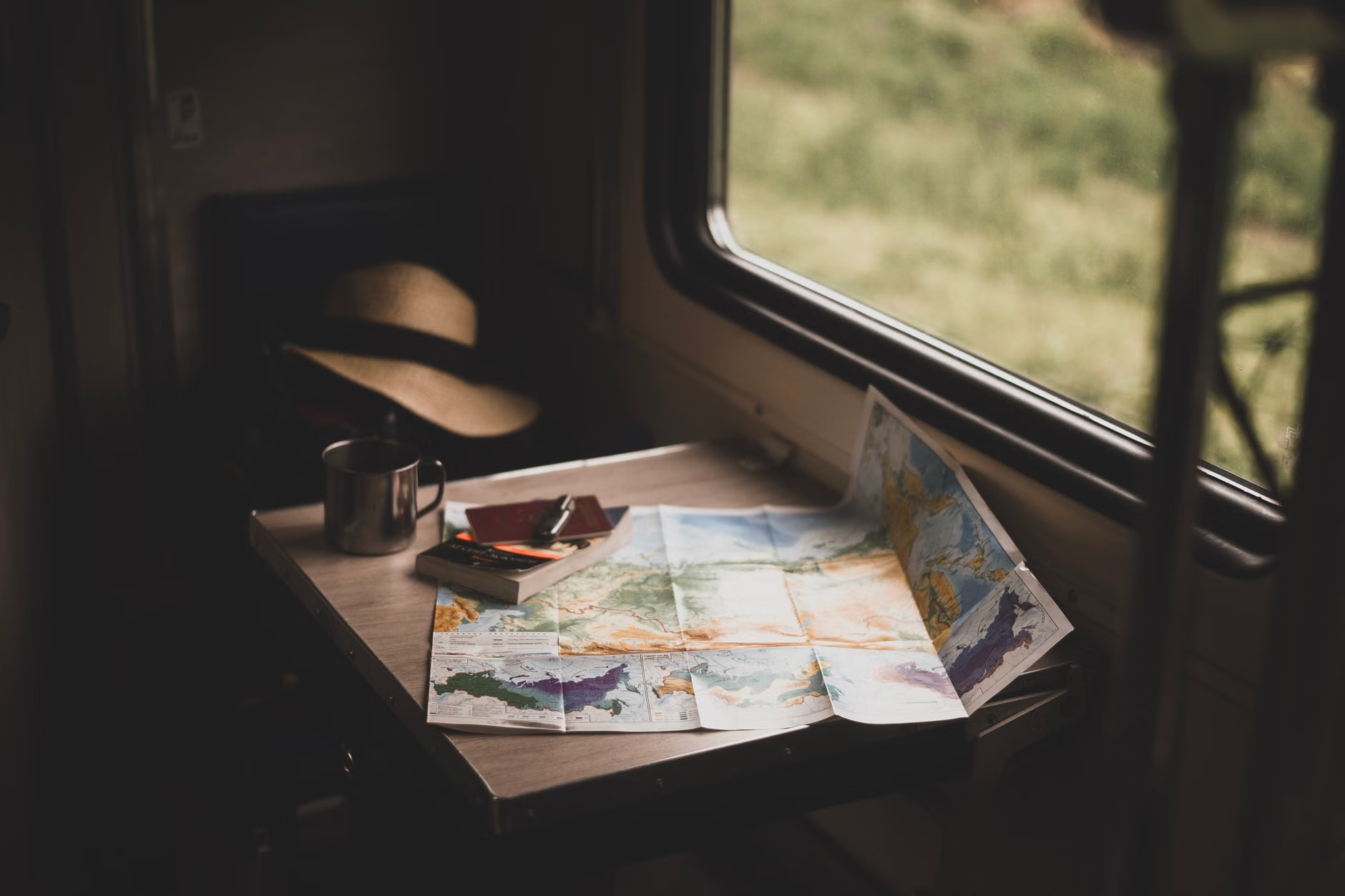
Comparative Logistics: Car vs. Rail
To understand the trade-offs, it helps to visualize the differences in a standard 3-day coastal weekend. The following table highlights the operational differences between the two modes of travel.
| Metric | Car Travel | Rail-First Strategy |
|---|---|---|
| Arrival Flexibility | High, but subject to traffic. | Fixed, but highly predictable. |
| On-Board Experience | Driver is isolated; passengers confined. | Shared space, movement allowed. |
| Cost Predictability | Low (fuel, parking, tolls, repairs). | High (fixed ticket prices). |
| Last-Mile Cost | Hidden (parking fees). | Transparent (transit/bike share). |
The “Car Travel” column often hides costs that don’t appear on a receipt. For instance, the “mental tax” of driving in unfamiliar, high-traffic coastal areas is a real cost that impacts your energy levels for the remainder of the trip. By choosing the train, you are essentially purchasing a “mental health” buffer that allows you to arrive at your destination refreshed rather than drained.
Managing Unexpected Delays and Challenges
Rail travel, like any system, has its failure points. The most common anxiety is the “missed connection.” If you are traveling with young children, the idea of being stranded at a transit hub is daunting. However, modern rail apps have evolved significantly. Most national rail operators now offer real-time delay tracking and automatic rebooking options for missed connections on the same ticket.
The 30-Minute Rule: Never book a connection with less than 30 minutes of buffer time. If you have to change platforms, 10 minutes is technically enough, but with a family and luggage, it is a recipe for a meltdown. Use the extra 20 minutes to grab a coffee or let the kids stretch their legs. If you arrive early, you win. If the train is late, you are still within your buffer.
The “Offline Backup” Habit: Technology is great, but don’t rely solely on it. Always download your route map, hotel address, and emergency contacts for offline viewing. If your phone dies or you lose signal in a coastal tunnel, you don’t want to be left without a plan. Keep a printed itinerary in your pocket—it’s a simple, low-tech fail-safe that has saved many trips from unnecessary stress.
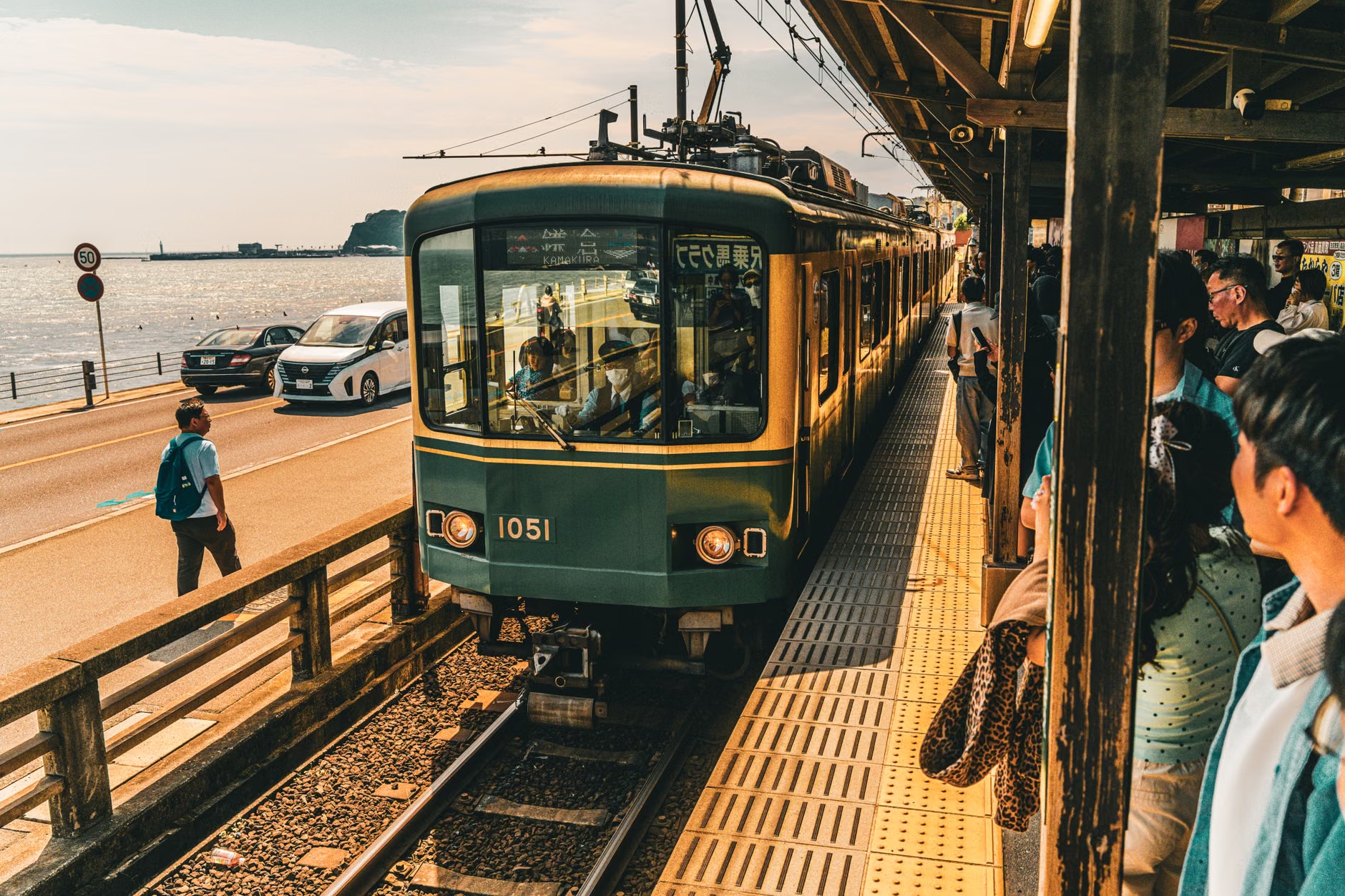
Choosing the Right Region for Your First Rail-First Trip
Not all coastal regions are created equal for rail travel. If you are planning your first trip, choose a destination with a high “Rail-Density Index.”
The “Proven” Regions
- The Mediterranean Coast (France/Italy/Spain): The rail infrastructure here is world-class. You can travel from major hubs like Nice, Genoa, or Barcelona directly into smaller beach towns with ease. The trains are frequent, and the stations are often located in the town centers.
- Japan’s Shinkansen & Local Lines: Japan is perhaps the gold standard. You can reach virtually any coastal area via the rail network. The “Ekiben” (station bento boxes) are a culture unto themselves and make for a perfect, easy lunch on the train.
- The UK’s Coastal Rail Lines: Routes like the Cornish Main Line offer stunning views and stop at multiple seaside towns that are perfectly walkable.
Avoid regions where the rail line ends 20 miles inland from the coast. In those areas, you would be forced to rely on infrequent local buses or expensive taxis, which negates the benefits of the Rail-First strategy. Always check the official national rail website (e.g., SNCF for France, JR Rail for Japan, or National Rail for the UK) to verify the proximity of the station to the water.
Hidden Costs and Unexpected Benefits
One aspect of the Rail-First strategy that is often overlooked is the “Socialization Dividend.” When you are driving, the car is a bubble. When you are on a train, you are part of a community. You see locals commuting, other families traveling, and the rhythm of the region unfolding outside the window. For children, this is an education in how the world moves. It teaches them that there are different ways to navigate a space, and that the journey is just as much a part of the memory as the beach itself.
Another variable is the “Luggage-to-Mobility Ratio.” If you find yourself struggling to move your bags from the station to the hotel, consider using a luggage forwarding service. Many coastal regions, particularly in Japan and parts of Europe, offer services that will transport your suitcases from one station to another or directly to your hotel for a nominal fee. This allows you to walk through the town and explore immediately upon arrival, rather than dragging heavy bags through cobblestone streets.
Be wary of the “Sunday Afternoon Rush.” Coastal trains can get crowded on weekends. If you are traveling on a peak day, book your tickets in advance to ensure seat reservations. Standing for an hour with children is not the way to start a relaxing vacation. Many operators allow you to choose your seats online; pick a spot near the door for quick access, or near the luggage rack if you have bags.
Finalizing Your Strategy
The transition to a Rail-First lifestyle for family travel is a shift in mindset. It requires letting go of the need to control every single variable, such as the exact departure time or the precise route. In return, you gain the ability to be present with your family. You stop being a chauffeur and start being a traveler.
Start small. Try a weekend trip to a nearby coastal town that you would usually drive to. Track your actual spending, the time you spent in transit, and—most importantly—how you felt when you arrived. You will likely find that the stress of the “car-first” mentality was a weight you didn’t need to carry.
Don’t be afraid to experiment with different types of rail services. High-speed lines are great for covering distance, but regional, slower lines are often where the best views and the most charming small stations are found. If you find a route you love, make it a recurring tradition. The beauty of the rail is that it remains constant, while your family grows and changes with every trip.
Finally, remember that the goal of this strategy is not to be a purist. If you find that you need to rent a car for just one day to reach a remote, inaccessible cove, do it. The Rail-First strategy is about reducing your reliance on the car, not banning it entirely. It is about making the car an option of last resort, rather than your default setting. By making this change, you are prioritizing your family’s comfort, your budget, and the quality of your time together.
Frequently Asked Questions
What should we do if our kids get restless on a long train ride?
Unlike a car, a train offers the freedom to move. If the kids get restless, take a walk to the dining car or simply move to the vestibule area to look out the windows. Pack “train-specific” activities—things they only get to use when on the rails—to keep the novelty high. Avoid screens until the final hour of the trip to keep them engaged with the changing landscape.
How do we handle large items like strollers or beach gear?
The golden rule is: if you can’t carry it while holding your child’s hand, don’t bring it. Use a lightweight, umbrella-style stroller that folds quickly. For beach gear, consider renting it at your destination. Many coastal hotels provide umbrellas, chairs, and sand toys for their guests. If you must bring your own, look for high-quality, collapsible versions that fit securely in the train’s luggage racks.
Is it really cheaper to take the train for a family of four?
When you account for the “total cost of mobility”—including fuel, high-demand coastal parking fees (which can exceed $30-$50 per day), and the stress-related costs of traffic—the train is almost always more economical. Use online fare calculators provided by national rail operators to compare ticket prices against your estimated fuel and parking costs for a specific trip. You will often find the savings are significant enough to upgrade your accommodation or dining experience.
For further planning, check the official resources for your destination: