Key Takeaways:
- Prioritize “High-Turnover” Staples: Only bulk-buy items you consume at least once a week to avoid food waste and capital lock-up.
- Sync with Harvest Cycles: Align your bulk purchases with local harvest peaks to secure the lowest prices and highest nutrient density.
- Master Preservation Methods: Bulk buying is only cost-effective if you have a reliable system for freezing, dehydrating, or pickling excess produce.
You can slash your monthly grocery bill by up to 30% without sacrificing quality by shifting from weekly impulse shopping to a seasonal, bulk-buying rhythm. For those of us in our 30s and 40s, juggling the chaotic schedule of work and parenting, the goal isn’t just saving money—it’s about reclaiming time and ensuring your family eats nutrient-dense food throughout the year. The “Slow-Food” approach to bulk buying isn’t about hoarding; it’s about strategic procurement synced with the Earth’s natural harvest cycles.
Why Seasonal Bulk-Buying is the Ultimate Family Financial Strategy
The standard modern grocery experience is designed to keep you in a cycle of high-frequency, high-margin purchasing. When you buy a 1lb bag of organic quinoa every week, you are paying a premium for packaging, logistics, and retail markup. When you buy a 10lb bag directly from a supplier or a bulk-bin section during a seasonal sale, the unit cost drops significantly. This isn’t just about pennies; it’s about compounding your savings over a year to fund other family needs.
Beyond the budget, there is the “Quality Gap.” Produce harvested in its peak season and processed immediately—whether through freezing or canning—often holds more nutritional value than “fresh” produce that has spent two weeks in transit. For a busy parent, having a freezer stocked with pre-portioned, locally sourced seasonal vegetables means you have a “fast-food” option that is actually healthy.
However, the biggest mistake most people make is “Bulk-Buying Blindness.” This happens when you buy a massive quantity of something because it’s on sale, only to find it buried in the back of your pantry six months later, expired and forgotten. To make this work, you must adopt a Inventory-to-Consumption Ratio. If you don’t use it in 90 days, it shouldn’t be a bulk purchase.
Building Your Seasonal Procurement Calendar
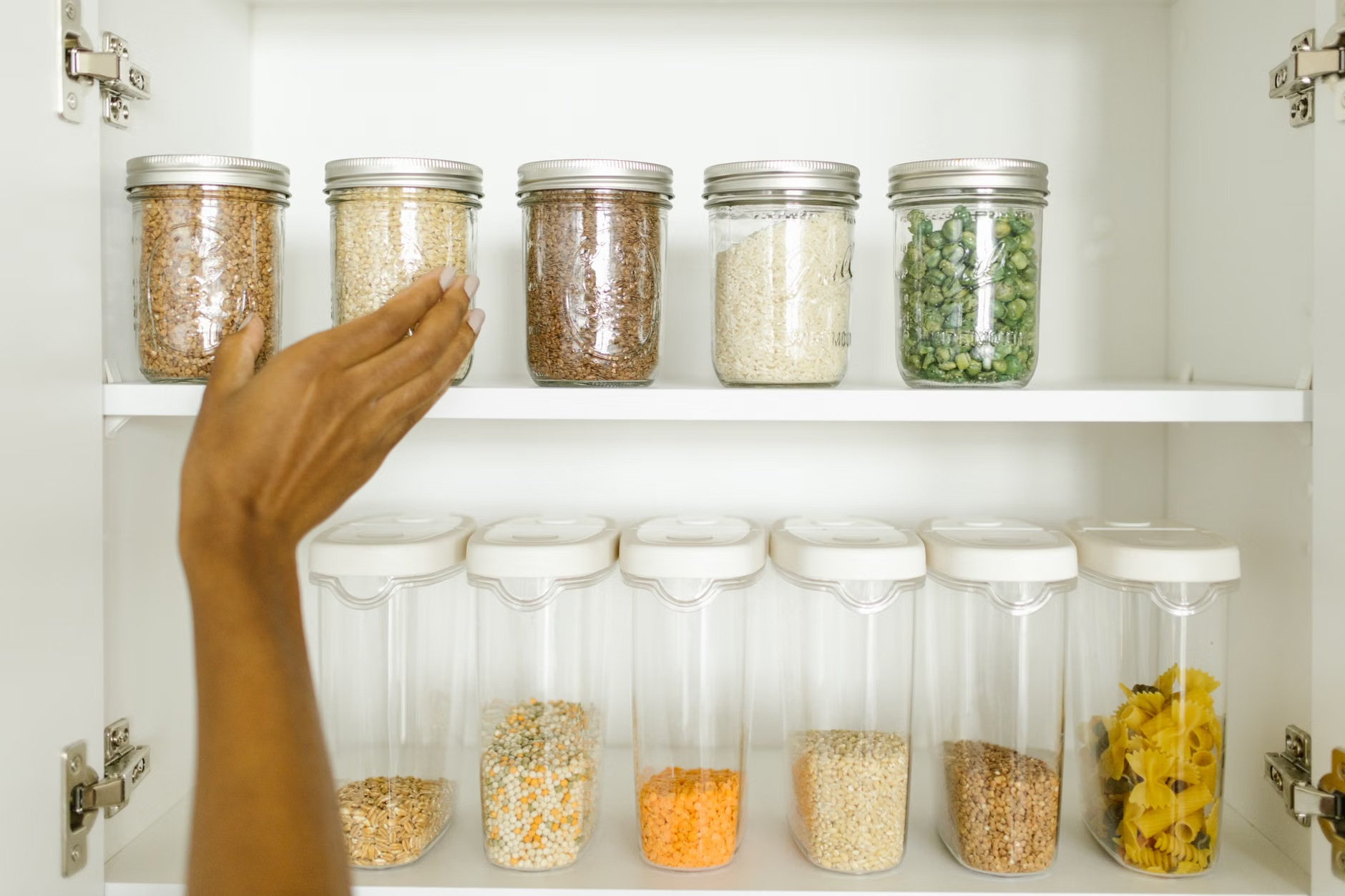
To master bulk buying, you need a map. Not every food item benefits from bulk purchasing. Dry goods like rice, oats, lentils, and spices are ideal for bulk because of their long shelf life. Perishables, however, require a seasonal calendar. In the Northern Hemisphere, for example, late summer is the time to bulk-buy tomatoes and berries for canning or freezing. Autumn is for root vegetables like potatoes, onions, and winter squash, which can be stored in cool, dark places for months.
Here is a decision matrix to help you determine what to buy in bulk and when:
| Category | Bulk Suitability | Storage Requirement | Best Time to Buy |
|---|---|---|---|
| Grains/Legumes | High | Airtight containers | Anytime (monitor price dips) |
| Root Vegetables | High | Cool, dark, ventilated | Late Autumn |
| Soft Fruits/Berries | Medium | Freezer/Dehydrator | Peak Summer |
| Spices/Nuts | Medium | Cool, dark, sealed | Post-Holiday Sales |
The key here is rotation. If you buy 20lbs of onions in October, you must ensure your storage environment is actually capable of keeping them fresh. If your apartment is too warm or humid, those onions will rot within weeks, turning your “savings” into literal waste. Always perform a “Storage Audit” before committing to a bulk purchase. Do you have the space? Is the temperature stable? If the answer is no, scale back your bulk purchase to a quantity that fits your current infrastructure.
The Art of Preservation: Turning Bulk into Convenience
Buying in bulk is only half the battle. The other half is processing. If you bring home 15lbs of strawberries, they will not stay fresh in the fridge for more than a few days. You must have a “Processing Hour” scheduled. This is where parents often struggle. The secret is to avoid the “all-day canning session” trope. Instead, use the Incremental Preservation Method.
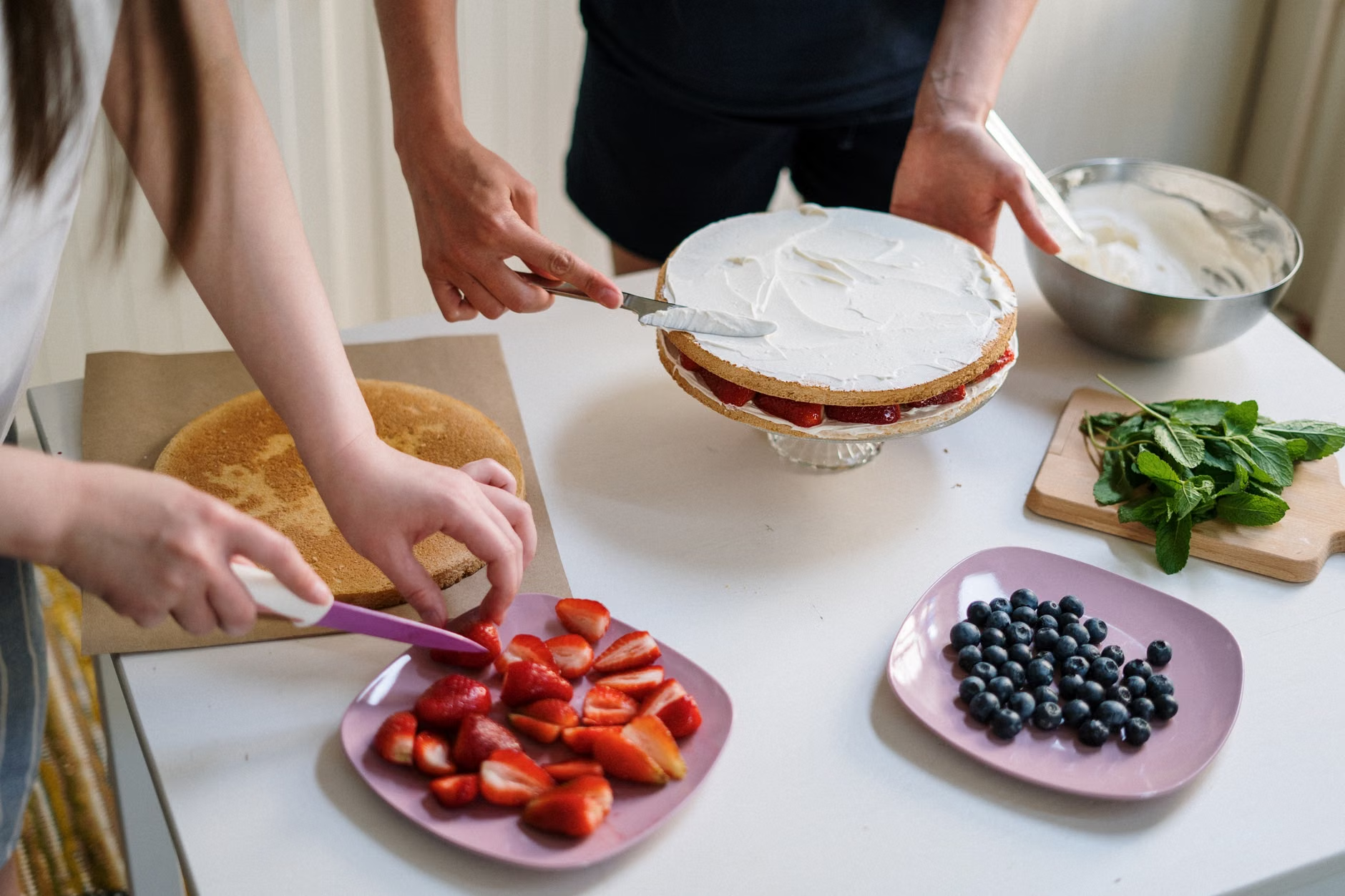
When you get home with your bulk haul, don’t try to process it all at once. Wash and portion them immediately. For berries, spread them on a baking sheet to “flash freeze” them for two hours before transferring to freezer-safe bags. This prevents them from clumping into one giant, icy brick. By doing this in small, manageable bursts during your normal evening routine, you turn a chore into a standard habit.
Common mistakes in preservation often involve poor sealing. Even in a freezer, food can suffer from “freezer burn” if exposed to air. Investing in a vacuum sealer is a significant upfront cost, but for a family of four, it pays for itself within the first year by preventing food loss. If a vacuum sealer isn’t in your budget, learn the “water displacement method” for freezer bags: submerge the bag in a bowl of water (leaving the seal just above the surface) to push all the air out before locking it shut.
Financial Planning for the Seasonal Pantry
Bulk buying requires a shift in cash flow. You are essentially shifting your grocery spending from a flat, weekly recurring expense to a “lumpy” expense. You might spend $200 on a single bulk haul of grains and dried goods in January, which means your weekly grocery bill for the next month will be significantly lower. You need to account for this in your household budget.
One overlooked variable is the Opportunity Cost of Storage. In smaller homes, space is a premium. If your bulky items are taking up space that could be used for other essential home functions, you are paying a “storage tax.” Before you buy that 50lb bag of flour, ask yourself: Is the money saved worth the loss of physical space in my kitchen? For some, the answer is a hard no. For others, a small investment in a vertical shelving unit transforms a wasted corner into a high-value pantry.
Also, beware of the “Bulk Trap.” Some items, like oils or specialty flours, have a shelf life even if they appear stable. Oils can go rancid within six months. If you buy a gallon of olive oil that you won’t finish in six months, you are paying for a product that is degrading in quality. Only bulk-buy items you have a verified track record of consuming within their shelf-stable window.
Step-by-Step: Your First Bulk-Buying Cycle
If you are ready to start, don’t try to overhaul your entire kitchen in one weekend. Start with a “Pilot Program.” Pick three items you use consistently—for example, oats, pasta, and canned tomatoes. Research local suppliers, farm co-ops, or bulk-food stores. Do not rely on big-box store “bulk” sections if they don’t offer a better price-per-unit than your local supermarket; always do the math.
1. Audit: Look at your grocery receipts for the last three months. Identify the top 5 non-perishable items you buy repeatedly.
2. Calculate: Find the price-per-unit (e.g., price per 100g or per kg) for those items at your current store. Then, compare this to a bulk supplier.
3. Source: Find a reputable supplier. This could be a local co-op, a warehouse club, or an online bulk food retailer. Check their shipping costs, as high shipping fees can negate your savings.
4. Store: Purchase appropriate airtight containers. Plastic is cheaper, but glass or food-grade stainless steel lasts longer and is easier to clean. Label everything with the purchase date.
5. Rotate: Use the “First In, First Out” (FIFO) rule. When you add new stock, place it behind the old stock so you always consume the oldest items first.
There are subtle trade-offs to the bulk-buying lifestyle that aren’t often discussed. One is Dietary Rigidity. When you have 20lbs of black beans in your pantry, you are going to eat a lot of black beans. This can lead to “menu fatigue.” To combat this, keep a small portion of your budget flexible for “wildcard” ingredients that add variety to your meals. Don’t let your bulk-buying strategy become a source of boredom for your family.
Another trade-off is the Initial Capital Outlay. Moving to a bulk-buying model requires more cash upfront. If your family budget is extremely tight, this transition might require a “buffer month” where you save specifically to fund the bulk purchases. Treat this as an investment in your household infrastructure.
Finally, consider the Social Aspect. Bulk buying is often more effective when shared. If you have friends or neighbors who are also interested, consider a “buying club.” You can split a 50lb bag of rice or a case of tomatoes, lowering the individual cost and the storage burden on each household. This turns a solitary chore into a community-building exercise.
Common Misconceptions
A common myth is that bulk buying is only for people with large houses and massive basements. While space helps, it isn’t a requirement. Many people in urban apartments successfully manage bulk buying by using under-bed storage, vertical wall shelving, or even repurposing a closet. The constraint isn’t your square footage; it’s your organizational system. If you can see what you have, you can use it.
Another misconception is that bulk-bought food is “lower quality.” This is often conflated with “wholesale” or “discount” goods. In reality, many bulk suppliers source from the same farms and manufacturers as premium brands. You are simply paying for the product, not the branding, the fancy box, or the shelf space in a high-end grocery store. Always check the ingredient list—bulk items should be exactly that: the item itself, without additives or fillers.
Refining Your Strategy
As you gain experience, your bulk-buying strategy should evolve. You will learn which items are worth the effort and which aren’t. Maybe you decide that bulk-buying flour is a win, but bulk-buying rice is too much of a hassle because of the storage weight. That is perfectly fine. The goal is to build a system that serves your life, not a system that you serve.
Keep a simple notebook or a digital spreadsheet to track your “Price-Per-Unit” for the items you buy regularly. When you see a sale, you’ll immediately know if it’s a genuine bargain or just marketing fluff. This data-driven approach removes the guesswork and helps you make confident decisions that benefit your family’s health and your bank account. Over time, you will find that your grocery shopping becomes less of a recurring stressor and more of a predictable, manageable part of your monthly routine.
Remember that the “Slow-Food” philosophy is fundamentally about intentionality. By slowing down to plan your purchases and taking the time to store and preserve your food properly, you are opting out of the consumerist cycle that prioritizes convenience over value. It takes effort, but the rewards—a well-stocked pantry, lower monthly bills, and more control over what your family eats—are well worth the adjustment.
Frequently Asked Questions
Is bulk buying always cheaper than shopping at discount supermarkets?
Not necessarily. While bulk buying is generally cheaper, you must account for the “true cost,” including the price of storage containers, potential food waste, and the value of your time spent processing items. Always calculate the price-per-unit and compare it against your local discount store’s “sale” price. If the bulk price isn’t at least 15-20% lower, the convenience of buying smaller quantities might be the better choice.
What should I do if I don’t have a large freezer?
If your freezer space is limited, focus your bulk buying on dry goods (grains, legumes, nuts, spices) and shelf-stable items (canned goods, oils, vinegars). You can still achieve significant savings without needing to freeze large quantities of produce. For fresh items, focus on “natural storage” like root cellars or cool, dark cabinets for items like onions, garlic, and potatoes.
How do I prevent my bulk-bought items from going stale?
The enemy of shelf-stable bulk items is air, moisture, and light. Invest in high-quality, airtight glass or BPA-free plastic containers. Store them in a cool, dark pantry away from heat sources like the oven or dishwasher. For items like flour or rice, consider adding a food-grade oxygen absorber packet to the container to extend shelf life significantly.
For further reading on food storage and seasonal produce guides, you can visit the USDA Local and Regional Food Directories or your local agricultural extension service website for region-specific harvest calendars.