- Prioritize “Transit-Ready” Gear: A stroller that weighs more than 8kg or doesn’t fold with one hand is a liability in public transit hubs.
- The Cargo Bike Advantage: For distances over 3km, a family cargo bike is statistically safer and more efficient than trying to navigate shared bikes with a child seat.
- Master the “Hub” Strategy: Don’t rely on door-to-door transit; identify “intermodal” hubs where stroller-accessible elevators and secure bike parking converge before you leave home.
If you have ever tried to navigate a subway turnstile with a double stroller or attempted to find a bike-share dock that actually has an open spot while your toddler is entering a meltdown, you already know the truth: “Green commuting” is often a logistical nightmare disguised as an eco-friendly dream. We are told that urban mobility is evolving, but for parents in their 30s and 40s, the gap between “sustainable city planning” and “getting the kids to school on time” feels wider than ever.
The goal isn’t just to save the planet; it is to save your sanity. To do that, you need to stop treating public transit as a monolithic system and start treating it as a series of specific, solvable engineering problems. Let’s look at how to actually make this work.
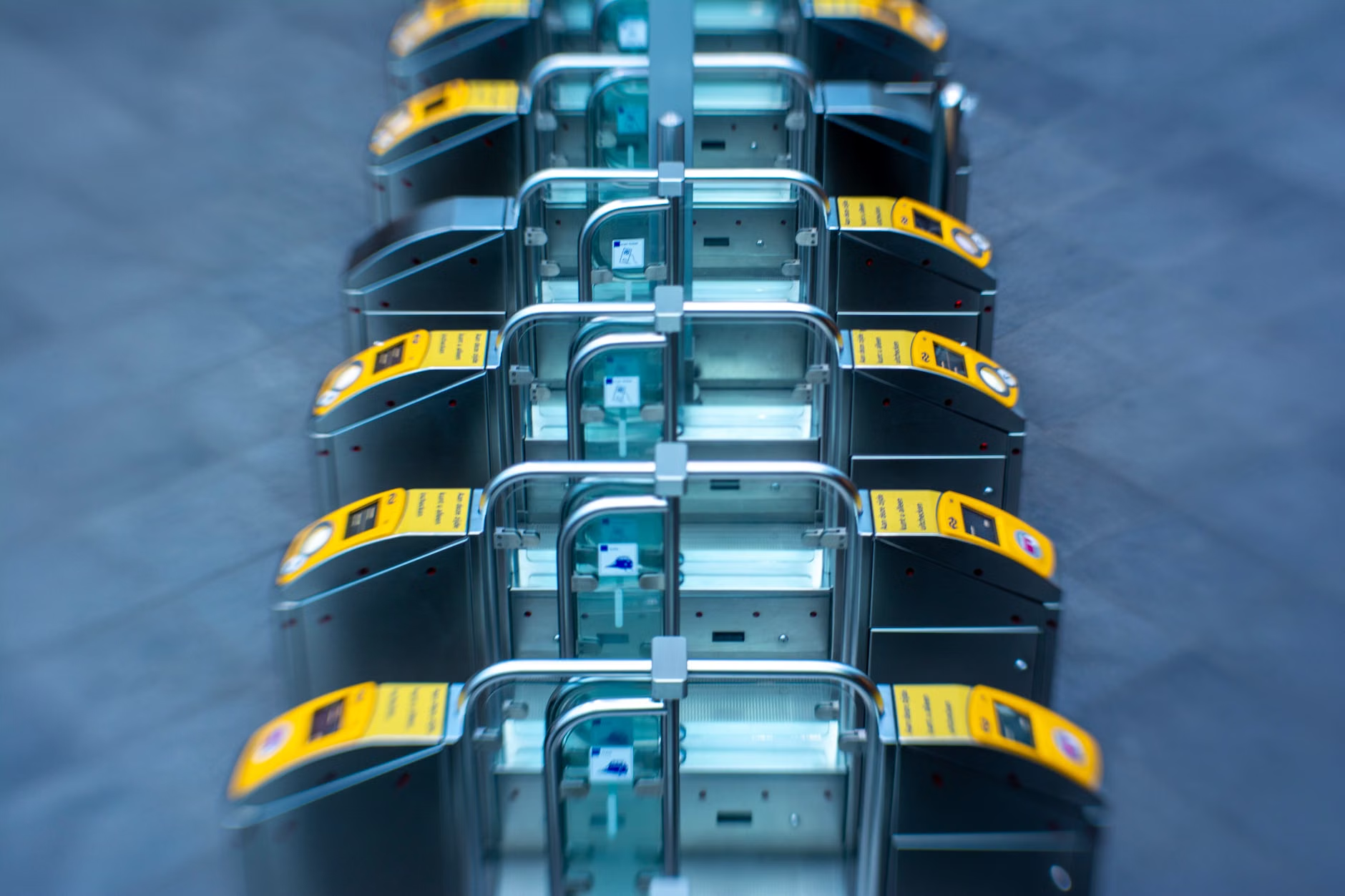
The Anatomy of a Stroller-Friendly Commute
The biggest mistake parents make when attempting to go car-free is assuming that all “urban” strollers are created equal. They aren’t. If your stroller is built for off-roading in a national park, it is likely a disaster for a crowded metro station. For a successful commute, you need to categorize your gear based on intermodal compatibility.
When you are looking at transit, the “turnstile test” is your primary metric. Can you fold your stroller, carry it, and hold your child’s hand simultaneously? If the answer is no, you are one missed elevator away from a ruined morning. The best strollers for commuting in your 30s and 40s are those that weigh under 7kg and feature a “gravity fold”—where the weight of the stroller essentially does the closing work for you.
Beyond the weight, consider the wheel base. In cities like London, New York, or Tokyo, public transit infrastructure is aging. Elevators break. Escalators are often too narrow for “side-by-side” strollers. If you are a parent of two, a tandem (front-to-back) stroller is not just a preference; it is a structural necessity for navigating narrow transit corridors.
The Hidden Cost of “Last-Mile” Efficiency
Most urban planners talk about the “last mile”—the distance between your transit stop and your final destination. For a solo commuter, a walk is fine. For a parent, that last mile is often where the entire schedule collapses. If you are taking the train, you need to map out the elevator locations specifically. Do not rely on general station maps. Use apps like Citymapper or local transit authority real-time trackers that specify which elevators are currently out of service.
If you find yourself frequently frustrated by the lack of stroller space, consider the trade-off of a “transit-lite” strategy. This means keeping a lightweight umbrella stroller at your workplace or school daycare, rather than dragging your main travel system back and forth. Yes, it is an extra cost, but the reduction in daily cognitive load is significant.
Bike-Sharing: The Parent’s Perspective
Bike-share programs have exploded in popularity, but they are notoriously unfriendly to the family unit. Most standard bike-share docks feature rigid, heavy bikes that do not accommodate child seats. If you are trying to commute with a child, you are essentially locked out of 90% of the public bike-share fleet.
So, what is the alternative? You have to pivot toward the private-to-public hybrid model. If you are commuting regularly, a personal electric cargo bike (or a high-quality “long-tail” bike) is almost always more cost-effective than a car when you factor in parking, fuel, and insurance. However, if you are not ready to commit to a cargo bike, you need to look for “Family-Friendly Bike Share” initiatives which are popping up in cities like Copenhagen, Amsterdam, and select districts in Portland and Vancouver.
When using a bike-share, the biggest mistake is failing to check the docking availability at your destination. If you are riding with a child, the stress of finding a full dock and having to ride an extra 1km to the next station is amplified. Always use the service’s app to “reserve” a dock if the system allows it, or check the status 10 minutes before you arrive.

Safety Rules for the Two-Wheeled Parent
Safety isn’t just about helmets—though, let’s be clear, if your child is on a bike, they need a helmet that meets CPSC or equivalent standards. It is about visibility and predictability. When you are carrying a child, you are essentially a wide-load vehicle. You lose the agility of a solo cyclist. You must take the full lane. Do not ride in the “door zone” (the area next to parked cars). If a car door opens, you don’t have the reaction time to swerve when you are carrying a passenger.
Another overlooked variable is the weight distribution of your cargo. If you are using a child seat mounted on the rear rack, your bike will behave differently when you brake. Practice riding with the weight of your child in a low-traffic area before attempting a rush-hour commute. You will notice that your stopping distance increases by about 20-30%.
Comparing Your Commute Options
Not all transit is equal. Use this table to decide which mode fits your specific daily needs.
| Mode | Best For | Major Trade-off |
|---|---|---|
| Public Transit (Train) | Distances > 5km, bad weather | Elevator reliability, crowd density |
| Public Transit (Bus) | Short, cross-town trips | High boarding difficulty with strollers |
| Shared Bike (Solo) | Quick, independent errands | Dock availability, no child capacity |
| Cargo Bike (Private) | Daily school/daycare runs | High upfront cost, storage requirements |
The “best” option depends entirely on the density of your city. In high-density cities like London or NYC, the subway is usually faster than any bike. In mid-density cities like Melbourne or Seattle, the bike lanes are often more reliable than the bus schedules. Look at your average transit speed, not just the distance.
The Mental Load of Sustainable Parenting
There is a hidden cost to the “Green-Commute” lifestyle: decision fatigue. Every morning, you are evaluating: “Is it raining? Is the elevator broken? Is the bike dock full?” This is a massive drain on your focus before you even reach your workplace. To mitigate this, you need to build a “Plan B” protocol.
If you are a regular bike commuter, your Plan B is a pre-loaded transit card and a rain cover for your bike that stays in your bag. If you are a public transit commuter, your Plan B is a ride-share app with a “save” for your home and work addresses. Never leave home without knowing exactly how you will get back if your primary mode fails.
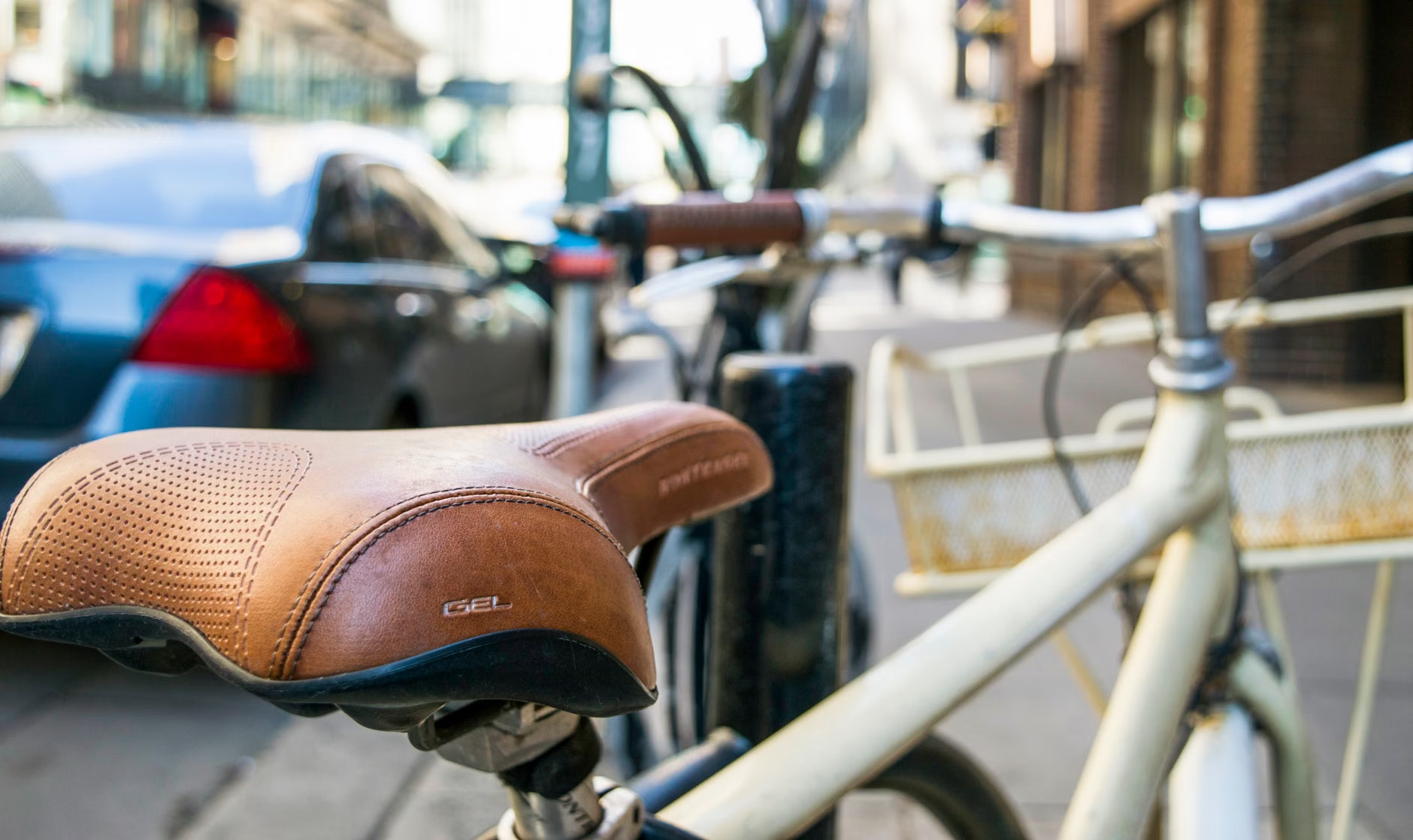
Common Misconceptions About Urban Commuting
Many parents believe that they need a “do-it-all” vehicle. They want a stroller that can also be a bike trailer, or a bike that can be folded onto a train. While these products exist, they are often heavy, expensive, and fragile. The “Jack-of-all-trades” equipment usually fails when you need it most. It is far better to have a dedicated, simple, and reliable setup for your most common route.
Another misconception is that you need to be a “cyclist” to bike-commute. You don’t. You are a parent moving from A to B. Avoid the “cycling culture” gear—you don’t need spandex or high-end performance parts. You need a comfortable seat, an upright posture, and reliable brakes. If you are buying a bike, prioritize upright geometry, which allows you to see over traffic and makes it easier to monitor your child.
Actionable Steps for Tomorrow Morning
If you want to start changing your commute, don’t try to go car-free overnight. Start with a “Trial Tuesday.” Pick one day where you commit to using public transit or a bike for your entire trip. Log the time it takes, the frustration points, and the actual cost.
1. Audit your route: Use Google Maps on “Transit” mode, but then manually check the stations. Are there elevators? Are there bike racks?
2. Test your gear: Can you fold your stroller in under 30 seconds? If not, practice at home until you can.
3. Check the weather buffer: If you are biking, check the 24-hour forecast. If it’s raining, have your transit card ready to go.
The shift to green commuting is not about moral superiority; it is about reclaiming your time and reducing the stress of being stuck in a traffic jam. By treating your commute as a logistical challenge rather than a daily chore, you can turn a source of anxiety into a manageable, even enjoyable, part of your day.
Frequently Asked Questions
Generally, no. Most standard bike-share bikes are not designed for child seats. If you need to bike with a child, look for cities that offer specialized cargo bike-shares or invest in a personal cargo bike which provides a much more stable, crash-protected environment for the passenger.
2. How do I handle a stroller when the bus is crowded?
Always aim for the designated “wheelchair/stroller” area. If it is full, don’t be afraid to wait for the next bus. If you are in a high-traffic area, try to schedule your travel outside of the 8:00 AM – 9:00 AM and 4:30 PM – 5:30 PM peak windows. If you must travel at peak, a carrier (soft baby wrap) is a much better option than a stroller.
3. What is the most common mistake parents make when switching to public transit?
Over-packing. Parents often carry a “just in case” bag that is far too heavy. When you are commuting, every kilogram counts. Streamline your gear to the absolute essentials, and keep a “secondary stash” of diapers, wipes, and snacks at your destination (daycare or office) to avoid carrying them back and forth.
For further reading on urban mobility and local transit policies, check the following resources: