The most effective way to manage your household food budget amidst 2026’s resource scarcity is to shift from “menu-first” shopping to “availability-first” inventory management, prioritizing shelf-stable staples and seasonal flexibility over rigid meal planning.
- Unit Pricing is Your Primary Defense: Don’t look at the sticker price; calculate the cost per gram or ounce to identify hidden inflation in smaller packaging.
- The 80/20 Pantry Rule: Maintain an “emergency core” of 80% shelf-stable, versatile ingredients, leaving only 20% of your grocery budget for volatile fresh produce.
- Supply Chain Transparency: Use local grocery chain apps to check real-time stock levels before leaving your home to prevent “scarcity-induced impulse buying” when items are missing.
If you have spent any time in a grocery store lately, you have likely noticed the subtle—and sometimes not-so-subtle—shifts. In 2026, the term “resource scarcity” has moved from a boardroom buzzword to a reality for those of us juggling the weekly grocery run. Whether it is a sudden shortage of specific grains, erratic pricing on imported fruits, or the downsizing of packaging (often called “shrinkflation”), the grocery landscape has changed.
For parents in their 30s and 40s, this isn’t just about money; it is about the mental load of keeping a family fed when the supply chain feels like a game of musical chairs. When you walk into the store, you want to know that you can get what you need without overpaying or coming home empty-handed. Let’s break down how to navigate this new era of grocery shopping with a strategy that keeps your sanity—and your bank account—intact.
Understanding Why Scarcity is the New Normal
To shop effectively, we first have to understand why this is happening. We are currently facing a “perfect storm” of logistics constraints, climate-related harvest volatility, and labor shifts in the agricultural sector. In 2026, this manifests as “supply gaps.” A supply gap occurs when a specific product category—like tomatoes or coffee—experiences a temporary dip in availability, causing prices to spike or shelves to sit empty for a week or two.
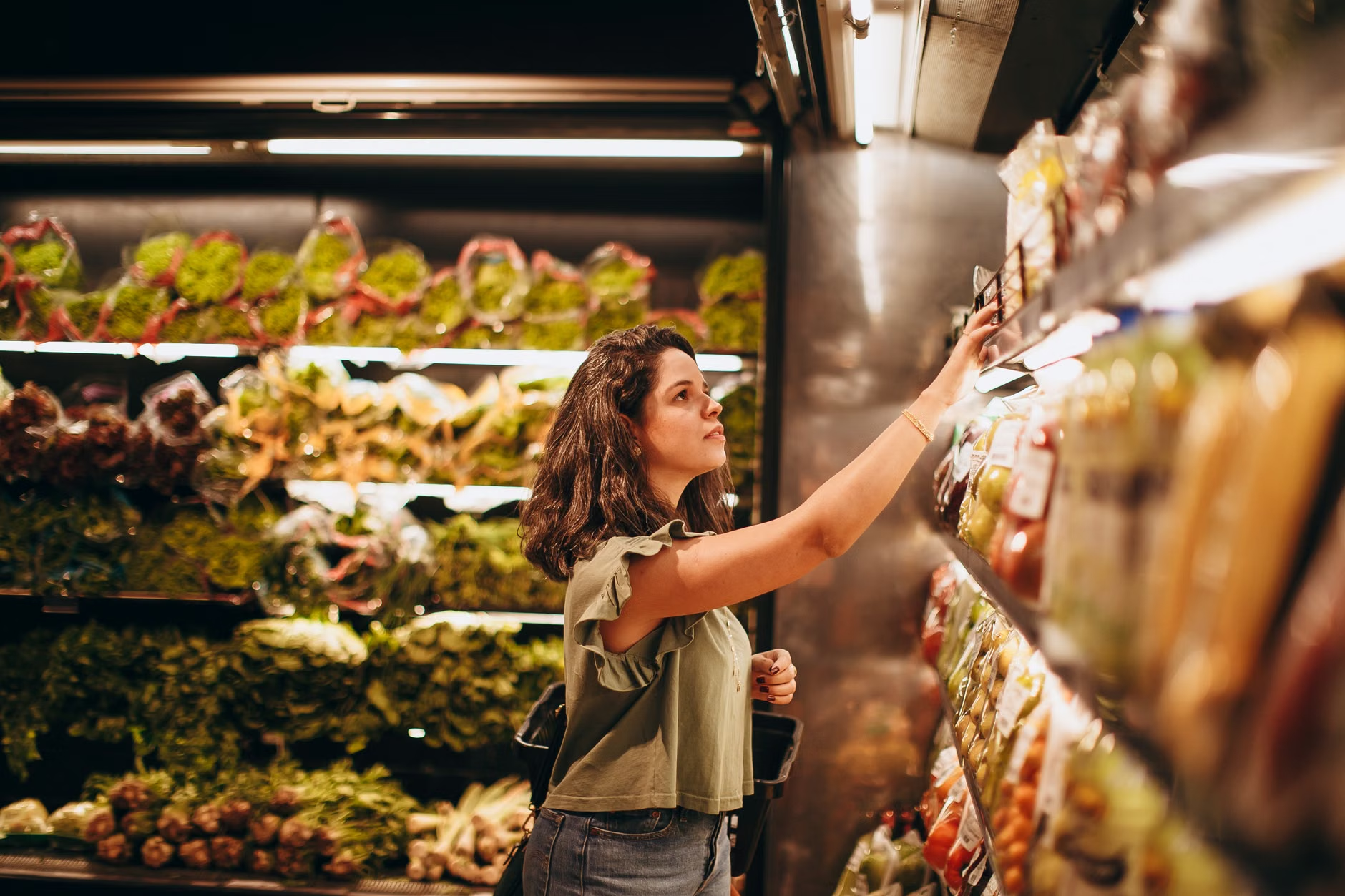
Why does this matter to you? Because reacting to these gaps emotionally leads to overspending. When you see a staple missing, your instinct might be to buy three of the expensive alternative. This is a common trap. Understanding that these gaps are often temporary allows you to pivot your meal plan rather than panic-buying at a premium.
The Psychology of ‘Scarcity-Induced Impulse Buying’
Retailers are well aware of the anxiety that empty shelves create. They often place “premium substitutes” right next to the empty space where the cheaper, sold-out item usually sits. This is a classic merchandising move. If your go-to pasta is out, you are more likely to grab the “artisan” version that costs 40% more. Recognizing this nudge is the first step in regaining control of your grocery bill.
The 80/20 Pantry Strategy: Your Financial Safety Net
The most resilient households in 2026 are those that have stopped treating the grocery store as their only source of food. By adopting the 80/20 rule, you minimize your exposure to weekly price spikes. You maintain 80% of your meals using ingredients that have a long shelf life and are less susceptible to immediate supply chain shocks.
What the 80/20 Pantry Looks Like
The 80% consists of dry goods, canned legumes, frozen vegetables, and grains. The 20% is your “fresh” budget—the perishable items you buy weekly based on what is currently affordable and available. When you go to the store, if your 20% items (like fresh bell peppers) are suddenly priced at a premium due to a supply gap, you don’t panic. You simply swap them for frozen ones from your 80% reserve.
| Category | Strategy | Why it works |
|---|---|---|
| Core Staples | Bulk buying when on sale. | Buffers against sudden price hikes. |
| Frozen Produce | Prioritize over fresh “out-of-season.” | Consistent price and nutrient profile. |
| Meal Planning | “Pantry-first” approach. | Reduces food waste and impulse buys. |
Mastering Unit Pricing: The Hidden Math of 2026
Shrinkflation—the practice of reducing product size while keeping the price the same—is rampant in 2026. The only way to combat this is by ignoring the “price per item” and focusing exclusively on the “unit price.” Most grocery store shelf labels now display the price per 100g or per liter, but they often put this in tiny font.
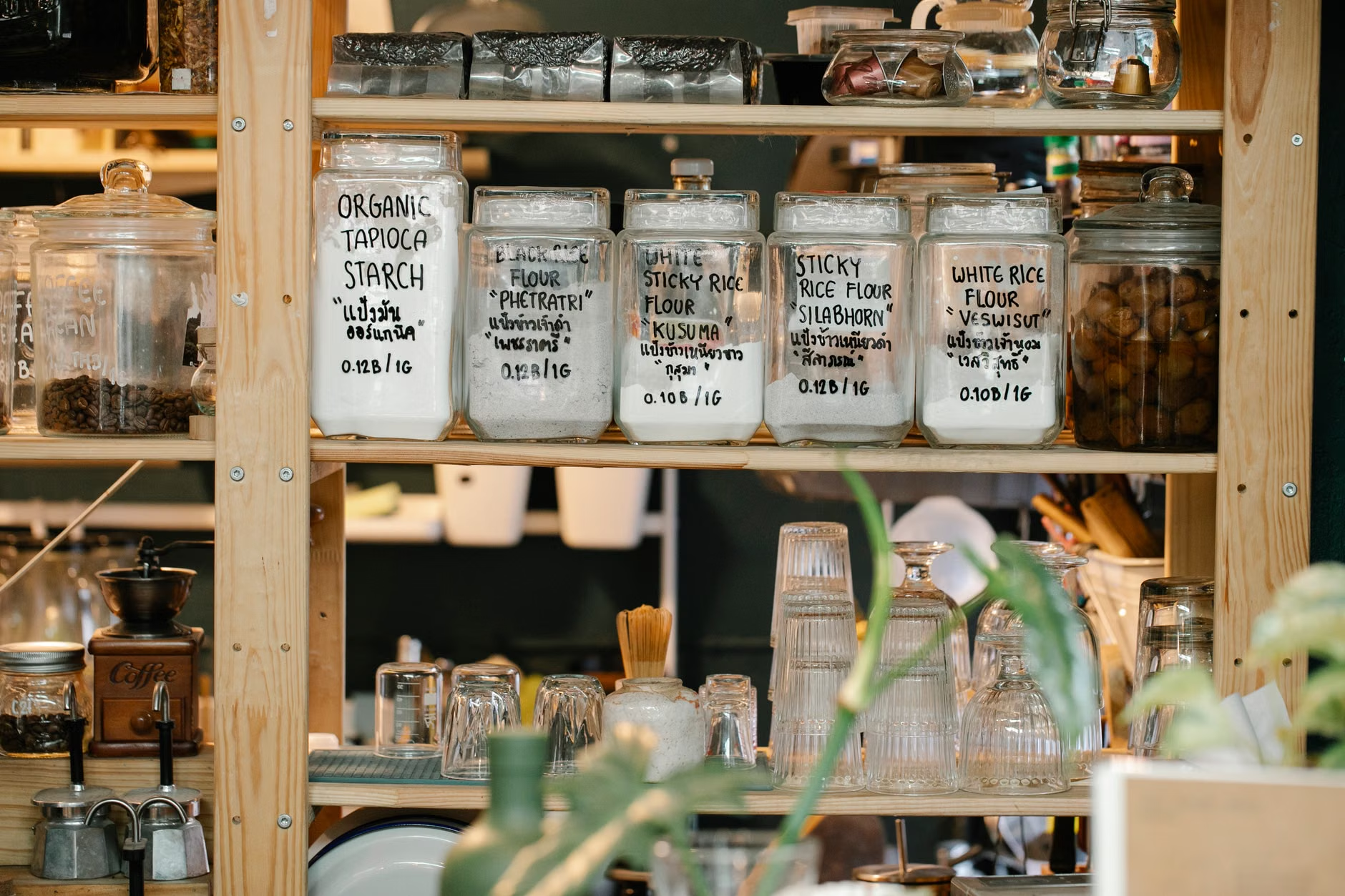
Common Mistake: Assuming the “Family Size” or “Bulk” pack is always cheaper. In 2026, this is frequently false. Manufacturers often use “bulk” packaging to trick consumers into paying a premium for convenience. Always check the unit price. You will often find that buying two smaller standard packs is cheaper than one large “family” pack. This is a deliberate pricing strategy by brands to capture higher margins from busy parents who don’t have time to do the math.
Using Technology to Outsmart Supply Gaps
Digital tools have moved from being a luxury to a necessity. Most major grocery chains now have apps that offer real-time inventory tracking. Before you leave the house, check the app for your local store. If an item is listed as “out of stock,” you save yourself the trip or the frustration of finding an empty shelf.
Moreover, these apps often feature “substitution” settings. If you are ordering online, be very specific about your substitution preferences. If you aren’t ordering online, use the app as a scout. If the app shows a shortage of a specific brand, search for a generic store-brand equivalent in the app first. This keeps you from wandering the aisles, which is where most impulse spending happens.
Practical Steps for Your Next Grocery Run
To make this actionable, treat your grocery shopping like a mission rather than a chore. Here is a step-by-step framework to apply on your next trip:
- Inventory Check: Before making a list, check your pantry. Identify the “80%” items that need replenishing.
- The “Flexible” List: Write down your meal plan, but label it “Flexible.” For example, if the recipe calls for broccoli but it is too expensive or unavailable, write “Green Vegetable” instead.
- The Unit Price Audit: When at the store, spend the extra three seconds to look at the unit price. If a product has changed its packaging size, the unit price will reveal the true cost increase.
- Avoid the End-Caps: Retailers put high-margin, high-demand items on end-caps (the ends of aisles). These are often the items most affected by scarcity pricing. Stick to the center aisles for staples.
Unexpected Trade-offs: The Hidden Costs of Convenience
We often talk about the cost of groceries in terms of dollars, but we rarely talk about the “cost of convenience.” Pre-cut vegetables, pre-marinated meats, and “meal kits” are the first items to see price hikes during periods of resource scarcity. Why? Because they involve more labor and more packaging, both of which are currently expensive and prone to supply chain disruptions.
If you are trying to cut costs, the single most effective move is to buy raw, whole ingredients. Yes, it takes more time, but the “convenience tax” you pay on pre-processed food can add up to 20-30% of your total grocery bill. If your time is truly limited, choose one or two “convenience” items that provide the most value (like pre-washed salad greens) and prepare the rest from scratch.
Managing Family Expectations
For parents, the biggest challenge is often the kids. If you are used to buying specific brands or specific snacks, and those are suddenly unavailable or significantly more expensive, it can lead to frustration. Be transparent with your family. Explain that “we are trying something new this week” or “this store is out of our usual brand, so we’re testing this one.” Normalizing flexibility helps your children adapt to a changing environment and reduces the pressure on you to provide the “perfect” shopping basket every single time.
Final Thoughts
The grocery environment of 2026 demands a more strategic approach, but it does not have to be a source of constant stress. By prioritizing your pantry inventory, ignoring the “convenience premium,” and relying on unit pricing rather than sticker prices, you can navigate these challenges effectively. Remember, your goal is to feed your family well while maintaining your financial boundaries. It is perfectly okay if your shopping list looks different from what it did a year ago; adaptation is the most valuable skill you can develop in this economy.
Stay focused on the long-term goal of stability. A well-managed pantry and a flexible mindset are your best tools in an unpredictable market. You are doing a great job navigating these complexities, and with these strategies, you are already ahead of the curve.
Frequently Asked Questions
1. Why is the “family size” pack sometimes more expensive per unit than smaller packs?
This is a marketing tactic known as “bulk-buying bias.” Manufacturers know that consumers often assume larger packs are cheaper, so they set the price higher to increase their margins. Always check the unit price—the cost per 100g or per kg—on the shelf tag to verify the true value.
2. How do I handle sudden supply shortages without resorting to expensive alternatives?
The best approach is to maintain a “flex-pantry.” If your preferred brand of a staple is missing, have a list of pre-vetted, lower-cost alternatives ready. If an entire category is unavailable, use a substitute that serves a similar purpose—for example, if fresh berries are too expensive, look for frozen alternatives or canned fruit in juice rather than syrup.
3. Are grocery apps actually accurate for real-time stock?
Most major chain apps are quite accurate, but there is usually a slight lag. If an item shows “low stock,” it may have been sold out in the last hour. Use the app to get a general sense of availability, but always have a backup plan for your essential ingredients.
Official Resources for Further Reading: