Quiet-tourism is the most effective way to reclaim the joy of city travel by prioritizing off-peak timing and lesser-known neighborhoods, ensuring your trip remains restorative rather than exhausting.
- Shift your rhythm: Visiting major landmarks before 9:00 AM or after 6:00 PM reduces crowd exposure by up to 70% in most metropolitan hubs.
- Neighborhood selection: Choosing accommodation in residential districts rather than central tourist zones lowers costs and provides access to authentic local experiences.
- The ‘Micro-Zone’ strategy: Spend 80% of your time in a 2-kilometer radius of your accommodation to minimize transit stress and maximize immersion.
If you are in your 30s or 40s, you know the specific brand of exhaustion that comes with family travel. You want to show your kids the world, or perhaps enjoy a rare weekend away with your partner, but the reality of modern city tourism often involves standing in hour-long queues, navigating swarms of tour groups, and spending half your budget on overpriced, mediocre food. The “quiet-tourism” trend isn’t about hiding in a hotel room; it’s a deliberate strategy to engage with major cities on your own terms.
Why the Shift Toward Quiet-Tourism Matters
For parents and busy professionals, our “leisure time” is a finite resource. When you only have four days of vacation, spending six hours of that time waiting in lines at the Louvre or the Colosseum feels like a failure of planning. Quiet-tourism matters because it changes the objective of travel from “collecting landmarks” to “experiencing place.”
When you strip away the pressure to see the “Top 10 Must-Visit Sites,” you remove the primary driver of travel-related stress. This approach is rooted in the “Slow Travel” movement, which emphasizes deep connection over breadth. In the context of a bustling metropolis like London, New York, or Tokyo, this means accepting that you won’t see everything—and recognizing that seeing everything was never the point.
Consider the trade-off: A standard tourist itinerary forces you into the “bottleneck” effect, where thousands of people follow the same path at the same time. By choosing quiet-tourism, you opt out of the bottleneck. You might miss the most famous photo op, but you gain the ability to hear your own thoughts, engage with local residents, and actually enjoy your coffee before it gets cold.

Mastering the Temporal Shift: The 9-to-6 Rule
The most common mistake travelers make is adhering to the standard “office hours” of tourism. Most museums, galleries, and major sites operate on a schedule that mirrors the standard workday. If you arrive at 11:00 AM, you are entering the peak of the crush.
To practice quiet-tourism, you must adopt the 9-to-6 rule. This is not just a suggestion; it is a tactical decision. Most major cities have a “golden window” before 9:00 AM. In cities like Paris or Rome, the streets are often empty, and the light is perfect for photography, long before the tour buses arrive. By the time the crowds hit, you should be transitioning to a secondary activity—perhaps a local market or a quiet neighborhood park.
Similarly, the “evening lull” is a secret weapon. Most day-trippers and tour groups depart a city center by 5:00 PM to return to their hotels or cruise ships. By staying in the city center or a well-connected neighborhood, you can access major landmarks during the final hour of operation, when the crowds have thinned significantly, and the atmosphere becomes entirely different.
Applying the Temporal Shift to Family Travel
If you are traveling with children, the 9-to-6 rule takes on a new importance. Kids are generally more resilient when they aren’t being pushed through a crowded museum gallery. By front-loading your day with one major site early, you can spend the rest of the afternoon in lower-stimulation environments. This prevents the “meltdown factor” that often ruins family trips.
Here is a decision framework for your daily schedule:
| Time Block | Activity Type | Why? |
|---|---|---|
| 07:00 – 09:30 | Iconic Landmarks | Zero queues and better light for photos. |
| 10:00 – 15:00 | Neighborhood Exploration | Avoiding mid-day tourist peaks. |
| 15:30 – 18:00 | Rest / Low-key Activity | Preserving energy for the evening. |
| 18:00 – 20:00 | Evening Landmarks / Dining | City centers are quieter and more atmospheric. |
The Geography of Quiet: Choosing Your Base
Where you stay dictates your entire experience. Booking a hotel in the “Heart of the City” is a classic error. These areas are designed for short-term turnover, meaning they are loud, expensive, and lack the amenities you actually need as a family or a couple in their 30s/40s, such as quiet parks, local grocery stores, or decent laundry facilities.
Instead, look for “buffer zones”—neighborhoods that are two or three transit stops away from the main tourist hub. In London, this might mean looking toward Hackney or Peckham instead of Westminster. In New York, it might mean choosing a neighborhood in Brooklyn or Queens that offers a direct subway line to Manhattan. These areas offer the “quiet” aspect of the trend while keeping the city accessible.
The key insight here is the “2-Kilometer Radius Rule.” When you arrive in a new city, map out a 2-kilometer circle around your accommodation. If you can find 80% of your daily needs (groceries, a playground, a few cafes, and a local transit connection) within that circle, you have successfully minimized your transit stress. You aren’t just a tourist; you are a temporary resident. This perspective shifts the power dynamic of the trip. You stop being a victim of the city’s chaos and start navigating it like a local.
Technology as a Tool, Not a Distraction
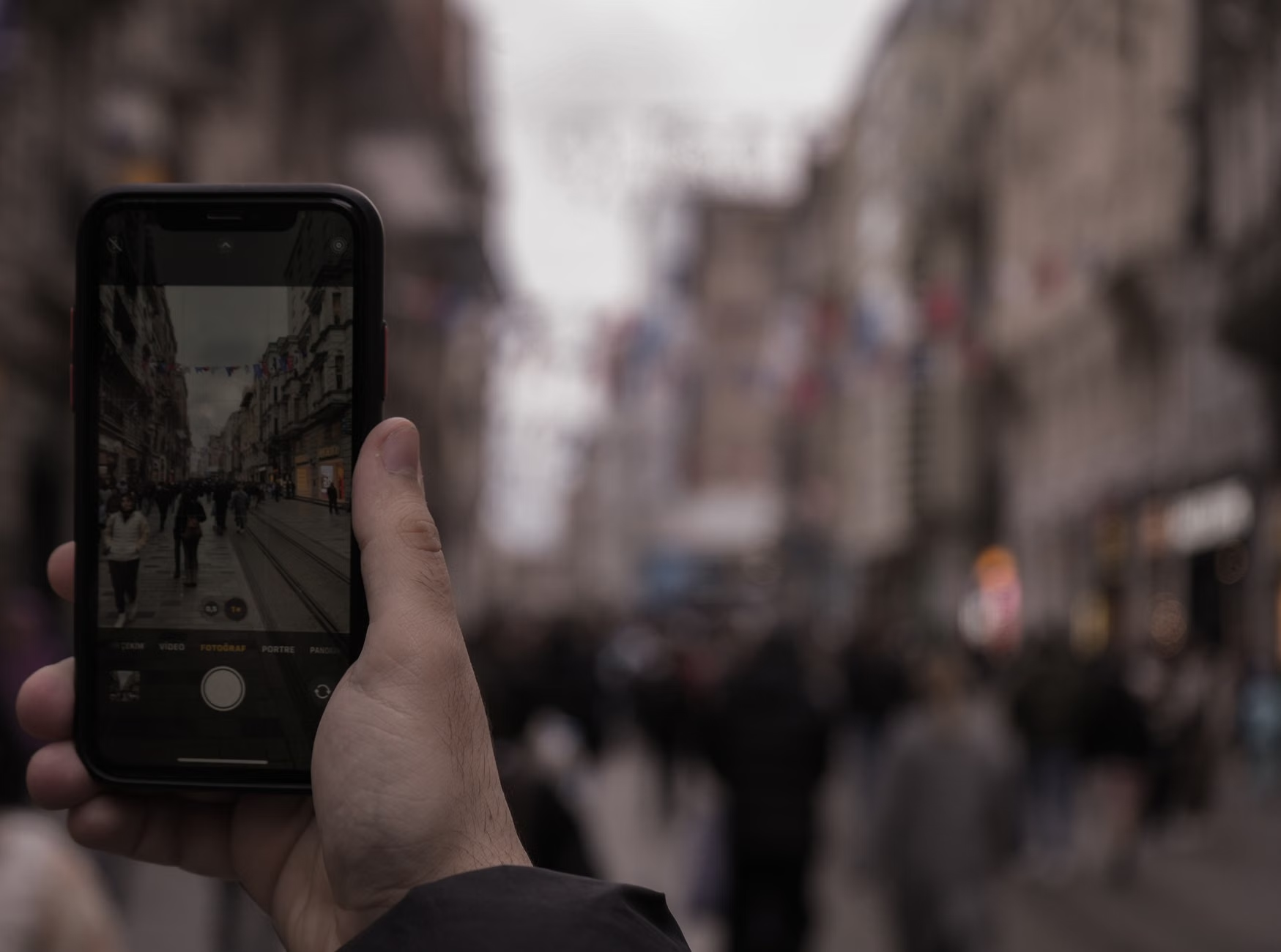
There is a misconception that quiet-tourism means disconnecting entirely. On the contrary, technology is your best friend when trying to avoid crowds. Use real-time data to your advantage. Google Maps’ “Popular Times” feature is an essential tool that many travelers ignore. Before you head to a museum or a restaurant, check the graph. If the “live” bar is at its peak, change your plans immediately.
Another overlooked variable is the “booking-first” culture. In many cities, you can bypass the main entrance queues entirely by booking a timed-entry slot online. While this is standard for major museums, it is now becoming a requirement for smaller, popular sites. Don’t assume you can walk up to a venue. Use a shared calendar app to track your tickets and times, ensuring you aren’t rushing across the city because of a poorly planned schedule.
Be wary of “algorithmic bias.” Social media platforms often push the same five locations in any given city. If you rely solely on Instagram or TikTok for your itinerary, you are guaranteed to end up in a crowd. Use your digital tools to find “secondary” attractions. If the main city museum is crowded, look for the smaller, specialized collections—often located in historic houses or university buildings—that rarely see more than a handful of visitors.
Addressing the Hidden Costs of Quiet-Tourism
Quiet-tourism isn’t necessarily cheaper, but it is more efficient. The hidden cost is often time spent researching. You cannot simply show up in a major hub and expect to find “quiet” by accident. You have to hunt for it. This means spending an extra hour during the planning phase to identify neighborhoods, transit routes, and alternative entry times.
Consider the trade-off of “convenience vs. peace.” Staying in a quiet neighborhood might add 15 minutes to your commute to the city center. For some, this is a deal-breaker. However, if those 15 minutes of transit gain you three hours of peace and a better dining experience, the trade-off is mathematically sound. You are buying back your sanity with time.
Another common mistake is attempting to do too much. When you embrace quiet-tourism, you must commit to a “one-major-thing-a-day” policy. If you try to cram the Louvre, the Eiffel Tower, and a river cruise into one day, you will be exhausted, regardless of how “quietly” you attempt to move. The goal is to reduce the number of transitions. Each transition—moving from a museum to a restaurant, then to a park—is a moment where you are exposed to the chaos of the city. Minimize the number of transitions, and you minimize the noise.
Practical Steps for Your Next City Break
To put this into practice, follow this step-by-step framework for your next trip:
- The Anti-Itinerary: List the three things you *must* see. Everything else is optional. If you only accomplish these three things in a week, the trip is a success.
- The Transport Audit: Look at a map of the city. Identify the main tourist cluster. Choose an accommodation that is at least three transit stops away but on the same direct line.
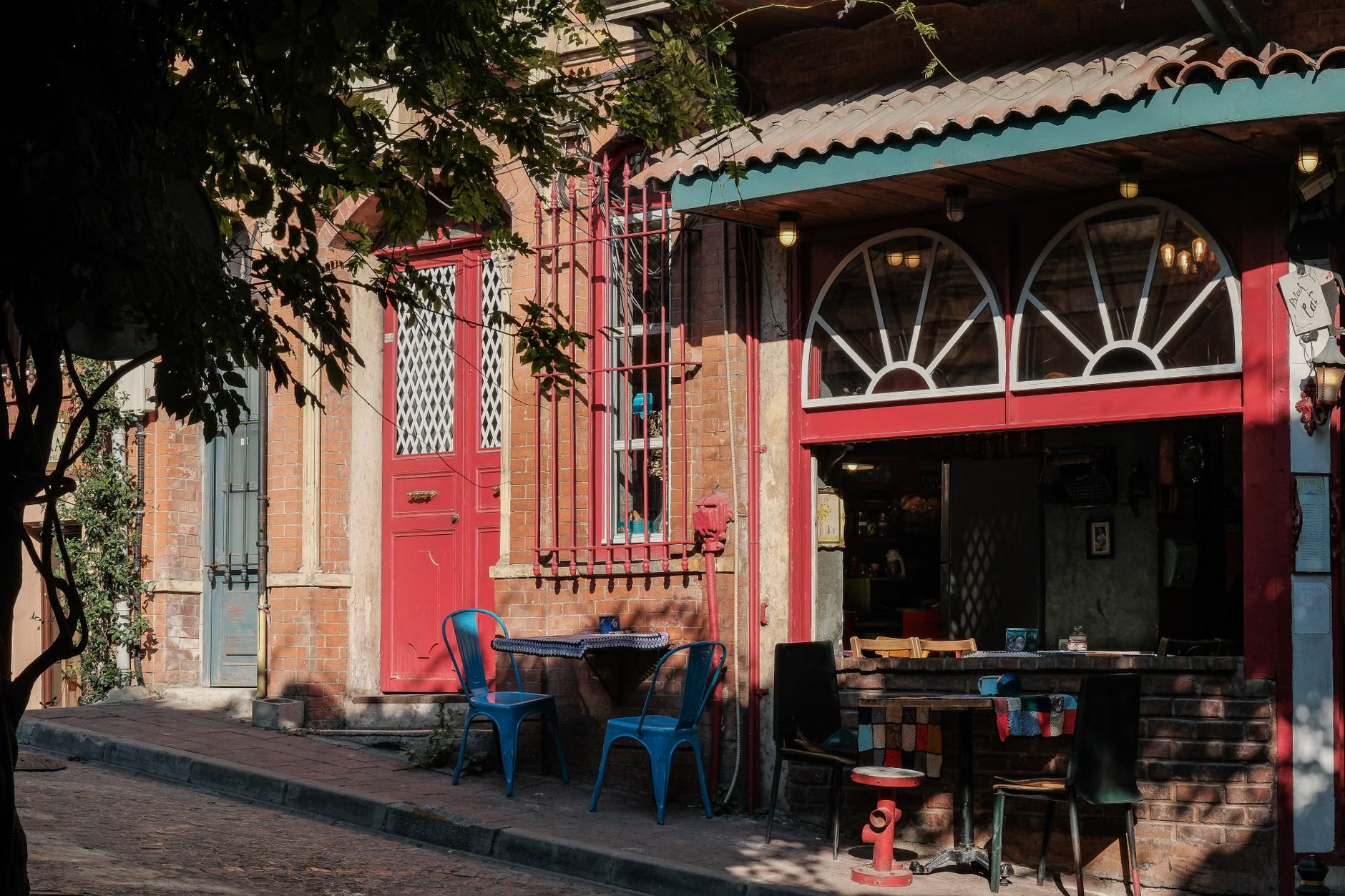
- The Meal Rule: Never eat within 500 meters of a major landmark. Walk three blocks away, down a side street. You will find better food, lower prices, and a much quieter environment.
- The Pre-Departure Check: Two weeks before you leave, check the official websites of your “must-see” sites. Book your tickets now. If they are sold out, don’t try to force it; find an alternative.
This approach requires discipline. It is tempting to add “just one more thing” to your schedule. Resist that urge. The quiet-tourism trend is about quality of experience, not quantity of sights. If you find yourself in a crowded street, stop. Step into a bookstore, a quiet church, or a park. Your goal is to find the rhythm of the city that exists beneath the tourist veneer.
Beyond the Obvious: Insights for the Modern Traveler
One overlooked aspect of quiet-tourism is the “psychological reset.” In our 30s and 40s, we are often managing high-pressure jobs and family responsibilities. We don’t need our vacations to be another source of high-pressure management. By opting for a slower pace, you are actively choosing to lower your cortisol levels.
A common misconception is that “quiet” means “boring.” On the contrary, exploring a residential neighborhood in Tokyo or a quiet district in London often leads to more “authentic” experiences than the tourist zones. You might find a local bakery where the owner has been making the same bread for 30 years, or a small park where you can watch local families go about their day. These are the memories that actually stick, not the blurry photo of a crowded plaza.
Finally, remember that quiet-tourism is a form of sustainable travel. By spreading your spending into residential areas, you are supporting local businesses that actually serve the community, rather than just the tourist-facing shops that sell mass-produced souvenirs. You are being a better guest in the city you are visiting.
Frequently Asked Questions
1. Does quiet-tourism mean I won’t see the famous landmarks at all?
No, it just means you see them differently. By visiting during off-peak hours—specifically early mornings or late evenings—you can experience the landmarks without the crushing crowds, which often provides a much more profound and personal connection to the site.
2. How do I find “quiet” neighborhoods in a city I’ve never visited?
Use tools like Google Maps to look for areas with high concentrations of local amenities (grocery stores, pharmacies, local schools) rather than hotels. Read local neighborhood blogs or forums (like Reddit’s city-specific subreddits) to see where residents actually live and spend their time.
3. Is it more expensive to stay outside the city center?
Usually, it is the opposite. You will often find that accommodation in residential districts is significantly cheaper than in the city center. Even if you spend a bit more on transit, the overall cost of living (food, coffee, services) is typically much lower, resulting in a net saving.
Quiet-tourism is not a revolutionary new way to travel; it is a return to a more thoughtful, intentional way of seeing the world. It requires you to prioritize your own well-being over the checklist of a guidebook. Next time you head to a major city, try it. Give yourself permission to skip the crowd, find a quiet street, and actually enjoy the place you’ve traveled so far to see. It’s worth it.
For more information on planning sustainable and stress-free city visits, you can refer to resources like the UN World Tourism Organization’s guide to sustainable travel, which emphasizes the importance of managing visitor flows for both local communities and the traveler experience.