The most effective way to end morning chaos with your teen isn’t by nagging them to move faster; it is by externalizing their executive functions into a predictable, low-friction environment.
- Executive function is about management, not willpower: Teens struggle because their prefrontal cortex—the “CEO” of the brain—is still under construction, not because they are inherently lazy.
- Environmental design beats verbal reminders: Replace “Did you pack your gym bag?” with a dedicated landing zone where the bag is already packed the night before.
- Transition to autonomy: Move from “manager” (giving orders) to “consultant” (asking, “What is your plan for the morning?”) to build their internal regulation skills.
If your mornings involve a repetitive loop of “Did you brush your teeth?”, “Where are your shoes?”, and “We’re going to be late,” you aren’t just dealing with a sleepy teenager—you are witnessing a breakdown in executive function. For parents in their 30s and 40s juggling work meetings and school runs, this is the daily friction point that drains your battery before the workday even begins.
Executive function is the umbrella term for the brain’s “operating system”: working memory, flexible thinking, and self-control. When a teen is asked to get ready, they aren’t just putting on clothes; they are multitasking, sequencing complex steps, and managing time. If their “system” is overloaded, they don’t move. Here is how you can re-engineer their morning to reduce your mental load and build their independence.

Understanding the “CEO” of the Brain in Adolescence
To fix the morning, we have to stop viewing the struggle as a character flaw. Research into adolescent neurobiology shows that the prefrontal cortex—the area responsible for planning, impulse control, and prioritizing—is the last part of the brain to reach maturity, often not fully developed until the mid-twenties. Think of your teen as a junior executive who has been given a high-stakes role but lacks the software to manage the workflow.
When you ask a teen to “just get ready,” you are giving a vague command that requires them to break down a sequence of 20+ micro-tasks. A teen with lower executive function capacity doesn’t see “getting ready”; they see a blurry, overwhelming list of chores. If they are tired or stressed, their “working memory”—the ability to hold information while manipulating it—flickers. They might start brushing their teeth, get distracted by a towel on the floor, and suddenly forget they needed to pack their lunch.
The shift for parents: Instead of focusing on compliance (“Why won’t you listen?”), focus on scaffolding (“How can we make this process visible?”). If you treat the morning routine as a system to be optimized rather than a battle of wills, you remove the emotional heat from the interaction.
The Physics of Morning Friction: Designing the Environment
The biggest mistake parents make is relying on verbal prompts. Every time you say, “Hurry up,” you are acting as their external frontal lobe. This creates a dependency loop: they don’t learn to monitor their own time because you are doing it for them. To break this, you need to “offload” the instructions to their environment.
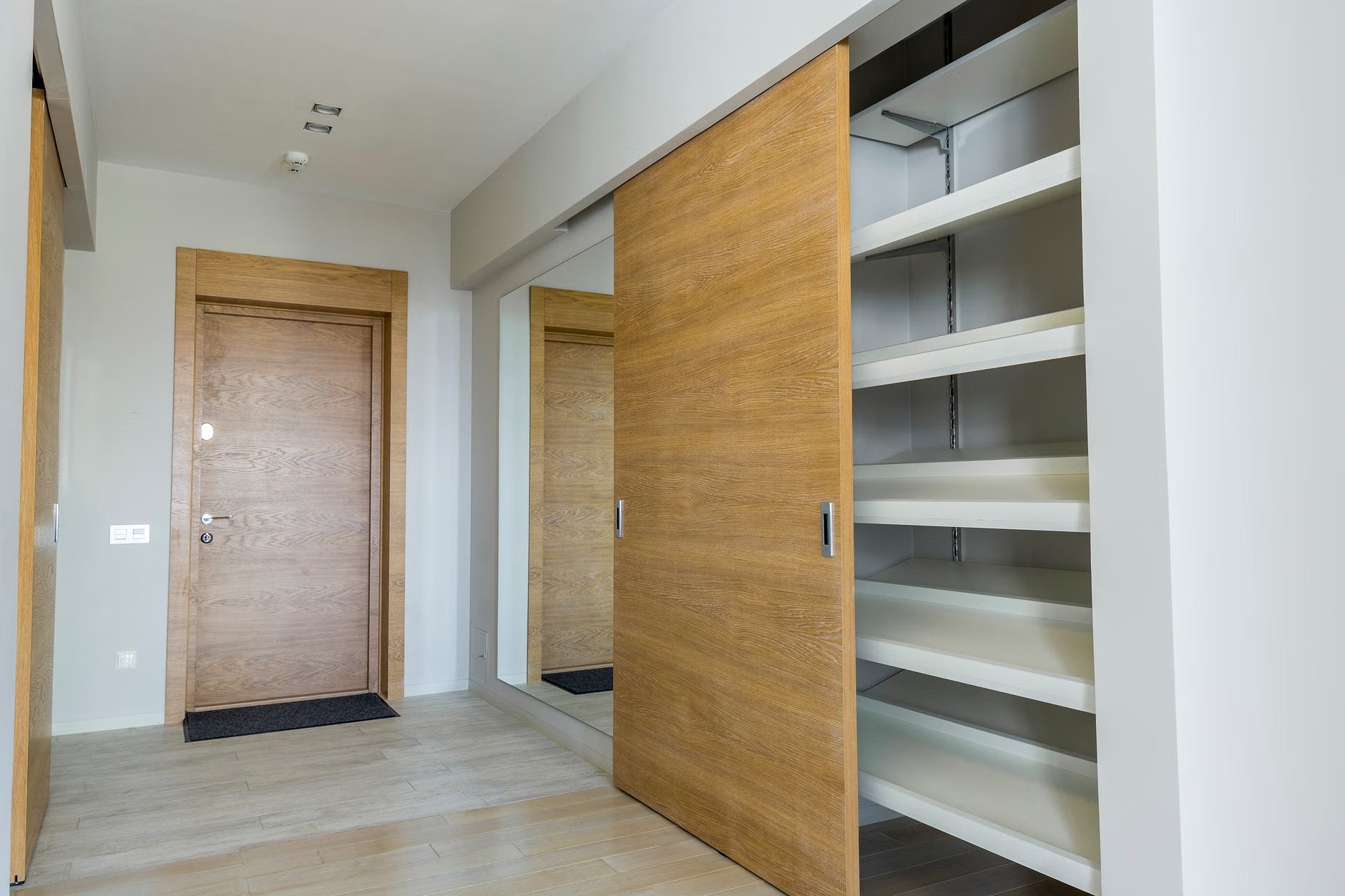
Start by creating a “Launchpad.” This is a dedicated, non-negotiable space near the door where everything required for the day must land the night before. If it isn’t in the Launchpad, it doesn’t exist. This sounds rigid, but it eliminates the “Where is my…” search-and-rescue mission that ruins 10 minutes of every morning.
The “Night-Before” Audit
The morning routine actually starts at 8:00 PM the night before. This is when the executive function “planning” phase happens. If you try to plan at 7:00 AM, you are fighting against biological grogginess and cortisol spikes. Use a simple, physical checklist—not an app—taped to the inside of their bedroom door or the bathroom mirror.
| Task Category | The “Before Bed” Action | The “Morning” Reality |
|---|---|---|
| Equipment | Pack bag, check sports gear, charge device. | Grab and go. |
| Logistics | Lay out clothes, check weather. | Dress and move. |
| Nutrition | Prepare lunch/snacks, verify breakfast menu. | Eat and clean up. |
The table above represents a decision-rule framework. If the “Night-Before” column is empty, the “Morning” column becomes a chaotic scramble. The goal is to make the morning routine a series of “automatic” actions that require zero executive decision-making.

The “Consultant” Approach: Shifting from Manager to Coach
Once the environment is designed, you need to change your communication style. If you are constantly telling them what to do, you are reinforcing the idea that you are the one responsible for their success. This is the “manager” trap. You want to move to a “consultant” role.
A consultant asks questions that force the other person to use their own executive functions. Instead of saying, “Put your shoes on,” try, “What is your plan for getting out the door in the next five minutes?” If they look blankly at you, point to the checklist. This redirects the authority from your voice to the plan itself. It’s a subtle shift, but it changes the power dynamic from “Parent vs. Teen” to “Teen + Plan vs. The Clock.”
Common Pitfalls in Routine Implementation
- The “Perfectionist” Trap: You expect them to follow the checklist perfectly on day one. They won’t. Expect a 2-3 week adjustment period where the system will “break.” Use these breaks to ask, “Why did this step fail today?”
- Over-Complication: If your checklist has 15 steps, it’s too long. Start with the “Big Three”: Gear, Clothes, Breakfast. Add more once those are mastered.
- The “Rescue” Temptation: If they forget their lunch, do not bring it to them. The natural consequence of an empty stomach is the most powerful teacher for executive function. If you rescue them, you teach them that they don’t actually need to manage their own lives.
The Role of Physiological Regulation
Even the best systems fail if the human component is biologically depleted. Many teens today suffer from “sleep debt,” which mimics ADHD-like symptoms. If your teen is getting six hours of sleep, their executive function is essentially offline. You cannot “system” your way out of biological sleep deprivation.
Consider the “Light-and-Movement” protocol. Exposure to natural light within 30 minutes of waking up helps reset the circadian rhythm, which improves alertness. If your teen is a “slow starter,” don’t try to force high-level focus immediately. Build in a “buffer” that allows for 10 minutes of low-stakes activity—like listening to music or grabbing a glass of water—before they have to switch into “productive mode.”
Advanced Tweaks for High-Friction Mornings
If your teen is chronically struggling despite having a plan, look for “hidden bottlenecks.” These are tasks that look small but carry a high “cognitive load.” For example, choosing what to eat for breakfast might seem easy, but for a teen with sensory sensitivities or decision fatigue, it can be a major hurdle. Standardize breakfast. If they eat oatmeal every day, the “decision” is removed, and the executive function cost drops to zero.
Another overlooked variable is the “digital transition.” If your teen’s first interaction in the morning is checking social media, they are immediately flooding their brain with dopamine and external demands. This makes the “boring” tasks like putting on socks feel like a massive chore. Implement a “No-Screens-Until-Ready” rule. This isn’t about punishment; it’s about protecting their cognitive bandwidth for the tasks that actually matter for their day.
Measuring Success: The 30-Day Review
Don’t look for success on a day-to-day basis; look for trends. Are there fewer arguments? Is the house quieter? Are they actually remembering their bag more often? After 30 days, sit down with your teen—not as a teacher, but as a project partner. Ask them what part of the system makes them feel the most in control. When they identify the value in the system, they move from being a participant to an owner.
Refining Your Strategy for the Long Term
The goal of these routines is not to create a “perfect” morning, but to cultivate a sense of agency. As your teen moves toward adulthood, they will eventually have to manage their own schedules, nutrition, and professional responsibilities. The executive function skills they build now—the ability to look at a goal, break it into steps, and manage their own environment—are the skills that will determine their success in college and their early career.
If you find yourself sliding back into old habits, remember the “Consultant” rule. When things get heated, stop and ask yourself: “Am I trying to solve a problem for them, or am I teaching them how to solve it themselves?” The former provides relief in the moment; the latter provides independence for the future.
For further reading on adolescent brain development and executive function, the Harvard Center on the Developing Child provides excellent resources on how these foundational skills are built. Additionally, the CHADD (Children and Adults with Attention-Deficit/Hyperactivity Disorder) organization offers practical, science-backed strategies for managing executive function challenges that are applicable even to teens without a formal diagnosis.
Frequently Asked Questions
What should I do if my teen refuses to use the checklist or follow the routine?
Refusal is usually a sign that they feel the system is being “done to them” rather than “done with them.” Involve them in the design phase. Ask, “What part of the morning feels the most chaotic for you?” and let them suggest the solution. If they feel like an architect of their own routine, they are far more likely to stick to it.
Is it ever too late to start these routines if my teen is already in high school?
It is never too late. While it is easier to build these habits in middle school, the teenage brain is still highly plastic. The key is to frame it as “optimizing for your own life” rather than “following my rules.” Focus on the benefit to them—more sleep, less stress, and more control over their time.
How do I handle the “morning moodiness” that makes any conversation difficult?
Limit verbal communication during the first 15 minutes of the morning. Use visual cues (the checklist, a timer, or a whiteboard) instead of your voice. Moodiness is often a physiological response to waking up; don’t take it personally, and don’t try to “fix” their mood. Stick to the system, and allow the routine to be the “manager” so you can remain the supportive parent.
Building a low-friction morning takes time, but by externalizing the executive function process, you are giving your teen the best possible foundation to navigate their own day. Stay consistent, keep the systems simple, and trust that these small, structural changes lead to significant long-term growth.