The secret to a stress-free kitchen isn’t willpower or a strict schedule; it is building an environment that lowers the “activation energy” required to start cooking by minimizing sensory overload and visual noise.
- Visual accessibility is vital: If you can’t see an ingredient, it effectively does not exist. Use clear containers to prevent “out of sight, out of mind” food waste.
- Zone-based workflows: Organize your kitchen by task (chopping, heating, cleaning) rather than by item category to reduce the physical movement required during prep.
- Externalize your executive function: Use visual cues like magnetic boards or color-coded timers to offload the mental burden of tracking cooking times and inventory.
If you have ever stood in front of a full refrigerator, stared at the ingredients, and felt completely paralyzed by the sheer number of choices—or the mental labor required to turn those raw items into a meal—you aren’t alone. For many people, particularly those who are neuro-divergent or simply managing the “brain fog” of a demanding career and parenting, the kitchen is the ultimate battleground of executive function.
Executive function is the set of mental skills that include working memory, flexible thinking, and self-control. In the kitchen, this translates to planning a meal, remembering if the stove is on, timing multiple components, and managing sensory input like the noise of the vent hood or the smell of burning garlic. When these systems are overloaded, meal prep becomes a chore you avoid until the last possible second.
Designing for “Low-Friction” Accessibility
The goal of a neuro-diverse kitchen setup is to reduce the friction between “I need to eat” and “I am eating.” Most standard kitchen designs focus on aesthetics, but for the neuro-diverse cook, functionality must prioritize cognitive load reduction.
The most common mistake is storing items in opaque cabinets. If your spice rack or pantry items are hidden behind solid doors, your brain has to perform an extra “retrieval” step to remember what is there. This is why “open shelving” or “clear storage” isn’t just a trend—it is a cognitive necessity. When you see your ingredients, you are reminded of them. This creates a “visual inventory” that triggers your brain to utilize what you already have, rather than buying duplicates or ordering takeout because the act of searching for food felt too draining.
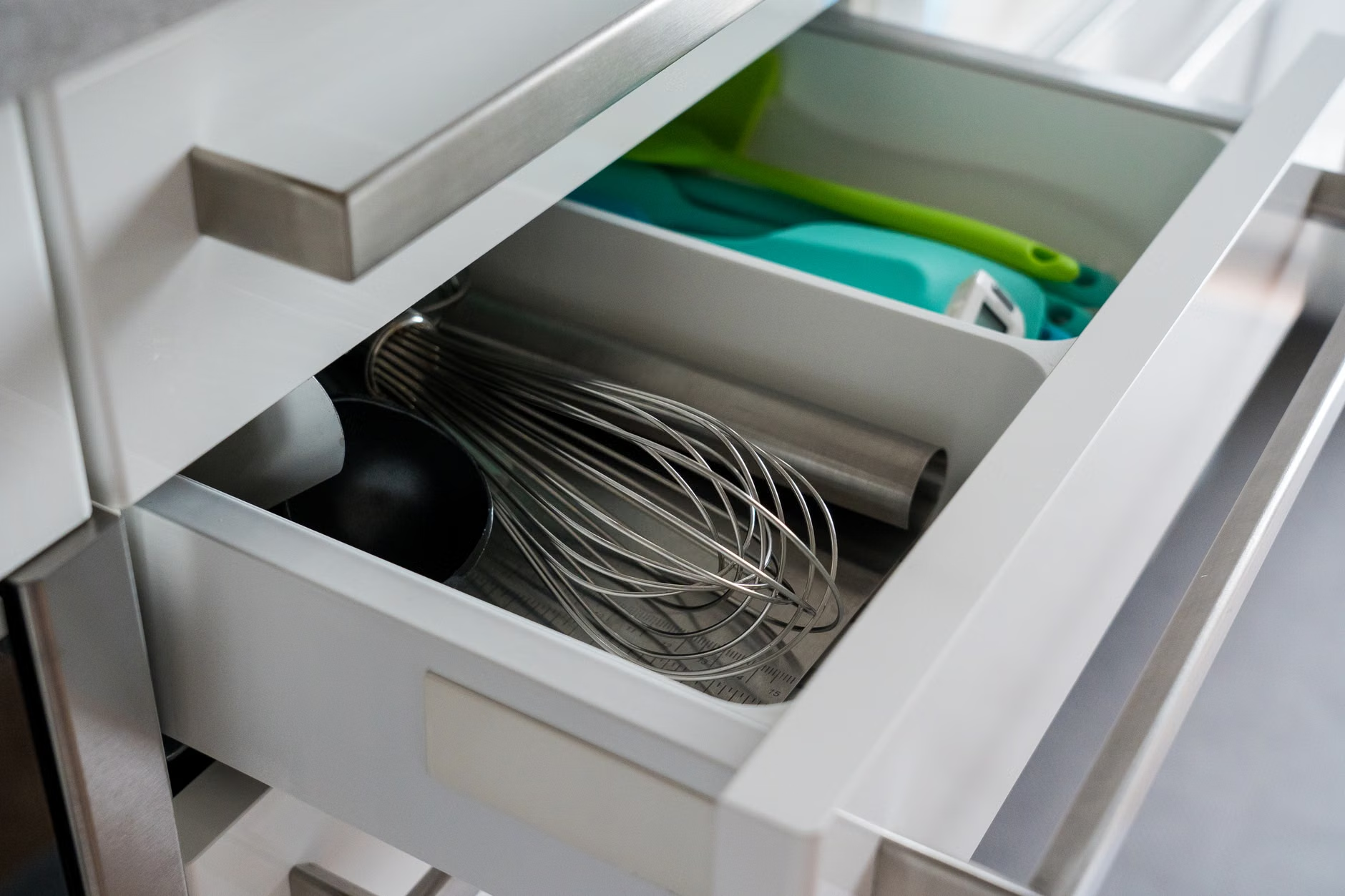
To implement this, start by auditing your “high-frequency” zone. Take your most used items—the chef’s knife, the cutting board, the olive oil, the salt—and place them within arm’s reach of your primary prep area. If you have to walk across the kitchen to find a spatula, you have introduced a “break” in your task flow. For a neuro-divergent brain, that break is often where the momentum dies. Keep the “work triangle” (stove, sink, fridge) clear of clutter, but also clear of unnecessary tools.
The Psychology of Sensory Management
Cooking is a sensory-heavy activity. Between the clanging of pots, the hum of the dishwasher, and the bright, flickering lights of a range hood, it’s easy for the nervous system to become overstimulated. This overstimulation often manifests as irritability or a sudden, unexplained urge to abandon the kitchen entirely.
Consider the lighting in your workspace. If your kitchen uses harsh, cool-toned overhead fluorescent lights, consider switching to warm-toned LED under-cabinet lighting. This creates a localized, focused “task light” that keeps the rest of the room feeling calmer. Similarly, noise management is often overlooked. If the sound of the microwave or the constant ticking of a timer causes you anxiety, invest in a visual timer or a silent, color-changing light timer. These tools provide the necessary information (time remaining) without the auditory spike.
| Sensory Trigger | Common Impact | Practical Fix |
|---|---|---|
| Overhead Fluorescent Lighting | Visual fatigue/Headaches | Warm-toned under-cabinet LED strips |
| Loud/Beeping Timers | Auditory Overstimulation | Visual/Silent countdown clocks |
| Visual Clutter on Counters | Cognitive Overload | “Reset” ritual: Clearing counters before bed |
The table above highlights that simple, low-cost adjustments can significantly lower the barrier to entry for cooking. By controlling the environment, you control your ability to stay focused on the task at hand.
Systems Over Habits: The “Reset” Ritual
Habits rely on willpower, which is a finite resource. Systems, however, rely on structure. The most effective system for a busy parent or professional is the “Closing Shift” or “Reset Ritual.” This is a 10-minute routine performed at the end of the day to prepare the kitchen for the next morning.
The rule is simple: The kitchen must be returned to a neutral, “ready-to-go” state. This means the dishwasher is emptied (so it’s ready to receive dirty dishes during prep), the counters are wiped, and the coffee maker is prepped. When you walk into a “reset” kitchen, you aren’t greeted by the “to-do” list of last night’s dinner. You are greeted by a blank slate.
If you struggle with the “where does this go?” problem, label everything. Don’t rely on memory. Use a label maker or masking tape to mark exactly where the blender, the colander, and the measuring cups belong. This removes the “decision fatigue” of deciding where to put things away, making the post-cooking cleanup significantly faster and less mentally taxing.
Managing “Executive Function” via External Tools
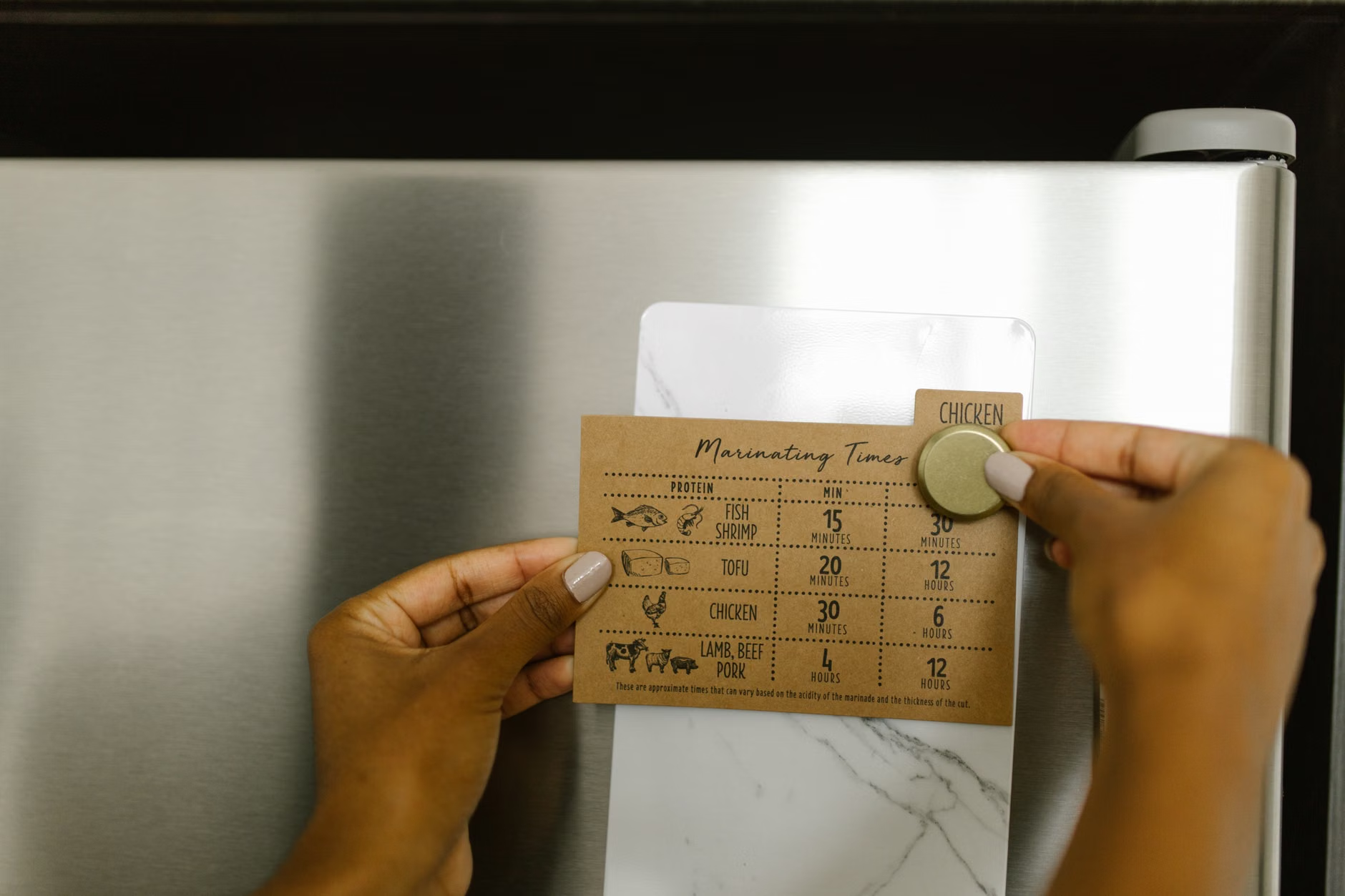
Externalizing your thoughts is the single most effective way to manage executive function. If you try to hold your grocery list, your dinner plan, and your child’s school schedule in your head, you will inevitably drop one of those balls. Offload this to physical objects.
Use a large, high-contrast magnetic whiteboard on the refrigerator. Write down the meal plan for the week, but keep it simple: “Monday: Pasta, Tuesday: Tacos.” Don’t overcomplicate it. The goal is to provide a “single source of truth” for the household. When you or your partner look at the fridge, the question “What’s for dinner?” is answered instantly, without requiring a conversation or a mental search.
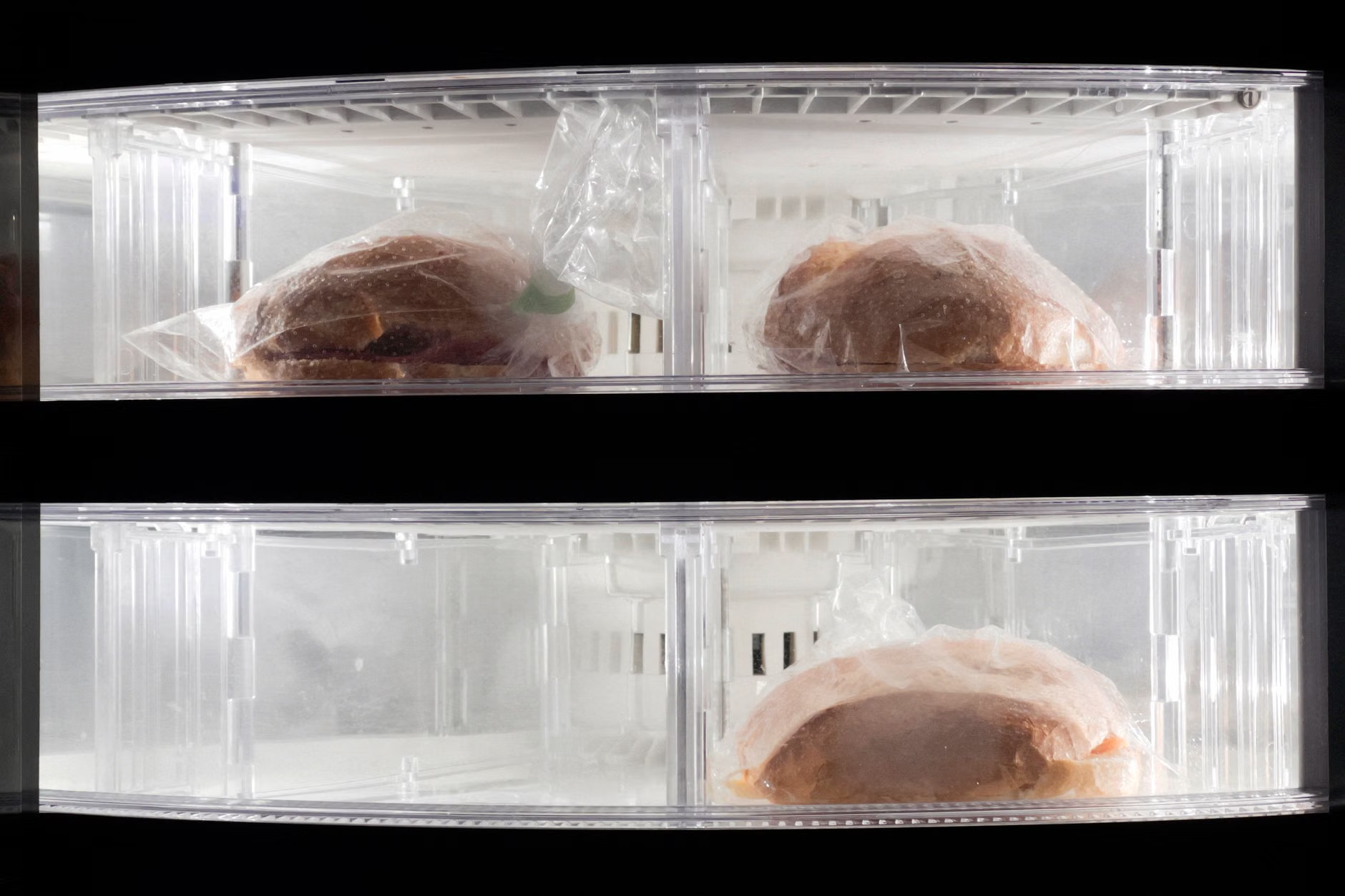
Another powerful tool is the “Prep Container System.” On a Sunday or whenever you have a burst of energy, wash and chop your vegetables. Put them in clear, stackable containers. When it’s time to cook on a Wednesday night, you aren’t starting from scratch. You are just assembling. This “assembly-line” approach is standard in professional kitchens, but it is even more critical for the home cook who has limited mental bandwidth during the week.
The Hidden Costs of “Perfect” Organization
One common trap is “over-organizing.” You might see photos of kitchens with every single grain of rice in a matching glass jar. While this looks clean, it creates a massive maintenance burden. Every time you buy a new bag of rice, you have to open the bag, pour it into the jar, wash the jar, and ensure you don’t mix up the labels. For many, this is a recipe for burnout.
The “Good Enough” Rule: Only organize the items you use daily. If you use a spice once a year, leave it in its original container. If you use olive oil every day, keep it in an easy-to-grab dispenser. Do not waste your limited executive function on organizing things you rarely touch. Focus your energy on the top 20% of items that you interact with 80% of the time.
Another consideration is the “sensory cost” of cleaning. If you hate the feeling of damp sponges, use a silicone brush or a dishwasher-safe tool. If you find the sound of water running into a sink frustrating, use a deep basin to soak items rather than scrubbing under a running tap. These tiny changes are not about laziness; they are about removing the sensory barriers that make you avoid the cleaning process.
The Decision-Making Framework for Meal Prep
When you are deciding what to cook, use a decision tree to avoid getting stuck in the “analysis paralysis” loop. If you are exhausted, your meal plan should be “low-effort.” If you have time and energy, it can be “high-effort.”
- Tier 1 (Low Energy): Assemble only. Rotisserie chicken, pre-washed greens, store-bought dressing, frozen vegetables. (Total time: 5 minutes)
- Tier 2 (Medium Energy): Cook one component. Roast salmon, steam frozen veggies, microwave rice. (Total time: 20 minutes)
- Tier 3 (High Energy): Full preparation. Sautéing, chopping fresh herbs, multiple pans. (Total time: 45+ minutes)
Be honest about your energy level before you start. The biggest mistake is aiming for Tier 3 when your brain is operating at a Tier 1 capacity. This leads to unfinished meals, wasted ingredients, and a sense of failure. By categorizing your meals, you give yourself permission to choose the “low energy” path without guilt.
Final Thoughts: Success is in the Routine
The neuro-diverse kitchen is not about having the most expensive gadgets or the most aesthetic pantry. It is about creating a space that respects your cognitive and sensory needs. By reducing visual noise, creating clear zones for tasks, and externalizing your planning, you transform the kitchen from a place of stress into a place of efficiency.
Start with one change this week. Perhaps it is clearing your counters, or maybe it is buying a magnetic whiteboard for your meal plan. Do not try to overhaul the entire system at once. The goal is to build a sustainable rhythm that supports your life, not to create another project that ends up as a source of stress. Your kitchen should work for you, not the other way around.
For more research on managing executive function in the home, you can refer to resources from organizations like CHADD (Children and Adults with Attention-Deficit/Hyperactivity Disorder), which offers excellent guidance on managing daily living tasks for neuro-diverse individuals.
Frequently Asked Questions
1. How do I stop myself from buying groceries that I end up forgetting about?
The best way to prevent food waste is to keep a “visible inventory.” Use clear bins in your fridge and pantry. When you buy something, place it in the front. If you have an item that is about to expire, place a small piece of blue tape on it or put it in a dedicated “eat first” bin at eye level. This uses visual cues to remind your brain of what needs to be consumed.
2. What should I do if I get overwhelmed halfway through cooking?
It is perfectly acceptable to pause. If you are becoming overstimulated, turn off the stove, step out of the kitchen, and take five minutes to regulate your nervous system. Often, the feeling of “I can’t do this” is simply a sign that your sensory threshold has been reached. Once you are calm, you can decide whether to finish the meal or pivot to a simpler, “Tier 1” option.
3. Is it better to meal prep everything on Sundays, or cook daily?
This depends on your specific sensory preferences. Some people find “batching” on Sunday overwhelming because it is a massive, multi-hour sensory event. If that sounds like you, try “component prep”—just chop veggies or cook grains in bulk, but don’t assemble the full meals until you are ready to eat. This keeps the daily cooking time low without the exhaustion of a full-day marathon.