The most effective way to reconnect with your family isn’t by reaching your destination faster, but by choosing a travel mode that makes the journey the actual experience. “Slow-transit” rail travel—defined by routes that prioritize scenery, history, and passenger comfort over sheer speed—is rapidly becoming the preferred choice for parents in their 30s and 40s who are exhausted by the frantic pace of modern air travel.
- Reduced Cognitive Load: Unlike air travel, which requires rigid security protocols and pre-flight anxiety, rail travel allows for seamless boarding, movement, and spontaneous relaxation.
- The “Third Space” Benefit: Trains serve as a neutral, shared environment where the distractions of household chores and screens are naturally replaced by conversation and observation.
- Economic & Environmental Efficiency: While ticket prices vary, slow-transit rail often eliminates the need for expensive airport transfers, luggage fees, and hotel-night premiums associated with short-haul flights.
You know the drill. A typical family vacation starts with a 4:00 AM wake-up call, a frantic rush to the airport, the “liquid bag” stress at security, and then trying to keep a toddler or a restless pre-teen contained in a cramped seat for hours. By the time you arrive, you’re not refreshed; you’re just relieved to have survived the transit. This is exactly why the “slow-transit” movement is gaining traction among professionals who value their downtime.
Why the “Slow-Transit” Shift Matters for Modern Families
For parents balancing demanding careers with the logistics of raising children, time is the ultimate currency. It seems counterintuitive to choose a travel method that takes longer. However, the value of slow-transit isn’t found in the clock—it’s found in the quality of the time spent. When you board a heritage rail line or a scenic long-distance train, the “travel” phase of your vacation shifts from a chore to be endured into a shared activity to be enjoyed.
Think of it as a forced digital detox. On a train, you are physically tethered to a moving environment that provides a constantly shifting backdrop. There is no “seatbelt sign” forcing you to stay put for three hours. You can walk to the dining car, stand in the vestibule, or simply sit at a table and play cards. This mobility is a game-changer for parents with high-energy children. The train becomes a rolling living room, reducing the “containment stress” that makes flying with kids so taxing.
The Practical Economics of Choosing Rail Over Air
A common misconception is that rail travel is an expensive luxury. In reality, when you calculate the “total cost of arrival,” rail is often surprisingly competitive. If you factor in the cost of airport parking, ride-shares to the terminal, checked baggage fees, and the inevitable “I’m hungry” airport meals, the price gap shrinks significantly.
Furthermore, many heritage and scenic rail routes offer family-specific passes or off-peak discounts that aren’t advertised by major flight aggregators. For a family of four, the cost of a train journey can often be lower than four individual airline tickets, especially when factoring in the flexibility of bringing your own food and luggage without excessive surcharges.
| Feature | Air Travel | Slow-Transit Rail |
|---|---|---|
| Check-in Stress | High (Security/Liquids) | Low (Show up 15-30 mins early) |
| Mobility | Restricted to seat | Freedom to walk/dine |
| Luggage | Strict weight/size limits | Generous allowances |
Decision rule: If your destination is within 500-800 kilometers, the “time saved” by flying is almost always neutralized by the time spent in security lines and airport transit. For these distances, rail is almost always the superior choice for a family reset.
Curating the Experience: What Makes a “Heritage” Route Different?
Not all train rides are created equal. When we talk about “heritage” or “scenic” routes, we are looking for lines that prioritize the journey’s character. These often include historic steam engines, vintage restored carriages, or routes that traverse geography inaccessible by road. These aren’t just transport; they are immersive experiences.
Consider the difference between a high-speed commuter line and a heritage route. On a commuter line, the priority is efficiency—getting from Point A to Point B with minimal fuss. On a heritage route, the priority is the experience—the sound of the steam whistle, the view of the valley, and the history of the tracks themselves. For children, this makes the trip feel like an adventure rather than a transit requirement.
How to Plan Your First Slow-Transit Trip
Planning a rail trip requires a different mindset than booking a flight. You aren’t just looking for the cheapest fare; you are looking for the best itinerary. Here is a step-by-step approach to ensure your family trip stays on track:
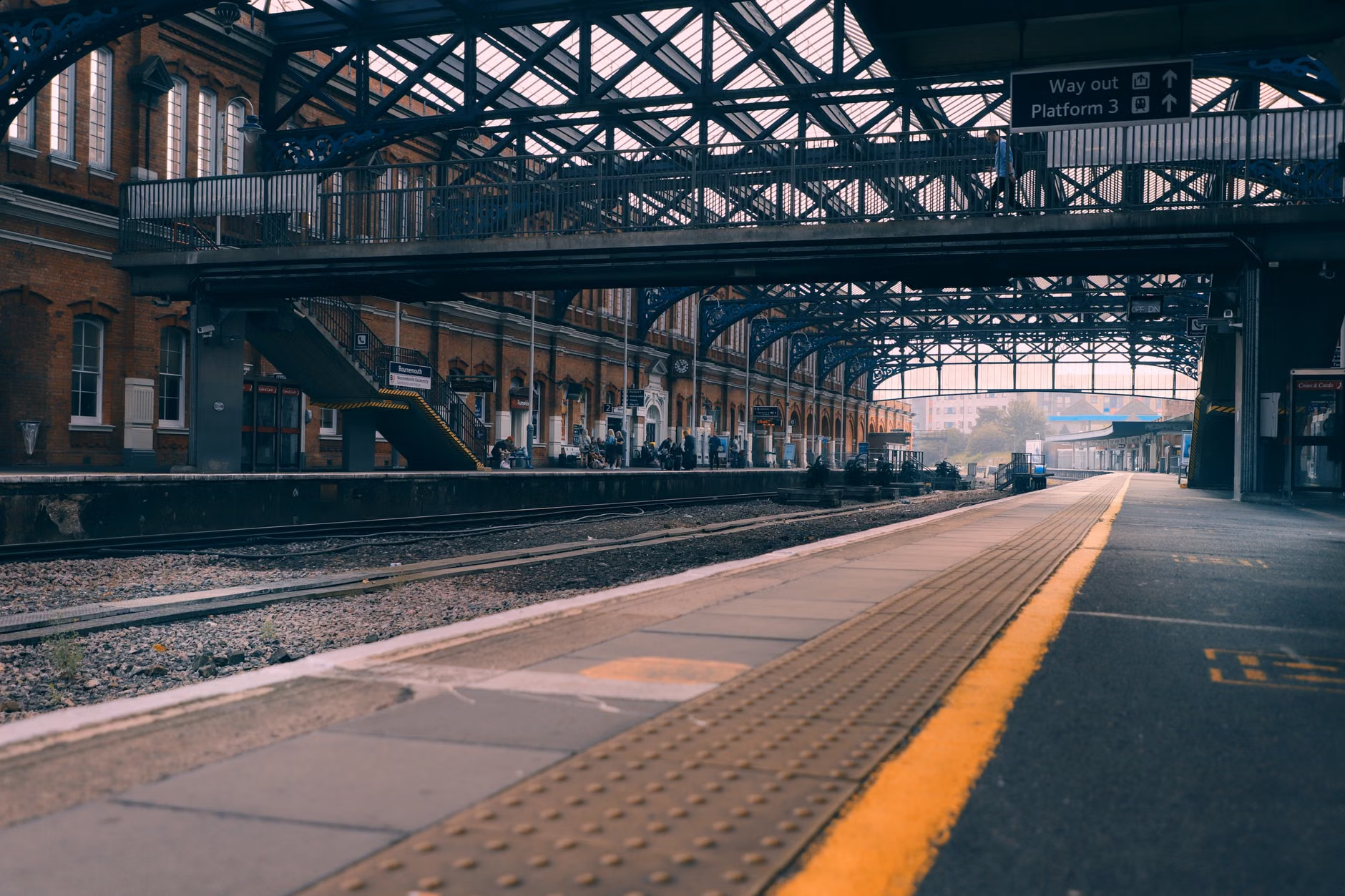
- Map the “Last Mile”: Unlike airports, train stations are often located in the heart of cities. Check if your hotel is within walking distance or a short public transit ride from the station. This eliminates the need for expensive rental cars.
- Book the “Table Seat”: Many long-distance and heritage trains offer seating configurations with tables. Prioritize these. It provides a dedicated space for meals, games, and homework, which is essential for keeping kids occupied.
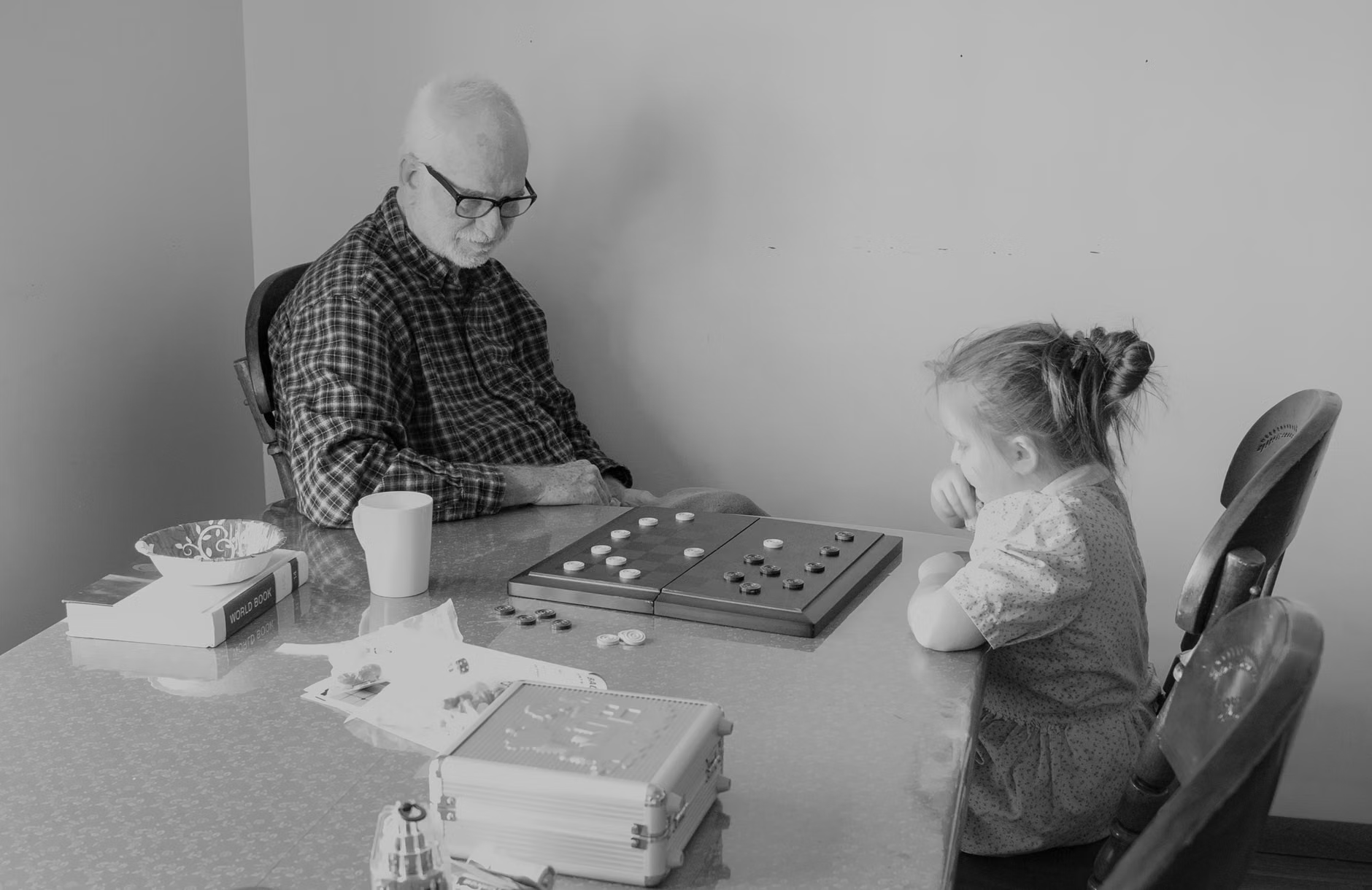
- Pack a “Transition Kit”: Even on a fun train ride, kids get bored. Pack a small kit containing non-digital activities: card games, sketchbooks, and travel-sized board games. Avoid screens where possible to lean into the “slow” aspect of the trip.
- Check for “Through-Ticketing”: If your route involves multiple operators, look for sites that allow for through-ticketing. This ensures that if one train is delayed, you are protected for the connection.
Common Mistakes to Avoid
The most common mistake is over-scheduling. Because rail travel is more relaxed, many parents assume they can squeeze in more sightseeing on the day of arrival. Don’t do this. Treat the arrival day as part of the “slow-transit” experience. Allow yourself buffer time to settle into your accommodation without the pressure of a tour or reservation immediately following your arrival.
Another pitfall is assuming all trains have high-quality dining cars. On some scenic heritage lines, food options might be limited to light snacks or require pre-booking. Always check the operator’s website 48 hours before departure to see if you need to bring your own picnic—which, honestly, is often more fun for the family anyway.
The Unexpected Variable: Weather and Seasonality
A factor often overlooked is how the season changes the rail experience. A route that is breathtaking in the autumn (with changing leaves) might be completely different in the winter (with snow-covered peaks). Check the operator’s “seasonal highlights” page. Many heritage lines run special events, such as “Santa trains” in December or “nature observation” trips in the spring. These seasonal variations can turn a standard trip into a core memory for your children.
Also, keep in mind that heritage lines are often run by volunteer organizations or historical societies. Their schedules may be less frequent than national rail networks. If you are planning a trip around a specific event or festival at your destination, ensure your train ticket is booked well in advance, as these routes often reach capacity during peak seasons.
Taking Action: Your Next Steps
If you are feeling the burnout of modern life, your next vacation should be a deliberate departure from the status quo. Don’t look at a map and ask, “Where can we fly?” Instead, look at a rail map and ask, “Where can the tracks take us?”
Start by researching the major national rail operators in your region (e.g., Amtrak in the US, Eurostar or Deutsche Bahn in Europe, JR in Japan, or Via Rail in Canada). Most of these have a “scenic routes” or “heritage” section on their websites. Pick one that looks interesting, check the duration, and start planning your next family reset around the journey itself, not just the destination.
Remember, the goal is not to arrive quickly. The goal is to arrive together, relaxed, and with a few stories about the journey to share before you even reach your hotel. That is the true power of slow-transit.
Frequently Asked Questions
Q: Is slow-transit rail travel really suitable for toddlers?
A: Yes, often more so than flying. The ability to move around the train, visit the cafe car, and have a dedicated table space makes it significantly easier to manage a toddler’s energy than being restricted to a cramped airline seat.
Q: How far in advance should I book these heritage routes?
A: Heritage lines, specifically those using vintage steam or historic rolling stock, often have limited capacity and can sell out months in advance for peak seasons. It is best to check availability at least 3-4 months before your intended travel date.
Q: What if I have a lot of luggage?
A: Unlike airlines, most trains do not have strict weight limits for luggage. However, you are responsible for carrying your bags on and off the train. Pack smart: use wheeled luggage that you can easily manage on your own, as station porters are becoming a rarity.
Useful Resources:
- The Man in Seat 61 – An essential resource for planning long-distance and scenic rail travel globally.
- Eurail (for European travel)
- Amtrak Scenic Routes (for North American travel)