Key Takeaways for the Modern Traveler:
- Prioritize “off-peak” urban zones: Quiet-tourism thrives by avoiding the “Golden Hour” of major landmarks, shifting your itinerary to early mornings or overlooked residential districts.
- The 70/30 Rule: Dedicate 70% of your trip to low-stimulation activities like neighborhood walks or local library visits, reserving only 30% for high-traffic tourist attractions.
- Digital Minimalism is mandatory: To truly experience a city, you must replace real-time social media posting with offline navigation and focused observation.
The most effective way to experience a metropolitan hub today isn’t by checking off a list of ten major landmarks, but by finding the one quiet corner where you can actually hear yourself think. We are currently seeing a massive shift in how people in their 30s and 40s—those of us juggling professional deadlines, school runs, and the constant hum of digital notifications—approach travel. We are moving away from the “checklist” mentality of tourism and embracing “Quiet-Tourism.”
Quiet-tourism isn’t just about finding a library or a park; it is a deliberate strategy to reclaim your cognitive bandwidth while traveling. When you are already dealing with the mental load of parenting or high-pressure careers, a vacation that requires navigating thousands of other tourists at a major monument often feels like more work than the job you left behind. This trend is about intentionality, silence, and the pursuit of low-stimulation environments within the world’s loudest cities.
Why the “Checklist” Model is Failing Parents and Professionals
For most of us, our 20s were defined by “FOMO” (Fear Of Missing Out). We felt the need to see the Eiffel Tower, the Colosseum, or the Statue of Liberty, regardless of the crowds or the stress. In our 30s and 40s, however, our tolerance for sensory overload has plummeted. We have spent years managing chaotic schedules, and when we finally get a break, we don’t want to spend it standing in a two-hour queue for a photo op.
The “checklist” model of travel is inherently high-stress. It relies on tight schedules, heavy transit usage, and constant exposure to the most crowded environments in a city. For a parent, this is a logistical nightmare. For a professional, it is a failure of rest. Research suggests that “cognitive fatigue”—the feeling of being mentally drained—is significantly exacerbated by high-stimulation environments. When you travel to a major hub, you aren’t just dealing with the travel itself; you are dealing with the “urban cacophony” of constant movement, noise, and visual clutter.
Quiet-tourism matters because it allows for “restorative travel.” It recognizes that travel should be a resource-replenishment activity, not a resource-depletion activity. By choosing to visit the “second-tier” sites of a city—the neighborhood art galleries, the quiet residential parks, or the historical archives—you avoid the psychological tax of fighting for space. This isn’t about being a snob; it’s about being a strategist for your own mental health.
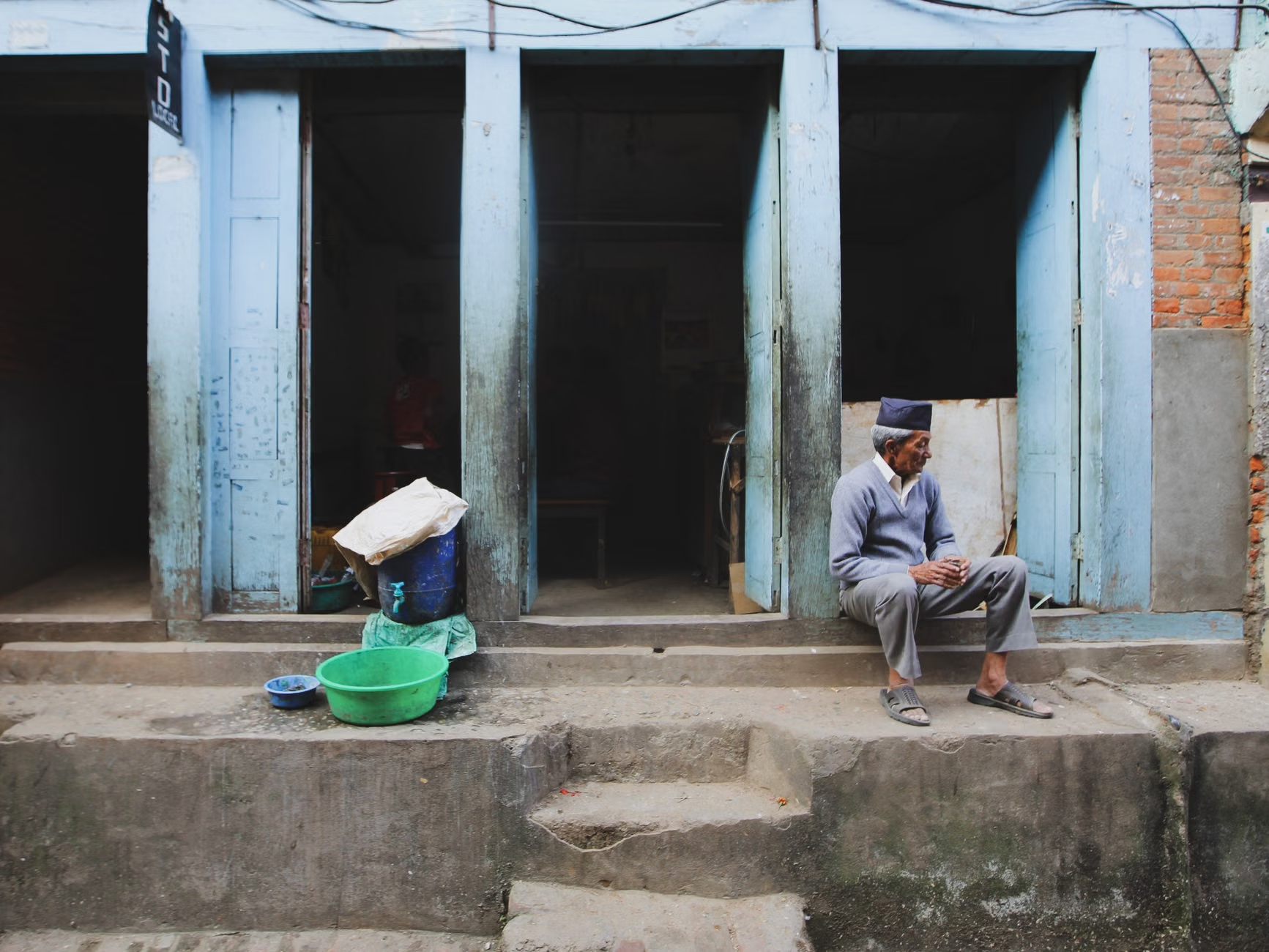
The Mechanics of Quiet-Tourism: Strategies for Your Next Trip
If you want to adopt this approach, you need a different operating system for your travel plans. You cannot simply use the “top 10 things to do” lists provided by major travel aggregators. Those lists are designed to drive volume, not tranquility. You need to curate your own experience.
The first step is geographic displacement. Instead of staying in the city center, which is the epicenter of tourist noise, choose to stay in a “commuter-adjacent” neighborhood. These areas often have better cafes, more authentic local dining, and a sense of rhythm that isn’t dictated by tour buses. If you are visiting London, for example, look at neighborhoods like Hampstead or Dulwich rather than the West End. You will find that the local pace is slower, the coffee is better, and the silence is easier to find.
The second step is temporal shifting. The “Golden Hour” of a tourist attraction is usually mid-day. If you insist on seeing a famous site, go at the exact moment the gates open or one hour before they close. In between those times, the site is a sensory disaster. By shifting your schedule, you reclaim the space. Most famous cathedrals, museums, and historical sites are almost entirely empty for the first thirty minutes of their operating day. That is when you can actually experience the architecture, not just the crowd.
Designing Your Daily “Quiet” Itinerary
To make this practical, let’s look at a comparison between a traditional tourist itinerary and a quiet-tourism itinerary for a weekend in a city like New York or Tokyo.
| Activity Type | Traditional Tourist | Quiet-Tourist |
|---|---|---|
| Morning | Major monument with 2-hour queue | Local garden or quiet library visit |
| Lunch | Tourist-trap cafe near the landmark | Neighborhood bistro away from transit hubs |
| Afternoon | Shopping in high-traffic commercial zones | Museum archive or independent bookstore |
| Evening | Nightlife/Crowded observation deck | Quiet dinner or evening stroll in a park |
The difference here isn’t just about where you are; it’s about the level of stimulation. The traditional tourist is constantly making decisions: “Where do we go next? Is there space? Is it too loud?” The quiet-tourist has eliminated these variables by choosing lower-traffic environments. This allows the brain to transition from “executive function mode”—where you are constantly planning and managing—to “default mode,” which is essential for true mental recovery.
The Hidden Costs of “Hyper-Connectivity” While Traveling
One of the biggest barriers to quiet-tourism is our own technology. We have been trained to treat travel as a performance. We take photos to prove we were there, we check reviews in real-time, and we stay connected to work emails “just in case.” This is the antithesis of quiet-tourism.
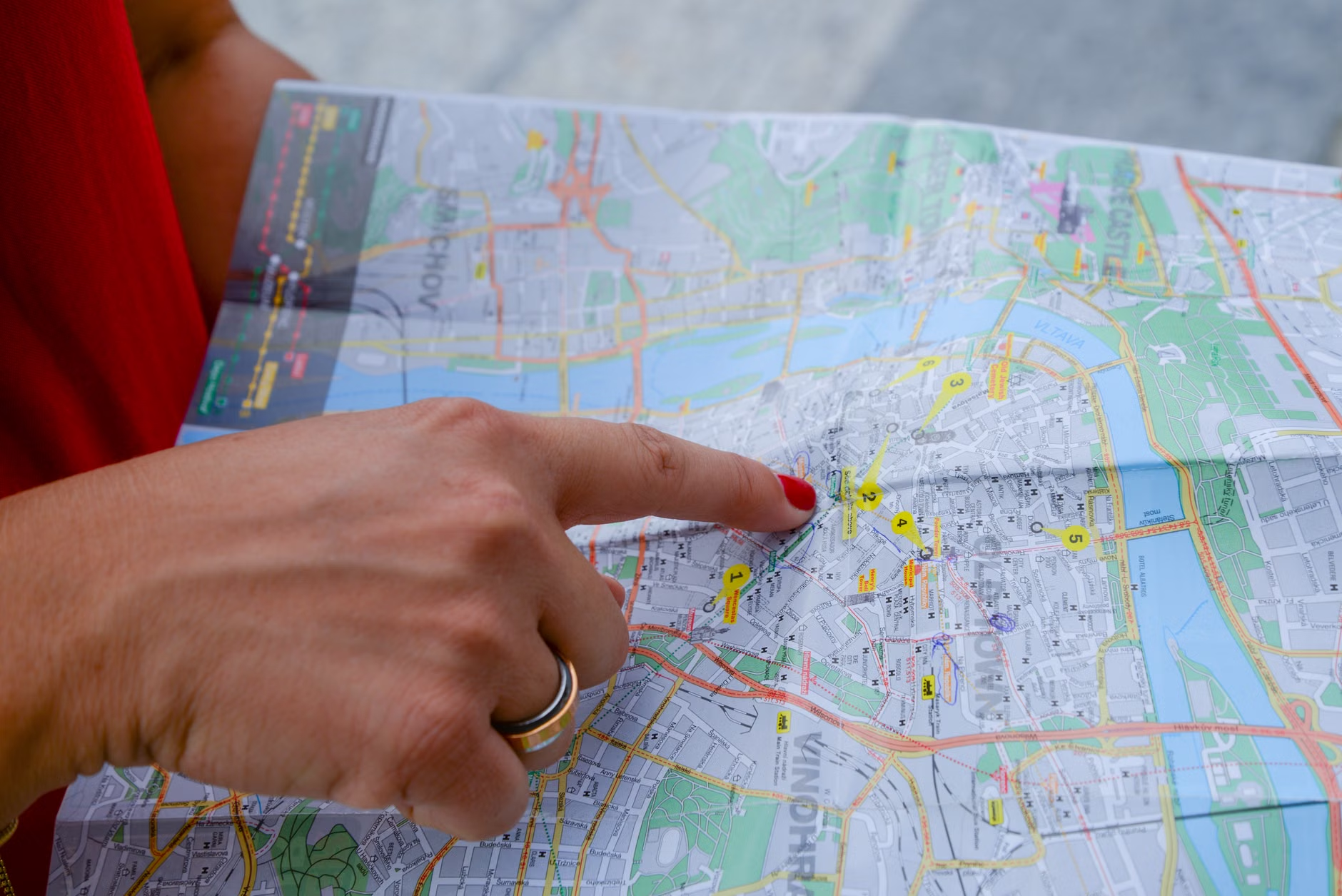
When you are constantly looking at a screen, you are not in the city. You are in your digital life, superimposed on a physical location. To practice quiet-tourism, you must adopt a “Tech-Minimalist” policy. This doesn’t mean leaving your phone at home; it means changing your relationship with it. Use a paper map for navigation whenever possible. It forces you to engage with the physical world, look at street signs, and understand the layout of the city. When you use Google Maps, you are following a blue dot without understanding the geography of where you are.
Furthermore, stop the “real-time update” cycle. If you are in your 30s or 40s, you have likely seen how social media creates a pressure to optimize every moment. By deciding that you will not post about your trip until you are home, you reclaim your agency. You are no longer performing for an audience; you are experiencing the moment for yourself. This simple psychological shift is one of the most effective ways to lower your cortisol levels while traveling.
Practical Steps to Implement Quiet-Tourism
If you are ready to try this, here is your step-by-step guide to planning your next trip with a focus on silence and depth.
1. The “Local Radius” Rule
When you arrive, draw a circle on a map with a 2-kilometer radius around your accommodation. Make a commitment to spend 80% of your time within that circle. This forces you to get to know one area deeply rather than skimming the surface of five different districts. You will find that after the second day, you are no longer a “tourist” in that neighborhood—you are a temporary resident. You start to recognize the shopkeepers, the rhythm of the streets, and the quiet spots that aren’t on any blog.
2. Audit Your “Must-See” List
Take your list of ten things you want to see and cut it to three. Be brutal. Ask yourself: “Do I actually want to see this, or do I feel like I’m supposed to?” If the answer is the latter, cross it off. By reducing the volume of your itinerary, you remove the pressure to rush. If you find yourself in a quiet cafe and you want to stay for three hours, you can. That is the luxury of quiet-tourism.
3. Use “Low-Sensory” Transport
Avoid the busiest metro lines during rush hour if you can. Walking is always the best option for quiet-tourism. It allows you to control your environment. If a street is too loud, turn a corner. You cannot do that on a bus or a train. If you must use public transport, choose the off-peak hours (between 10 AM and 3 PM). You will save money and avoid the collective anxiety of the commuter rush.
The Overlooked Variable: The “Sensory Budget”
There is a concept in psychology called your “sensory budget.” Every human being has a limited amount of sensory information they can process before they start to feel fatigued. In a city like Tokyo, London, or New York, you hit that budget by noon. The flashing lights, the sirens, the constant motion of crowds, and the ambient noise of construction are all consuming your cognitive resources.
Most travelers ignore this budget. They try to power through, leading to “travel burnout”—that feeling on the third day of a trip where you just want to sit in your hotel room and sleep. By practicing quiet-tourism, you are actively managing your sensory budget. You are choosing to spend your “credits” on a quiet museum visit rather than a loud, crowded street festival. You are choosing a park over a mall. This is how you sustain high energy levels throughout your trip.

Common Misconceptions About Slow Travel
There is a common misconception that “quiet” means “boring.” People often assume that if they aren’t hitting the major landmarks, they aren’t “doing” the city. This is entirely incorrect. In fact, you will likely learn more about a city by sitting in a local park for an hour than you will by standing in a line for an hour. You observe the people, the culture, the architecture, and the way the city functions.
Another misconception is that quiet-tourism is only for the wealthy. On the contrary, it is often much cheaper. The most famous tourist sites have high entry fees, high-priced gift shops, and are located in the most expensive parts of the city. By staying in residential neighborhoods and visiting local, free, or low-cost spaces like libraries, public gardens, and neighborhood markets, you significantly reduce your travel costs. Quiet-tourism is not a luxury; it is a smarter way to spend your money.
Finally, there is the fear that you will “miss out.” But what are you missing out on? A crowded photo of a statue? A generic souvenir? When you prioritize silence and depth, you aren’t missing out; you are opting in to a more meaningful experience. You are trading the quantity of your photos for the quality of your memories.
The Psychological Benefits of Silence in Metropolitan Hubs
Why do we need this? Our lives are defined by “always-on” connectivity. When you are a parent, you are constantly “on call.” Even when you are away from your children, your brain is still in a state of hyper-vigilance. This is a survival mechanism, but it is exhausting. When you travel, you need to break this cycle of vigilance.
Silence—or even just the absence of “social noise”—allows the prefrontal cortex to reset. This is the part of the brain responsible for complex decision-making, planning, and emotional regulation. When you are in a quiet environment, your brain doesn’t have to constantly process external stimuli. It can shift into a state of reflection. This is why some of our best ideas come to us when we are walking or sitting in a quiet space. We are giving our brain the room to breathe.
For parents, this is especially important. You are used to managing the needs of others. A trip that is designed around your own needs for silence and stillness is a radical act of self-care. It isn’t selfish; it is necessary. You cannot pour from an empty cup, and a trip that is just as chaotic as your home life will not refill that cup.
Actionable Advice for Your Next Trip
If you are planning a trip to a major city, here is your final checklist for implementing a “Quiet-Tourism” approach:
- Select your accommodation based on quietness, not proximity to landmarks. Check reviews for noise levels. If a hotel is located on a main thoroughfare, assume it will be loud. Look for “boutique” or “residential” options.
- Prioritize “Third Spaces.” Identify libraries, quiet gardens, or niche museums before you leave. These are your “safe zones” where you can retreat when the city gets too loud.
- Adopt a “No-Screen” window. Dedicate at least four hours a day to being completely disconnected from your phone. Use a paper map, a physical book, or simply observe.
- Eat away from the tourist path. If a restaurant has a menu in five languages and a waiter standing outside, keep walking. Find where the locals are eating.
- Embrace the “Empty Morning.” Wake up early. The city is a completely different place at 7 AM. It is quiet, clean, and yours.
The goal is to return from your trip feeling refreshed, not just “done.” If you come back from a vacation and feel like you need another vacation to recover, you have failed to manage your sensory budget. Quiet-tourism is the antidote to this cycle. It is about reclaiming your time, your space, and your peace of mind in the middle of the world’s most exciting places.
Frequently Asked Questions
Is quiet-tourism just another term for “slow travel”?
While similar, quiet-tourism is a specific subset of slow travel that focuses on the management of sensory input. Slow travel is about the pace of movement; quiet-tourism is about the quality of the environment. You can travel slowly but still be in a high-stimulation environment. Quiet-tourism specifically seeks out low-stimulation, restorative spaces.
How do I handle the pressure to visit “must-see” landmarks?
The pressure is internal, not external. Remind yourself that a city’s culture is not contained within its most famous monument. It is found in its streets, its rhythm, and its daily life. If you feel compelled to see a landmark, do it at the extreme ends of the day—either right when it opens or just before closing—to avoid the sensory overload of the crowd.
Can quiet-tourism work with children?
Yes, but it requires a different approach. Instead of rushing to a museum, find a local playground in a quiet neighborhood. Children also suffer from sensory overload. By choosing quieter, more open spaces, you allow them to explore and play without the stress of navigating massive crowds. It makes for a much more manageable and enjoyable trip for the whole family.
Ultimately, the choice to embrace quiet-tourism is a choice to value your own experience over the consensus of the crowd. It is a way to ensure that your travel is a genuine break from the demands of your life, rather than just a change of scenery. Take your time, find the quiet, and enjoy the city on your own terms. You deserve a vacation that actually restores you.
For more information on the benefits of low-stimulation environments, you can look into the research provided by the Psychology Today archives on urban stress, or explore urban planning resources like Project for Public Spaces, which discusses how to create more livable, human-centric city environments.