Buying pre-owned luxury items is no longer just about saving money; it is a strategic shift toward building a curated, high-quality wardrobe that holds value and resists the volatility of fast-fashion trends.
- Focus on “Investment-Grade” items: Prioritize classic leather goods and timeless jewelry, which historically maintain 60-80% of their resale value compared to seasonal apparel.
- Authentication is non-negotiable: Always use platforms that offer professional, third-party authentication services, as the counterfeit market has become increasingly sophisticated.
- Calculate the “Cost-per-Wear”: A $500 pre-owned designer coat worn for five years is a better financial decision than a $150 fast-fashion coat replaced every winter.
If you are in your 30s or 40s, your relationship with shopping has likely changed. You’ve moved past the “buy everything in sight” phase and are now looking for items that last through school runs, board meetings, and weekend trips. The second-hand luxury movement—often called “re-commerce”—has matured from dusty thrift bins into a highly professional, tech-driven market. But navigating this space requires more than just an eye for style; it demands a bit of forensic investigation.
Understanding Why Luxury Resale is Booming
The rise of the circular economy is not just a trend; it is a response to the declining quality of mid-tier retail. When you walk into a department store today, the price-to-quality ratio of entry-level luxury has shifted. By choosing pre-owned, you are often accessing materials—full-grain leathers, natural silks, and heavy-duty hardware—that are becoming rare in current mass-produced collections.
For the busy parent or professional, this shift offers a way to maintain a professional appearance without the constant churn of seasonal shopping. It is about “slow fashion” in practice. When you buy a bag that has already seen five years of life and still looks impeccable, you have proof of its durability. That is data you simply cannot get from a brand-new item on a store shelf.
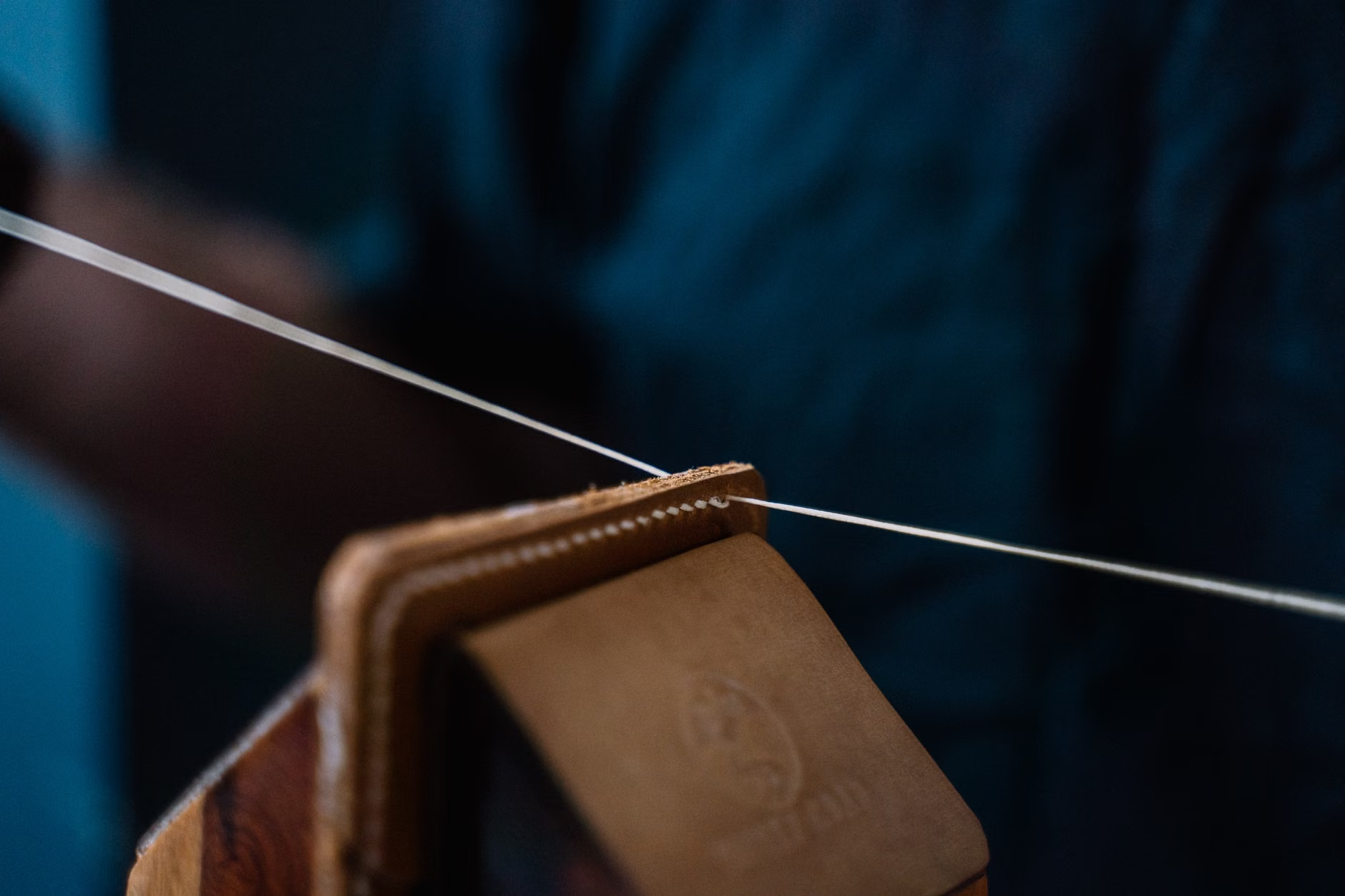
The Hierarchy of Resale Value: What to Buy and What to Avoid
Not all luxury goods are created equal in the resale market. Understanding what holds value is the difference between a smart purchase and a sunk cost. If your goal is to build a wardrobe that functions as a soft asset, you must distinguish between “fashion” and “style.”
Investment-Grade Assets
These items typically retain the highest percentage of their original price. They are the “blue chips” of the fashion world. Think of neutral-colored leather handbags from heritage houses, classic watches, and solid gold jewelry. These items are immune to the whims of seasonal trends because they serve a permanent function in a functional wardrobe.
Depreciating Assets
Trendy items, such as sneakers with loud logos or “it-bags” that dominated social media for one season, tend to lose value rapidly. Once the trend passes, the resale price often plummets because the market is flooded with sellers looking to offload them. If you buy these, do it for the joy of wearing them, not as an investment.
| Category | Resale Retention | Strategy |
|---|---|---|
| Classic Leather Goods | 65-90% | Buy for long-term use |
| Fine Jewelry | 50-70% | Focus on brand heritage |
| Seasonal Apparel | 20-40% | Buy for personal style only |
How to Authenticate Without Being an Expert
The fear of buying a “super-fake” is the number one barrier for most people. However, you do not need to be an expert in leather grain or font types to stay safe. The market has evolved to include gatekeepers who do the heavy lifting for you.
Rule 1: Use platforms with built-in authentication. Sites like The RealReal, Vestiaire Collective, or Rebag have internal teams that inspect items before they reach the buyer. While you pay a premium for this service, it is an insurance policy against losing your entire investment.
Rule 2: Check the “Condition Report” meticulously. Most professional sites provide detailed notes on hardware scratches, leather wear, or interior stains. If a listing lacks these details, treat it with extreme caution. A common mistake is ignoring the “smell” or “interior debris” mentioned in reports—these are often signs of improper storage that can ruin an item over time.
Rule 3: Understand the “Provenance.” If you are buying from a private seller on a peer-to-peer marketplace, ask for the original receipt, dust bag, and box. While these can be forged, they are strong indicators of a seller who cares for their items. If the seller acts defensive when asked for clear photos of the serial number or heat stamp, walk away immediately. There is no deal good enough to justify the risk of a counterfeit.
The Hidden Costs of Pre-Owned Luxury
It is easy to get caught up in the “deal” and forget that a pre-owned item may require some TLC. When you buy something that has lived a previous life, you need to budget for its “maintenance cycle.”
For example, if you buy a vintage leather bag, consider the cost of a professional leather spa treatment. A deep cleaning and conditioning can cost anywhere from $50 to $150, but it can extend the life of a bag by a decade. Similarly, if you are buying pre-owned designer shoes, always factor in the cost of a cobbler. Adding a rubber sole to a pair of luxury heels before you wear them will protect the leather sole from water damage and extend the shoe’s life significantly.
Another hidden factor is the “sizing discrepancy.” Luxury sizing is notoriously inconsistent. A size 8 in one European brand might fit like a 7 in another. When buying second-hand, you rarely have the option of returning an item because it “doesn’t quite fit.” Always measure a piece of clothing you already own that fits perfectly and compare it to the specific measurements provided by the seller, rather than relying on the brand’s size tag.
Building Your Strategy: The 80/20 Rule of Wardrobe Curation
To build a wardrobe that works, apply the 80/20 rule: 80% of your wardrobe should consist of timeless, neutral, high-quality pieces sourced from the second-hand market. These are your workhorses—the trench coat, the black leather tote, the gold hoop earrings. The remaining 20% can be your “fun” items—seasonal trends or high-street pieces that add personality to your look.
This strategy prevents “wardrobe fatigue.” When you own too many trendy items, you feel like you have nothing to wear because nothing matches. When you own high-quality classics, you can mix and match effortlessly. This is the secret of people who always look “put together” without looking like they are trying too hard.

Common Mistakes to Avoid
- Emotional Bidding: In auction-style settings, it is easy to get caught in a bidding war. Set your “walk-away price” before the auction starts and stick to it. If you lose, another piece will come along.
- Ignoring Storage History: Avoid items that have been stored in damp basements or garages. Mold and mildew are almost impossible to remove from luxury textiles and leather and can ruin your other clothes.
- Over-prioritizing “NWT” (New With Tags): While NWT items are tempting, they often carry a price premium that negates the benefit of buying second-hand. A “very good” condition item is often a better value and has already been “broken in” for comfort.
The Future of Your Closet
As you move through your 30s and 40s, your time becomes your most valuable resource. Shopping for second-hand luxury is a way to reclaim that time. Instead of spending hours in a mall looking for quality that is no longer there, you can spend twenty minutes a week browsing curated platforms for pieces that align with your personal style and values.
Remember that this is a marathon, not a sprint. You don’t need to build your entire dream closet in a month. Start with one category—perhaps a high-quality leather tote for work or a durable pair of boots—and learn the market for that specific item. Once you understand the pricing and the condition levels, you will feel much more confident expanding into other areas.
Ultimately, the goal is to own things that serve you, rather than you serving your things. By choosing pre-owned, you are opting for quality over quantity, sustainability over waste, and style over trends. It is a smarter way to live, and it leaves you with more resources to spend on the things that truly matter—your family, your experiences, and your future.
Frequently Asked Questions
1. How do I know if a price is fair for a pre-owned item?
The best way to gauge fair market value is to use the “sold” listings filter on platforms like eBay or look at the pricing history on dedicated luxury resale sites. Ignore the “asking price” (what people hope to get) and focus on the “sold price” (what people are actually paying). If a listing is significantly lower than the average sold price, be highly suspicious of its authenticity.
2. Can I resell items if I change my mind?
Yes, that is one of the biggest advantages of buying high-quality, pre-owned luxury. If you buy a classic item at a fair price and take good care of it, you can often sell it a few years later for close to what you paid. Think of it as a “rental” where you only pay for the depreciation, which is often minimal for well-maintained classic pieces.
3. What should I do if my second-hand item arrives and it’s not as described?
If you used a reputable platform with buyer protection, document everything immediately. Take high-resolution photos of the undisclosed damage or the discrepancy. Contact the platform’s customer support before you use or clean the item. Most reputable sites have clear dispute resolution processes that favor the buyer when an item is “not as described.”
For more information on consumer rights and online shopping safety, you can visit the Federal Trade Commission’s guide to online shopping.