The most effective way to reclaim your weekend mornings while maintaining a vibrant social life is to transition to “zero-proof” beverages—a move that eliminates the physical “hangover tax” without sacrificing the ritual of a celebratory drink.
Key Takeaways:
- The “Hangover Tax”: Even one or two drinks can disrupt REM sleep and cognitive performance, which is a luxury most parents in their 30s and 40s simply cannot afford on a Saturday morning.
- Quality Over Quantity: The modern zero-proof market has evolved from sugary “mocktails” to complex, botanical-based distillates that provide a sensory experience comparable to high-end spirits.
- Social Reframing: Choosing zero-proof isn’t about abstinence; it’s about intentionality. It allows you to participate in social gatherings while remaining fully present for your family the next day.
If you are in your 30s or 40s, you have likely noticed a shift in your relationship with alcohol. Maybe it is the realization that a single glass of wine with dinner now leads to a groggy 6:00 AM wake-up call from a toddler, or perhaps you are just tired of the “brain fog” that follows a social evening. You are not alone. The “zero-proof” movement—the rise of premium, non-alcoholic beverages designed to mimic the complexity of spirits, wines, and beers—is not just a trend; it is a practical response to the demands of modern parenting.
Why the Shift to Zero-Proof is a Strategic Parenting Choice
For parents, time is the ultimate currency. When you are balancing professional responsibilities, household management, and the unpredictable nature of raising children, your “recovery time” is non-existent. Traditional alcohol consumption, even in moderation, creates a physiological deficit. Research suggests that alcohol intake—even at low levels—can significantly reduce the quality of restorative sleep. For a parent who is already dealing with sleep fragmentation due to childcare, adding alcohol to the mix is essentially choosing to operate at a deficit the following day.
Beyond the biological impact, there is the psychological benefit of “the ritual.” Humans are creatures of habit. We often reach for a drink at the end of the day not just for the alcohol, but for the signal it sends: The workday is over. The chores are paused. It is time to exhale. The beauty of the current zero-proof market is that it preserves this ritual. You are still holding a glass, you are still smelling the botanicals, and you are still enjoying a complex flavor profile, but you are removing the negative downstream effects.
Consider the “decision fatigue” that parents face daily. By choosing a zero-proof option, you remove the internal negotiation of “should I have another?” or “will I regret this tomorrow?” You simplify your decision-making process, which frees up mental bandwidth for things that actually matter, like planning the next day’s activities or simply enjoying a quiet conversation with your partner.
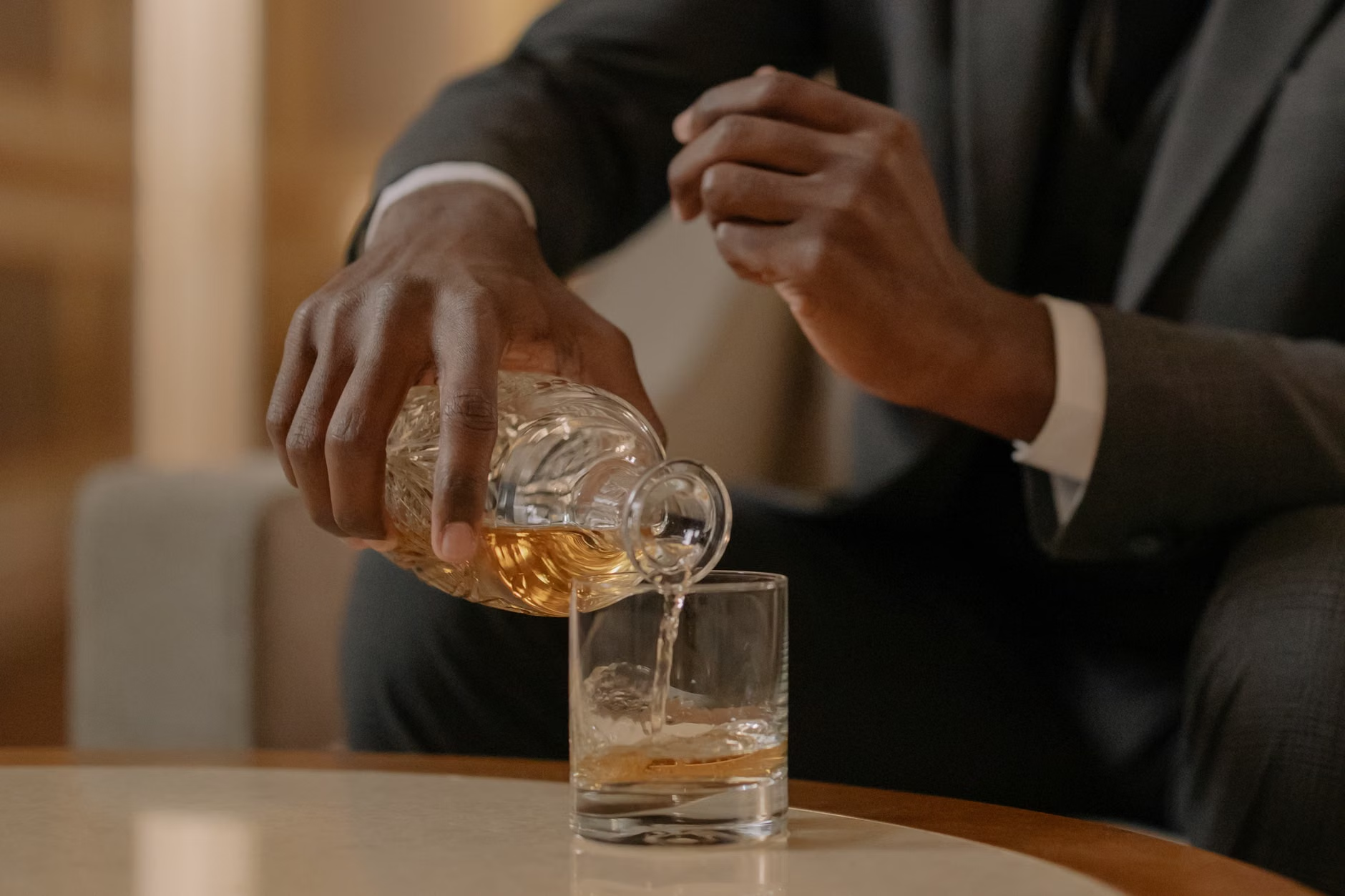
Ten years ago, “non-alcoholic” meant sugary fruit punches or watered-down soda. Today, the landscape is entirely different. We are seeing a surge in “distilled non-alcoholic spirits” that use steam distillation to extract flavors from botanicals, spices, and barks. These are not meant to be drunk straight like a shot of whiskey, but rather used as a base for sophisticated cocktails.
The Three Tiers of Alcohol-Free Beverages
When you are shopping for your home bar, it helps to categorize your options so you know exactly what you are getting. Not all alcohol-free drinks are created equal, and understanding the production method will help you find what you enjoy.
| Category | Best For | Key Characteristic |
|---|---|---|
| Botanical Distillates | Mixing complex cocktails (e.g., “gin” and tonics) | Uses herbs and spices; no sugar, calorie-light. |
| Fermented Alternatives | Replenishing the “beer” or “cider” craving | Retains the body and slight funk of traditional brews. |
| Functional Adaptogens | Evening relaxation or mood enhancement | Often infused with herbs like ashwagandha or L-theanine. |
A common mistake is assuming “non-alcoholic” means “health food.” Always check the nutrition label. Some mass-market “mocktails” are essentially glorified sodas packed with high-fructose corn syrup. If you are looking for a sophisticated adult beverage, look for labels that emphasize “botanical,” “distilled,” or “infused with adaptogens” rather than “sweetened” or “fruit-flavored.”
Integrating Zero-Proof into Your Social Life
One of the biggest hurdles for parents isn’t the drink itself—it is the social pressure. There is a deeply ingrained cultural expectation that social bonding must revolve around alcohol. When you show up to a backyard BBQ or a dinner party with a non-alcoholic option, you might feel like you are drawing attention to your choice. The trick is to treat your drink with the same level of ceremony as everyone else.
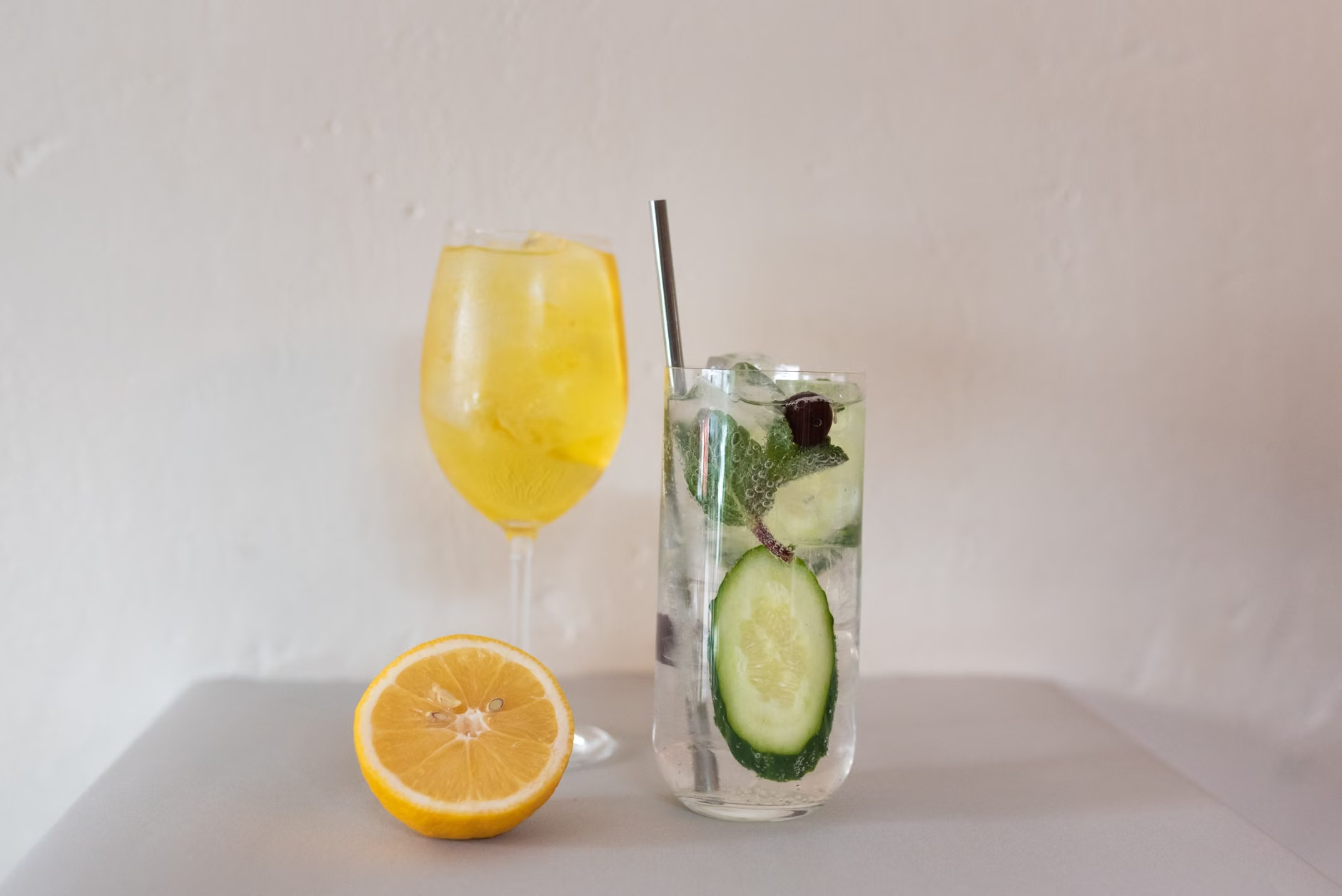
Use proper glassware. When you pour a non-alcoholic botanical spirit over a large clear ice cube with a sprig of fresh rosemary and a slice of grapefruit, it looks exactly like a craft cocktail. Most people will not even ask what you are drinking. If they do, keep your answer brief and positive: “I’m trying out these new botanical spirits; the flavor profile is incredible.” You do not owe anyone a confession about your health goals, your parenting schedule, or your sleep habits.
Practical Tips for the “Zero-Proof” Host
If you are hosting, the easiest way to normalize the trend is to provide options. Do not hide the non-alcoholic drinks in the back of the fridge. Put them in the same ice bucket as the beer and wine. When your guests see high-quality non-alcoholic options sitting alongside traditional spirits, it signals that choosing to abstain is a valid, sophisticated choice, not a social sacrifice.
Decision Rule: If you are hosting a mixed group, aim for a 3:1 ratio of alcoholic to non-alcoholic options, but ensure the non-alcoholic options are premium. A guest who chooses not to drink shouldn’t be relegated to tap water or a generic soda while everyone else enjoys a curated selection.
The Hidden Benefits: Beyond the Morning After
We often talk about the absence of a hangover as the primary benefit, but there are deeper, more subtle advantages that parents in their 30s and 40s will appreciate. First, there is the “emotional regulation” factor. Alcohol is a depressant. For parents who are already navigating the high-stress environment of raising children, adding a substance that impacts mood stability and anxiety levels can be counterproductive. Many parents find that after a few weeks of being zero-proof, their baseline anxiety levels drop, and they feel more patient during the “witching hour” of the late afternoon.
Second, there is the financial aspect. If you are buying premium non-alcoholic spirits, they are often priced similarly to high-end alcohol. However, you are not paying the “tax” of a wasted Sunday morning. If you calculate the cost of a weekend where you feel foggy versus a weekend where you are active, present, and energized, the ROI on a $30 bottle of non-alcoholic spirit is significant.
Common Misconceptions About Zero-Proof Beverages
There is a persistent myth that non-alcoholic drinks are just “juice for adults.” While some entry-level options may lean that way, the top-tier products are specifically crafted for the adult palate. They use bitterness, acidity, and heat (often from ingredients like chili or ginger) to mimic the “burn” or “bite” of alcohol. This is a crucial distinction. The adult palate craves complexity, not just sweetness.
Another misconception is that you have to choose between “drinking” and “not drinking.” The zero-proof movement is actually about “mindful drinking.” You do not have to commit to permanent sobriety to enjoy these benefits. You can be a “zero-proof on weeknights” person or a “zero-proof until the kids are in bed” person. It is about using the right tool for the right moment.
Building Your Home “Zero-Proof” Kit
You don’t need a massive inventory to get started. Start with these three essentials to cover 90% of your needs:
- A Botanical Distillate (The “Gin” Alternative): Use this for anything that requires a crisp, herbal base. It pairs perfectly with tonic, lime, and cucumber.
- A Non-Alcoholic Apertif (The “Bitter” Alternative): This is your go-to for a pre-dinner drink. Mix it with soda water and a slice of orange for a classic, sophisticated vibe.
- A Craft Non-Alcoholic Beer or Cider: Keep a four-pack in the fridge for when you want something casual, like during a weekend project or while grilling in the backyard.
When you start experimenting, treat it like a culinary project. If a drink is too sweet, add a squeeze of fresh lemon or a dash of bitters (note: most bitters contain trace amounts of alcohol, so check the label if you are strictly avoiding it). If it lacks “depth,” add a splash of soda water or a garnish of fresh herbs. The goal is to create a drink that feels like an experience, not a compromise.
The Long-Term View: A Sustainable Lifestyle
As we move into our 30s and 40s, our bodies simply stop processing alcohol the way they did in our 20s. This is a biological reality. The “zero-proof” trend is a sustainable way to adapt to this change. It allows us to continue participating in the social rituals that we enjoy, while prioritizing the physical and mental stamina required for parenting. It is not about deprivation; it is about optimization. It is about realizing that the best part of a Friday night is the conversation and the company, and the best part of Saturday morning is waking up feeling capable, present, and ready to go.
If you have been feeling that the “cost” of your evening drink is starting to outweigh the benefit, try swapping it out for a week. See how your energy levels change. See how your patience changes. Most importantly, see how your mornings change. The shift might be subtle at first, but the cumulative effect over a year of parenting is profound. You are not just changing what is in your glass; you are changing the quality of your life.
Frequently Asked Questions
1. Are zero-proof spirits really “alcohol-free”?
Most premium zero-proof spirits are 0.0% to 0.5% ABV (alcohol by volume). For context, this is similar to the amount of alcohol found in a ripe banana or a glass of orange juice. However, if you are avoiding alcohol for medical or religious reasons, always check the label specifically for the “0.0%” designation.
2. Why are these drinks often as expensive as alcoholic spirits?
The price reflects the complex production process. Extracting delicate flavors from botanicals without using alcohol as a solvent is technically difficult and expensive. You are paying for the R&D and the high-quality, often organic, ingredients used to replicate the complexity of a spirit.
3. Can I make these drinks at home without buying expensive bottles?
Yes, but they will be more “refreshment” than “spirit-mimicry.” You can experiment with making your own simple syrups using fresh herbs (rosemary, basil, mint), citrus peels, and spices. Mixing these with high-quality sparkling water and a touch of fresh fruit juice creates a very pleasant, sophisticated drink that is a far cry from basic soda.
For more information on the evolving landscape of non-alcoholic beverages and the science of mindful drinking, you can explore resources from organizations like The World Health Organization (WHO) on Alcohol consumption or research platforms like The National Institutes of Health (NIH) which provide data on how alcohol affects long-term health and sleep architecture.