Key Takeaways
- Co-regulation is a physiological necessity: Before children can self-regulate, they must experience being “regulated” by a calm adult nervous system during shared activities.
- Play is the primary language of regulation: School-aged children often struggle to verbalize stress; structured, low-pressure play allows them to process emotions without the need for direct confrontation.
- The “Pause-Connect-Redirect” framework: Successfully managing a child’s emotional outburst requires you to first stabilize your own internal state, establish a physical or emotional bridge, and then guide the activity toward a calmer goal.
The most effective way to help your school-aged child handle big emotions isn’t through a lecture or a time-out; it is by borrowing your nervous system to help them calm down through intentional, shared playtime. If you have ever felt your own blood pressure spike when your eight-year-old throws a controller after losing a video game, you have experienced the exact moment where co-regulation is required.
Co-regulation is essentially the process of using your own calm, grounded presence to signal to your child’s brain that they are safe. For children in the 6-to-12 age range, the world is increasingly complex—full of academic pressures, social hierarchies, and the hormonal shifts of early puberty. When they become overwhelmed, they lose access to the “thinking” part of their brain. You cannot teach them to “calm down” with words when their amygdala—the brain’s alarm system—is firing. You have to “be” the calm first.
Understanding the Mechanics of Co-Regulation in School-Aged Children
Think of co-regulation as a rhythmic dance between two nervous systems. Research in developmental psychology suggests that children are biologically wired to seek cues of safety from their caregivers. When a child is dysregulated—screaming, shutting down, or becoming aggressive—their nervous system is stuck in a “fight, flight, or freeze” mode. Telling them to “breathe” or “stop crying” often fails because their prefrontal cortex (the logic center) is effectively offline.
Playtime acts as a bridge. By engaging in a shared activity that requires focus, rhythm, or physical movement, you provide an external structure that the child’s brain can “latch onto” to regain equilibrium. This isn’t about ignoring the behavior; it is about providing the neurobiological support necessary for the child to return to a state of readiness where they can actually hear your guidance.

The “Biological Mirroring” Effect
There is a phenomenon called “limbic resonance,” where our emotional states synchronize with those around us. If you approach a child’s tantrum with frustration, you are essentially adding fuel to their fire. If you approach with a grounded, slow, and predictable demeanor, you are offering a “biological anchor.” For school-aged kids, this doesn’t mean you have to be a zen master; it means you need to be the “thermostat” rather than the “thermometer.” A thermometer merely reflects the temperature of the room (the child’s stress); the thermostat sets the temperature.
Why Play is the Best Tool for Emotional Regulation
Why play? Because play is low-stakes and high-engagement. When a child is struggling, direct eye contact or intense conversation can feel like a confrontation. Play allows for “side-by-side” connection, which is often less intimidating for school-aged children. It bypasses the need for the child to explain exactly why they are upset, which is a massive hurdle for many kids who haven’t yet mastered emotional granularity.
Consider the difference between a conversation and a collaborative game:
| Approach | Mechanism | Outcome |
|---|---|---|
| Direct Questioning | Cognitive demand | Often triggers defensiveness or “I don’t know” |
| Co-Regulation Play | Sensory/Rhythmic engagement | Lowers cortisol, restores connection |
By engaging in play, you aren’t “letting them off the hook” for bad behavior. You are creating the conditions under which they can eventually learn to regulate themselves. Think of it as scaffolding; you provide the support structure until they have the internal strength to build their own emotional house.
Practical Strategies for Implementing Co-Regulation Playtime
Implementing this isn’t about buying new toys; it’s about changing your intent. You can use existing activities to foster regulation. The key is to look for activities that involve rhythm, repetition, or physical coordination.
1. The Rhythmic Connection
Rhythm is incredibly soothing to the human brain. Activities like hand-clapping games, bouncing a ball back and forth, or even just listening to music with a steady beat can help sync your nervous systems. When your child is spiraling, try inviting them into a simple, repetitive movement. “Hey, let’s see if we can keep this balloon in the air for ten hits without it touching the floor.” The focus required for the game forces the brain to shift gears away from the emotional upset.
2. The “Side-by-Side” Strategy
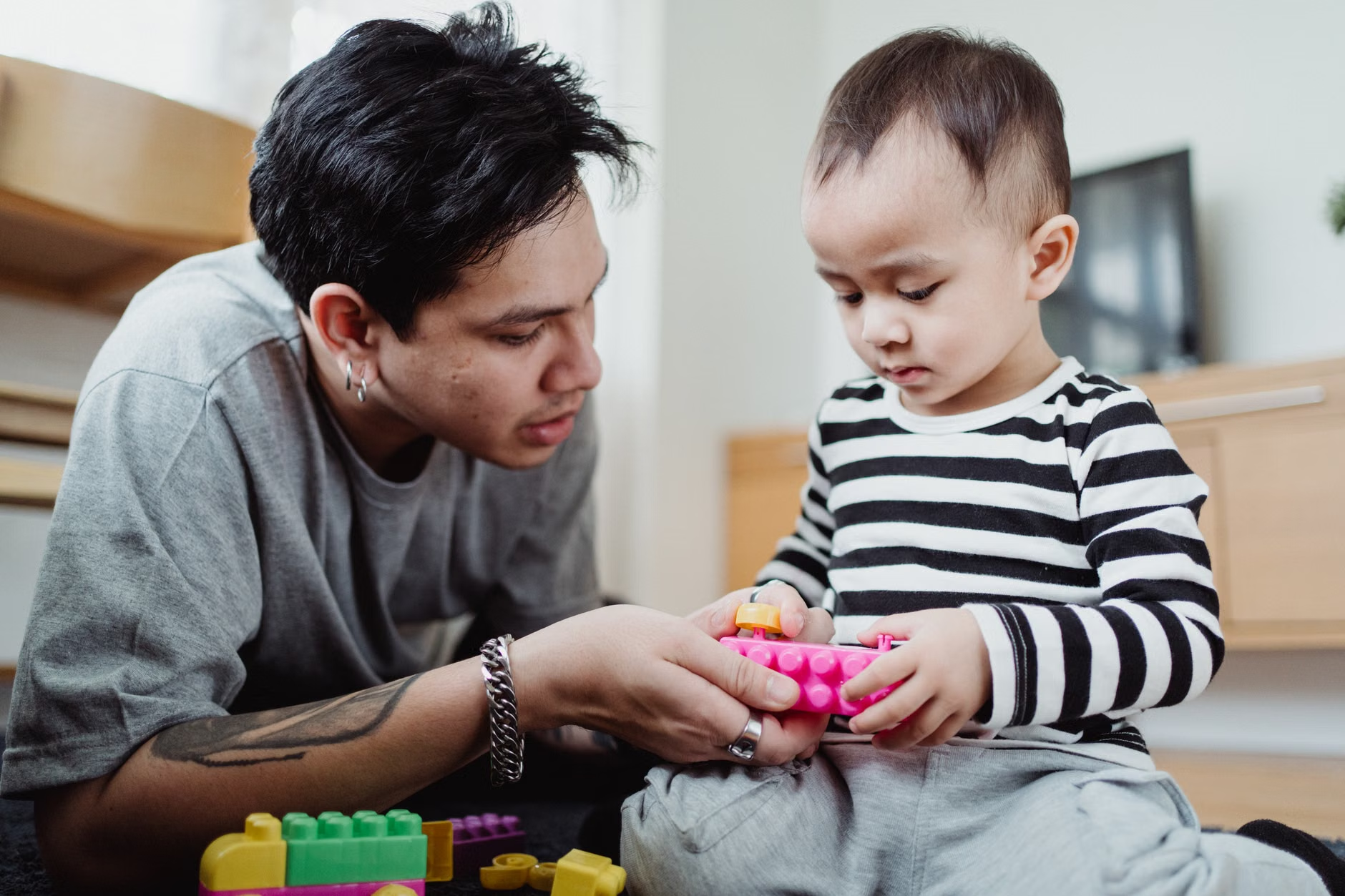
If your child is having a tough day, avoid asking “What’s wrong?” while looking them in the eye. Instead, sit next to them and start doing something tactile. Build a LEGO set, draw on the same piece of paper, or sort a deck of cards. The physical proximity, combined with the lack of direct pressure to perform or explain, often opens the door for the child to begin talking on their own terms. This is the “walk and talk” principle applied to the living room.
3. Proprioceptive Play
Proprioception refers to the body’s sense of its position in space. Heavy work—activities that involve pushing, pulling, or lifting—is deeply regulating for the nervous system. If your child is prone to physical outbursts, they may be seeking sensory input. Try activities like a “pillow fight” with specific rules, a tug-of-war using a soft rope, or even “animal walks” (like bear crawls) across the room. These activities provide intense sensory input that can help a dysregulated child feel more grounded in their own body.
Common Pitfalls and How to Avoid Them
Even with the best intentions, parents often make mistakes that hinder the co-regulation process. The most common error is trying to “fix” the problem too quickly. We are socialized to provide immediate solutions, but when a child is dysregulated, they don’t need a solution; they need safety.
Common Mistake: The “Logical” Trap. You try to explain why their reaction is disproportionate while they are still in the middle of the meltdown. Correction: Save the “life lesson” for when the child is calm. During the heat of the moment, your only goal is to lower the emotional temperature.
Common Mistake: The “Forced” Play. Trying to force a game when the child is clearly not ready. Correction: If they reject your invitation to play, don’t push. Simply sit nearby and engage in your own activity. Your calm presence alone can be a source of regulation even without direct participation.
Common Mistake: Inconsistency. Expecting a one-time “play session” to solve chronic emotional regulation issues. Correction: Co-regulation is a habit, not a cure. It is a long-term investment in your child’s emotional architecture. Consistency matters more than intensity.
Creating a “Calm Down” Environment at Home
You don’t need a dedicated room for this, but having a “low-stimulation zone” can be a game-changer. This is a space where the goal is to reduce sensory input rather than increase it. This area might contain soft pillows, weighted blankets, noise-canceling headphones, or simple fidget tools.

When you notice your child beginning to struggle—perhaps their voice is getting higher, they are fidgeting more, or they are becoming short-tempered—you can gently suggest heading to this area together. “I notice things are feeling a bit overwhelming right now. Let’s go hang out in the quiet corner for a few minutes.” By making it a shared activity (“Let’s go”), you transform a potential punishment into a supportive tool.
The Long-Term Impact on Emotional Intelligence
By practicing co-regulation through play, you are teaching your child something far more valuable than just how to stop crying. You are teaching them that their emotions are manageable and that they have a reliable partner who can help them navigate the stormy seas of their own minds. Over time, the goal is to shift from external regulation (you helping them) to internal self-regulation (them identifying their own needs and strategies).
This transition doesn’t happen overnight. It is a gradual process that spans the entirety of their childhood. In their younger years, they rely on you entirely. As they grow into teenagers, they will begin to internalize your voice and your methods. The patience you show now is the foundation for the emotional resilience they will carry into their adult lives.
Actionable Steps for Your Next “Big Emotion” Moment
If you feel overwhelmed, follow this three-step sequence to regain control of the situation:
- Check your own state: Take a deep breath. If you are feeling angry or panicked, you cannot co-regulate. Take five seconds to ground yourself before you even address the child.
- Lower your physical profile: Get down to their eye level or lower. If they are lying on the floor, sit on the floor. This removes the “power” dynamic and signals that you are there to support, not to loom over them.
- Offer an “invitation to connect” through activity: Instead of asking, “Why are you doing this?”, try saying, “I see you’re having a really hard time. I’m going to sit here and draw/read/sort these blocks. You can join me if you’d like.”
Remember that the goal is not to eliminate negative emotions. It is to ensure that your child knows they don’t have to face those emotions alone. By providing a steady, rhythmic, and playful presence, you are giving them the most powerful gift a parent can offer: the knowledge that they are safe, even when they feel out of control.
Frequently Asked Questions
1. Is it okay to use screens for co-regulation?
While screens can be a quick fix, they are generally not recommended for co-regulation. Screens provide high-intensity, passive input that can actually stimulate the nervous system rather than calming it. If you must use a screen, choose something slow-paced and watch it together, discussing the content to maintain that human connection. The goal is to avoid the “zombie-like” state that often occurs with independent screen time.
2. What if my child refuses to play when they are upset?
That is perfectly normal and expected. When a child is in a state of high distress, they may push you away. Respect that boundary. You can stay in the room, perhaps doing something quiet like folding laundry or reading, which still provides a calm presence without demanding interaction. Often, once the initial wave of the emotion passes, they will naturally move closer to you.
3. Does this work for older children, or is it just for toddlers?
Co-regulation is essential for all ages, though the “play” looks different as children grow. For a 10- or 12-year-old, “play” might involve shooting hoops, taking a walk, playing a video game together, or working on a car or home project. The principle remains the same: side-by-side activity, low pressure, and a shared focus that allows the nervous system to settle.
For further reading on the neuroscience of connection and regulation, visit the ChildTrauma Academy, which offers extensive resources on how the brain responds to stress and the importance of relational health in child development.
Final Thought: You are the most important environmental factor in your child’s life. Be patient with yourself as you learn to be the calm center of their world; it is a skill that improves with every interaction.