The secret to surviving urban parenting isn’t adding more storage; it’s aggressively curating your environment to support mental clarity rather than visual noise.
- Design for “Resetability”: Choose furniture and storage that allow you to return your home to a neutral state in under 10 minutes.
- Prioritize Sensory Regulation: Use low-contrast color palettes and soft textiles to counteract the high-stimulation environment of city life.
- The 80/20 Maintenance Rule: Dedicate 80% of your space to calm, adult-oriented aesthetics, and 20% to “high-rotation” play areas that are easily hidden.
If you live in a city, your home is likely the only place you have complete control over. Yet, for many parents in their 30s and 40s, the home often feels like an extension of the chaos outside—piles of laundry, plastic toys that seem to reproduce overnight, and the constant hum of tech devices. Slow-living interior design isn’t about being a minimalist monk who owns three plates; it’s about creating a “frictionless” environment where you don’t have to fight your house just to find a moment of peace.
Why “Slow Living” is a Strategic Choice, Not Just an Aesthetic
In the context of modern parenting, “slow living” is a functional strategy. When you are juggling career demands, school drop-offs, and social obligations, your home shouldn’t be another source of cognitive load. Research into environmental psychology suggests that visual clutter competes for your attention, essentially fragmenting your focus and increasing cortisol levels—the stress hormone that is already elevated in most busy parents.
Think of your home as your battery charger. If your living room is filled with visual “breadcrumbs” of yesterday’s chores, your brain never fully switches off. Slow living in an urban apartment focuses on two things: reduction of visual stimuli and intentionality of movement. It’s not about buying expensive linen curtains; it’s about ensuring that every item in your home has a “home” of its own. When items don’t have a designated place, they become clutter. When they do, they become part of a system.
The “Frictionless” Kitchen: Managing the Heart of the Home
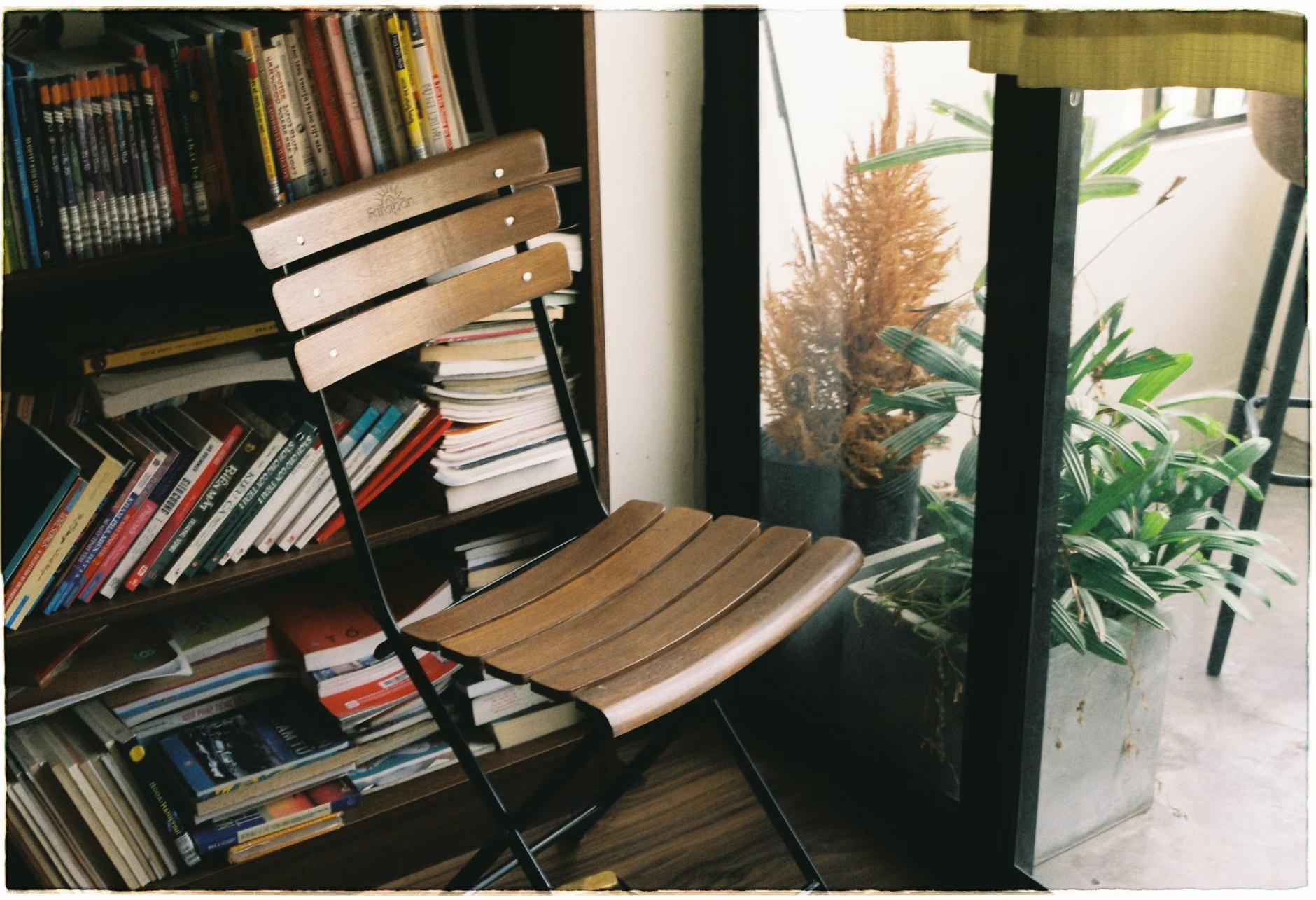
The kitchen is often the first place to succumb to “urban creep.” It’s where mail, school forms, grocery overflow, and coffee mugs congregate. To apply slow-living principles here, you must move away from “countertop living.”
The Strategy: The 10-Second Rule. If you cannot clear your kitchen counters in 10 seconds, you have too much stuff. Start by removing everything that isn’t used daily. That fancy stand mixer? If you use it once a month, it belongs in a cabinet, not on the counter. Urban apartments often suffer from a lack of cabinet space, which forces us to rely on open shelving. If you must use open shelves, use matching containers. The visual consistency of uniform jars significantly lowers the “noise” of a kitchen.
Common Mistake: Buying “organizers” before decluttering. Many parents spend hundreds on drawer dividers and bins, only to realize they are just organizing junk. The rule is: Edit first, contain second. If you haven’t used a specific kitchen gadget in the last 12 months, it is likely cluttering your life, not serving it.
Creating “Zones of Silence” for Parents
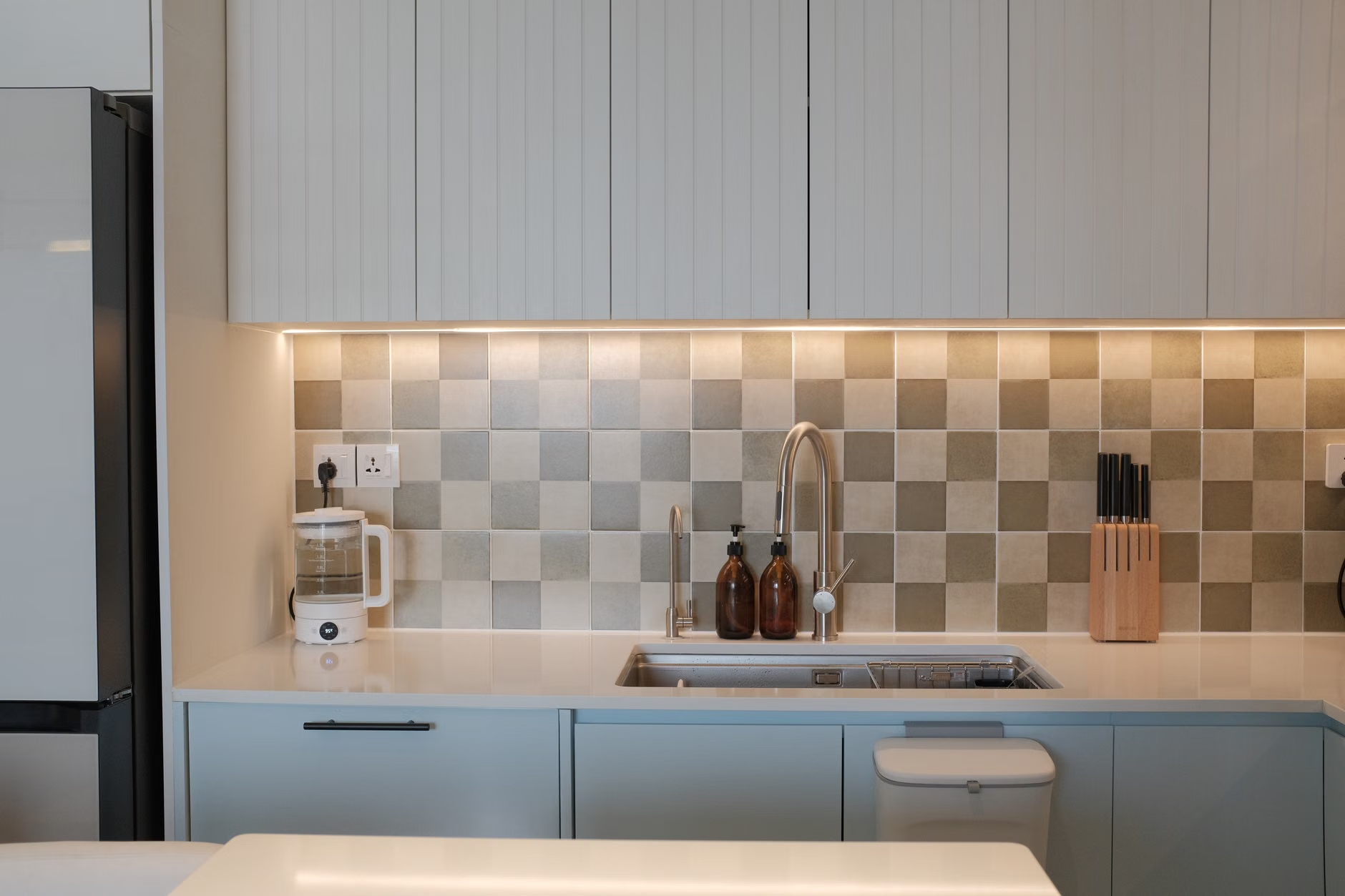
In a small apartment, you cannot always have a dedicated home office or a yoga studio. However, you can create “micro-zones.” A slow-living home prioritizes one chair, one corner, or one window that is strictly for “adult mode.”
This isn’t about being exclusionary; it’s about establishing boundaries. When you are in your “zone,” the kids learn that this is a space for quiet or reading. To achieve this, use lighting rather than physical barriers. A dedicated floor lamp with a warm-toned bulb (2700K is ideal for evening relaxation) can signify to the brain that this space is for resting, not for scrolling through work emails.
The Psychology of Texture
Urban homes are often filled with hard surfaces: glass, metal, concrete, and painted drywall. These materials reflect sound and light, contributing to a “cold” feeling. Slow living injects warmth through texture. Consider adding a high-pile rug or heavy curtains to dampen sound. When your home is quieter, your nervous system feels safer. This is particularly important for parents who spend their days in noisy offices or chaotic school environments.
Managing the “Toy Tsunami”
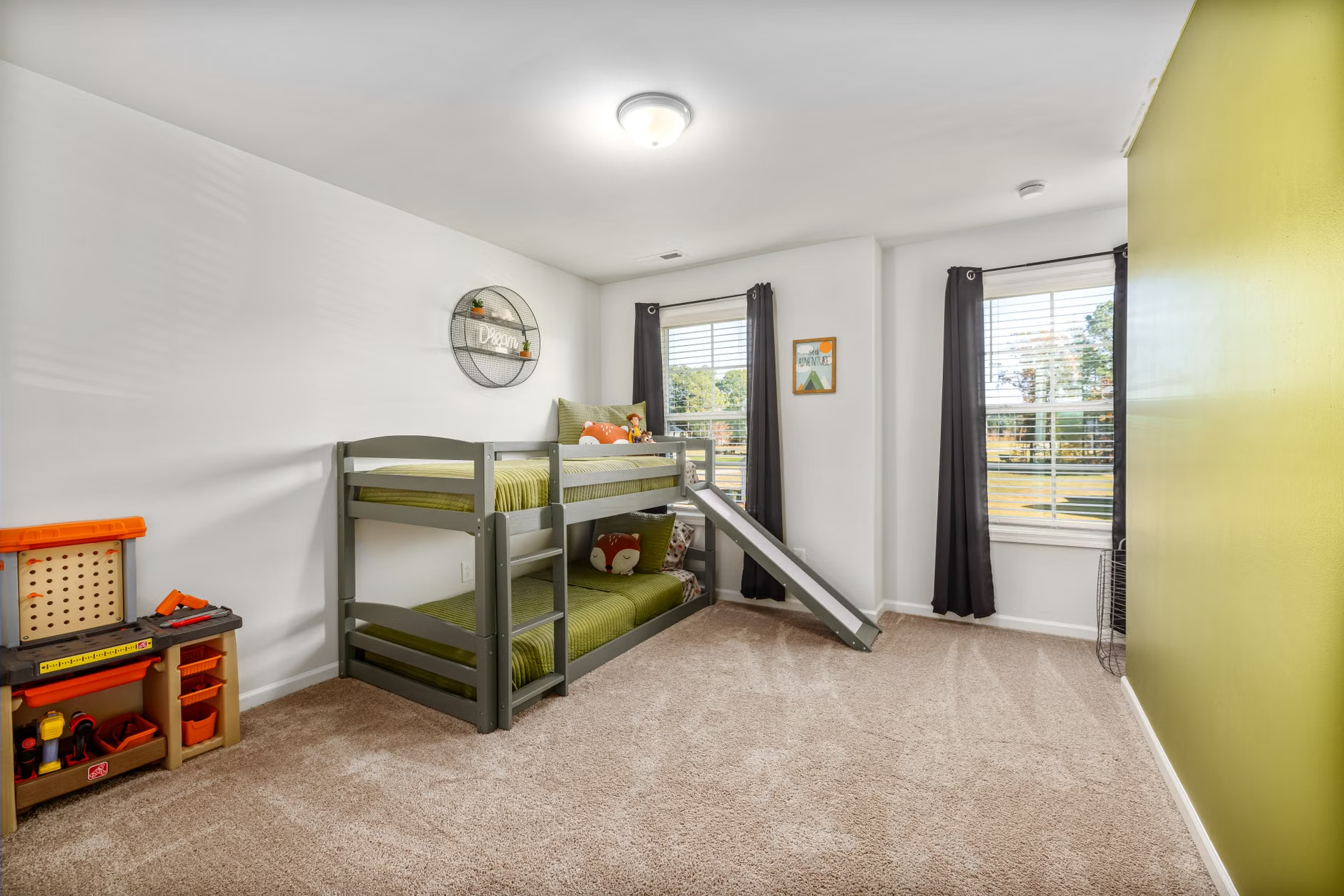
If you have children, you know the struggle: toys are the enemy of a peaceful living room. The solution is not to ban toys, but to implement a rotation system. Keep only 20% of your children’s toys in the common areas. Store the rest in opaque bins in a closet or under a bed. Every two weeks, swap the sets. This does two things: it makes the children more interested in their toys, and it keeps your living room from looking like a daycare center.
Decision Rule for Toy Storage: If a toy is broken, missing pieces, or hasn’t been touched in a month, it needs to leave the house. Do not store items “just in case.” Your square footage in an urban center is too expensive to use as a storage locker for things you don’t use.
The Financial and Practical Trade-offs
Slow living is often criticized as a “luxury” aesthetic, but it is actually a cost-saving measure. It discourages impulse purchasing. When you adopt a “one-in, one-out” policy, you stop buying things just because they are on sale or because you had a bad day. You start asking: “Does this item add value, or does it add to my cleaning time?”
Hidden Costs to Consider:
- High-quality storage: While you shouldn’t buy organizers before decluttering, once you know what you need, investing in durable, timeless storage (like wooden boxes or glass jars) is better than buying cheap plastic that breaks in six months.
- Maintenance of Natural Materials: Wood and stone are staples of the slow-living aesthetic, but they require more maintenance than plastic. Factor in the time it takes to oil a wooden table or clean natural fiber rugs.
| Feature | Traditional Urban Living | Slow-Living Approach |
|---|---|---|
| Surfaces | Cluttered with daily items | Clear, intentional items only |
| Storage | Hidden behind closed doors/overflowing | Visible, aesthetic, and curated |
| Color Palette | Bright, varied, high-contrast | Neutral, tonal, low-contrast |
| Daily Reset | Often ignored until the weekend | Built into a 10-minute nightly ritual |
Implementing the Change: A Week-by-Week Plan
Don’t try to renovate your entire life in a weekend. Start small.
Week 1: The Entryway. This is the first thing you see when you walk in. If it’s a mess, you feel stressed before you’ve even taken your shoes off. Clear the floor. Use wall-mounted hooks to get everything off the ground. If you have bags and coats everywhere, put them in a dedicated closet or basket.
Week 2: The Surfaces. Go through every room and clear the flat surfaces. Dining tables, coffee tables, and desks should be 80% empty. This creates a psychological “breath” in the room.
Week 3: The Lighting. Switch out harsh overhead bulbs for warm-toned lamps. If you have “cool white” lighting, you are effectively keeping your brain in “day mode” all evening. Warm light signals to your body that it is time to slow down.
Week 4: The Digital Declutter. Slow living extends to your digital space. Remove unnecessary apps from your phone. If you have a charging station in the kitchen, move it to a drawer. Seeing your phone charging on the counter acts as a reminder of the emails you haven’t answered.
Common Misconceptions About Slow Living
Many people assume slow living means you can’t have color or personality. This is false. A slow-living home is deeply personal; it just isn’t cluttered. You can have vibrant art or meaningful family photos, but they should be displayed in a way that they can be appreciated, not buried under a pile of mail.
Another misconception is that it is “too much work.” On the contrary, it is less work in the long run. When you have fewer things, you spend less time cleaning, organizing, and looking for lost items. The initial investment of time to purge and organize is high, but the daily “maintenance” cost is significantly lower than in a cluttered home.
When Should You Consult a Professional?
If you find that your home is genuinely impacting your mental health—if you feel overwhelmed to the point of paralysis—don’t just try to “tough it out.” Professional organizers (often certified by organizations like NAPO in the US or similar bodies globally) can help you create a system that works for your specific family dynamics. They aren’t just for the wealthy; they are for anyone who needs an objective pair of eyes to help them let go of the things that are holding them back.
Important Consideration: If you are moving or expecting a new child, this is the best time to implement these changes. It is much easier to set up a “slow” system from scratch than it is to retroactively fit one into a home that is already overflowing.
Final Thoughts: The Power of “Enough”
The most important takeaway for any urban parent is realizing that you don’t need a larger apartment to have a better life; you need a more intentional one. Your home is the stage for your family’s life. If the stage is too cluttered, the actors can’t perform. By choosing to live with less, you aren’t depriving yourself—you are creating space for the things that actually matter: rest, connection, and the quiet moments that make parenting worth it.
Start today by clearing one surface. Just one. Then, notice how it feels to look at that space without the clutter. That feeling is the beginning of your slow-living journey.
Frequently Asked Questions
Q: Can I really have a “slow living” home if I have three kids and a small apartment?
A: Absolutely. In fact, it is even more important. With less space, every item must earn its keep. Use “hidden storage” like ottomans with storage inside or under-bed bins to keep the play area contained, and focus on high-quality, long-lasting toys rather than a high volume of plastic ones.
Q: Does slow living mean I have to get rid of my sentimental items?
A: Not at all. Sentimentality is important. However, try to curate your sentimental items. Instead of keeping every single drawing your child has made, pick the best ones, frame them, or keep them in a dedicated memory box. The goal is to display what you love, not to store everything you’ve ever owned.
Q: How do I get my partner/family on board with this?
A: Don’t force them. Start with your own space—like your desk or your side of the closet. When your family sees how much easier your life is (and how much more time you have), they will naturally become more interested in the system. Lead by example rather than by instruction.
For more information on the environmental and psychological benefits of decluttering, you can visit the American Psychological Association’s guide on environmental stress.