The most effective way to improve your garden’s yield and build a stronger local network this year isn’t by purchasing expensive hybrid seeds from big-box retailers—it is by participating in a hyper-local seed swap.
- Adaptability wins: Seeds saved from plants already growing in your specific micro-climate are genetically predisposed to thrive in your soil, unlike mass-produced commercial seeds.
- The Social ROI: Seed swapping functions as a “low-stakes” community builder, perfect for parents and busy professionals looking to connect with neighbors without the pressure of formal clubs.
- Practical Risk Management: To avoid spreading soil-borne diseases or pests, always source seeds from reputable local growers and practice basic seed cleaning protocols.
If you have spent any time on local community forums or neighborhood apps lately, you have likely noticed a recurring theme: the rise of the hyper-local seed swap. It is not just about saving a few dollars on a packet of heirloom tomatoes. For many of us in our 30s and 40s, juggling the demands of work, parenting, and a desire to live more sustainably, these swaps represent a tangible way to reclaim a bit of control over our environment while building actual, face-to-face connections in a digital-first world.
But why is this happening now, and why should you care? The answer lies in the intersection of climate resilience, the rising cost of living, and a collective hunger for community that isn’t mediated by a screen.
Why Hyper-Local Seeds Outperform Commercial Varieties
When you buy seeds from a large national supplier, those seeds are bred for “general performance.” They are selected to look good in a catalog, travel well in shipping, and grow adequately in a wide range of zones. However, they are rarely optimized for your backyard.
When you participate in a hyper-local seed swap, you are accessing “landrace” or acclimatized seeds. If your neighbor has been successfully growing a specific variety of kale for five years in your town, the seeds from that kale have effectively been “vetted” by your local temperature fluctuations, rainfall patterns, and common pests. By the time you plant them, they are already programmed to thrive in your specific conditions.
This is a form of biological insurance. As weather patterns become more erratic, having a stock of seeds that have proven their hardiness in your specific micro-climate is a significant advantage. This isn’t just theory; it is practical gardening science. If a plant survives a particularly brutal drought in your neighborhood, the seeds you save from it carry the genetic markers for that resilience. Passing those on to a neighbor ensures that your entire community’s garden stock becomes stronger over time.

The Economic and Environmental Reality
Let’s talk numbers. A single packet of heirloom seeds from a boutique supplier can cost anywhere from $4 to $8, plus shipping. If you are planning to fill a few raised beds, your startup costs can easily exceed $100 before you even buy soil or fertilizer. A seed swap essentially reduces your seed cost to zero. While the monetary savings are nice, the environmental impact is the real long-term gain.
Commercial seed production often involves long-distance shipping, plastic packaging, and industrial-scale farming practices that prioritize yield over flavor or nutritional density. By swapping locally, you are eliminating the carbon footprint of the supply chain. You are also preserving genetic diversity. Many commercial varieties have been narrowed down to just a few dozen types. Local swaps often feature “family heirlooms”—varieties that have been passed down for generations and aren’t available in any store.
How to Start or Join a Swap Without the Awkwardness
For those of us in the “busy parent” demographic, the idea of joining a new club can feel like one more item on an endless to-do list. The beauty of the hyper-local seed swap is its inherent flexibility. You don’t need to be an expert gardener to participate. In fact, some of the best swaps are organized by people who are just starting out.
If you are looking to join an existing group, start by searching local Facebook groups, Nextdoor, or your local library’s bulletin board. Many public libraries now host “seed libraries” where you can “check out” seeds and return them at the end of the season. This is an excellent, low-pressure entry point.
If you want to organize a small swap, keep the scope small. Don’t try to host a massive event right away. Invite three or four neighbors or parents from your child’s school. The goal is to create a “seed circle” where you can share not just the seeds, but the stories behind them.
The Protocol of a Successful Swap
If you are going to swap, you must do it correctly to ensure the seeds are viable and healthy. Here is a simple framework for how to prepare your seeds for a swap:
| Step | Action | Why it matters |
|---|---|---|
| Cleaning | Remove all pulp and debris from the seeds. | Prevents mold and rot during storage. |
| Drying | Air-dry seeds for 1-2 weeks in a cool, dark place. | Ensures dormancy and longevity. |
| Labeling | Include variety name, year harvested, and where it was grown. | Provides necessary context for the next gardener. |
| Storage | Use paper envelopes or glassine bags. | Allows seeds to “breathe” and prevents moisture buildup. |
Common Mistake: Never use plastic bags for long-term storage of seeds. Plastic traps moisture, which leads to mold. Always use paper, which acts as a desiccant, keeping the seeds dry and viable for years.
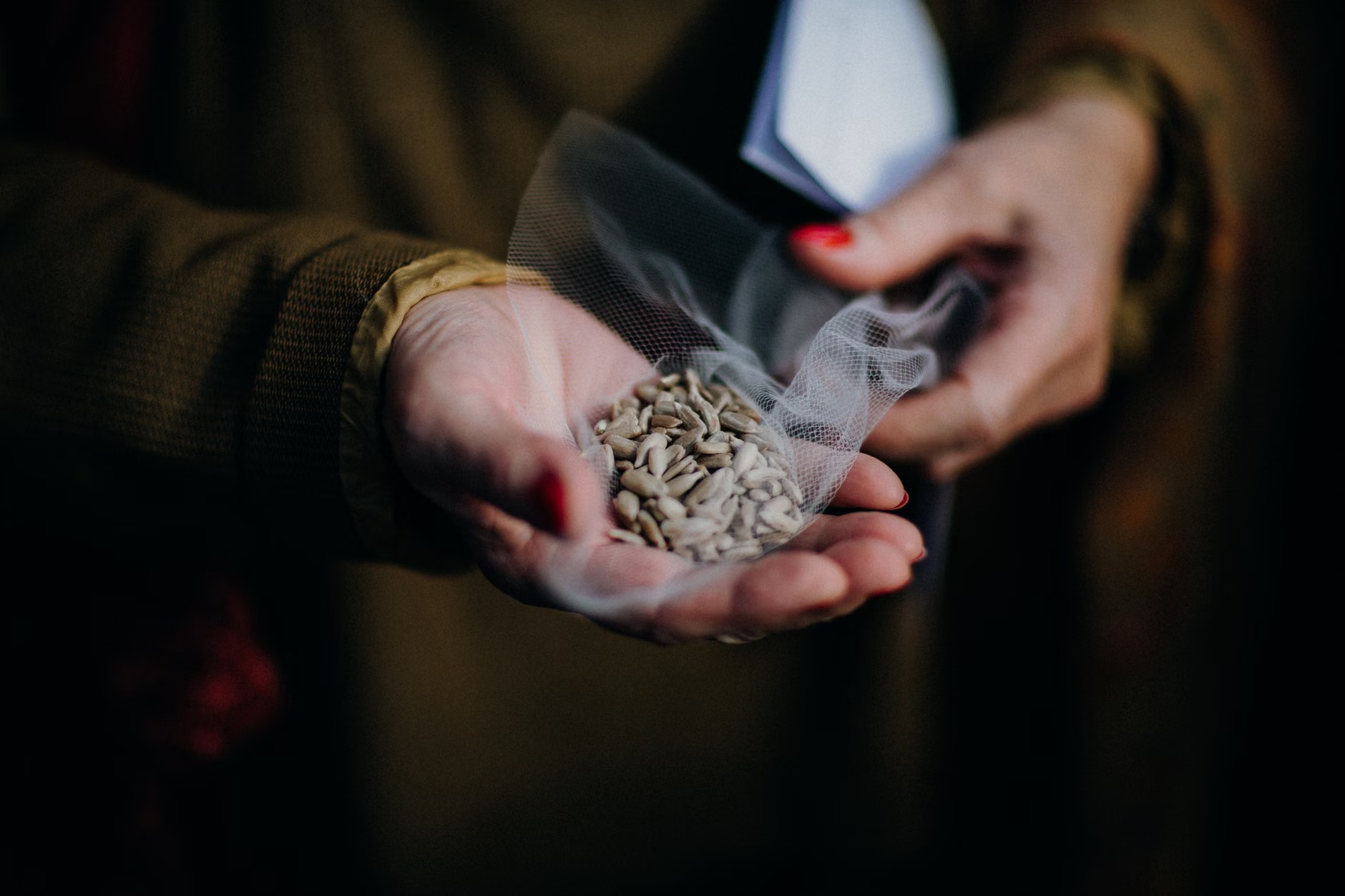
While seed swapping is generally a positive, low-risk activity, there are a few realities you need to manage. The most significant risk is the accidental spread of plant diseases or invasive species. If you are swapping with strangers, you have to be cautious about the provenance of the seeds.
If a plant was diseased when it was harvested, there is a risk that the virus or fungus could be carried on the seed coat. While most diseases don’t transfer this way, some—like certain types of mosaic viruses or bacterial blights—can. To mitigate this, only swap with people who you know are practicing basic, responsible gardening. Ask questions: “Did this plant have any issues with pests or blight last season?” If someone can’t answer that, it’s a red flag.
Another concern is cross-pollination. If you are saving seeds from squash, for example, they are notorious for cross-pollinating with other varieties in the same family. If your neighbor is growing pumpkins and you are growing zucchini, your next year’s crop might end up being a strange, inedible hybrid. This is why you should always label your seeds with the “year” and the “variety,” and ideally, mention if you took steps to prevent cross-pollination (like bagging blossoms).
Building Community Through Gardening
Let’s look at the “social ROI.” In our 30s and 40s, our social circles often shrink to our coworkers and our children’s friends’ parents. It can be hard to find a “third space” that isn’t a bar or a playground. A seed swap provides a structured, interest-based social interaction that feels organic. You aren’t just meeting to “network”; you are meeting to talk about something tangible.
When you swap seeds, you are also likely to swap advice. You’ll find out that your neighbor has the secret to keeping squirrels away from the tomatoes, or that the local soil pH is naturally lower than you thought. This is “tribal knowledge” that you cannot find on a website or in a store. It is the kind of local intelligence that makes a neighborhood feel like a community.
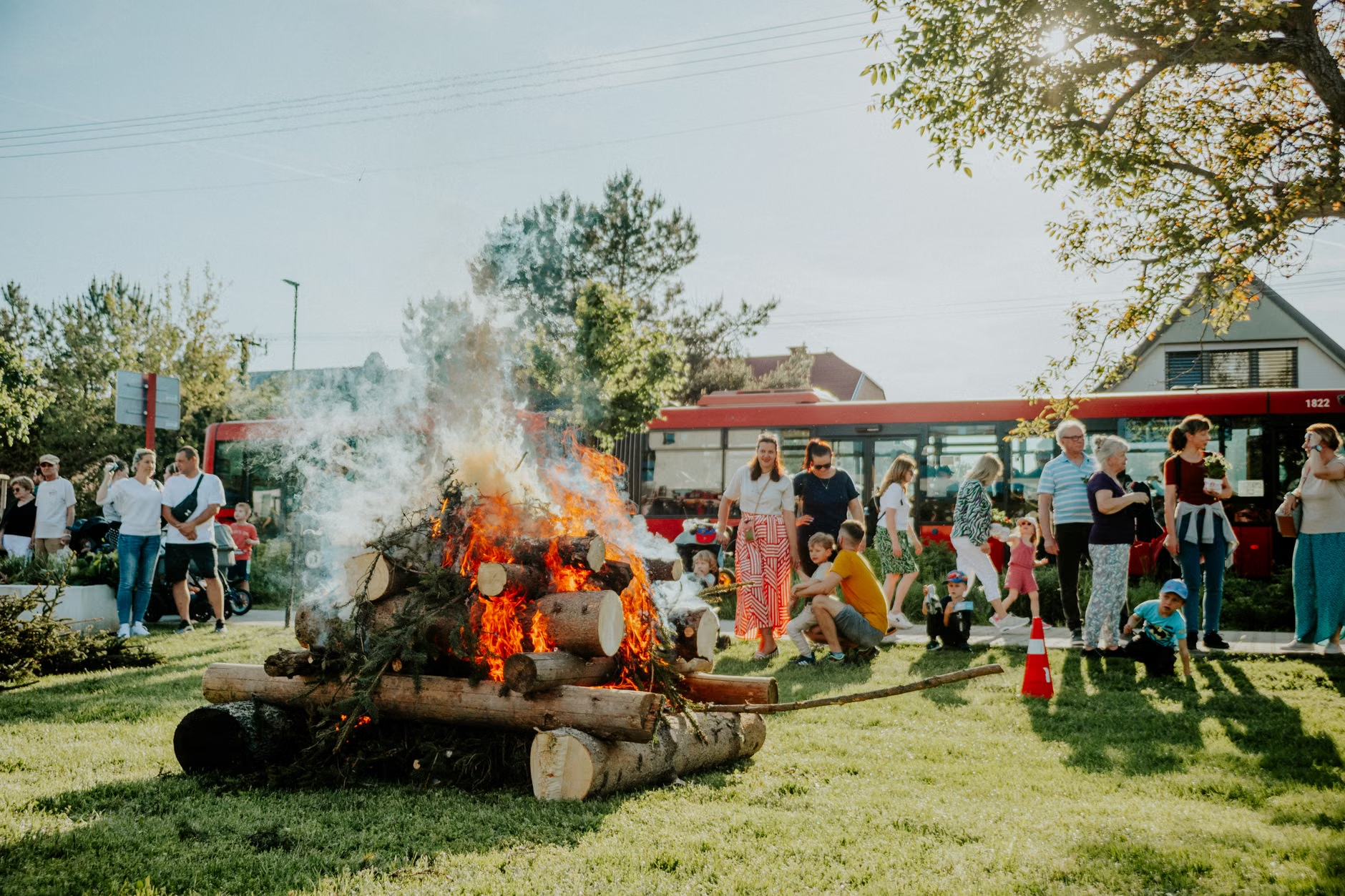
The “Parenting” Angle
If you have children, including them in the seed swap process is one of the best ways to teach them about biology, sustainability, and delayed gratification. Let them help you dry the seeds, put them in the envelopes, and write the labels. When they see the seeds they helped package turning into a plant months later, it creates a powerful connection to the food on their plate.
It also shifts the narrative around food. Instead of seeing food as something that magically appears at the grocery store, they see the cycle—the flower, the seed, the harvest, and the cycle starting over. It’s a lesson in patience and stewardship that is becoming increasingly rare in our “instant delivery” culture.
Practical Next Steps for Your First Swap
If you are ready to dive in, don’t overcomplicate it. Start by identifying what you already have. Did you have a successful harvest last year? If you saved seeds, you are ready. If not, don’t worry—most people are happy to share their surplus. Many gardeners end up with hundreds of seeds from a single packet, far more than they could ever plant.
- Inventory: Take a look at what you have. Be honest about the quality. Only offer what you would be happy to receive yourself.
- Outreach: Post on your local community page or ask around at school drop-off. You will be surprised by how many people are sitting on a stash of seeds they don’t know what to do with.
- The Setup: If you are meeting in person, keep it simple. A park bench or a backyard table is perfect. Bring a few extra envelopes and pens in case someone forgets theirs.
- The Exchange: Don’t feel like you need a 1:1 trade. Some people will have more to give than others, and that is perfectly fine. The goal is the exchange, not the transaction.
One Overlooked Variable: Always keep a small “master log” of what you planted and where. If you swap for a new variety, you want to know exactly how it performed in your garden compared to your usual crops. This data is the difference between a “lucky year” and a “consistent harvest.”
Final Thoughts: Why This Trend Matters
The hyper-local seed swap is more than just a gardening trend; it is a quiet act of rebellion against a system that encourages us to be passive consumers. By taking the time to save, store, and share our seeds, we are preserving genetic diversity, building local resilience, and, most importantly, creating a human connection with the people who live right next door to us.
We are all busy, and it is easy to feel like we are just “getting through” the week. But by carving out these small, intentional moments to engage with our local environment and our neighbors, we do more than just grow better vegetables. We grow a better community. Start small, share what you have, and see what happens when you stop buying and start swapping.
Frequently Asked Questions
1. How do I know if my seeds are still viable?
Most vegetable seeds remain viable for 2 to 5 years if stored correctly in a cool, dry, and dark place. To test them, place 10 seeds between damp paper towels in a warm spot. If more than 7 or 8 germinate within a week, your batch is healthy. If the germination rate is low, you can still plant them, but you should sow them more densely to compensate.
2. Can I swap seeds if I live in an apartment with no garden?
Absolutely. Many people in urban areas swap seeds for container-friendly varieties like herbs, dwarf tomatoes, or microgreens. You don’t need a large plot of land to participate; even a sunny windowsill or a balcony can be a productive space for these “hyper-local” experiments.
3. What if I am a beginner and have no seeds to trade?
Most experienced gardeners are thrilled to share their surplus with beginners. You don’t need to bring seeds to your first swap. You can offer to help with the organization, bring some light refreshments, or simply bring your curiosity. Most groups are eager to welcome new members who show a genuine interest in learning the craft.
For more information on seed saving techniques and maintaining genetic purity in your garden, refer to the Seed Savers Exchange educational resources.