The secret to a stress-free morning with a pre-teen isn’t more yelling or better alarms; it is outsourcing the “boss” role of the morning to an external, visual executive-function system. By shifting the burden of memory and sequencing from your child’s developing brain to a structured environment, you eliminate the need for constant verbal reminders and the resulting power struggles.
Three Keys to Executive-Function Mornings
- Externalize Memory: If it isn’t on a physical checklist or visual board, it doesn’t exist for a pre-teen’s brain.
- Sequence vs. Time: Pre-teens struggle with abstract time; focus on the order of tasks rather than the clock.
- Front-Loading Choices: Reduce the number of decisions (clothes, breakfast) to prevent “decision fatigue” before the school day begins.
If your mornings currently feel like a frantic relay race where you are the only one holding the baton, you aren’t failing—you are just dealing with a biological bottleneck. Between the ages of 9 and 13, the prefrontal cortex—the command center responsible for planning, working memory, and impulse control—is undergoing massive remodeling. It is essentially a construction zone.
Why Pre-teen Brains Struggle with Morning Logistics
When you ask your 11-year-old to “get ready for school,” you are actually issuing a complex, multi-step command that requires at least a dozen executive functions to execute. They need to initiate a task, shift attention from their current interest (like a game or daydreaming), hold a sequence of steps in their working memory, and suppress the impulse to do something more fun.
For an adult, this is automatic. For a pre-teen, it is a high-level cognitive load. When they “forget” to brush their teeth or leave their homework on the counter, it is rarely an act of defiance. It is usually a failure of working memory or task initiation. Understanding this distinction is the first step toward changing your dynamic. You aren’t trying to make them “obey”; you are trying to provide the scaffolding their brain currently lacks.
Step 1: The “Launchpad” Strategy for Physical Objects
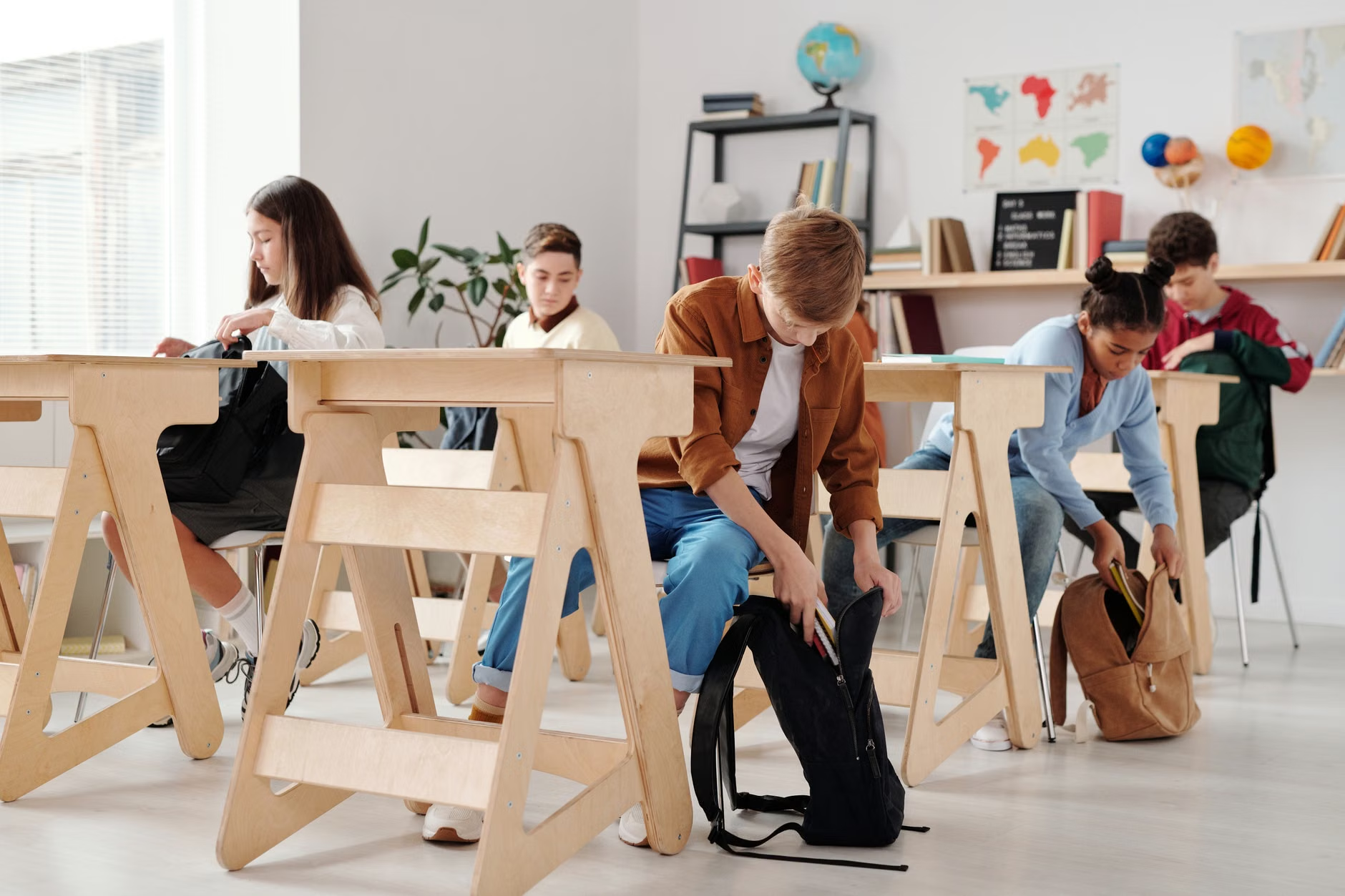
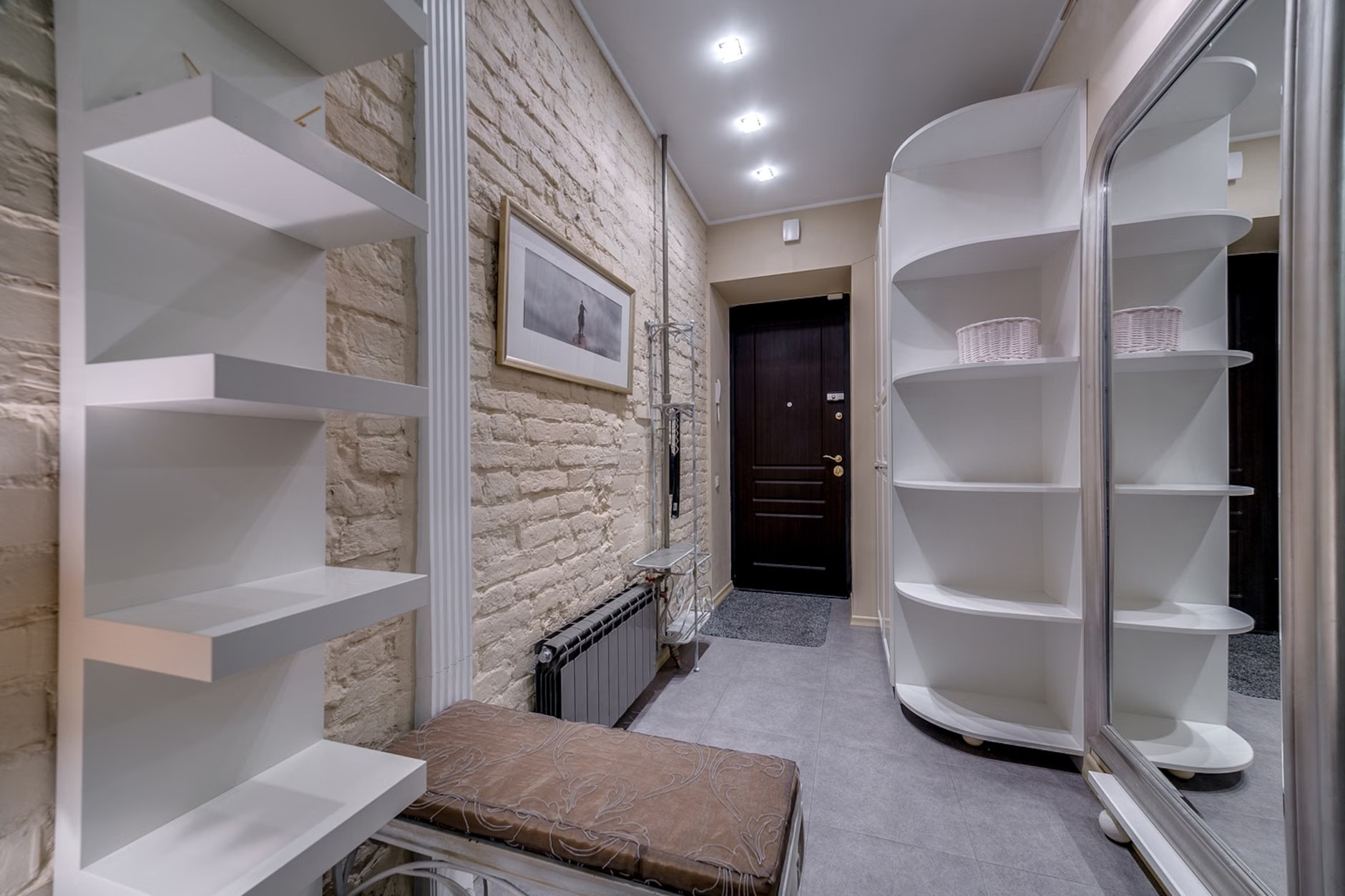
One of the biggest drains on morning executive function is “searching.” Searching for a lost shoe, a misplaced folder, or a charging cable consumes the limited mental energy a pre-teen has available early in the day. The “Launchpad” is a designated, non-negotiable zone where everything needed for the next day must land the night before.
How to implement it:
- The Zone: Choose a specific area near the door. It doesn’t need to be fancy; a dedicated basket or a specific hook is sufficient.
- The Rule: Nothing leaves the house for school unless it has touched the Launchpad by 8:00 PM the night before.
- The Benefit: This turns the morning from a “search and rescue” mission into a “grab and go” exit. If it isn’t in the Launchpad, the consequence is naturally linked to the failure to prepare, which is a powerful teacher.
Step 2: Externalizing the Sequence with Visual Checklists
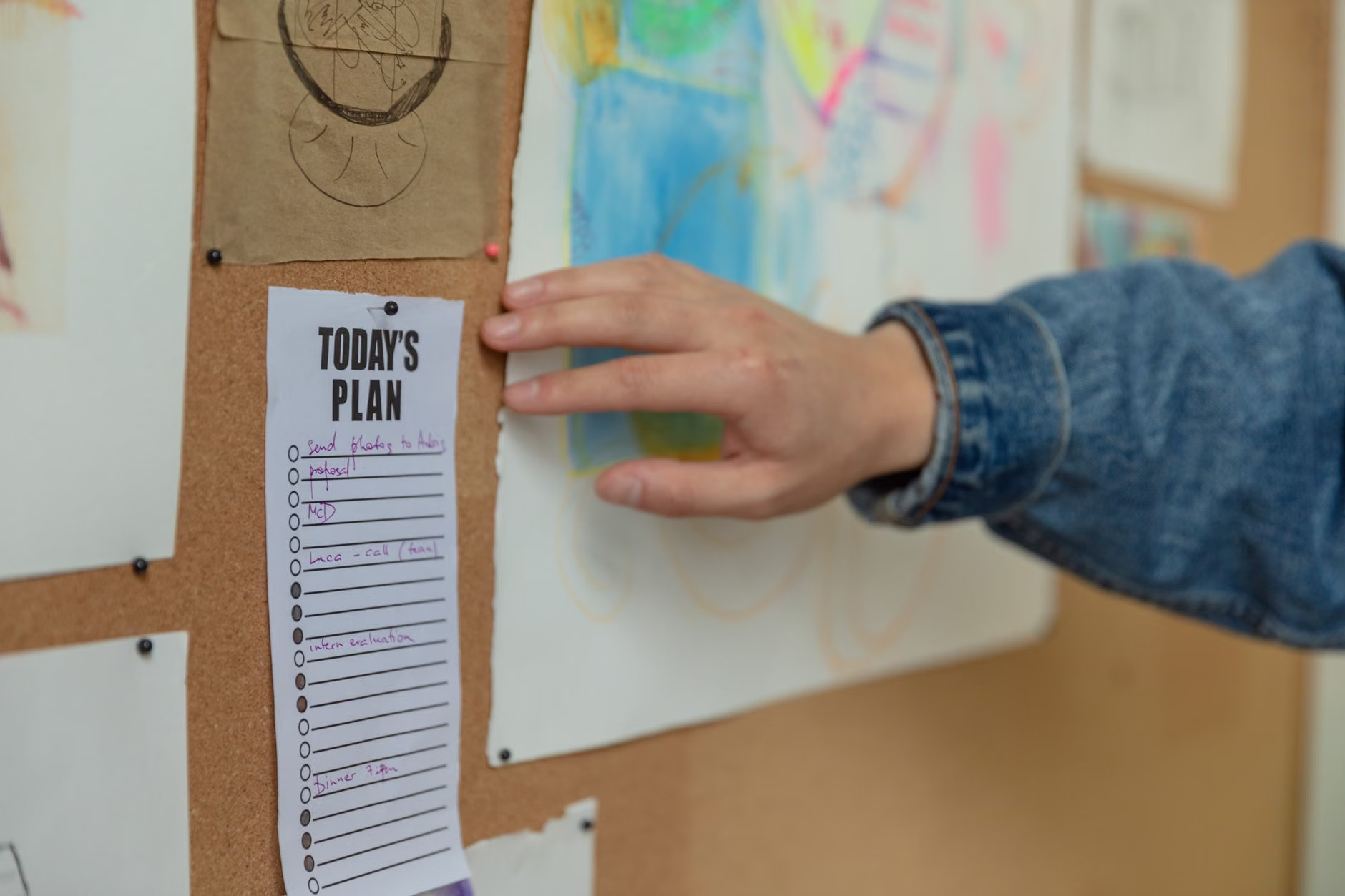
Verbal reminders are the most inefficient way to manage a pre-teen. They are easily ignored, they trigger “nagging” resistance, and they require you to be the manager. A visual checklist moves the authority from you to the list.
Designing the list:
Don’t just write “Get Ready” on a whiteboard. Break it down into the smallest possible units. For a pre-teen, “Get ready” is too vague. Instead, use a checklist that includes:
- Get dressed (including socks).
- Eat breakfast.
- Brush teeth/wash face.
- Check Launchpad (backpack, water bottle, homework).
Place this list at eye level in their bedroom or bathroom. Use a dry-erase marker so they can physically check off each item. The act of making a mark provides a small hit of dopamine, which helps with task initiation.
Step 3: Managing Decision Fatigue Through Systems
Executive function is a limited resource. Every decision we make—from what to wear to what to eat—depletes that resource. If your pre-teen starts their day by deciding what to wear, they are already using up their “brain battery” before they reach the bus stop.
The “If-Then” Framework:
Use “If-Then” planning to automate choices. “If it is Monday, then I wear the blue hoodie.” “If it is breakfast time, then I eat oatmeal or toast.” By limiting options to two or three pre-approved choices, you remove the choice-making process entirely. This isn’t about being rigid; it’s about preserving their cognitive energy for the school day ahead.
Step 4: The “Transition” Buffer
Pre-teens often struggle with the transition from the comfort of home to the demands of school. If you rush them, their anxiety spikes, and their executive function shuts down. This leads to “clamping”—where they freeze and become unable to do anything at all.
The 10-Minute Buffer:
Calculate exactly how much time they need to get ready, then add a 10-minute buffer. This isn’t “extra time to play”; it is a buffer for the inevitable mishaps (a spilled drink, a missing homework sheet, a slow morning). If they finish early, they get the 10 minutes as a reward to do whatever they want. This creates an incentive for efficiency rather than a penalty for being slow.
Step 5: The Parent’s Role: From Manager to Observer
The most difficult part of this system for parents is the “hands-off” requirement. If you are constantly hovering, checking, and reminding, you are doing the executive functioning for them. You need to transition from the “manager” to the “observer.”
The “Check-In” Method:
Instead of saying, “Did you pack your lunch? Do you have your shoes? Where is your homework?”, try asking one question: “What does your checklist say is next?”
If they forget something, allow the natural consequence to happen. If they forget their lunch, they have to deal with the school’s lunch policy. If they forget their homework, they have to face the teacher. These small, low-stakes failures are the most effective way for a pre-teen to learn the importance of their own systems. If you rescue them every time, you are teaching them that their system doesn’t actually matter because you will always fix it.
Addressing Common Misconceptions
Many parents fear that using systems will make their children dependent on checklists. Research into neurodevelopment suggests the opposite: external systems are the training wheels for internal executive function. By using these tools now, they are internalizing the process of breaking down tasks, sequencing actions, and managing time. They won’t use a whiteboard checklist forever, but they will eventually develop the mental habit of thinking in systems.
| Strategy | Old Way (Ineffective) | New Way (Executive Function) |
|---|---|---|
| Task Management | Verbal nagging/reminders | Visual, physical checklist |
| Decision Making | Choosing in the moment | Pre-planned “If-Then” choices |
| Preparation | Morning scramble | Night-before “Launchpad” system |
| Accountability | Parent checks everything | Child checks their own list |
The table above highlights the shift from reactive parenting to proactive systems. The goal is to move the “control” from the parent’s voice to the child’s environment. This reduces the emotional temperature of the household and builds genuine autonomy.
Practical Troubleshooting: What if it fails?
If you implement these steps and the mornings are still chaotic, do not abandon the system. Instead, conduct a “post-mortem” at a calm time—not in the morning. Sit down with your child and ask: “What part of the morning felt the hardest today?”
Often, you will find that the bottleneck is a specific task, like finding a clean uniform or making a lunch. Tackle that one specific bottleneck. Is it a lack of clean clothes? Then establish a Sunday night laundry ritual. Is it a lunch issue? Then simplify the menu to one consistent option. You are iterating on a system, not critiquing your child.
The Long-Term Impact on Development
By the time your child reaches high school, the goal is for them to be able to manage their own routines without your intervention. This is not just about getting to school on time; it is about developing the capacity to manage a project, a work schedule, or a household later in life. The skills they learn from a simple morning checklist—prioritization, sequencing, and self-monitoring—are the exact same skills required for adult success.
Final Recommendation: Start by introducing just one of these systems at a time. Start with the “Launchpad” this week. Once that is established, move to the visual checklist. Trying to overhaul everything at once will lead to resistance. Consistency, not intensity, is the key to building these neural pathways.
Frequently Asked Questions
- What if my pre-teen refuses to use the checklist?
Resistance often comes from feeling like the checklist is a form of control. Frame it as a “freedom tool”—if they follow the list, they finish faster and gain more free time. Give them input on how the list is designed to increase their buy-in. - How do I handle the “morning moodiness” that makes them unable to follow the list?
If their executive function is low due to poor sleep or low blood sugar, the list might be too much. Ensure they have a high-protein, low-sugar breakfast, and prioritize sleep hygiene. If the moodiness persists, the list acts as a “low-effort” guide that requires less cognitive power than verbal processing. - At what age should I stop using these systems?
There is no magic age. Continue as long as it is helpful. As they get older, they will likely start to customize the system or move it to a digital app. The goal is the process of self-management, not the specific tool.
For further reading on the development of executive functions, the Center on the Developing Child at Harvard University provides excellent resources on how these skills are built during adolescence. You can find their comprehensive guide at https://developingchild.harvard.edu/resources/what-is-executive-function-and-how-does-it-relate-to-learning/.
Remember, the goal is progress, not perfection. There will be mornings where the system breaks down. That is fine. Treat it as data, adjust the system, and try again the next day. Your patience in building these systems is the greatest gift you can give your child’s developing brain.