- Prioritize fabric over quantity: In hot climates, moisture-wicking, breathable fabrics like linen and technical blends are non-negotiable for both children and seniors to prevent heat-related fatigue.
- The “Three-Zone” packing rule: Organize gear into personal, shared, and medical zones to ensure that critical cooling items (like cooling towels or medications) are accessible within seconds, not buried in main luggage.
- Redundancy is your best friend: When traveling with vulnerable age groups, always pack double the amount of hydration-related items and sun protection than you think you need; the cost of buying these in a tourist trap is significantly higher than the weight penalty.
Packing for a single person is a chore. Packing for a family is a logistical operation. Packing for three generations—toddlers with endless energy, parents with a to-do list a mile long, and grandparents who need comfort and stability—in a hot climate is essentially a military-grade supply chain challenge. If you are reading this, you are likely the designated “travel architect” for your family, and you know that the difference between a relaxing holiday and a sweaty, irritable disaster often comes down to what you put in your suitcase.
The heat acts as a multiplier for every stressor. A slightly uncomfortable shoe becomes a blister; a forgotten water bottle becomes a dehydration risk; a lack of shade becomes a heatstroke concern. When you are managing the needs of children and older adults simultaneously, you aren’t just packing clothes—you are packing a portable climate-control system. Let’s break down how to optimize your luggage so you can focus on the trip, not the inventory.
The Physics of Heat-Regulated Packing
To pack effectively for a hot climate, you must first accept that your primary goal is thermoregulation. Humans in their 30s and 40s often tolerate heat better than children (whose internal cooling systems are still developing) and seniors (whose ability to regulate body temperature naturally declines). This means you cannot pack for yourself and assume everyone else will be fine.
The “Cooling Layer” Principle: Instead of heavy cotton, which traps sweat and takes forever to dry, shift your entire family to synthetic, moisture-wicking fabrics or high-quality natural fibers like linen or bamboo. Cotton is the enemy of the humid traveler; once it gets damp, it stays damp, acting like a warm, wet blanket against the skin.
When selecting items for kids, look for “UPF” (Ultraviolet Protection Factor) ratings. Unlike standard clothing, UPF-rated gear provides a consistent, physical barrier against UV rays, which is far more reliable than reapplying sunscreen every 45 minutes on a squirming toddler. For grandparents, the priority is breathability and ease of movement. Avoid zippers or complex buttons that become difficult to manage if their hands are swollen from heat-induced edema—a common, often overlooked issue during travel.
The Essential Packing Inventory Table
Use this table as a baseline check for your next trip. Note that these are not just suggestions; they are strategic requirements based on the physiological needs of your group.
| Category | Item | Why it’s essential |
|---|---|---|
| Cooling | Cooling Towels (PVA material) | Provides instant relief for seniors and kids when ambient temp exceeds 30°C. |
| Hydration | Collapsible silicone bottles | Space-saving, encourages constant intake, and easier to carry than heavy metal flasks. |
| Protection | Wide-brimmed hats with chin straps | Prevents heat-induced migraines and protects the scalp; straps keep them from blowing away. |
| First Aid | Electrolyte powder packets | Essential for preventing heat exhaustion; water alone is often insufficient for active kids or seniors. |
Managing the “Three-Zone” Luggage System
Most travelers pack by person—all of Mom’s stuff in one bag, all of Grandma’s in another. In a hot, high-stress environment, this is inefficient. You need to switch to a Zone-Based Packing Strategy.
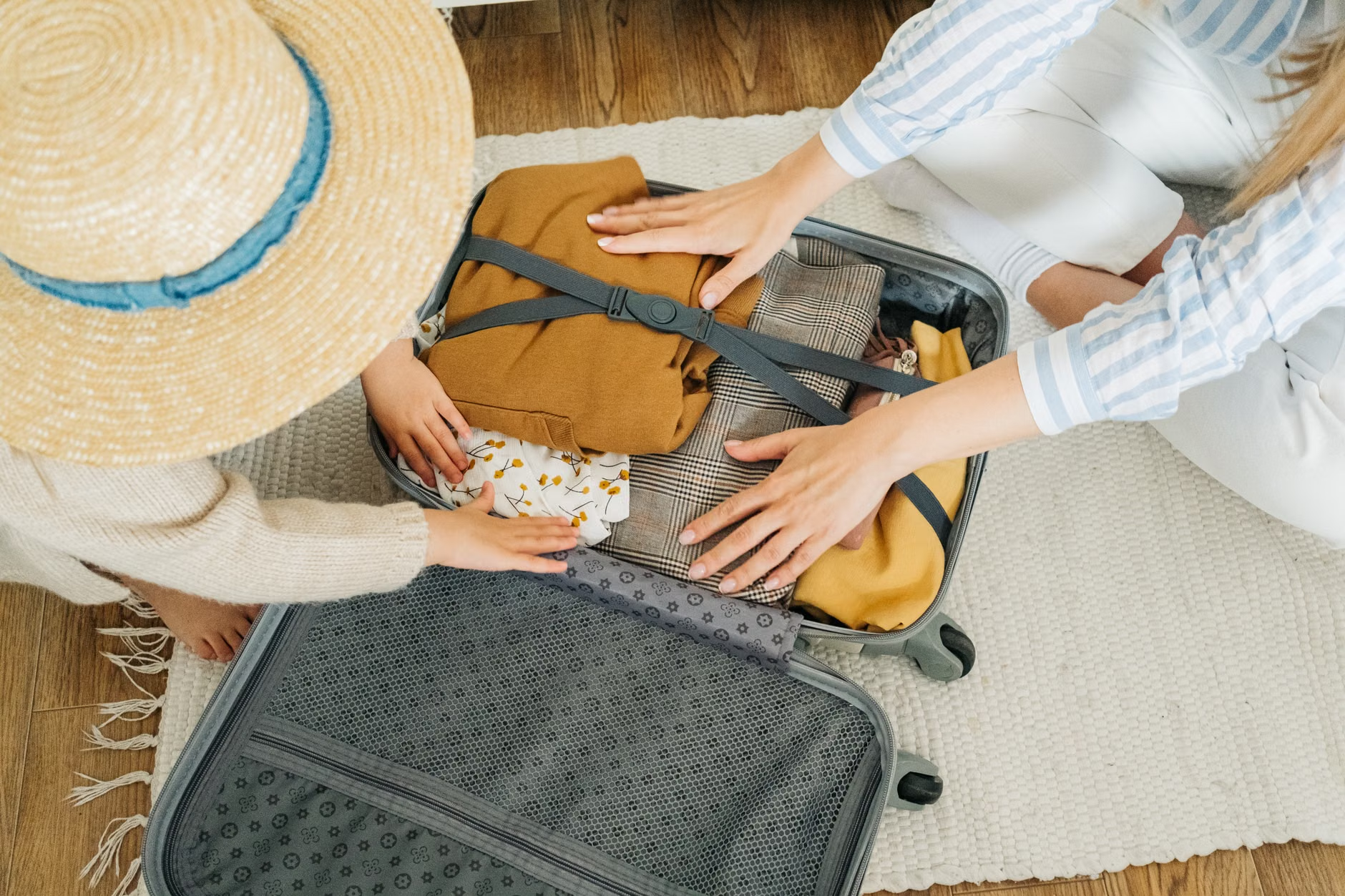
Zone 1: The “Immediate Access” Kit. This is your carry-on or “go-bag.” It contains everything needed for the first 12 hours of travel or an emergency in the heat. It must include: electrolyte packets, portable handheld fans (battery operated or rechargeable), cooling towels, and travel-sized sunscreen. If you are stuck on a tarmac or waiting for a hotel transfer in the sun, this bag is your lifeline.
Zone 2: The “Climate-Adaptive” Wardrobe. This is where you use packing cubes. Assign a specific color to each family member. This prevents the “Where is my shirt?” panic, which is a major source of family friction. In hot climates, pack 20% more socks and undergarments than you think you need. You will likely shower or change clothes multiple times a day due to humidity. Being able to access a fresh change of clothes for a child without dumping an entire suitcase is a sanity-saver.
Zone 3: The “Medical & Maintenance” Hub. This contains specialized medications, extra sun protection, and insect repellent. For seniors, this also includes any mobility aids or specific health monitors. Never check this bag. Keep it in your carry-on to avoid the disaster of lost luggage containing critical health supplies.
The Hidden Variables: What Most People Overlook
When you are in your 30s and 40s, you have the energy to power through discomfort. Your parents may not, and your children might not have the vocabulary to tell you exactly how they are feeling until they are already suffering from heat exhaustion. Here are the three variables that most travelers ignore until it’s too late.
1. Medication and Heat Sensitivity
Many common medications—including those for blood pressure, allergies, and even some over-the-counter antihistamines—can increase sensitivity to heat or interfere with the body’s ability to regulate temperature. If your parents are on medication, check with their doctor before travel. Ensure their medications are stored in a cool, insulated pouch. Heat can degrade the efficacy of certain pills, rendering them useless exactly when they are needed most.
2. The “Sun-Reflect” Problem
We often think about the sun coming from above, but in beach or urban environments, the sun reflects off sand, concrete, and water. This is why children often get burned under their chins or near their eyes. Pack polarized sunglasses for everyone. They don’t just look good; they reduce eye strain caused by glare, which is a significant factor in travel fatigue for seniors.
3. Humidity vs. Dry Heat: The Wardrobe Shift
If you are traveling to a humid climate, airflow is king. Loose-fitting linen is superior to tight-fitting “performance” gear. In a dry, hot climate (like Arizona or parts of the Mediterranean), you want to keep the sun off your skin, so lighter, long-sleeved, loose-fitting technical fabrics are better. A common mistake is packing heavy denim or dark colors, which absorb heat and increase your body temperature by several degrees.
Step-by-Step: The “Cool-Down” Protocol
Packing is only half the battle; how you use your gear determines the success of the trip. Implement this protocol to manage the group’s temperature effectively.
- The Morning Audit: Before leaving the accommodation, check everyone’s “Cooling Kit.” Does everyone have a full water bottle? Is the sunscreen applied? Are the hats packed? If you leave the hotel without these, you are essentially gambling with your comfort for the rest of the day.
- The 2 PM Retreat: In very hot climates, the sun is most intense between 1 PM and 4 PM. Even if you have a packed itinerary, plan for a “low-energy” period. This could be a museum visit, a movie, or a nap in the hotel. Do not force high-activity sightseeing during these hours.
- The Cooling Towel Ritual: Keep your cooling towels in a Ziploc bag in your bag. If someone gets irritable or shows signs of overheating, dampen the towel with a bit of water and place it on the back of the neck. This is a simple, non-medical intervention that can reset a person’s mood and physical state within minutes.
The Reality of Footwear in High Heat
Footwear is the most frequent cause of “intergenerational friction.” Children want to run, seniors need stability, and parents need to keep up with both. In hot weather, feet swell. A shoe that fits perfectly at 8 AM might be agony by 4 PM.
The Rule: Never pack brand-new shoes for a trip. Every person in your group should have at least two pairs of shoes that have been “broken in.” For seniors, ensure the shoes have non-slip soles. Hot, sweaty feet inside sandals can lead to slipping, which is a major fall risk. For children, avoid flip-flops for long walking days; they offer no support and are a tripping hazard on uneven tourist-site terrain. Opt for high-quality, breathable walking sandals with secure straps.
Financial and Logistical Considerations
It is easy to think, “I’ll just buy it there if I need it.” This is a dangerous assumption in tourist hotspots. You will often pay a 300% markup for basic items like sunscreen, hats, or portable fans. Furthermore, you may not find the specific brands or quality that your family requires.
If you are traveling with seniors, consider the cost of “comfort upgrades.” For example, paying for a private transfer instead of public transit can save the group from an hour of standing in the heat. This is not a luxury; it is a strategic investment in the group’s health. If you are on a budget, prioritize these “comfort spends” over expensive dinners or souvenir shopping. A cool, comfortable grandparent is a happy travel companion.
Also, check the local regulations for batteries. Many airlines have strict rules about lithium-ion batteries in portable fans or power banks. If you bring a high-capacity power bank for your devices, ensure it complies with IATA (International Air Transport Association) regulations. Carrying a forbidden battery can lead to it being confiscated at security, leaving you without your cooling gear exactly when you need it.
Common Pitfalls to Avoid
Even the best-laid plans fail due to simple oversights. Avoid these classic mistakes:
- The “One-Size-Fits-All” Sunscreen: Seniors often have thinner skin that reacts differently to chemicals. Children need high-SPF, tear-free formulas. Don’t buy one giant bottle for everyone. Pack individual types.
- Neglecting Electrolytes: Many people drink water until they feel full but forget that in high heat, you lose more than just water; you lose salts. Keep electrolyte powders in your bag. They are lightweight, cheap, and can prevent a full-blown heat exhaustion incident.
- Over-scheduling: The biggest mistake is assuming you can maintain the same pace you had in your 20s. With a multi-generational group, you are only as fast as your slowest member. Build “buffer time” into your schedule. If you think a walk will take 20 minutes, budget 40. This removes the pressure to rush, which in turn reduces stress and heat-related irritability.
The Psychological Aspect of Multi-Generational Travel
Traveling with family is emotionally charged. When you add physical discomfort from the heat, the potential for conflict increases exponentially. As the organizer, your role is to be the “thermal regulator”—not just of your bags, but of the group’s mood.
When someone gets cranky, ask yourself: Is it the heat? Is it hunger? Is it fatigue? Usually, it is a combination of all three. By having your “go-bag” (Zone 1) ready, you can offer a cold drink, a snack, or a cooling towel before a minor annoyance becomes a major argument. Remember, the goal of the trip is not to see every sight in the guidebook; it is to create shared memories. If that means skipping a temple because it’s too hot for your parents, do it without guilt. Your flexibility is the most valuable item in your suitcase.
Final Recommendations and Next Steps
Start your packing process at least two weeks before your departure. This gives you time to test your gear. Do your kids’ shoes still fit? Do the portable fans actually hold a charge? Are the medications up to date?
Create a master checklist in a shared digital document (like Google Sheets or Notion) that every adult can access. This ensures that if you are packing for the kids, your partner knows exactly what they need to pack for themselves and the grandparents. Communication is the final piece of the puzzle. Discuss the pace of the trip with the older generation beforehand. Managing expectations is just as important as managing your luggage.
Finally, remember that things will go wrong. You will forget something, a flight will be delayed, or a child will have a meltdown. That is part of the experience. By being prepared with the right gear, you have already mitigated the biggest risks. The rest is just the adventure.
Useful Resources for Travelers
- CDC: Warning Signs of Heat-Related Illness – A critical read to help you identify the difference between heat exhaustion and heatstroke.
- IATA Lithium Battery Regulations – Ensure your portable fans and power banks are permitted on your flight.
- WHO: Ultraviolet Radiation and Sun Health – Understanding the necessity of UV protection for different age groups.
Frequently Asked Questions
Q: How do I handle medications that need to be kept cool in a hot climate?
A: Use an insulated medical travel pouch with reusable ice packs. Most airport security checkpoints allow these through, provided you declare them. Always carry the prescription/doctor’s letter with you to avoid issues at customs.
Q: What is the best way to keep kids hydrated when they refuse to drink water?
A: Make it a game or use flavored electrolyte drops. Often, kids aren’t just thirsty; they are bored. Using a fun, colorful, or personalized water bottle can make the act of drinking more engaging. If they are truly resistant, offer high-water-content fruits like watermelon or grapes.
Q: Should I pack a portable fan for everyone or just one for the group?
A: Pack one for every person who is prone to overheating. If you rely on one fan for the whole group, you will find yourself in a “who gets the fan” argument while standing in a queue. They are small and inexpensive enough that everyone having their own is a worthwhile investment in group harmony.