Expect higher price volatility for imported household goods in 2026 as shipping routes continue to face geopolitical friction and labor cost increases, meaning “just-in-time” delivery for non-essential items will become a luxury rather than the retail standard.
- Buffer Your Calendar: Expect longer lead times for furniture, appliances, and non-perishable bulk goods; order 4–6 weeks earlier than usual to avoid seasonal bottlenecks.
- Inventory Over Precision: Retailers are moving away from lean inventory, which means fewer “instant” sales and more “pre-order” models; prioritize buying essentials during off-peak windows.
- Cost Visibility: Shipping surcharges are becoming permanent line items; factor a 5–8% “logistics premium” into your annual home improvement or renovation budget.
If you have spent any time in the last few years tracking a package or waiting for a backordered couch, you already know that the “global supply chain” isn’t just a term for news pundits—it is the invisible backbone of your grocery bill and your home project timeline. As we look toward 2026, the logistics landscape is shifting from the chaotic “pandemic recovery” phase into a new, more rigid “resilience-first” era. For those of us balancing careers, school runs, and the ever-shifting cost of living, understanding these shifts isn’t about becoming a trade expert; it’s about protecting your household budget and your sanity.
The Shift from “Just-in-Time” to “Just-in-Case”
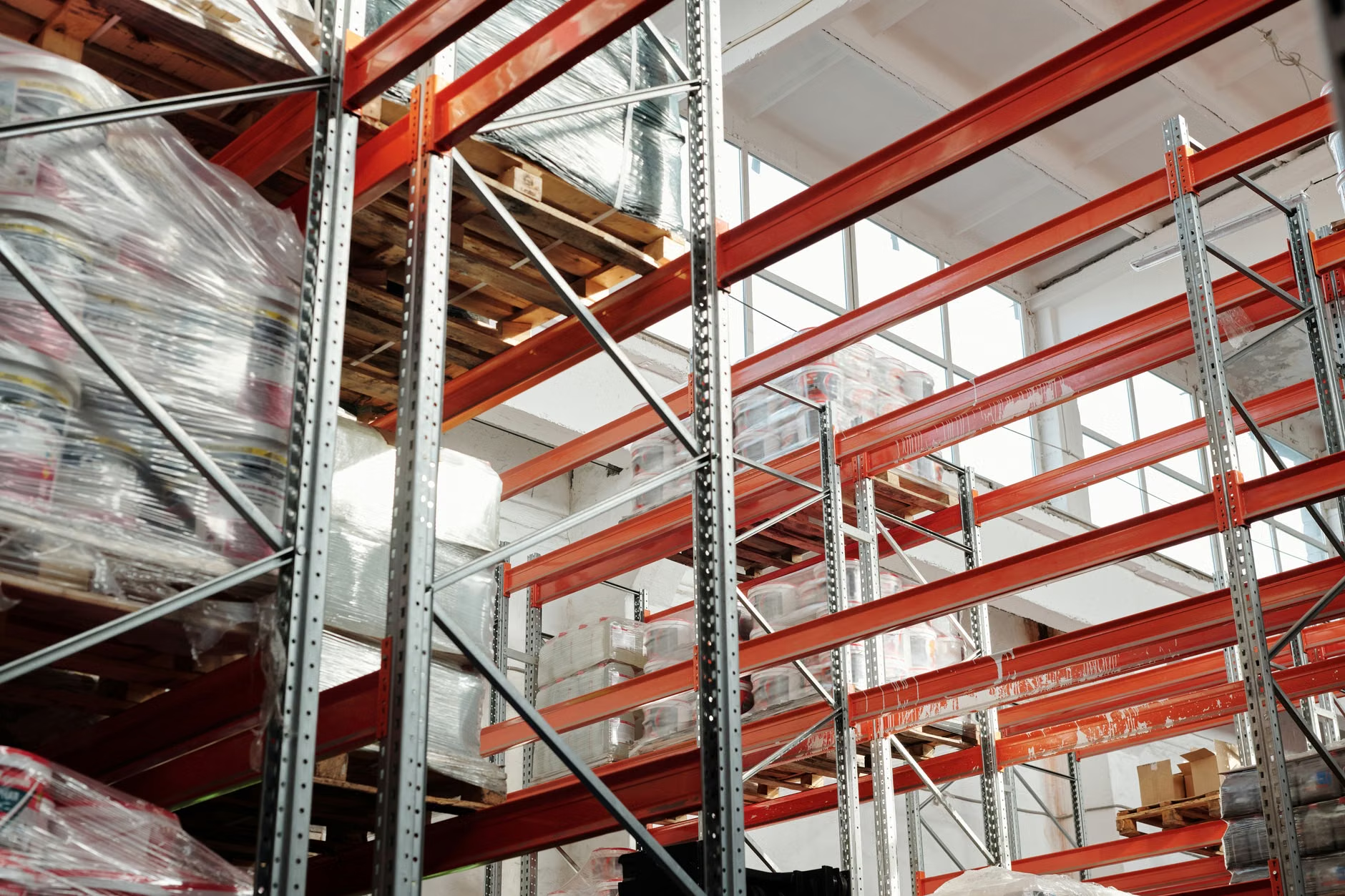
For decades, the global economy operated on a “just-in-time” model. Companies kept inventory as low as possible to save on warehouse costs, banking on the idea that a ship could get from a factory in Asia to a port in Europe or North America exactly when needed. By 2026, this model is effectively dead for many consumer goods. Major retailers are now adopting “just-in-case” logistics, keeping more stock in regional warehouses to hedge against sudden shipping delays or geopolitical disruptions.
Why does this matter for you? It means that while you might see more stock on shelves during a crisis, the overhead cost of that inventory is being passed down to the consumer. Retailers are paying more for storage, and your product prices reflect that “safety net.” If you are planning a home renovation or a major appliance purchase for 2026, do not expect deep discounts during traditional clearance periods. Instead, look for “bundled” deals where the company is trying to clear out warehouse space to make room for new, more expensive stock.
The Practical Action: If you are planning a kitchen renovation or a large-scale furniture upgrade, stop waiting for the “Black Friday” price drop. In 2026, the cost of moving goods (freight) is so high that retailers are focusing on higher margins rather than volume sales. Secure your items as soon as you have the budget, and prioritize retailers with local, regional distribution centers rather than those relying on direct-from-factory shipping.

Geopolitical Friction and the “Premium” on Shipping Routes
By 2026, the primary drivers of shipping costs are no longer just fuel prices; they are security and route efficiency. Major shipping lanes, such as those through the Red Sea or the Panama Canal, have become flashpoints for international policy. When ships are forced to take longer routes—such as bypassing the Suez Canal to go around the Cape of Good Hope—the added travel time adds weeks to delivery schedules and thousands of dollars in fuel and insurance per voyage.
How does this show up in your life? You will notice it in the “shipping surcharge” fees on larger items and the “out-of-stock” notices for niche household goods. Small-to-medium enterprises (SMEs) are hit hardest here. If you prefer buying from smaller, independent brands, be prepared for longer lead times. These companies lack the leverage of global giants like Amazon or Walmart to secure priority space on cargo ships.
Decision Rule for 2026: When buying large household items (appliances, outdoor furniture, exercise equipment), check the “Origin of Fulfillment.” If the product is shipping from a warehouse in your own country, the price will be more stable. If it is being drop-shipped from an overseas manufacturer, be prepared for a 15–20% “logistics contingency” in the final price, and a high probability of delays beyond the promised date.
The Rise of Regionalization: Why “Made Local” Matters More
We are seeing a massive trend toward “near-shoring” (moving production closer to the consumer). In 2026, you will see more products labeled as being assembled or finished in your home region. This is a direct response to the fragility of long-distance supply chains. While this is great for local economies, it often comes with a higher price tag due to labor costs.
Think of it as a trade-off: you are paying for the reliability of the supply chain. A product made closer to home might cost 10% more, but it is far less likely to be stuck on a container ship in the middle of the ocean for three months. For parents, this is especially important when it comes to essential household goods—diapers, cleaning supplies, and basic kitchenware. Stick to brands that have diversified their supply chains. If a company relies on a single country for 100% of its production, they are a high-risk vendor for your 2026 budget.
| Logistics Factor | 2024–2025 Trend | 2026 Reality | Impact on Your Household |
|---|---|---|---|
| Shipping Costs | Fluctuating | Structurally High | Higher base prices for imports |
| Inventory | Lean/Just-in-Time | Buffer/Just-in-Case | Fewer clearance sales |
| Delivery Times | Unpredictable | Stabilizing but longer | Plan 4-6 weeks ahead |
| Product Origin | Global/Diverse | Regional/Near-shored | Higher cost, better availability |
Managing Household Logistics: A Step-by-Step Guide for Families
If you feel like your household logistics are becoming as complex as a corporate supply chain, you aren’t wrong. Managing a household in 2026 requires a bit more foresight. Here is how to adapt your planning to the current environment:
Step 1: The “Essential Buffer” Audit
Identify the top 10 non-perishable items your family uses every month. By 2026, the “weekly run to the store” model is increasingly inefficient due to fluctuating stock. Aim to keep a 2-month buffer of these essentials. This isn’t about extreme stockpiling; it is about protecting yourself from the “bullwhip effect”—where a small delay at a factory causes a temporary local shortage that leads to panic buying and price spikes.
Step 2: Prioritize “Modular” Purchases
When buying furniture or home equipment, look for modular designs. If a part breaks, you want to be able to replace just the component rather than waiting for a whole new unit that may be stuck in a shipping queue. In 2026, modularity is the ultimate insurance policy against supply chain failure.
Step 3: Factor in “Invisible” Logistics Costs
When comparing prices online, the “sticker price” is becoming less relevant. Look at the total landed cost, including shipping, potential customs fees (if buying internationally), and return shipping policies. In 2026, many retailers are tightening return policies to offset shipping costs. A “free return” policy might be a thing of the past for heavy household items; check the fine print before you commit.

Common Misconceptions About 2026 Logistics
There is a common belief that automation and AI will solve supply chain issues by 2026. While AI is helping with demand forecasting, it cannot manufacture physical capacity. There are only so many ships, trucks, and train cars in the world. If you read that a company has “AI-optimized its supply chain,” it means they are better at telling you that your item is delayed, not necessarily that it will arrive faster. Don’t let tech-forward marketing lull you into a false sense of security regarding delivery times.
Another misconception is that the “good old days” of 2019 prices are coming back. The structural costs of global logistics—higher labor costs at ports, stricter environmental regulations on shipping fuels, and the cost of building regional warehouses—are permanent. Your household budget needs to adjust to this “new normal” where the cost of moving a physical object from point A to point B is higher than it was five years ago.
The Role of Data and Transparency
As a consumer, you now have more data than ever before. Use it. Many modern retail platforms now provide real-time inventory visibility. If a site says “only 3 left in stock,” believe them. In the 2026 landscape, retailers are being much more transparent about inventory because they can’t afford the logistics cost of overselling an item they don’t have. If an item is out of stock, don’t wait for a “back in stock” notification that might never come; look for a comparable alternative immediately.
Furthermore, pay attention to the “logistics rating” of sellers. On platforms like Amazon or eBay, a seller’s logistics performance is often more important than the product price. A seller who consistently delivers on time is worth a 5% premium over a seller who has the lowest price but a history of shipping delays. Your time is valuable; don’t waste it chasing a package that is stuck in a customs warehouse halfway across the world.
Practical Strategies for Large-Scale Home Projects
If you are planning a home renovation in 2026, the “logistics plan” is now as important as the design plan. Contractors and suppliers are struggling with the same issues you are. Here is your checklist for success:
- Verify Stock Before Signing: Never sign a contract for a renovation that depends on a specific high-end appliance or custom fixture until you have confirmed it is physically sitting in a local warehouse.
- The “Plan B” Fixture: Have a backup selection for every critical item. If your first-choice faucet is delayed, you need to know exactly which second-choice model you are willing to accept so the project doesn’t stall for weeks.
- Staggered Delivery: Coordinate with your contractor to have materials delivered in phases. Don’t let your garage or driveway become a storage unit for items that might sit there for months, risking damage.
The Psychological Shift: From Convenience to Planning
Perhaps the biggest change for families in 2026 is the psychological shift. We have been conditioned by the “one-click” culture to expect everything instantly. The 2026 supply chain reality forces us to slow down. This isn’t inherently bad. It encourages more intentional consumption. When you have to wait for an item, you are more likely to ensure it is the right item for your long-term needs, rather than an impulse buy.
Embrace this transition. By planning your household needs in advance, you reduce the stress of last-minute scrambles and the financial hit of paying for expedited shipping or premium prices during shortages. Treat your home like a well-managed household, and you will find that the global supply chain, while complex, is something you can navigate with confidence.
Summary of Recommendations
The 2026 landscape is defined by higher costs and a necessity for longer-term planning. Do not fall into the trap of expecting pre-2020 efficiency. Instead, build a “logistics buffer” into your time and budget. Focus on regional suppliers, keep a modest inventory of essentials, and prioritize modular, reliable products over the latest “fast-consumer” trends. By shifting your mindset from reactive to proactive, you turn the complexities of the global supply chain from a source of frustration into a manageable aspect of daily life.
For further reading on how global shipping indices are performing, you can monitor the Drewry World Container Index, which provides a realistic look at the cost of freight and how it trickles down to consumer prices.
Frequently Asked Questions
Why are shipping costs still high even though the pandemic is over?
The “pandemic” was a trigger, but the current costs are driven by structural factors: higher labor costs at ports, the cost of implementing greener, more expensive fuels for cargo ships, and the massive investment required to build regional warehouse networks to replace “just-in-time” systems.
Should I stop buying imported goods to save money?
Not necessarily. Many imported goods are still the most efficient option. The goal is not to stop buying imports, but to avoid the “convenience trap” of last-minute buying. If you plan your purchases 4–6 weeks in advance, you can avoid the premium costs associated with emergency shipping and stockouts.
How can I tell if a company has a reliable supply chain?
Look for companies that have diversified their manufacturing. If a company can source components from multiple countries, they are far more resilient than those relying on a single factory or region. Additionally, check their “fulfillment transparency”—if they can tell you exactly where your item is shipping from, they are likely better managed than those who cannot.
Disclaimer: This article provides general guidance based on current logistics trends. Always evaluate your specific financial situation and regional market conditions before making major purchasing decisions.