The secret to a successful heritage trip—traveling to your ancestral roots with both your children and your parents—is not found in the itinerary, but in the efficiency of your packing strategy. When you are the “sandwich generation” acting as the bridge between two other generations, your luggage must serve as a mobile command center that prioritizes accessibility and health over aesthetic trends.
Three Keys to Multi-Generational Heritage Travel
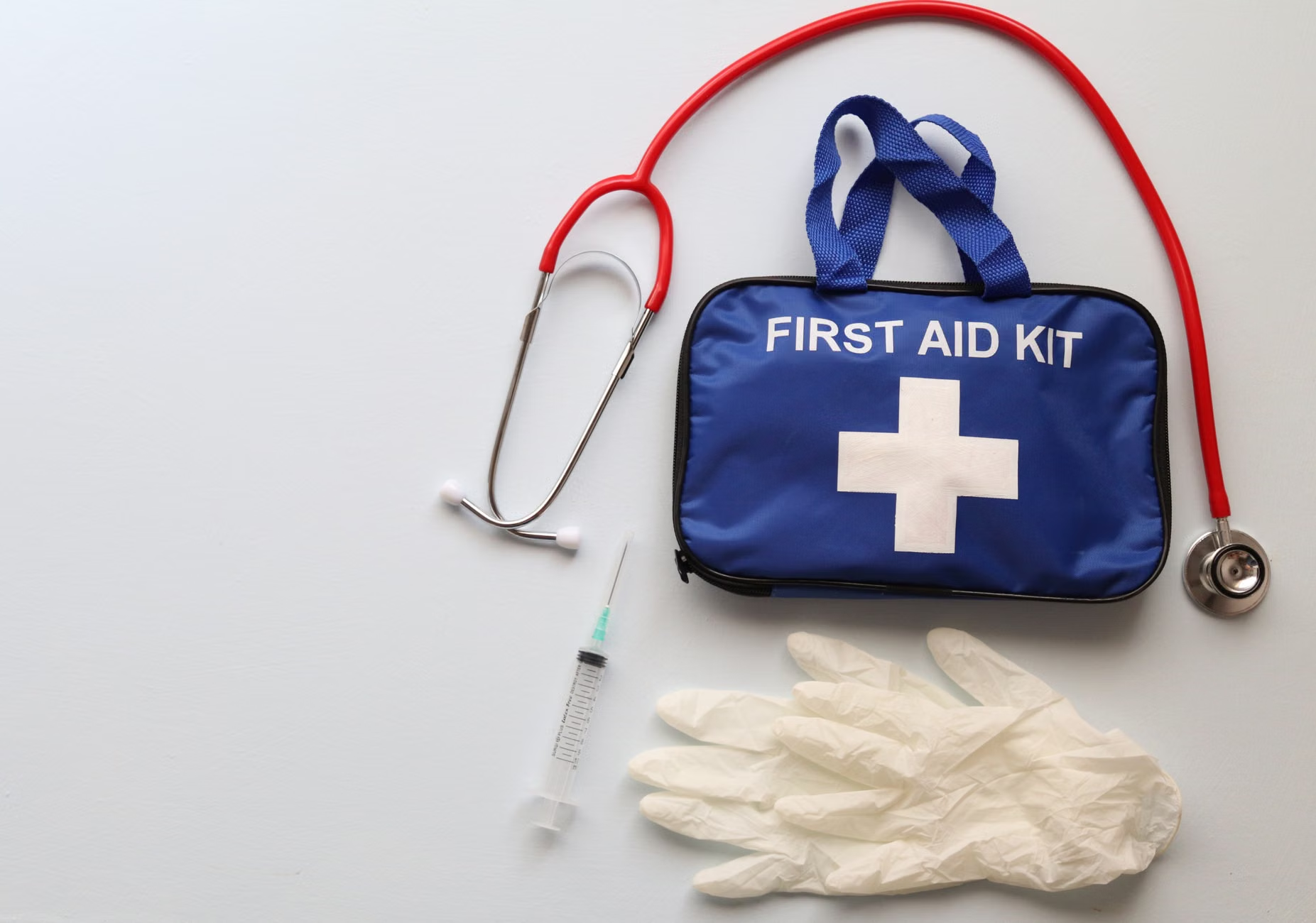
- Prioritize “Medical Autonomy”: Pack a centralized, high-visibility medical kit that contains prescriptions, dosage schedules in the local language, and emergency contacts for all three generations.
- The 70/30 Rule of Luggage: Dedicate 70% of your luggage space to shared essentials (tech, first aid, documents) and 30% to individual needs to prevent overpacking and ensure you can manage the load solo.
- Digitization as a Safety Net: Never rely on physical documents alone; keep high-resolution scans of passports, ancestry records, and insurance policies in an encrypted cloud folder accessible by at least two adults in the group.
If you have ever tried to navigate an ancient town square with a toddler in a stroller, an elderly parent who needs a steady pace, and a backpack that feels like it’s filled with lead, you know the frustration. Heritage travel adds an extra layer of complexity: you are not just sightseeing; you are often navigating archives, cemeteries, or distant relatives’ homes. This requires a specific, utilitarian approach to your packing list.
When traveling as a trio of generations, the biggest mistake is “silo packing”—where everyone brings their own bulky toiletries and chargers. Instead, treat your luggage as a shared utility. This reduces total weight, which is critical when you are the one likely handling the heavy lifting.
The Strategy: Use a modular system. Assign one “Command Cube” for each family member, but keep a “Master Utility Bag” that you, the organizer, keep in your carry-on. This bag should contain everything that could cause a travel crisis if lost: medication, power banks, spare glasses, and critical documents.
Common Mistake: Packing full-sized bottles of shampoo or excessive clothing “just in case.” In almost every destination, you can buy soap or toothpaste. You cannot, however, easily replace a specific blood pressure medication or a specialized walking aid on a Sunday afternoon in a small ancestral village.
| Category | What to Pack | Why it Matters |
|---|---|---|
| Health | Prescriptions (extra supply), mobility aids, basic pain relief. | Prevents emergency pharmacy runs in foreign languages. |
| Tech | Universal adapters, high-capacity power banks. | Ensures navigation and communication never fail. |
| Documentation | Physical copies of records, cloud backups. | Crucial for genealogy research or medical emergencies. |
Managing Mobility Across Three Generations
Heritage travel often involves visiting places that were not designed for modern accessibility. Cobblestone streets, steep stairs, and narrow cathedrals are the norm. If your parents have limited mobility or your child is in a stroller, your packing list must account for the “transition zones.”
The Footwear Decision Rule
Do not let your family members wear new shoes. This is a golden rule. Every person should have one pair of “destination-ready” footwear that has been broken in for at least two weeks. For the elderly, prioritize shoes with high-traction soles and Velcro or slip-on closures—lacing up boots in a busy airport or a crowded lobby is a recipe for stress.
The Mobility Kit
If you are traveling with someone who needs support, consider bringing a lightweight, collapsible cane or a portable seat. Many people resist these, but having a seat that weighs less than a kilogram can turn a two-hour wait at a museum into a comfortable experience. If you are flying, check your airline’s specific policy on mobility aids; most allow these as an extra item for free, but it must be clearly labeled and collapsible.
The Tech Stack for Ancestral Research
If the goal of your trip is to trace your family history, you are likely carrying more than just clothes. You are carrying the weight of history. Whether you are visiting local archives or meeting distant relatives, your tech setup needs to be streamlined.
The Essential Gear:
- Document Scanner (Portable): While phone apps like Adobe Scan or Microsoft Lens are excellent, a dedicated, lightweight portable scanner can be a lifesaver if you are dealing with fragile, old records that need careful handling.
- Encrypted Storage: Use a service with offline-access capabilities. If you are in a remote village with poor internet, you need to be able to pull up that scanned baptismal record from 1920 without relying on a 5G signal.
- The “Interview” Backup: If you are planning to interview elderly relatives, don’t just rely on your phone’s microphone. A small, lapel microphone that plugs into your phone will produce audio quality that you will be grateful for decades later.
Pro-Tip: Before you leave, create a “Heritage Folder” on your phone. Put every scrap of information—names of ancestors, birth dates, old addresses—into this folder. Organize it by location. When you arrive at the town hall or the cemetery, you won’t be fumbling through messy emails or printed papers.

You are the trip director, the translator, the child-minder, and the caretaker. Your packing list should reflect the need for your own mental health. It sounds counterintuitive, but pack a small “de-stress” kit for yourself. This might be a pair of noise-canceling headphones for those moments on the train when the kids are overstimulated and your parents are tired. It might be a small journal or a specific tea you like.
The “Buffer Day” Concept
When packing, don’t pack for every single minute of the trip. Leave space in your schedule—and your bags—for the unexpected. If you find a beautiful local craft or a heavy book of regional history, you will need the room. A common mistake is packing a suitcase that is already at 95% capacity. Aim for 75%. That 25% “buffer space” is your insurance against the logistical nightmare of trying to zip a bursting suitcase in a hotel room.
Health and Safety: The Non-Negotiables
When traveling with multiple generations, medical preparedness is the difference between a minor incident and a ruined vacation. You need to understand the local healthcare system before you arrive. In many European countries, for example, pharmacies are distinct from supermarkets and have limited weekend hours. In parts of Asia, certain over-the-counter medications common in the West may require a prescription.
Step-by-Step Medical Prep:
- Consult the GP: Two months before the trip, have every adult get a check-up and a list of generic names for their medications. Brand names vary wildly by country.
- The “Medical Passport”: Create a document that lists: Full Name, Date of Birth, Blood Type, Allergies, Current Medications (Generic Name + Dosage), and Emergency Contact. Print two copies and keep one in your wallet and one in the “Master Utility Bag.”
- Insurance Verification: Don’t just buy travel insurance; read the fine print regarding pre-existing conditions, especially for seniors. Ensure the policy covers medical evacuation.
The Hidden Costs and Trade-offs
One aspect of heritage travel that is often overlooked is the emotional weight of visiting ancestral sites. You might find that your parents react differently than you expect. They may become tired, reflective, or even overwhelmed. This is where your packing list meets psychology.
Pack items that facilitate connection. If you are visiting a place your grandfather grew up, bring a small photo of him as a child. Having a physical object to reference can ground the experience and give you a focal point for conversation. This isn’t “stuff”—it’s a tool for narrative.
The Trade-off: You will have to sacrifice some “fashion” for “function.” You cannot wear your most stylish, uncomfortable shoes if you want to walk through an ancestral village. You cannot carry a heavy designer bag if you need to be hands-free to help a child or a parent. Accept this now, and you will be much happier on the ground.
Finalizing Your Packing Strategy
As you prepare, remember that you are building the foundation for memories that will outlast the trip itself. The goal of the packing list is not to make you a “perfect traveler,” but to make you a “present traveler.” By eliminating the stress of lost documents, forgotten meds, or dead batteries, you free yourself to actually engage with the history you came to discover.
Your Final Action Plan:
- The 48-Hour Test: Lay out everything you think you need 48 hours before you leave. Then, remove 20% of the clothing. You will not miss it.
- The Digital Audit: Ensure every document is in your cloud drive and accessible offline.
- The “Go-Bag” Check: Confirm that your Master Utility Bag is easily accessible, not buried at the bottom of a checked suitcase.
Heritage travel is a marathon, not a sprint. Take care of your gear, take care of your logistics, and you will find that the trip becomes much more than just a visit to the past—it becomes a bridge to your future.
Frequently Asked Questions
Q: What is the best way to handle medication logistics for three generations?
A: Always keep all medications in their original packaging to avoid customs issues. Create a master list of all prescriptions, including the generic name and the dosage, and keep this in your “Master Utility Bag.” If traveling internationally, check the specific drug laws of your destination, as some common prescription medications are restricted in certain countries.
Q: How do I manage luggage weight when I’m the only adult handling the bags?
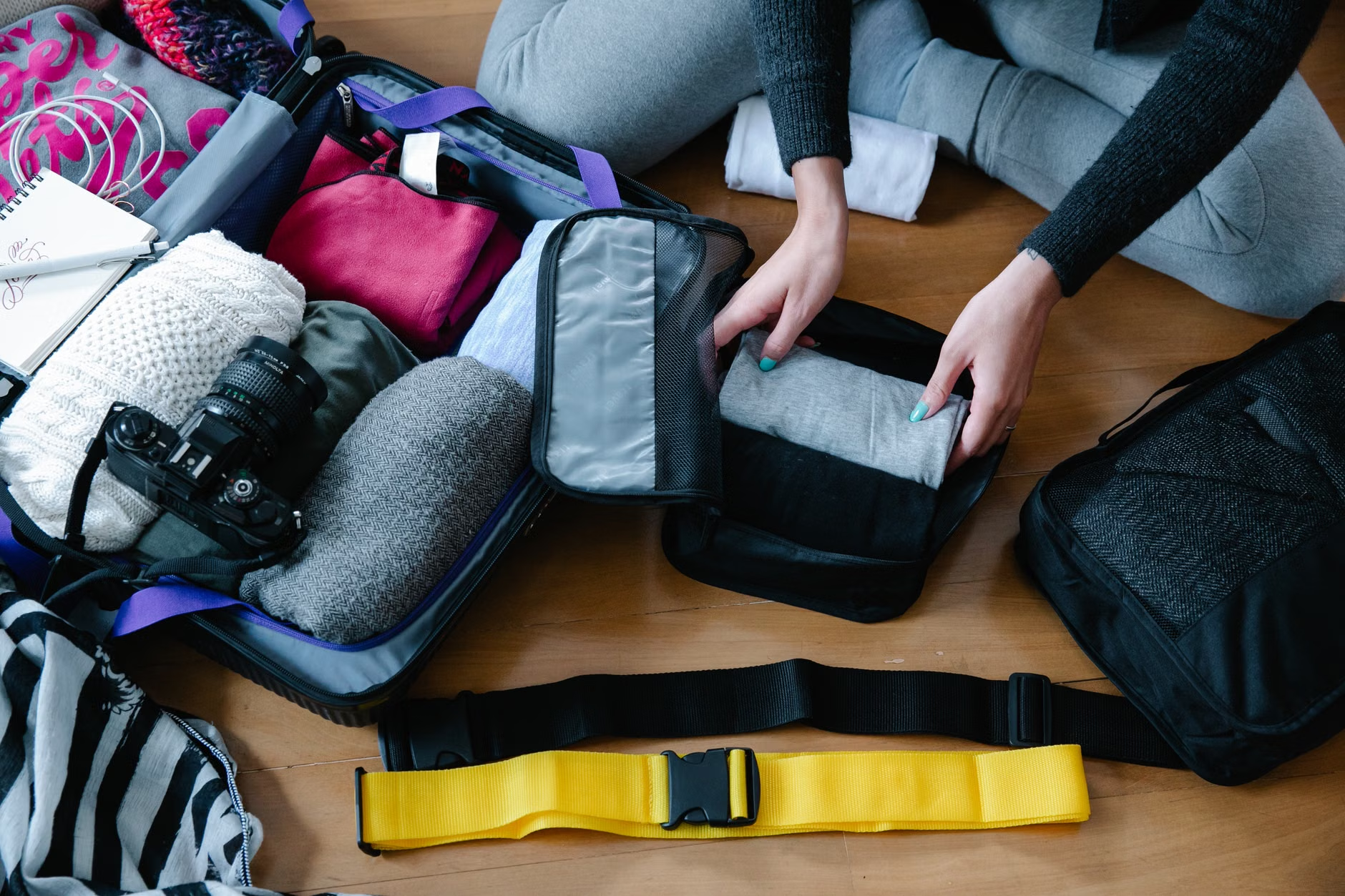
A: Prioritize high-quality, lightweight luggage with four-wheel spinners. Use compression packing cubes to maximize space and keep items organized, which makes it easier to find things quickly without unpacking everything. If possible, use a backpack for your “Master Utility Bag” to keep your hands free for children or mobility assistance.
Q: Should I bring a stroller or a wheelchair for heritage travel?
A: If the destination has significant historical sites with cobblestones or stairs, choose the most compact, lightweight version possible. For strollers, a “travel-stroller” that folds into a small square is best. For mobility aid, look for lightweight, foldable transport chairs rather than heavy-duty wheelchairs, and always call your airline and accommodation beforehand to confirm accessibility.
Useful Resources: