The most effective way to recover from the relentless pace of modern parenting is to stop “doing” and start “being” by embracing Quiet-Tourism, a travel philosophy that prioritizes stillness and local immersion over the frantic checklist of tourist hotspots.
- Prioritize Depth Over Breadth: Quiet-Tourism thrives on staying in one location for 5-7 days rather than hopping between cities, reducing the logistical stress that often triggers burnout in parents.
- The “Village First” Rule: Choose destinations with populations under 5,000 to ensure authentic interactions and access to low-stimulation environments that help children regulate their sensory input.
- Economic and Social Impact: By spending locally in rural areas, your travel budget directly supports small-scale artisans and farmers, making your vacation a form of regenerative economic contribution.
Why the “Must-See” Itinerary is Hurting Your Family Vacation
If you have ever returned from a “relaxing” family vacation feeling like you need another week off just to recover, you are not alone. For those of us in our 30s and 40s, the default mode of travel often looks like a military operation: early alarms, aggressive shuttle schedules, and a desperate race to see every “Top 10” attraction before the kids have a meltdown. This is the antithesis of restoration.
Quiet-Tourism—sometimes overlapping with the “slow travel” movement—is a deliberate rejection of this hyper-productive travel style. It is not about laziness; it is about intentionality. When you visit a rural village, the pressure to “consume” the destination disappears. There are no lines for the Louvre, no overpriced tourist traps, and no pressure to take the perfect photo for social media. Instead, you are left with the reality of daily life in a different setting.
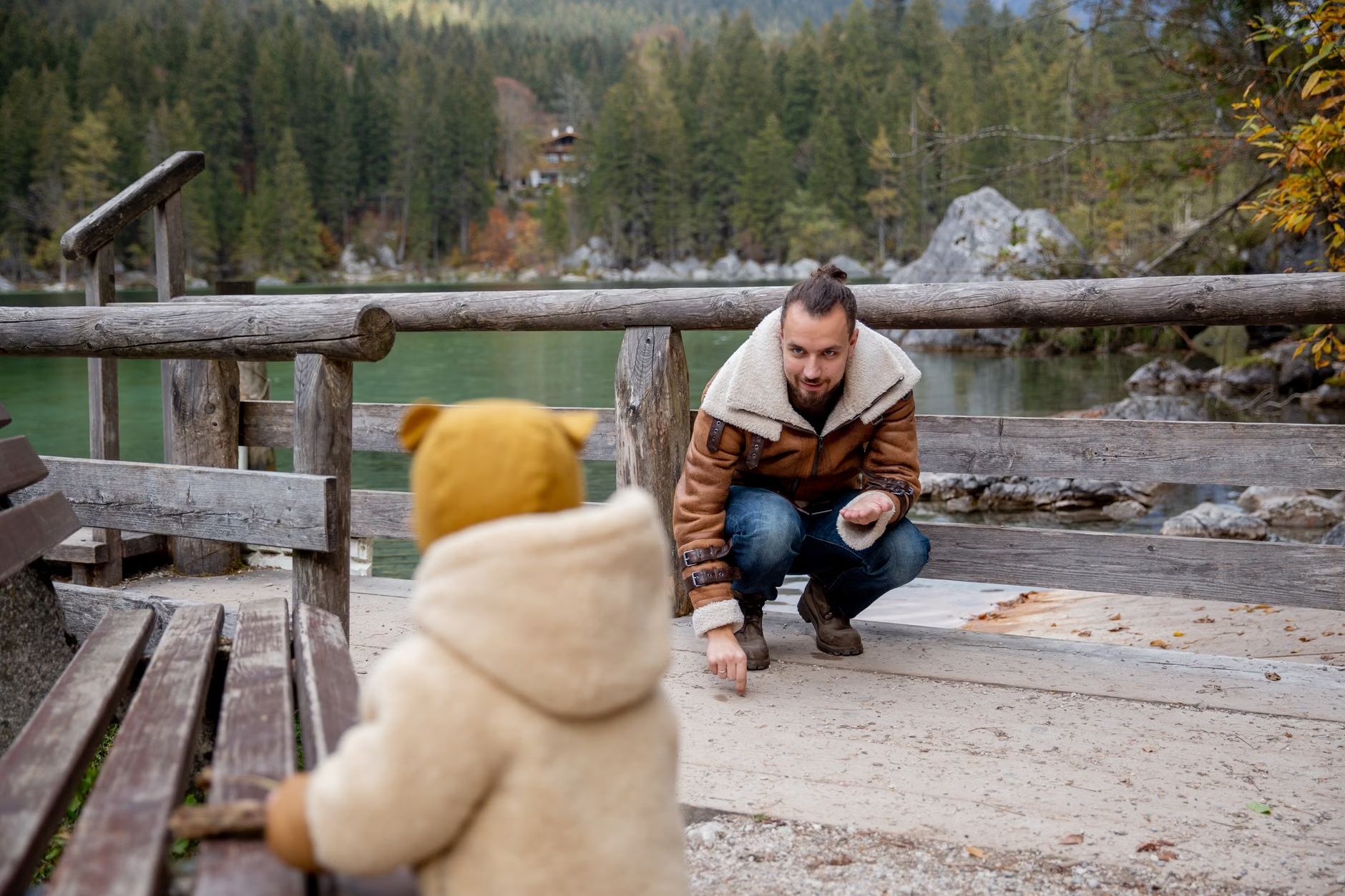
For a parent, this shift is transformative. When you aren’t rushing to the next landmark, you have the mental bandwidth to notice the way your child interacts with a local shopkeeper, or the specific way the light hits the valley at 4:00 PM. It shifts the vacation from a series of tasks to a series of experiences. This is where the real bonding happens.
Redefining the “Successful” Trip: What Quiet-Tourism Actually Looks Like
Quiet-Tourism is often misunderstood as “staying in a hotel.” It is actually about integrating into the rhythm of a place. In a rural setting, the “attraction” is the ecosystem itself. It might be the local bakery that opens at 7:00 AM, the weekly market where the local farmers sell their produce, or a hiking trail that leads to a hidden stream.
The core difference between a standard vacation and a Quiet-Tourism trip is the Decision Rule of Three. In a typical vacation, we pack three activities into a day. In Quiet-Tourism, you aim for only one primary activity per day, leaving the rest of the time for “unstructured discovery.”
The Architecture of a Quiet Day
| Time Block | Standard Vacation | Quiet-Tourism Approach |
|---|---|---|
| Morning | Rush to breakfast, check out of hotel. | Coffee at a local cafe, observe the village waking up. |
| Midday | Three museums, two landmarks, fast food. | A long, slow lunch with local ingredients. |
| Afternoon | Shopping, transit to next city. | Reading, playing in a park, or chatting with locals. |
This structure isn’t just “relaxing”—it is a tactical advantage. By choosing a rural base, you avoid the “tourist fatigue” that sets in by day three of a city break. Your nervous system, and your children’s, can actually down-regulate because the environment isn’t constantly demanding engagement.
Choosing the Right Rural Destination (Without the Boredom)
A common fear among parents is that a “quiet” trip will turn into a “bored” trip, especially for children who are used to high-stimulation environments. The key is to choose a location that offers low-intensity engagement rather than absolute isolation. You want a village, not a ghost town.
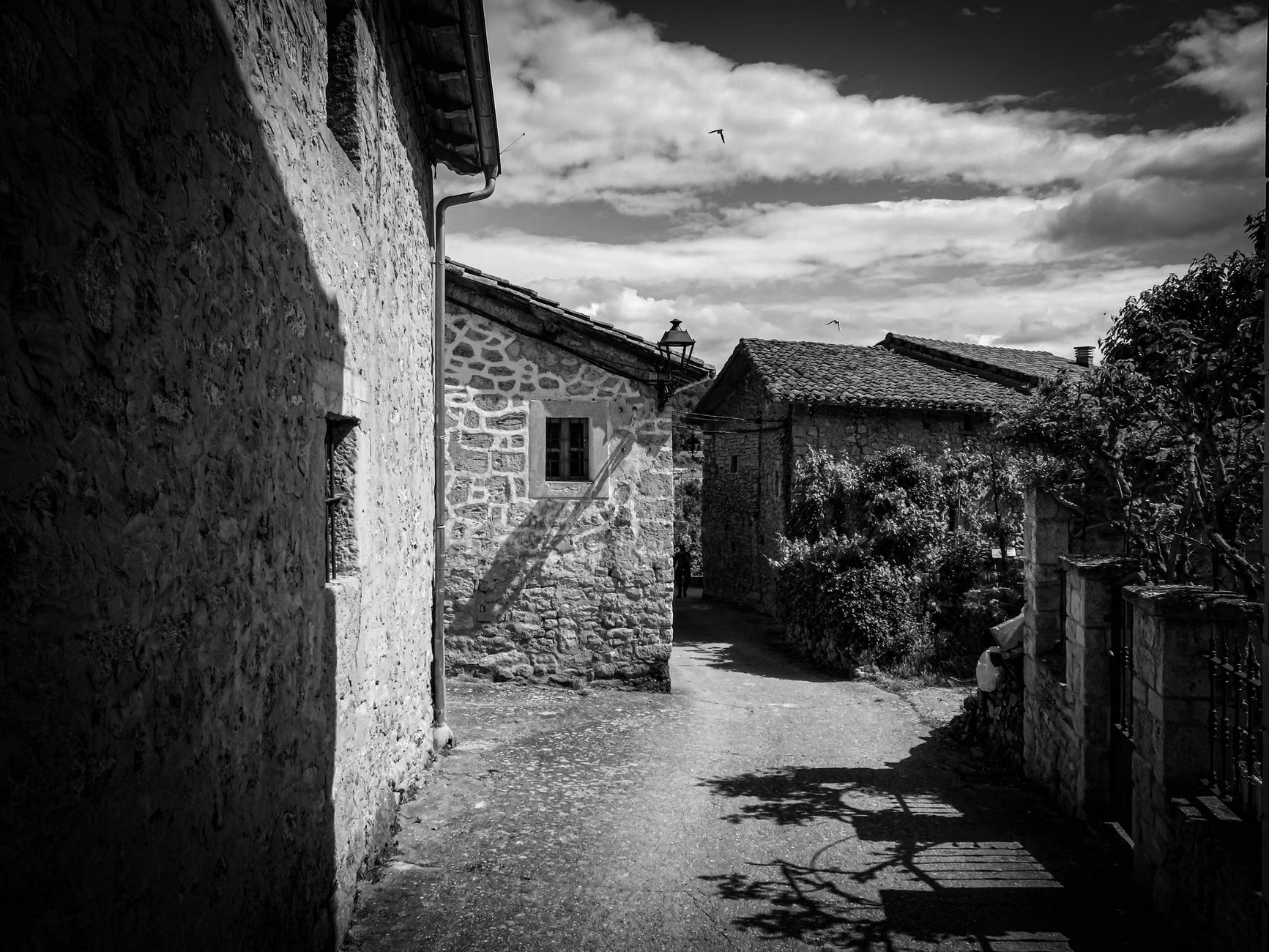
Look for places that have a “living” economy. Is there a school? A bakery? A library? These are signs that the village is a functional community rather than a curated museum piece. When you choose a place where real people live, your children are more likely to encounter real-world interactions. They see a village where the postman knows everyone’s name, or where the shopkeeper leaves the door unlocked while they stock shelves.
Three Criteria for Selecting Your Base:
- Connectivity: Ensure the village is within 30-45 minutes of a larger town or transit hub. You need an “escape hatch” if you need supplies or medical care, but it shouldn’t be close enough to tempt you into a “day trip” habit.
- Walkability: Can you reach the essentials (bread, milk, a park) on foot? If you are tethered to a car, you lose the spontaneity that makes quiet travel special.
- The “Third Place” Factor: Look for a public space that isn’t a tourist attraction—a park, a library, or a small town square where locals actually sit. This is where you will find the most authentic version of the culture.

The Hidden Costs and Benefits of Rural Immersion
It is important to be realistic about the trade-offs. Quiet-Tourism is not “easier” in terms of logistics; it requires more upfront planning. You won’t have the convenience of a hotel concierge or the abundance of English-speaking tourist services. This is a feature, not a bug, but it does require you to be more self-reliant.
The Language Barrier: In rural areas, English proficiency is often lower. This is an opportunity, not a hindrance. It forces you and your children to practice non-verbal communication, pointing, and basic gestures. It is a masterclass in empathy and patience.
The Grocery Reality: Don’t expect a 24/7 supermarket. You will likely be shopping at smaller, local markets with limited hours. This requires you to plan your meals around what is available, which is actually a wonderful way to teach children about seasonal eating and local food systems.
The “Digital Detox” Myth: You don’t need to ban technology, but you should shift its role. Use your devices for navigation, translation, and identifying local flora, not for mindless scrolling. The goal isn’t to disconnect from the world, but to reconnect with the immediate environment.
Step-by-Step: How to Plan a Quiet-Tourism Escape
If you are ready to pivot your travel style, start by reversing your planning process. Instead of looking for “things to do,” look for a “place to be.”
- Select a Region, Not a City: Focus on a region known for its agriculture or geography (e.g., the countryside of Tuscany, the villages of the Cotswolds, or rural coastal towns in Japan).
- Book a “Home,” Not a Room: Use platforms that allow you to rent an actual house or apartment with a kitchen. Having a kitchen is the single biggest factor in reducing travel stress for parents. It allows you to eat at your own pace.
- Establish a “Home Base” Routine: Spend the first two days doing absolutely nothing. Don’t plan a single excursion. Just walk to the local store, learn the names of the shopkeepers, and find your favorite bench.
- The “One-Per-Day” Rule: After the first two days, limit your excursions to one per day. This could be a hike, a visit to a neighboring village, or a local craft workshop. If you feel tired, cancel it.
The Long-Term Impact on Your Parenting
The most profound benefit of Quiet-Tourism is the way it resets the “expectations” of your children. In a world where they are constantly bombarded by stimulation, learning to find joy in a quiet walk or a simple meal is a superpower. It teaches them that they don’t need external entertainment to be happy.
For parents in their 30s and 40s, this is a way to reclaim your own identity. You aren’t just “a parent on duty” managing a trip; you are a human being experiencing a different way of life. When you return home, you will likely find that you have a higher tolerance for the “quiet” moments of your daily routine.
You stop seeing the downtime in your life as a gap that needs to be filled with noise or tasks, and start seeing it as the space where your life actually happens. That is the true value of Quiet-Tourism.
Frequently Asked Questions
1. Isn’t rural travel more expensive due to transportation needs?
Not necessarily. While you might need to rent a car, you save significantly on “tourist taxes,” attraction entry fees, and high-priced tourist-menu dining. By cooking some meals at home and focusing on free nature-based activities, the total cost often balances out or comes in lower than a city-focused vacation.
2. What if my kids get bored?
Boredom is the precursor to creativity. If your kids complain, resist the urge to fill the time with a screen or a planned activity. Provide them with basic tools—a sketchbook, a camera, or a magnifying glass—and let them explore. You will be surprised at how quickly they invent their own games when the “entertainment” is stripped away.
3. How do I find a “real” village rather than a tourist trap?
Look for villages that are not on the main “travel circuit” of a country. Use satellite maps on Google Maps to look for density; if the village has a high concentration of hotels and souvenir shops, it is likely a tourist trap. If you see more residential homes, small independent grocers, and community parks, you are on the right track.
Useful Resources:
- Slow Food International (For understanding the philosophy of local, sustainable consumption which aligns with Quiet-Tourism).
- UN Tourism: Tourism in Rural Development (Official insights into how rural tourism supports local communities).
Final Note: Quiet-Tourism is not a destination; it is a mindset. Start small, be intentional, and give yourself the grace to do less. You might find that the best vacation you ever had was the one where you didn’t “do” much at all.