Key Takeaways
- The 2026 reality: The EU’s Carbon Border Adjustment Mechanism (CBAM) will finalize its transition, effectively taxing imported electronics based on their carbon footprint, likely raising retail prices for non-EU manufactured goods.
- The “Green Premium”: Expect a shift where cheaper, high-emission electronics face steeper price hikes, forcing a market transition toward more energy-efficient and sustainably manufactured devices.
- Actionable Strategy: Prioritize “right-to-repair” friendly devices and extend the lifecycle of your current electronics to buffer against the inevitable inflationary pressure on new tech hardware.
If you have been keeping an eye on your family’s tech budget for 2026, you might have noticed more than just the usual cycle of annual hardware refreshes. There is a quiet, structural shift happening in global trade that is about to land squarely on your household’s electronics bill: the Carbon Border Adjustment Mechanism, or CBAM.
For most of us, “carbon border tax” sounds like dry policy jargon meant for international trade negotiators. But in reality, it is a mechanism designed to ensure that the products we buy—whether it is a new tablet for a school project or a smart appliance for the kitchen—pay their fair share for the carbon emitted during their production. By 2026, the temporary reporting phase of this policy will shift into full gear, and it will fundamentally change how electronics are priced, sourced, and sold globally.

What Exactly is the Carbon Border Tax?
To understand why your next phone or laptop might cost more, we need to look at the “what” and the “why.” At its core, the European Union’s CBAM is a climate policy tool. The EU has a strict internal system called the Emissions Trading System (ETS), which forces domestic factories to pay for the carbon they emit. Without a border tax, European companies would be at a massive disadvantage compared to international competitors who can produce goods cheaply by ignoring carbon emissions.
CBAM levels the playing field. It essentially acts as a carbon tariff. If a company imports a product into the EU from a country with laxer environmental regulations, they must pay a levy equivalent to what that product would have cost if it had been manufactured under EU carbon pricing rules. While this is an EU-led initiative, it is setting a global precedent. Major economies, including parts of North America and Asia, are watching closely, and many are drafting their own versions of “carbon adjustment” policies.
Why does this matter for a family in their 30s or 40s? Because modern electronics—from your smartphone to your gaming console—are incredibly carbon-intensive. They rely on complex supply chains involving mining, smelting, and high-heat manufacturing processes, often located in regions where electricity is still heavily dependent on coal. As these manufacturers are forced to account for their carbon output, that cost is almost certainly going to be passed down the supply chain to the end consumer: you.
The Hidden Costs in Your Electronics Supply Chain
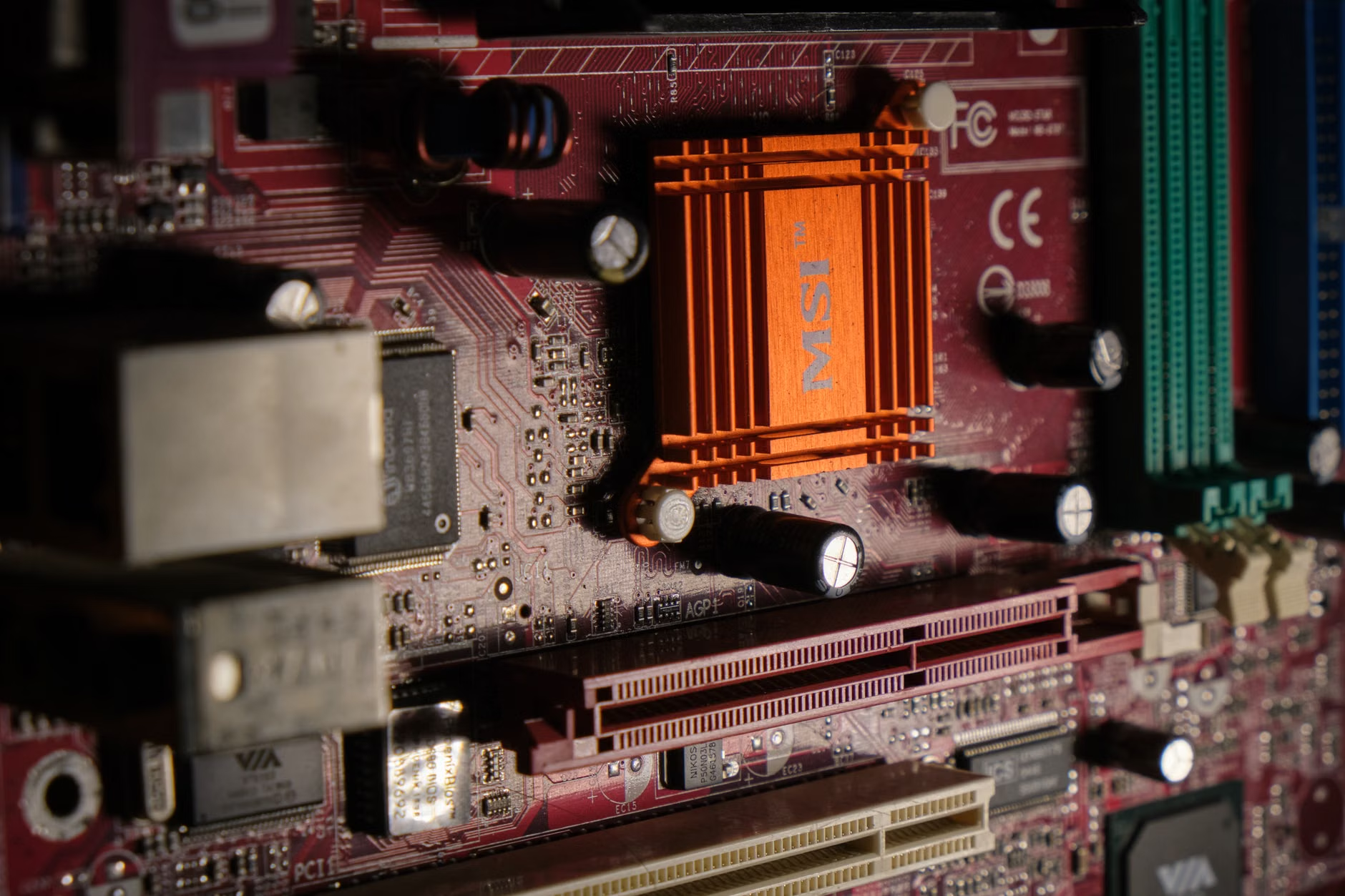
When you buy a piece of tech, you aren’t just paying for the plastic, glass, and circuitry. You are paying for the energy used to refine the aluminum in the chassis, the power used to run the clean-room fabrication facilities for the semiconductors, and the fuel used to ship these items across the ocean. Currently, these “hidden” costs are often subsidized by the environment. By 2026, the ledger will be corrected.
Consider the lifecycle of a modern smartphone. A significant portion of its total lifetime carbon footprint (often cited as 70-80%) occurs during the manufacturing phase, not during its usage. This is why the industry is so sensitive to carbon pricing. If a manufacturer uses renewable energy to power their factories, they will face lower CBAM fees. If they rely on high-emission grids, they will face higher tariffs.
This creates a “Green Premium.” Manufacturers who have already invested heavily in renewable energy and circular supply chains will likely see less of a price hike. Those who haven’t will face a difficult choice: absorb the cost and lose margins, or raise prices and risk losing market share. For the average family, this means that the “budget” tech options—often the ones produced with the least environmental oversight—might see the most dramatic price increases.
How the 2026 Shift Changes Your Buying Decisions
As we head into 2026, your approach to buying electronics will need to shift from “what’s the cheapest model” to “which model offers the best value over five years.” Here is how you can evaluate the impact of these changes on your household:
| Factor | Pre-CBAM Mentality | 2026 & Beyond Mentality |
|---|---|---|
| Purchase Driver | Lowest initial price | Total Cost of Ownership (TCO) |
| Lifecycle | Replace every 18-24 months | Replace every 36-48 months |
| Brand Loyalty | Based on features/specs | Based on transparency/sustainability |
| Repairability | Often ignored | Primary filter for purchase |
The “Total Cost of Ownership” (TCO) is going to be your best friend. If a device is $100 cheaper but breaks in two years, and the more sustainable, slightly more expensive model lasts for four years, you are actually paying more for the “cheaper” device in the long run. When the carbon tax kicks in, the price gap between these two models will likely narrow, making the more durable, high-quality option the logical financial choice.
The Rise of the “Repairability First” Era
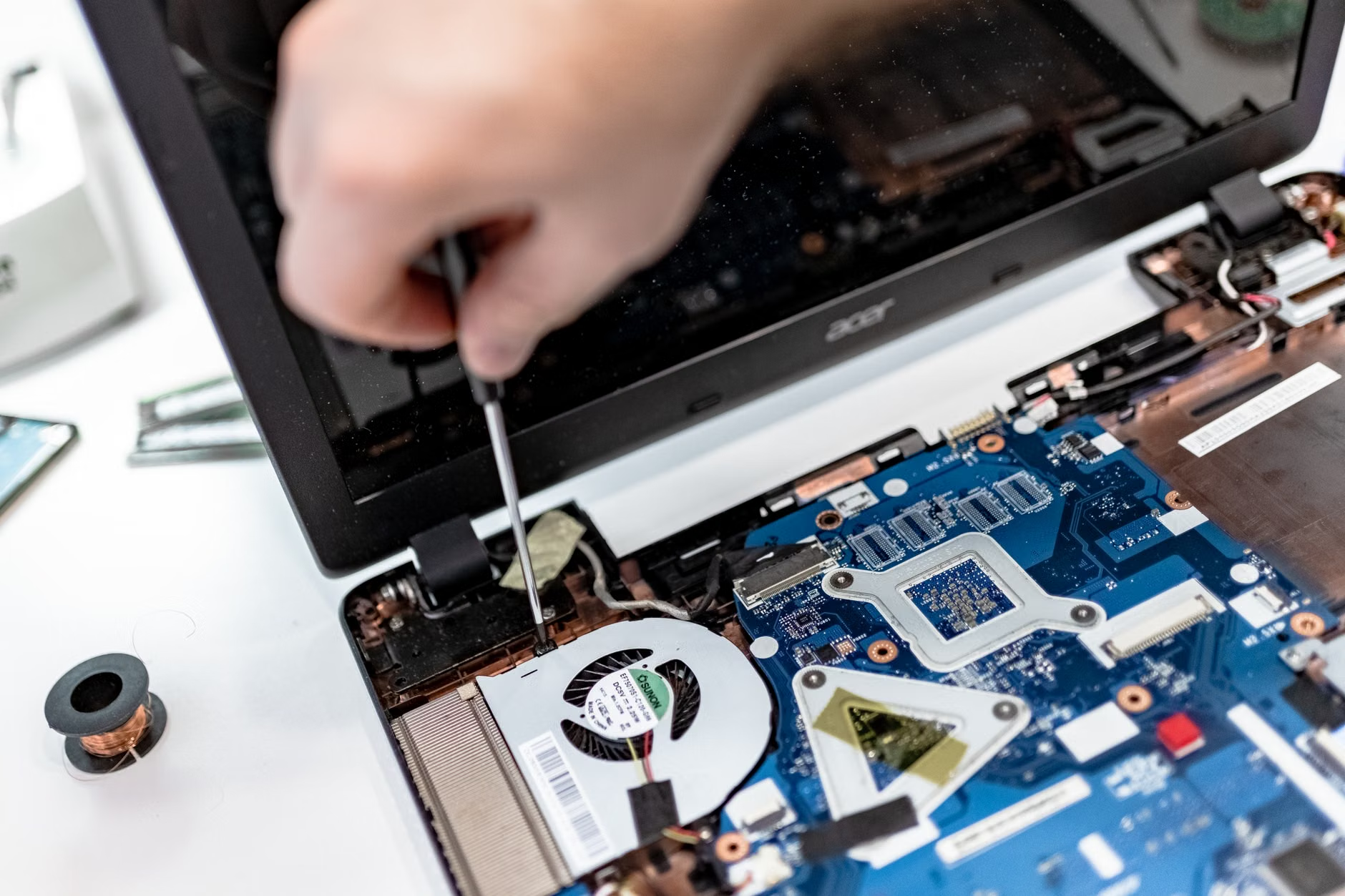
One of the most effective ways to combat the inflationary pressure of carbon taxes is to stop being a “disposable consumer.” In the past, companies made it difficult to repair devices—gluing batteries in place, using proprietary screws, or withholding software updates. This forced consumers to upgrade even when the hardware was perfectly functional.
However, the shift toward carbon accountability is aligning with the global “Right to Repair” movement. Manufacturers are beginning to realize that if they make a product that is easily repairable, it has a longer life, which justifies a higher initial price tag. When you are shopping for your family’s next laptop or phone, look for:
- Modular components: Can the battery or storage be replaced without specialized tools?
- Software support: Does the manufacturer guarantee at least 5-7 years of security updates?
- Refurbished markets: Is there a robust ecosystem for parts and repairs?
If you are a parent, this is also a fantastic opportunity to teach your children about the lifecycle of their tech. Instead of just buying a replacement when a screen cracks or a battery slows down, look into local repair shops or manufacturer-supported repair programs. It’s not just about saving money; it’s about understanding the resources that go into the devices we take for granted.
Common Misconceptions About Carbon Pricing
There is a lot of noise surrounding climate policy, and it is easy to get caught up in the wrong conclusions. Let’s clear up a few points that often cause confusion for families trying to budget for the future:
1. “It’s just an EU tax, so it doesn’t affect me.”
If you live outside the EU, you might think you are safe. But global supply chains are interconnected. If a major manufacturer in East Asia has to pay a carbon tax to sell their goods in Europe, they may raise prices globally to offset the costs across their entire production line. Furthermore, once the EU successfully implements this, other regions (like the UK, Canada, or even parts of the US) are likely to follow suit to protect their own industries. This is a global trend, not just a regional quirk.
2. “Everything will just become unaffordable.”
It is more likely that the market will bifurcate. We will see a segment of the market—high-efficiency, sustainable electronics—that maintains a stable price point because the manufacturers have already optimized their energy usage. The real price spikes will hit the “fast-tech” sector: low-quality goods produced in coal-heavy regions. By opting for higher-quality, more efficient brands, you can largely insulate your family from the worst of these price hikes.
3. “Individual action doesn’t change corporate policy.”
Actually, it does. In a market-driven economy, companies track purchasing data with incredible precision. If they see a massive consumer shift toward repairable, energy-efficient, and long-lasting electronics, they will pivot their design and manufacturing strategies to match that demand. Your purchase is a vote for the type of company you want to see survive in a carbon-constrained world.
Practical Steps for Your Household
So, what should you actually do today? You don’t need to panic, but you should start adjusting your habits. Here is a step-by-step strategy for the next 18 months:
- Audit your current inventory: Take an inventory of your family’s electronics. Identify which devices are reaching the end of their life cycle. If you need a replacement, start researching now rather than waiting for a failure.
- Prioritize longevity: When you do need to buy, look for brands that have clear, publicly available sustainability reports. Look for companies that are transparent about their supply chain emissions. If they aren’t talking about it, they are likely not prepared for the 2026 shift.
- Build a “Repair Buffer”: Dedicate a small portion of your tech budget to a “repair fund.” Having the money set aside to fix a screen or replace a battery is much cheaper than buying a new device every time something minor goes wrong.
- Use energy-efficient settings: While this doesn’t change the purchase price, it reduces the ongoing carbon footprint of your devices. Teaching your family to use power-saving modes on laptops and game consoles is a small but meaningful habit.
The transition to a carbon-conscious economy is not meant to be a punishment for consumers; it is a necessary evolution of how we value the resources that power our lives. While the 2026 carbon border tax might make the sticker price of some electronics sting a bit more, it also pushes the industry toward a model that is more durable, efficient, and ultimately more sustainable. By shifting your mindset from “disposable consumption” to “long-term investment,” you aren’t just saving your family’s budget—you are helping build a more resilient tech ecosystem for the next generation.
Frequently Asked Questions
Does the Carbon Border Adjustment Mechanism (CBAM) apply to all electronics?
CBAM is being phased in by sector. Initially, it focuses on high-emission industries like iron, steel, cement, aluminum, and electricity. However, because electronics rely heavily on aluminum and semiconductors (which require massive energy inputs), they are indirectly impacted. As the policy matures, the scope is expected to expand, and the “embedded carbon” in complex manufactured goods will be monitored more closely.
Will I see a specific “carbon tax” line item on my receipt?
No. You will not see a “carbon tax” line item on your receipt like you might see sales tax. Instead, the carbon cost will be baked into the manufacturer’s cost of goods sold. You will experience it as a general increase in the price of new electronics, particularly those that are not energy-efficient or that rely on fossil-fuel-heavy manufacturing regions.
Should I rush to buy electronics before 2026 to avoid price hikes?
Not necessarily. While prices may rise, the pace of technological innovation means that waiting often gets you better, more efficient hardware for your money. Furthermore, buying unnecessary items now just to “save money” is counter-productive if those items are obsolete in three years. Focus on buying high-quality, long-lasting gear when you actually need it, rather than panic-buying based on tax speculation.
For more detailed information on the European Union’s implementation of the Carbon Border Adjustment Mechanism, you can visit the official European Commission CBAM portal.