- The “Zero-Proof” movement is not about total sobriety, but about intentionality: Many parents are choosing non-alcoholic alternatives to maintain social connection while ensuring they feel sharp for early morning parenting duties.
- Quality matters more than quantity: Modern non-alcoholic spirits use complex botanical distillations rather than fruit juice and sugar, providing a genuine “adult” flavor profile that mimics the ritual of a cocktail.
- Social navigation requires a strategy: Navigating peer pressure or awkward social questions is easier when you have a pre-planned drink order and a clear understanding of your personal “why.”
The most significant shift in modern social drinking isn’t necessarily the rise of sobriety, but the evolution of the “middle ground.” For parents in their 30s and 40s, the trade-off of a fun Friday night is often a sluggish Saturday morning spent managing tantrums or sports practices with a headache. This is where the zero-proof trend has found its footing—not as a moral stance, but as a practical tool for high-performance parenting.
Why “Zero-Proof” is Replacing “Dry”
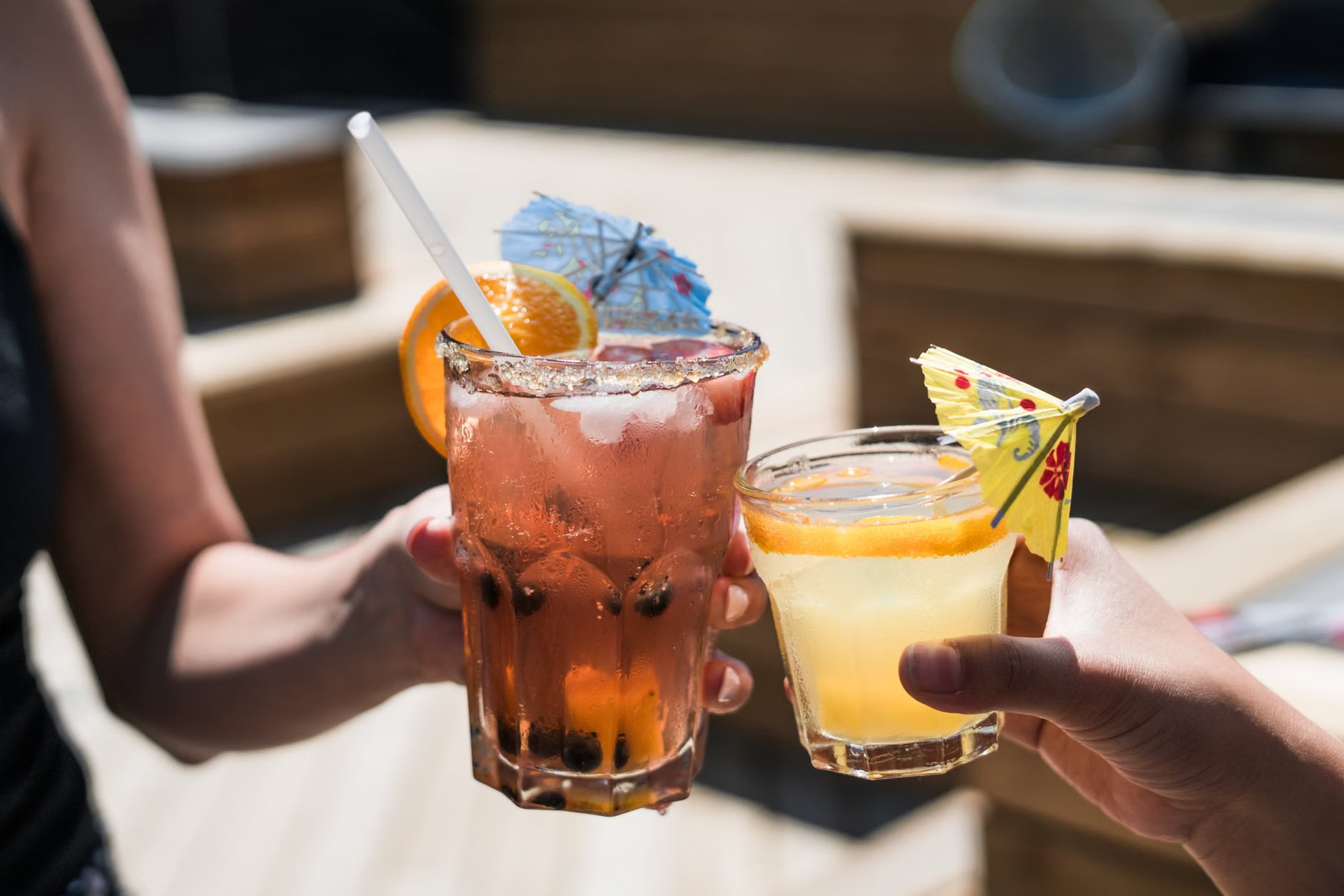
Historically, if you weren’t drinking alcohol, your options were limited to soda, juice, or water—all of which feel like a demotion in a social setting. The “zero-proof” movement, however, approaches non-alcoholic beverages with the same craft and complexity as traditional mixology. These aren’t just sugary mocktails; they are sophisticated concoctions using bitters, botanicals, and distillations that offer a genuine sensory experience.
For a parent managing a career and a household, the math is simple. A glass of wine might provide a temporary mood shift, but the physiological cost of disrupted sleep and decreased mental clarity the next day is often too high. Zero-proof spirits allow you to maintain the ritual of “unwinding” at the end of the day or participating in a toast at a dinner party without the subsequent neurological or physical fog.
It is important to distinguish between “alcohol-free” and “non-alcoholic.” Most zero-proof beverages are crafted to contain 0.0% to 0.5% ABV (Alcohol by Volume). For the vast majority of people, this is negligible. However, if you are choosing to abstain for medical or recovery reasons, it is vital to check labels, as some “non-alcoholic” products may contain trace amounts of alcohol from the fermentation process.
The Physiological Reality of Parenting in Your 30s and 40s
As we enter our 30s, our tolerance for alcohol naturally changes. The metabolic process of breaking down ethanol becomes less efficient, and the impact on sleep architecture is profound. Alcohol is a sedative, yes, but it suppresses REM sleep, which is the stage where we process emotions and consolidate memories. For a parent who is already sleep-deprived, alcohol acts as a force multiplier for fatigue.
When we choose zero-proof, we aren’t just skipping a drink; we are optimizing our recovery. A “sober-curious” approach allows for a clearer head during the “witching hour”—that chaotic time between 5:00 PM and 7:00 PM when dinner needs to be cooked, homework checked, and bedtime routines initiated. Being present, rather than just physically present, is a significant advantage that many parents find addictive once they experience it.
One of the biggest hurdles for parents adopting a zero-proof lifestyle is the social pressure. In many professional and social circles, alcohol is the social lubricant that bridges the gap between strangers. When you stop drinking, you might feel like you are losing your “off switch” or your ability to relax in a group setting.
The reality is that social anxiety often decreases once the initial awkwardness of “not drinking” passes. Most people are far less concerned with what is in your glass than you think. If you feel pressured, the best strategy is the “pre-emptive order.” By ordering your own non-alcoholic cocktail as soon as you arrive, you signal to others—and to yourself—that you are participating in the social ritual, just with a different liquid.
| Scenario | Recommended Strategy |
|---|---|
| Dinner Party with Friends | Bring a high-quality non-alcoholic spirit to share; it shifts the focus to the quality of the drink. |
| Corporate Networking Event | Order a club soda with lime and bitters. It looks identical to a gin and tonic, ending unnecessary questions. |
| Casual Weekend BBQ | Stick to craft non-alcoholic beers or canned shrubs; they feel casual and fit the setting perfectly. |
The table above highlights that “zero-proof” isn’t a one-size-fits-all approach. Your choice should depend on the environment. If you are in a professional setting where you don’t want to explain your lifestyle, the “mimicry” method (soda with lime) is your best friend. If you are with friends who know you well, being open about your preference for feeling great the next morning often leads to a deeper, more interesting conversation about wellness and parenting.
How to Build Your Home “Zero-Proof” Bar
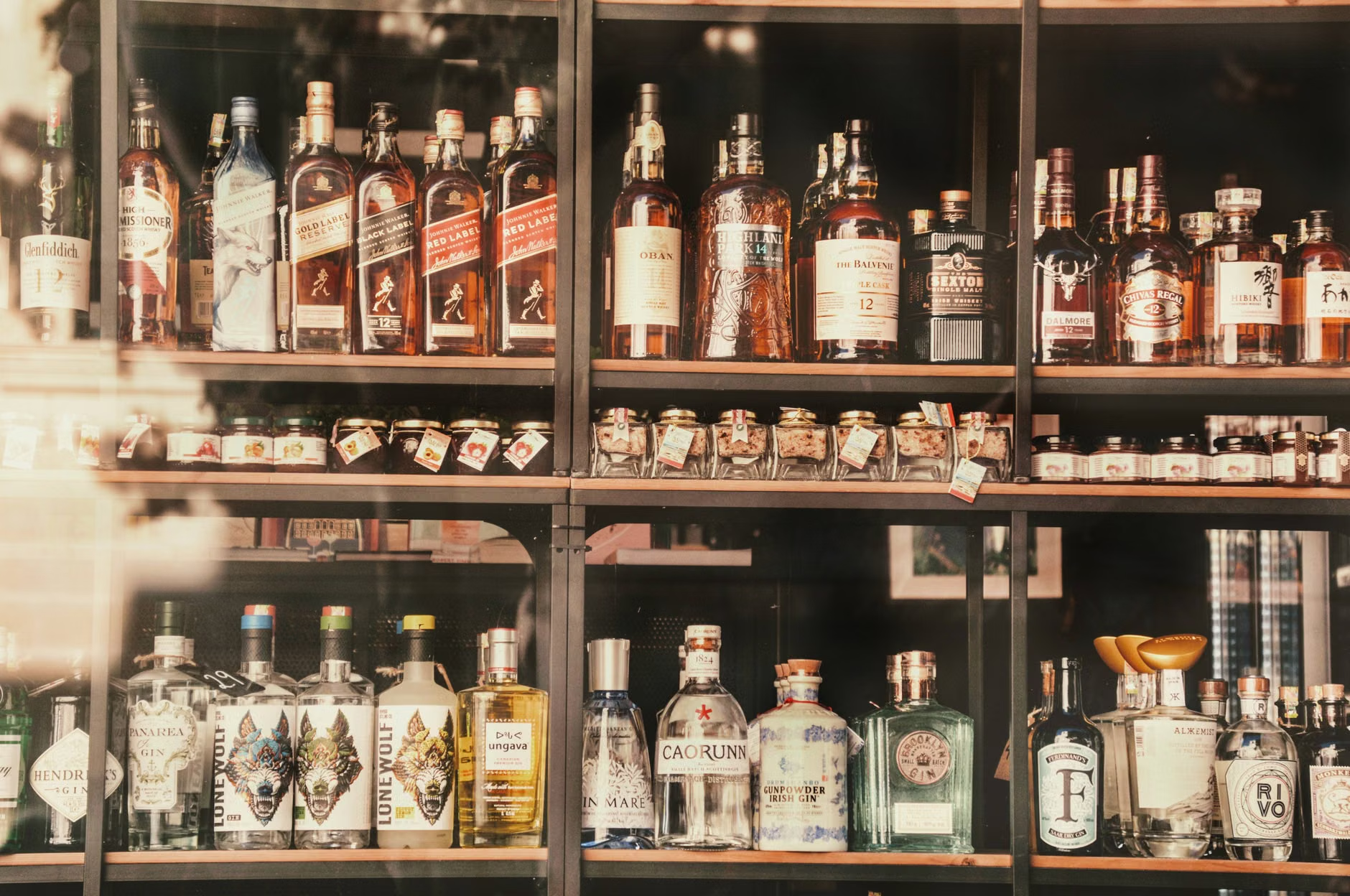
You don’t need to replace your entire liquor cabinet, but having a few staples can make a huge difference in your evening routine. Start by identifying the flavor profiles you enjoy. Do you miss the bite of a gin and tonic? Look for botanical-forward spirits that use juniper and citrus peels. Do you prefer the complexity of a whiskey sour? Seek out non-alcoholic spirits that utilize oak, smoke, and spice notes.
Common Mistake: Many people try to substitute alcohol with juice-heavy “mocktails.” This leads to a sugar crash that mimics the lethargy of alcohol. Instead, look for beverages that use ingredients like apple cider vinegar (shrubs), ginger, tonic water with quinine, or complex teas like Lapsang Souchong to provide depth.
When building your bar, focus on the “ritual.” The act of pouring a drink into a nice glass, adding a garnish, and sitting down to decompress is just as important as the liquid itself. It signals to your brain that the workday is over and family time has begun. This transition is a crucial psychological boundary for parents who work from home.
The Hidden Costs and Considerations
One overlooked variable in the zero-proof market is the price point. Surprisingly, many premium non-alcoholic spirits cost as much, if not more, than their alcoholic counterparts. This is due to the complex distillation and extraction processes required to capture flavors without the alcohol base. If you are a heavy consumer, this can add up.
However, compare this to the cost of a “hangover day.” If you factor in the value of your Saturday morning—the ability to go for a run, play with your kids, or focus on a hobby—the price of a bottle of non-alcoholic spirit starts to look like an investment in your time rather than just a beverage purchase. It is a trade-off: money for time and mental energy.
Another point to consider is the “sugar trap.” Some mass-market non-alcoholic drinks are essentially glorified sodas. Always read the nutrition label. If a drink has 30 grams of sugar, it’s not a wellness drink; it’s a dessert. Look for products that prioritize low-sugar, high-botanical ingredients to ensure you are actually feeling the benefits of the switch.
Step-by-Step: Implementing the Shift
If you want to try the zero-proof lifestyle, don’t feel the need to commit to a lifetime of abstinence immediately. Treat it as an experiment. Here is a practical framework for the next 30 days:
- The Weekday Rule: Commit to zero-proof beverages from Monday through Thursday. This is when your parenting and professional performance matter most.
- The Audit: Keep a simple note on your phone for one week. Rate your sleep quality and your energy levels during the 5:00 PM to 8:00 PM window.
- The Exploration: Purchase two different types of non-alcoholic spirits—one botanical/gin style and one bitter/aperitif style. Test them with different mixers to find what you actually enjoy.
- The Social Test: Attend at least two social events where you intentionally choose a zero-proof drink. Observe how you feel and how others react.
You will likely find that the “cravings” for alcohol are often just cravings for the ritual of a drink or the sensation of “winding down.” By replacing the substance but keeping the ritual, you satisfy the psychological need while protecting your physical health.
Beyond the Glass: The Cultural Shift
The rise of the zero-proof market is a reflection of a broader cultural shift towards “intentional living.” Parents in their 30s and 40s are increasingly rejecting the “work hard, party hard” mentality that defined previous generations. We are realizing that we only have a finite amount of energy, and we want to spend that energy on things that provide long-term value—our children, our health, and our personal growth.
This doesn’t mean we stop having fun. It means we redefine what fun looks like. A dinner party where everyone is sharp, engaged, and present is fundamentally different from one where everyone is slightly dulled by alcohol. It creates an environment for deeper connection and, frankly, a much better morning for everyone involved.
Frequently Asked Questions
1. Are zero-proof drinks actually healthier than soda?
Generally, yes, provided you choose the right ones. Many premium non-alcoholic spirits are designed to be low-calorie and low-sugar, focusing on botanical extracts. However, you should always check the label. If a drink is marketed as “non-alcoholic” but contains high-fructose corn syrup or excessive amounts of fruit juice, it is essentially a soda and should be consumed in moderation.
2. How do I handle friends who keep pushing me to have “a real drink”?
The key is confidence. You don’t owe anyone a long explanation. A simple, “I’ve got an early start tomorrow and I’m trying out this new non-alcoholic spirit, it’s actually great,” usually shuts down the conversation. If they persist, remind them that you are still there to socialize, which is the point of the gathering. Most people will drop it once they realize you aren’t trying to make a moral statement about their own drinking habits.
3. Can I make my own zero-proof drinks at home?
Absolutely. You don’t need expensive pre-bottled spirits to start. You can create excellent non-alcoholic drinks using ingredients like fresh herbs (rosemary, basil, mint), high-quality tonic water, bitters (check the label for trace alcohol), and citrus. A simple “shrub”—a syrup made from fruit, sugar, and vinegar—mixed with sparkling water provides a complex, acidic, and refreshing profile that mimics the “bite” of alcohol without the need for spirits.
Ultimately, the zero-proof movement is about empowerment. It is about taking back control of your evenings and your mornings. By making small, intentional changes to what you drink, you can significantly improve your quality of life as a parent. Start by replacing just one or two drinks a week and see how it impacts your energy. You might be surprised at how little you miss the alcohol when you feel the benefits of being fully present.
For more research on the science of alcohol and sleep, you can consult resources from the National Sleep Foundation, which provides detailed insights into how alcohol affects your sleep cycles. Stay curious, stay sharp, and enjoy the process of finding what works for your lifestyle.